








A Complete Guide to Soccer Arcade Game Modes and Gameplay Styles
- Understanding Football-Themed Arcade Entertainment Formats
- Penalty shootout and target-kicking formats
- Timed shooting and accuracy challenges
- Multiplayer and head-to-head gameplay
- Gameplay Styles, Hardware Systems, and Revenue Mechanics
- Physical skill play versus screen-led interaction
- Free-play, pay-per-play, and redemption models
- Comparing common operating formats
- Procurement and Site-Planning Criteria for Operators
- Measuring throughput, footprint, and return on investment
- Safety, compliance, and quality verification
- Serviceability, spare parts, and software support
- How PALM FUN Supports Arcade and Redemption Projects
- Manufacturing capabilities and product development
- Related equipment for mixed entertainment venues
- International reputation and partnership approach
- Frequently Asked Questions
A soccer arcade game is an interactive entertainment machine that converts football-themed play into measurable objectives such as goals, points, timed challenges, accuracy tests, or ticket rewards. For B2B buyers, the most important evaluation factors are not visual design alone but gameplay clarity, player throughput, cabinet durability, payment compatibility, maintenance access, prize integration, and revenue potential. This guide compares competitive penalty-kick machines, timed shooting challenges, multiplayer football simulators, sensor-based skill games, and redemption formats so operators can select equipment suited to arcades, family entertainment centers, shopping malls, sports venues, amusement parks, and mixed-use leisure facilities.
Understanding Football-Themed Arcade Entertainment Formats
Penalty shootout and target-kicking formats
Penalty-kick cabinets are among the easiest football attractions to understand. A player aims at a goal, selects or responds to a goalkeeper challenge, and attempts to score within a defined number of shots. Commercial versions may use a physical ball, pressure-sensitive target zones, optical sensors, or a screen-based interface. Their straightforward rules reduce onboarding time, which is valuable in high-traffic locations where visitors decide within seconds whether to play.
For operators, the principal commercial advantage is fast session turnover. A three-shot or five-shot round can support many plays per hour while keeping the queue visible and easy to manage. Buyers should examine ball-return design, goal-net construction, sensor calibration, impact protection, and replacement-part availability. A machine that appears attractive but requires frequent sensor adjustment can create hidden labor costs and lost revenue.
Timed shooting and accuracy challenges
Timed formats ask players to hit illuminated targets, react to changing goal zones, or complete as many successful shots as possible before the countdown ends. These systems create a clear skill ladder: beginners can participate immediately, while experienced users try to improve their score. Digital leaderboards, personal best records, and bonus rounds can increase repeat play without requiring complicated instructions.
When comparing timed attractions, buyers should assess whether the software supports adjustable difficulty, multilingual prompts, operator-controlled session length, and local pricing. Difficulty should be challenging enough to encourage repeat attempts without appearing arbitrary. A well-designed scoring algorithm should reward accuracy, reaction speed, and consistency rather than relying on random outcomes, especially when the machine is positioned as a skill-based entertainment product.
Multiplayer and head-to-head gameplay
Two-player football machines create social competition and can perform well in locations where groups visit together. Common variations include simultaneous shooting, alternating penalty rounds, team-versus-team scoring, and cooperative target challenges. Multiplayer equipment can generate higher average transaction value because two or more participants may pay for one session, but it also requires more floor space and careful crowd-flow planning.
Project owners should review the physical separation between players, ball containment, sound levels, screen visibility, and access around the cabinet. A competitive format should communicate the winner clearly and reset quickly for the next group. If a machine is installed near food service, retail displays, or quiet seating, adjustable audio volume and directional speakers can prevent customer-experience conflicts.
Gameplay Styles, Hardware Systems, and Revenue Mechanics
Physical skill play versus screen-led interaction
Physical ball-based equipment delivers tactile feedback and a stronger sense of athletic participation. It can attract sports fans who want to kick, aim, and react in a real-world space. Screen-led systems generally provide more flexible themes, animated opponents, tournament logic, and software-driven content. The correct choice depends on the venue profile, available footprint, maintenance capabilities, and desired audience.
Physical systems require robust mechanical protection around goals, nets, panels, pedals, and ball-return assemblies. Screen-based cabinets require reliable displays, computing hardware, software updates, and protected control interfaces. Hybrid designs combine a physical kick or ball mechanism with digital scoring and visual effects. These can provide strong immersion, but buyers should request a clear bill of materials and understand which components are proprietary.
Free-play, pay-per-play, and redemption models
Free-play installations are often used as promotional attractions in sports retailers, hotels, brand activations, and corporate events. They can support customer engagement but do not necessarily generate direct machine revenue. Pay-per-play models use a coin acceptor, bill validator, card reader, or cashless payment terminal to control each session. Redemption-oriented models add tickets, digital points, coupons, or prize eligibility to the skill outcome.
A redemption game machine must balance entertainment with transparent reward logic. Operators should verify how tickets are calculated, whether the payout rate can be configured, and whether the system can connect to an existing card or loyalty platform. The redemption mechanism should not interrupt the player experience, and ticket jams should be easy to clear. Where regulations apply, the operator remains responsible for reviewing local amusement, prize, electrical, and payment requirements before deployment.
Comparing common operating formats
| Format | Typical session profile | Primary commercial strength | Main procurement consideration |
|---|---|---|---|
| Penalty challenge | Short, fixed number of shots | High throughput and simple instructions | Ball containment, sensor reliability, and reset speed |
| Timed target challenge | Countdown-based scoring round | Repeat play through personal-best competition | Difficulty configuration and software stability |
| Two-player competition | Head-to-head or alternating turns | Social engagement and shared transactions | Footprint, crowd flow, sound, and player safety |
| Redemption skill game | Skill result linked to tickets or points | Integration with prize-counter economics | Payout control, ticket handling, and card-system compatibility |
| Promotional free-play unit | Open access or event-based usage | Brand engagement and attraction value | Durability, portability, and simple event setup |
The table provides a functional comparison rather than a universal performance guarantee. Actual revenue depends on location, pricing, operating hours, audience demographics, visibility, competition, local spending behavior, and preventive maintenance. Buyers should request a financial model based on expected plays per day, average price per session, prize cost where applicable, payment fees, electricity, staffing, and downtime.
Procurement and Site-Planning Criteria for Operators
Measuring throughput, footprint, and return on investment
Throughput is the number of completed sessions a unit can support during operating hours. It depends on session duration, payment speed, reset time, instructions, and whether players require staff assistance. A compact unit with a two-minute cycle may outperform a larger attraction with a five-minute cycle in a busy corridor, while a High Quality multiplayer cabinet may deliver greater revenue per transaction in a destination entertainment zone.
Before purchasing, record the available floor area, ceiling height, access route, power location, emergency egress, and service clearance. The published cabinet footprint is not the full installation requirement. Space may also be needed for player movement, spectators, ball travel, queue formation, ventilation, and technician access. A professional layout should show the equipment at operating scale rather than simply placing a rectangle on a floor plan.
Safety, compliance, and quality verification
Sports-themed machines involve moving balls, impact surfaces, electrical components, and frequent physical contact. Buyers should request product specifications, electrical documentation, operating instructions, warranty terms, and available conformity information for the destination market. The FIFA football technology resources provide useful context on how football-related equipment and technology are assessed in the broader sports sector, although arcade equipment must still satisfy the applicable amusement and electrical rules of its installation country.
Quality management is another important procurement signal. Suppliers that operate documented processes can provide more consistent assembly, inspection, traceability, and corrective action. Buyers can review the principles described by ISO 9001 quality management guidance when evaluating a manufacturer’s approach to process control. Product-specific certification should never be assumed from a general marketing statement; certificates, test reports, and technical files should be checked for scope, validity, and model relevance.
Serviceability, spare parts, and software support
Downtime directly reduces earning potential. A reliable supplier should explain how to replace wear components, recalibrate sensors, access control boards, update software, and troubleshoot payment equipment. Ask whether spare nets, balls, switches, display modules, power supplies, ticket dispensers, and communication cables are stocked or made to order.
Operators should also clarify warranty exclusions, remote technical support, response times, packaging standards, and responsibility for shipping damaged components. Preventive maintenance schedules should cover cleaning, fastener inspection, sensor testing, cable checks, payment validation, and software backups. For equipment connected to a venue network, cybersecurity and data handling should be discussed with the supplier’s technical team.
How PALM FUN Supports Arcade and Redemption Projects
Manufacturing capabilities and product development
PALM FUN was founded in 2015 and specializes in high-quality mechanical lottery machines, coin pusher machines, raffle machines, and innovative gaming and lottery equipment. Our work covers research and development, industrial design, production, and sales, enabling project owners and distributors to coordinate product decisions with one experienced manufacturing partner.
Our state-of-the-art factory covers 3,000 square meters and is supported by skilled development engineers focused on technology, reliability, and user experience. This structure helps our team evaluate cabinet construction, mechanical movement, control systems, visual presentation, and operator usability as connected parts of the same product. For buyers, that integrated approach can simplify communication during customization, sampling, production, and pre-shipment inspection.
Related equipment for mixed entertainment venues
Football-themed attractions are often most effective when included in a broader entertainment mix. Our coin pusher machine portfolio can support repeat-play environments by combining mechanical movement, visible prize progression, and straightforward operation. Our redemption games and arcade games machines can help operators create complementary zones for different ages, play preferences, and spending levels.
Distributors and project investors evaluating arcade machines for sale should compare more than catalog appearance. They should assess cabinet durability, component availability, packaging, customization options, payment compatibility, operating instructions, and after-sales support. PALM FUN works with clients seeking equipment for amusement centers, family entertainment facilities, shopping destinations, and international distribution channels, with product planning based on the intended market and venue model.
International reputation and partnership approach
PALM FUN products are recognized and popular in more than 50 countries worldwide. Our objective is to build long-term partnerships by supporting clients beyond the initial shipment, including product communication, technical coordination, and service guidance. This international orientation helps buyers consider regional preferences, import requirements, operating environments, and local commercial expectations before finalizing a project.
Our vision is to become the world’s leading manufacturer of redemption game machines. Buyers can review our product range and company capabilities at PALM FUN. A practical evaluation should still include a written specification, commercial quotation, warranty terms, production schedule, quality-control plan, and installation responsibilities so both parties share the same project expectations.
When selecting a football attraction or related redemption equipment, the strongest procurement decision usually comes from matching gameplay to venue behavior. High-traffic locations may prioritize short sessions and rapid resets; sports venues may value physical authenticity; family entertainment centers may prefer tickets and repeat-play incentives; and High Quality arcades may require multiplayer competition, digital leaderboards, and cashless payment integration. A supplier that can explain these trade-offs clearly is better positioned to support sustainable operation than one focused only on visual novelty.
Frequently Asked Questions
What are the most common gameplay modes for football arcade equipment?
Common formats include penalty-kick challenges, timed target shooting, multiplayer head-to-head competitions, physical skill games, screen-led simulations, and redemption formats linked to tickets or digital points.
How should operators choose between physical ball play and screen-based interaction?
Physical systems provide tactile participation and sports authenticity, while screen-based systems offer flexible software, animated opponents, leaderboards, and adjustable content. The choice should reflect venue profile, footprint, maintenance capability, and target audience.
What should buyers check before purchasing a redemption-oriented football machine?
Buyers should verify payout configuration, ticket or digital-point calculation, payment compatibility, ticket-jam access, software stability, spare parts, warranty terms, and compliance documentation for the destination market.
How is the return on investment of an arcade sports machine estimated?
ROI depends on expected plays per day, price per session, operating hours, downtime, prize costs, payment fees, electricity, staffing, floor space, and local customer demand. Suppliers should provide assumptions that can be tested against the planned venue.
Why are maintenance and spare parts important for football arcade equipment?
Frequent physical interaction can affect balls, nets, sensors, switches, cables, displays, and payment components. Easy service access, documented troubleshooting, stocked replacement parts, and responsive technical support help reduce downtime and protect revenue.
What does PALM FUN manufacture?
PALM FUN manufactures mechanical lottery machines, coin pusher machines, raffle machines, redemption games, and other innovative gaming and lottery equipment, supported by research and development, design, production, and sales capabilities.
Recommended for you
Wholesale where to buy arcade games manufacturer and supplier in Asia
PALM FUN Best professional game room arcade manufacturers and supplier brands
Wholesale wall arcade game manufacturer and supplier in Asia
Wholesale coin pusher machines manufacturer and supplier
FAQs
Research & Development, how hard is the birth of one new redemption machines?
How to guides works?
For example:
1. Proactively inquire and add tickets when a customer's machine is running low on tickets.
2. Assist players in organizing tickets when they are dispensed unevenly.
3. Offer storage tools such as storage bags and rubber bands when customers are arranging their tickets.
4. Provide free USB interfaces for charging near popular machines and rest areas.
5. Implement warm and clear reminders, guidance on ticket redemption, and directional signage, all designed to be straightforward. The more of these you provide, the more players will appreciate your thoughtfulness, without finding it bothersome.
How to choose the exchange gifts of the tickets(reward points)?
2. Gifts should be diverse. This refers to the variety of items available, providing players with more choices. Everyone's preferences are different, especially adults who have higher expectations for gifts. The venue should strive to meet the diverse needs of these players.
3. Gifts should be fashionable. The younger generation that follows trends is very interested in the hottest items of the moment. If the venue can keep up with the latest trends, it can attract the majority of consumers.
4. Gifts should be innovative. Especially during holidays and seasons, it's a good idea to try out new approaches, creating a competitive advantage with unique offerings. For example, the current trend of combining pop culture and blind box culture.
How to guide the players to recognize tickets at the beginning setup of the redemption machines?
Never assume that your players already understand the purpose of lottery tickets(reward points). Even in venues that have been in operation for many years, it is still discovered during on-site interviews with players that many of them are not aware. Don't believe it? Just ask consumers at the venue. The machines, redemption counters, materials hung above the venue, and announcements by staff, among others, can all be channels for informing players about the purpose of lottery tickets(reward points). It is essential to do more promotion, create large displays and large cards, and clearly communicate the purpose of lottery tickets(reward points) to the players.
What details should be paid attention to in the operation of redemption machines?
① Machine parameter adjustments.
② Equipment performance and gameplay.
③ Decoration and promotion of the area and equipment.
④ Machine placement locations.
⑤ Selection of prizes.
2. The primary operational techniques for redemption machines are in the attractiveness of the gameplay, maintaining a reasonable payout rate, and creating an engaging atmosphere. Depending on the season and market changes, promotional activities should be carried out with a balance, analysis, and follow-up. Therefore, you can consider the following operational methods:
① Collaborate with several venues or businesses to distribute promotional materials to enhance external visibility and interaction.
② Conduct targeted promotional activities to retain returning customers.
③ Organize regular member events to ensure member attraction and consistent customer base. For example, offering extra lottery rewards for a certain amount of tokens deposited or giving a certain number of lottery tickets(reward points) when a membership card is issued.
④ Strengthen interaction with neighboring businesses within the commercial district.
⑤ Organize selective activities for children and offer special deals for exchanging unique children-oriented prizes.
3. Setting parameters correctly:
4.New machine arrival -- Familiarizing with the game--Initial parameter control--Promotional --ctivities and advertising--Adjusting parameters based on the number of players--Multiple adjustments of parameters--Increased popularity--Profitability--Reinvestment.
Note: Data analysis should be conducted weekly to promptly understand the ticket payout probability for each redemption machine. In case of any abnormal situations, swift follow-up and troubleshooting are essential to identify the causes and rectify the issues.
You may also like
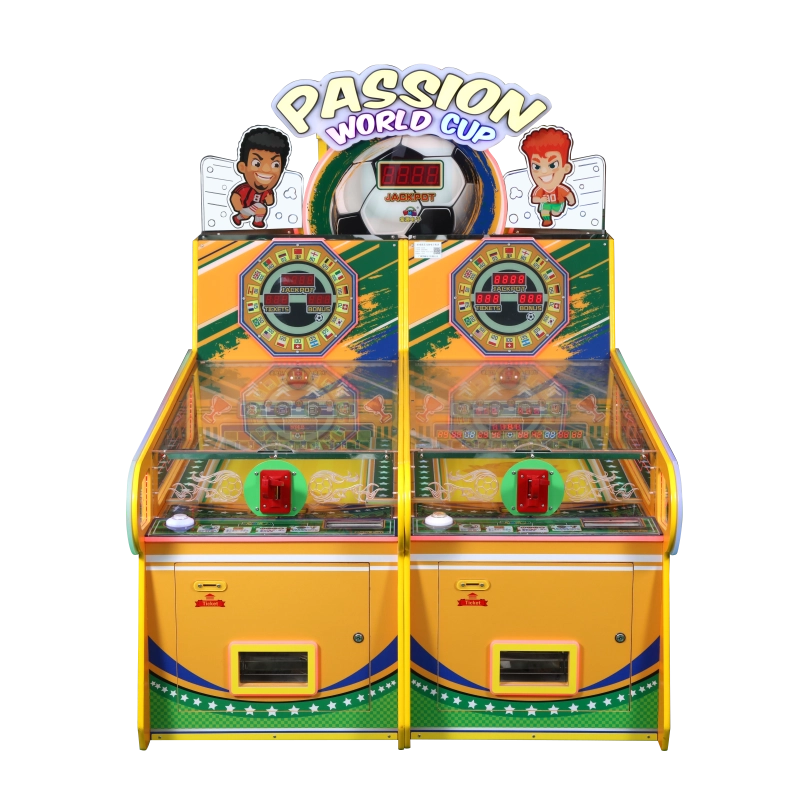
Soccer Fever arcade soccer games (Manual Version)
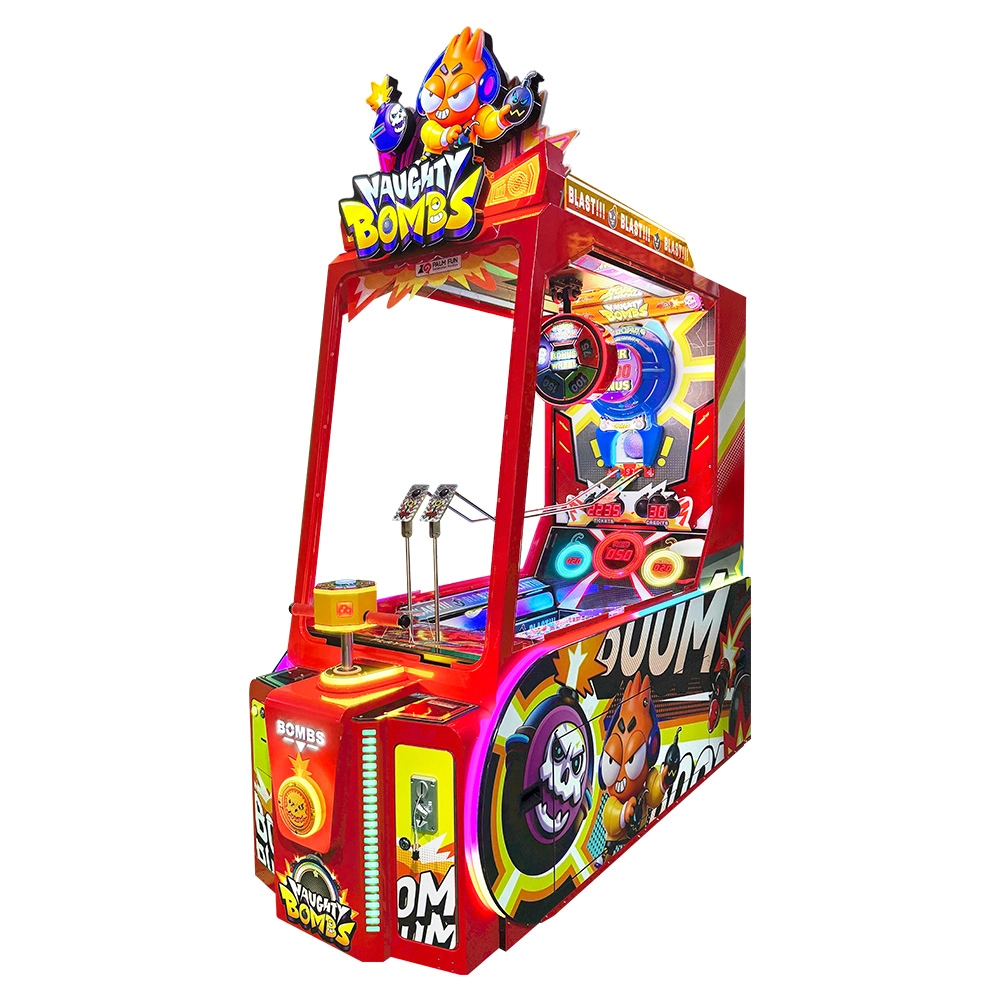
Naughty Bombs Ball Drop Redemption Arcade Game Machine
Naughty Bombs is a ball-drop redemption arcade game featuring rolling-ball gameplay, colored targets, ticket prizes, surprise bonus rewards, lighting and sound effects. Players use timing to launch and drop balls toward colored target areas. The product is presented for arcade, family entertainment center and other entertainment-venue projects, with customizable 110V / 220V AC voltage configuration.
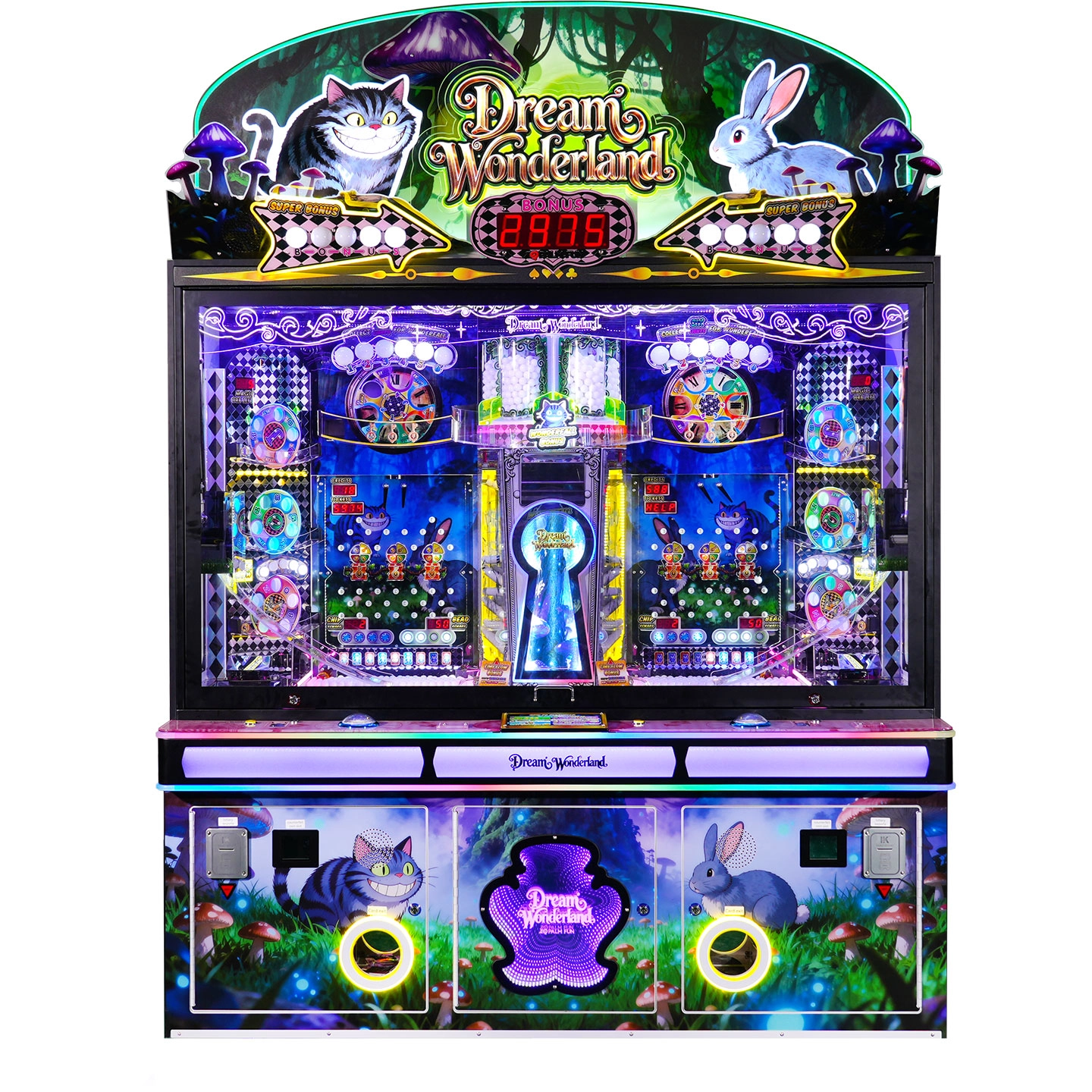
Dream Wonderland Marble Pusher Redemption Game
Enter Dream Wonderland — a magical marble pusher adventure filled with glowing lights, magic orbs, bonus wheels, collectible character cards, and exciting jackpot challenges.
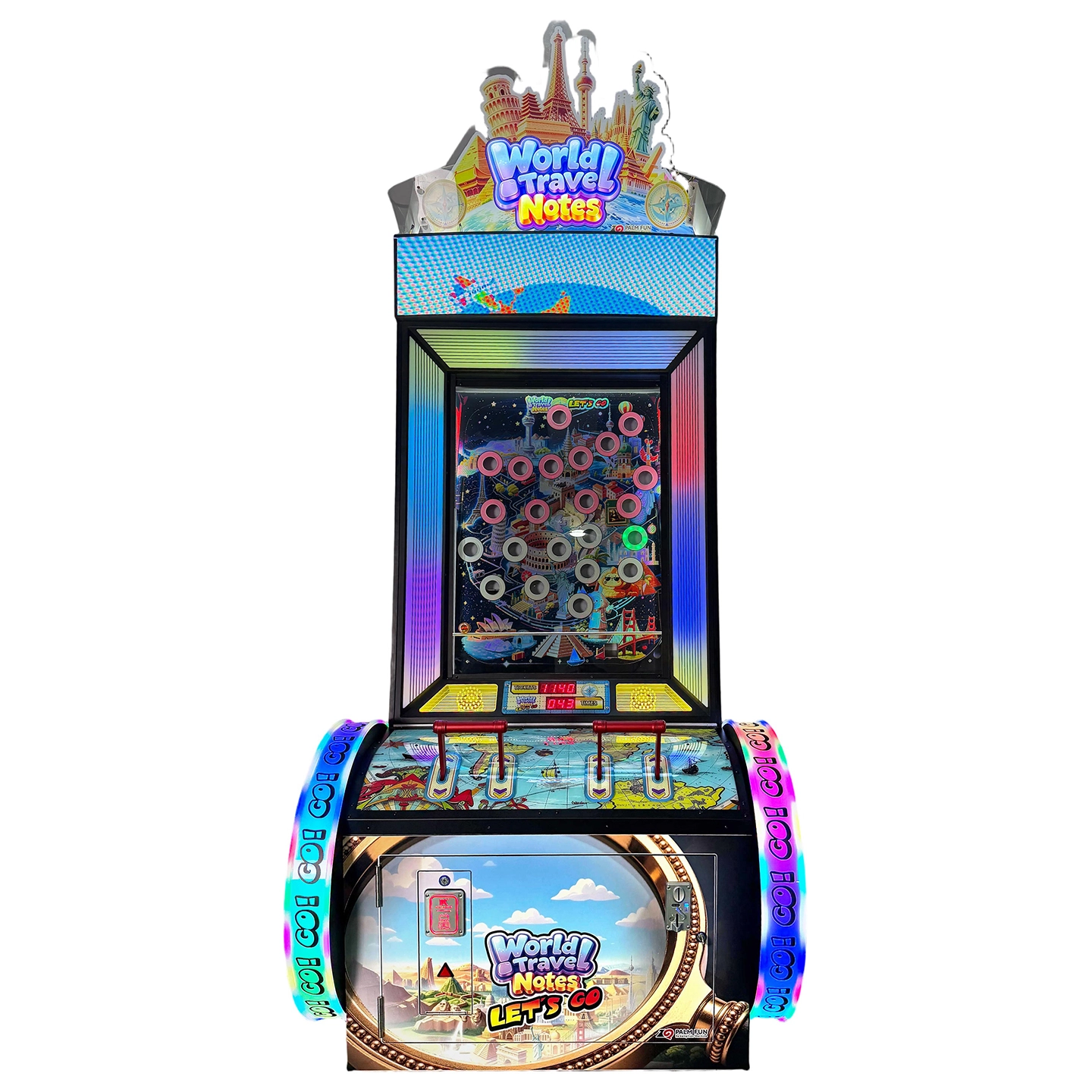
World Travel Notes – Balance Ball Redemption Arcade Game
World Travel Notes is a skill-based balance ball redemption game with a fun world-travel theme. Players use two handles to control the balance bar and guide the ball into each target hole. As the game progresses, the targets become more challenging, leading players toward the final grand prize. With colorful world-travel graphics, dynamic RGB lighting, a live score display, and progressive difficulty, World Travel Notes is designed to attract attention and encourage repeat play in arcades, FECs, shopping malls, and other entertainment venues.

Copyright © 2026 PALM FUN All Rights Reserved. | Privacy Policy • Terms and Conditions | Sitemap
palmfunarcade
Palm Fun Arcade Game
Whatsapp: +8618126837443
PalmFun Arcade
PalmFun_Arcade
PALM FUN Redemption Machine