








What Is a Soccer Arcade Game? A Complete Beginner’s Guide
- Understanding Football-Themed Arcade Equipment
- How the attraction works
- Common machine formats
- Redemption play versus amusement play
- What Buyers Should Evaluate Before Procurement
- Cabinet construction and player safety
- Scoring accuracy and software control
- Throughput, payment, and maintenance
- Operating Strategy and Return on Floor Space
- Placement and customer flow
- Revenue and KPI management
- Compliance and responsible operation
- Why Supplier Capability Matters: The PALM FUN Approach
- Engineering and manufacturing foundation
- Product portfolio for complete venue planning
- International market experience and project support
- Frequently Asked Questions
A soccer arcade game is a commercial amusement machine that recreates a football shooting challenge in a compact, timed format. Players normally kick or shoot a ball toward illuminated targets, while electronic sensors calculate accuracy, speed, combinations, or total points. Depending on the configuration, the unit may operate as a standalone skill game, a ticket- or coupon-based redemption game, or a networked attraction within a broader arcade. For operators, the important purchasing questions are not limited to appearance: cabinet durability, sensor reliability, player throughput, payment compatibility, safety, service access, prize economics, and return on floor space all influence project performance.
Understanding Football-Themed Arcade Equipment
How the attraction works
Most football shooting machines combine a physical play area with an electronic scoring system. A player inserts coins, taps a cashless card, or activates a session through the venue’s payment system. A countdown begins, targets light up, and the participant attempts to hit as many scoring zones as possible. Infrared, optical, pressure, or other sensor technologies detect successful shots. The control board then sends results to a screen, scoreboard, sound system, or ticket dispenser.
The basic experience is easy to understand because it connects a familiar sports action with immediate feedback. This low learning curve is commercially valuable. Families, children, teenagers, sports fans, and casual visitors can begin playing without a long tutorial. A supplier should still document the sensor type, calibration procedure, expected ball replacement cycle, software settings, and available spare parts before shipment.
Common machine formats
Compact penalty-kick units are designed for limited floor areas and typically focus on one player at a time. Larger interactive football attractions may include several targets, multiple balls, higher-impact barriers, digital animations, and head-to-head modes. Some cabinets are configured for ticket redemption, while others use scoreboards and prize-free competitive play. The right format depends on venue identity, customer age range, available ceiling height, queue management, and local amusement regulations.
For a family entertainment center, a modular layout can be more useful than a visually oversized cabinet. Operators can place the unit near other sports attractions, a classic arcade game zone, or a prize counter. A location with limited supervision may require enclosed kick zones, anti-slip flooring, rounded edges, and clear operating instructions. Buyers should request assembly drawings and installation requirements rather than relying only on product photographs.
Redemption play versus amusement play
A redemption configuration awards tickets, points, coupons, or digital credits according to the player’s score. This model can encourage repeat sessions because the customer works toward a prize target. A pure amusement configuration emphasizes entertainment, competition, and replay value without a physical reward. Neither model is universally superior. Redemption play requires prize inventory, ticket accounting, payout controls, and compliance with local rules; amusement-only play may simplify operations but places greater pressure on cabinet appeal and game depth.
Operators should define the commercial model before selecting equipment. If the venue already uses a centralized card system, the machine must support the relevant reader, pulse, MDB, or other payment interface. If paper tickets are required, the dispenser needs adequate capacity and easy access for replenishment. The supplier should also explain how scores and payouts are adjusted, locked, logged, and restored after a power interruption.
What Buyers Should Evaluate Before Procurement
Cabinet construction and player safety
A commercial sports cabinet experiences repeated impacts, rapid player movement, ball contact, cleaning, and occasional misuse. Structural panels should resist loosening, while the goal frame, net, protective screen, kick area, and mounting points should be designed for sustained public use. Finishes should tolerate routine cleaning without rapid fading or peeling. Electrical components should be enclosed and positioned to reduce unauthorized access.
Safety review should cover pinch points, exposed fasteners, sharp corners, ball rebound, floor traction, electrical grounding, ventilation, and emergency power isolation. Buyers should ask for the manufacturer’s safety documentation and confirm which standards apply in the destination market. The ISO 9001 quality management standard can help buyers understand how a supplier structures documented processes, although certification alone does not replace a product-specific safety assessment.
Scoring accuracy and software control
Players quickly notice inconsistent scoring. A missed target that registers as a hit, or a clear hit that produces no credit, can create complaints and reduce repeat use. Procurement teams should request a demonstration of sensor response, calibration access, scoring tolerance, game-duration settings, attract-mode configuration, volume control, and error reporting.
Software flexibility is also important for different venue strategies. A children’s zone may use longer sessions and simpler scoring, while a sports bar or competitive entertainment site may prefer shorter rounds, leaderboards, and higher replay frequency. A reliable supplier should explain whether settings are changed through a service menu, remote management platform, or factory authorization. Documentation should identify backup procedures and the process for restoring configuration after board replacement.
Throughput, payment, and maintenance
Revenue potential depends partly on the number of completed sessions per operating hour. A short game can support high throughput, but excessive queue speed may reduce perceived value. A longer experience can justify a higher price but may limit capacity during peak periods. Operators should model session price, average occupancy, operating hours, downtime, prize cost where applicable, and floor-space opportunity cost.
Maintenance planning should include daily cleaning, ball inspection, sensor testing, fastener checks, screen protection, ticket replenishment, and monthly electrical inspection. Ask whether common replacement items are stocked regionally and whether the supplier provides wiring diagrams, troubleshooting guides, remote assistance, and technician training. A machine that is inexpensive to purchase but difficult to repair can produce a higher total cost of ownership.
| Evaluation area | Compact penalty-kick unit | Multi-target interactive attraction | Procurement implication |
|---|---|---|---|
| Typical floor requirement | Lower | Higher | Measure circulation space, queue area, and safety clearance before ordering. |
| Player capacity | Usually one active player | One or more, depending on design | Match capacity to peak traffic and venue operating model. |
| Game complexity | Simple and fast to learn | More targets, modes, or interaction | Choose simplicity for high turnover and depth for repeat-play locations. |
| Maintenance exposure | Fewer moving elements | More sensors, screens, and impact areas | Confirm spare parts, service access, and diagnostic procedures. |
| Redemption integration | Often straightforward | May require more software configuration | Verify card readers, ticket systems, payout logic, and local compliance. |
The comparison is a planning framework rather than a universal specification. Actual dimensions, payment interfaces, sensor architecture, and payout functions vary by manufacturer. Buyers should obtain a signed technical datasheet and a commercial quotation that separates machine price, shipping, installation, commissioning, software options, spare parts, warranty coverage, and after-sales support.
Operating Strategy and Return on Floor Space
Placement and customer flow
Placement affects visibility, safety, and conversion. A football shooting attraction should be visible from the main circulation path but positioned far enough from entrances, glass panels, dining areas, and narrow aisles to avoid congestion. Bright graphics and a readable score display can attract attention, while excessive sound may create problems in mixed-use venues. The surrounding area should allow a waiting player to observe the action without standing inside the kick zone.
Venue owners should evaluate adjacency with other attractions. A sports-themed machine may perform well near basketball, air hockey, driving simulators, and other competitive arcade games machines because customers understand the activity category. It can also support cross-selling when linked to a prize counter or membership program. A floor plan should account for queue length at peak times rather than only the physical footprint of the cabinet.
Revenue and KPI management
Useful operating indicators include plays per day, average revenue per play, utilization by hour, repeat-play rate, ticket payout ratio, technical downtime, service cost, and customer complaints. These indicators help distinguish weak placement from weak product performance. For example, low usage during all hours may indicate poor visibility or insufficient attraction value, while strong usage followed by complaints may indicate calibration or payment problems.
A basic payback model can compare monthly gross play revenue with rent allocation, payment fees, electricity, prize expense, routine maintenance, staff labor, and expected downtime. Buyers should avoid relying on an advertised payback period without reviewing assumptions. Local pricing, customer demographics, competition, seasonality, and the venue’s marketing program materially change financial results.
Compliance and responsible operation
Regulatory requirements vary by country, state, and municipality. Relevant issues may include electrical conformity, electromagnetic compatibility, fire safety, accessibility, age guidance, prize rules, import documentation, and amusement-device inspection. The U.S. Consumer Product Safety Commission amusement guidance illustrates why operators should review applicable safety responsibilities rather than assuming that a commercial entertainment machine is automatically compliant in every jurisdiction.
For international projects, documentation should be prepared before shipment. A buyer may need packing lists, commercial invoices, certificates of origin, wiring information, voltage specifications, user manuals, and conformity records. The IAAPA safety resources provide an industry reference point for amusement professionals, but local authorities and qualified inspectors remain the final source for jurisdiction-specific obligations.
Why Supplier Capability Matters: The PALM FUN Approach
Engineering and manufacturing foundation
PALM FUN was founded in 2015 and specializes in high-quality mechanical lottery machines, coin pusher machines, and raffle machines. Our work covers research and development, product design, production, and sales for innovative gaming and lottery equipment. This broader product experience is relevant to buyers evaluating a football-themed attraction because reliable commercial amusement equipment depends on more than exterior graphics; it requires mechanical integration, control logic, payment compatibility, repeatable assembly, and practical service access.
Our state-of-the-art factory covers 3,000 square meters and is supported by skilled development engineers focused on technology advancement and user experience. The manufacturing process is intended to provide consistent build quality across components, support product refinement, and respond to changing operator requirements. For a distributor or project owner, this engineering connection can simplify discussions about customization, cabinet configuration, game settings, branding, and integration with an existing entertainment environment.
Product portfolio for complete venue planning
PALM FUN’s portfolio includes coin pusher machine solutions, redemption games, arcade games machines, mechanical lottery equipment, and raffle machines. A coin pusher can complement a sports attraction by giving visitors a slower, prize-oriented experience, while other redemption games can broaden the mix across different ages and play preferences. Building a balanced equipment package helps operators manage customer flow instead of depending on one product category.
Buyers searching for arcade machines for sale should assess whether the supplier can support the full project lifecycle. Important questions include minimum order quantity, available colors and branding, voltage and plug configuration, packaging design, shipping terms, spare-parts availability, warranty response, installation support, and replacement-board lead time. PALM FUN aims to build long-term partnerships by providing comprehensive support and services for clients operating in competitive gaming markets.
International market experience and project support
PALM FUN products are recognized and used in more than 50 countries worldwide. International distribution requires attention to packaging, documentation, electrical specifications, language requirements, logistics coordination, and communication after delivery. Our team works with distributors, investors, brand owners, and facility operators to align equipment selection with venue objectives and local market conditions.
Supplier selection should remain evidence-based. Buyers should request factory photographs or a live production review, product videos under operating conditions, technical drawings, sample manuals, quality-control records, references where available, and a clear warranty policy. PALM FUN’s stated vision is to become a leading global manufacturer of redemption game machines, supported by continued investment in product development, manufacturing capability, and customer service. More information about our products and company is available at PALM FUN.
For project owners, the best purchasing decision balances attraction value with operational control. A well-selected football skill attraction should be intuitive for first-time players, robust enough for repeated public use, compatible with the venue’s payment and redemption system, and supported by a supplier capable of delivering parts and technical assistance. When these factors are reviewed together, the equipment becomes a measurable business asset rather than an isolated decorative purchase.
Contact PALM FUN to discuss your venue requirements or explore our coin pusher machines, redemption games, and arcade machines for sale.
Frequently Asked Questions
What is a soccer arcade game?
A soccer arcade game is a commercial amusement machine that recreates a football shooting challenge through a timed play session, physical targets, sensors, scoring software, and a display or reward system.
How does a football shooting arcade machine detect successful shots?
Depending on the design, the machine may use infrared, optical, pressure, or other sensors to detect when a ball reaches a target, then send the result to the scoring and payout system.
Can a football-themed arcade machine issue tickets or digital rewards?
Yes. A redemption configuration can award tickets, coupons, or digital credits according to the player’s score, while an amusement-only configuration can focus on competition without a physical reward.
What should buyers check before purchasing this type of arcade equipment?
Buyers should review cabinet construction, safety, sensor accuracy, software controls, payment compatibility, floor-space requirements, maintenance procedures, spare-parts availability, warranty terms, shipping, and local compliance requirements.
How can operators estimate the return on a football arcade attraction?
Operators can compare expected plays per day and revenue per play with rent allocation, payment fees, electricity, prizes, maintenance, labor, and downtime while considering placement, customer demographics, seasonality, and local competition.
Why is supplier support important for a redemption game machine?
Supplier support affects installation, calibration, troubleshooting, spare-parts access, warranty response, software configuration, and long-term uptime, all of which influence customer satisfaction and total cost of ownership.
Recommended for you
How to Master the Drop the Ball Arcade Game: Tips and Strategies
The latest trends for coin operated arcade games for sale
Wholesale arcade games with tickets manufacturer and supplier in Asia
Private-label cabinet and branding for single player arcade
FAQs
Why redemption ticket machines are popular?
2.Redemption machines are becoming the most important breakthrough to enhance the sustainable operation of indoor arcade game halls.
3.Players are of all ages and they continue to expand.
The revenue proportion of redemption machines
How to choose the exchange gifts of the tickets(reward points)?
2. Gifts should be diverse. This refers to the variety of items available, providing players with more choices. Everyone's preferences are different, especially adults who have higher expectations for gifts. The venue should strive to meet the diverse needs of these players.
3. Gifts should be fashionable. The younger generation that follows trends is very interested in the hottest items of the moment. If the venue can keep up with the latest trends, it can attract the majority of consumers.
4. Gifts should be innovative. Especially during holidays and seasons, it's a good idea to try out new approaches, creating a competitive advantage with unique offerings. For example, the current trend of combining pop culture and blind box culture.
How to guide the players to recognize tickets at the beginning setup of the redemption machines?
Never assume that your players already understand the purpose of lottery tickets(reward points). Even in venues that have been in operation for many years, it is still discovered during on-site interviews with players that many of them are not aware. Don't believe it? Just ask consumers at the venue. The machines, redemption counters, materials hung above the venue, and announcements by staff, among others, can all be channels for informing players about the purpose of lottery tickets(reward points). It is essential to do more promotion, create large displays and large cards, and clearly communicate the purpose of lottery tickets(reward points) to the players.
How to place the redemption machines in a right place?
1,Ensure that the placement and layout of the equipment are distinct and centralized.
2,Keep noise levels low and avoid having a line of sight that spans too far to prevent players from easily taking in everything, which may slow down their movement.
3,Avoid clustering high-ticket payout machines and disperse machines of the same style.
4,Mix popular machines with less popular ones and avoid placing all popular machines together.
You may also like
Soccer Fever arcade soccer games (Manual Version)
Naughty Bombs Ball Drop Redemption Arcade Game Machine
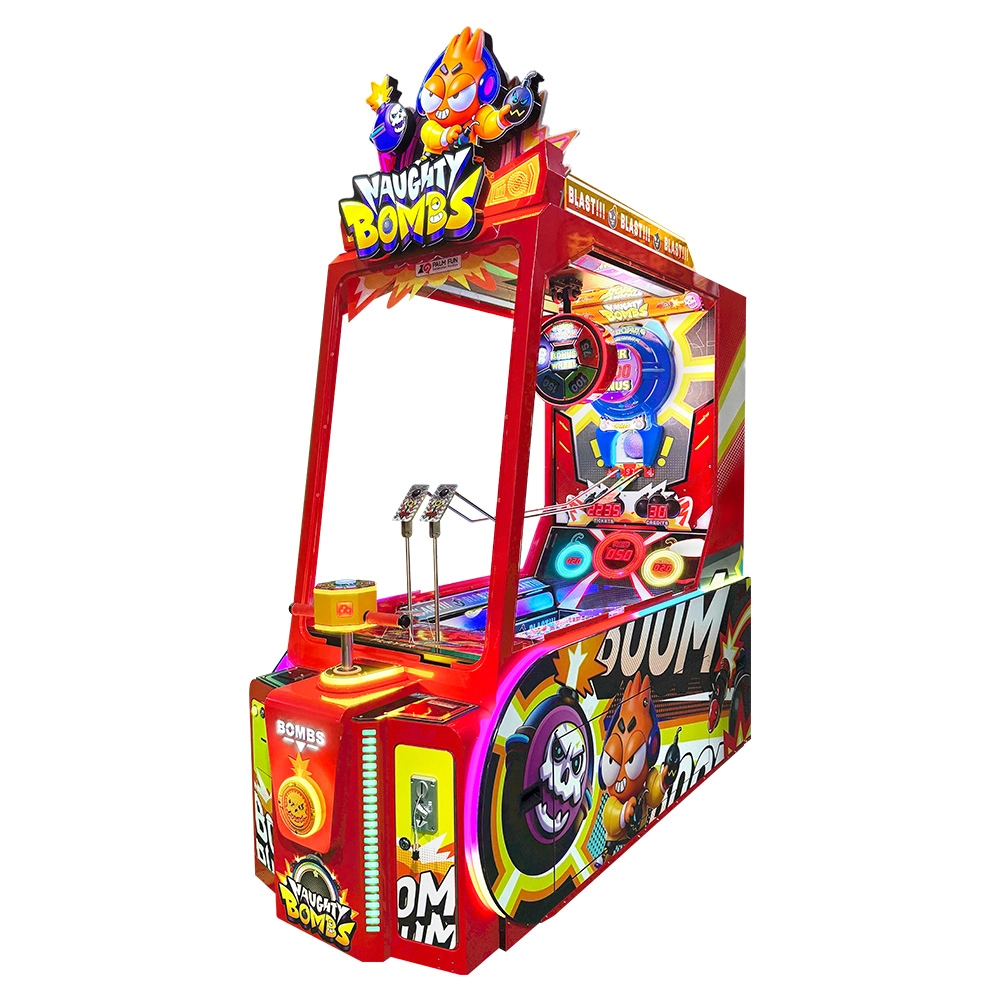
Naughty Bombs is a ball-drop redemption arcade game featuring rolling-ball gameplay, colored targets, ticket prizes, surprise bonus rewards, lighting and sound effects. Players use timing to launch and drop balls toward colored target areas. The product is presented for arcade, family entertainment center and other entertainment-venue projects, with customizable 110V / 220V AC voltage configuration.
Dream Wonderland Marble Pusher Redemption Game
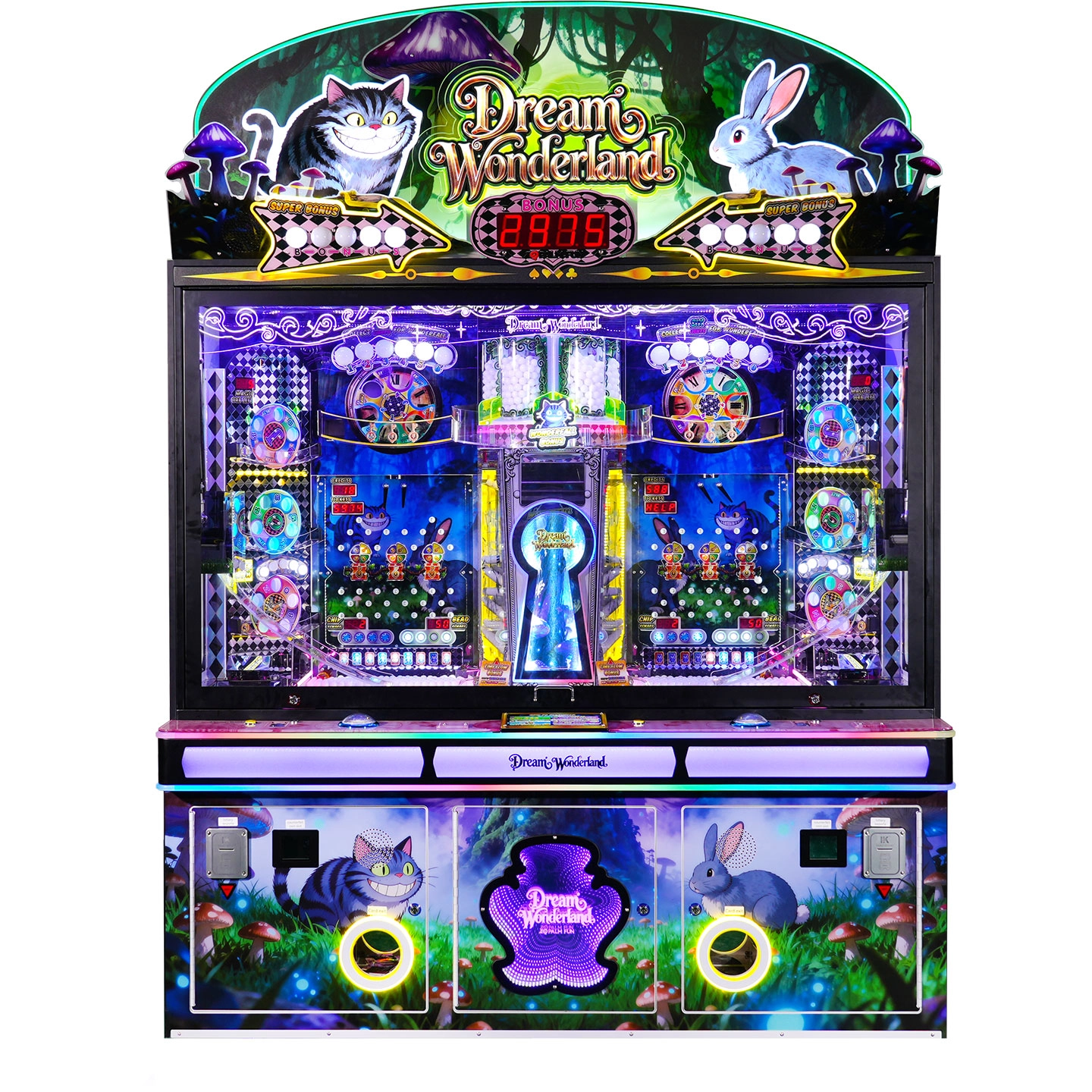
Enter Dream Wonderland — a magical marble pusher adventure filled with glowing lights, magic orbs, bonus wheels, collectible character cards, and exciting jackpot challenges.
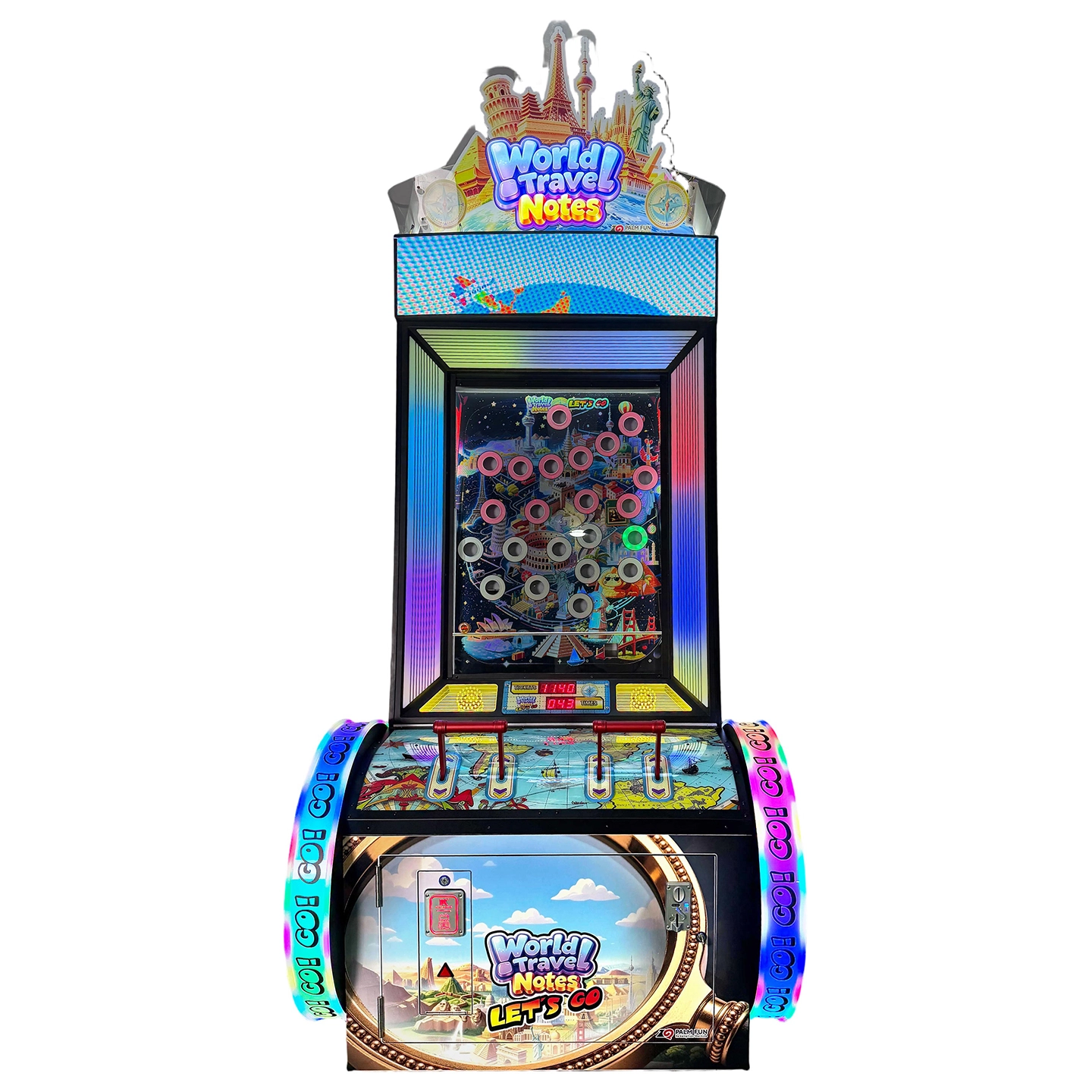
World Travel Notes – Balance Ball Redemption Arcade Game
World Travel Notes is a skill-based balance ball redemption game with a fun world-travel theme. Players use two handles to control the balance bar and guide the ball into each target hole. As the game progresses, the targets become more challenging, leading players toward the final grand prize. With colorful world-travel graphics, dynamic RGB lighting, a live score display, and progressive difficulty, World Travel Notes is designed to attract attention and encourage repeat play in arcades, FECs, shopping malls, and other entertainment venues.

Copyright © 2026 PALM FUN All Rights Reserved. | Privacy Policy • Terms and Conditions | Sitemap
palmfunarcade
Palm Fun Arcade Game
Whatsapp: +8618126837443
PalmFun Arcade
PalmFun_Arcade
PALM FUN Redemption Machine