







Are Coin Pusher Machines Still Profitable in 2026? Costs, Revenue & ROI Guide
An operator-focused guide to coin pusher profitability in 2026, covering revenue drivers, operating costs, ROI calculations, legal considerations, machine quality and purchasing factors.
- Are Coin Pusher Machines Profitable in 2026?
- Key Takeaways: The Economics of Coin Pushers
- Critical Factors Influencing Profitability
- Calculating ROI: A 2026 Financial Model
- The Impact of Manufacturing Quality on Net Profit
- Navigating the Legal Landscape (Skill vs. Chance)
- Expert Tips for Maximizing Revenue
- What Should Buyers Check Before Purchasing a Coin Pusher?
- Conclusion
- What is the average ROI for a coin pusher machine?
- Are coin pushers considered gambling or skill games?
- How much does it cost to maintain a coin pusher?
- Do I need a license to operate a coin pusher machine?
- How do owners make money if players win prizes?
- What are the best locations for coin pusher machines?
- Can coin pushers dispense cash instead of tickets?
- Why choose PALM FUN for coin pusher machines?
In the evolving landscape of arcade entertainment, operators frequently ask: Are coin pusher machines still profitable? The practical answer is that coin pusher machines can be commercially viable when play revenue, prize or ticket costs, venue economics, machine uptime and equipment investment are managed together. There is no single profit margin or payback period that applies to every venue.
As we move through 2026, operators evaluating coin pusher profitability should focus on measurable factors such as player traffic, play pricing, reward cost, maintenance, machine configuration and local compliance requirements. The goal is to build a venue-specific operating model rather than rely on a fixed industry ROI claim.
Are Coin Pusher Machines Profitable in 2026?
Yes, coin pusher machines can be profitable for arcades and family entertainment centers, but actual results depend on the venue and operating model. A machine performs best when it attracts repeat play while its direct costs, reward expenses and downtime remain under control.
The appeal of a coin pusher comes from a simple, visible play cycle: players can see coins, tokens, tickets or prizes move across the playfield and can immediately understand how another play may change the outcome. That makes the format accessible in a wide range of arcade and redemption environments.
- Player engagement: A visible, easy-to-understand game state can support repeat play.
- Operating simplicity: The commercial model is based on measurable play revenue, reward cost and machine availability.
- Broad venue use: Coin pusher formats can be evaluated for arcades, family entertainment centers and other amusement locations where local rules permit them.
Key Takeaways: The Economics of Coin Pushers
The economics of a coin pusher should be evaluated from actual venue data rather than a universal “house edge” or profit percentage. Operators should compare gross play revenue with the real cost of tickets, prizes, floor space, maintenance, utilities and equipment investment.
For redemption-based operation, gross revenue and profit are not the same. Tickets, merchandise or other rewards have a real cost, and their configuration can affect both player experience and operating economics. A useful profitability model therefore tracks revenue and costs separately.
- Gross play revenue: Revenue generated from paid plays.
- Prize or ticket cost: The operator's actual cost of rewards issued.
- Venue cost: Floor-space allocation, rent or revenue-share expenses where applicable.
- Maintenance: Routine cleaning, inspection, wear parts and service requirements.
- Uptime: Revenue opportunity is reduced whenever the machine is unavailable for play.
Critical Factors Influencing Profitability
The main profitability factors are venue traffic, player fit, reward economics, machine reliability and the total operating cost. These factors should be evaluated together before a purchase decision is made.
- Location & Traffic: Review real visitor volume, dwell time and whether the audience is interested in arcade or redemption play.
- Prize Strategy: Track the actual cost of tickets, merchandise or other rewards and keep it aligned with the venue's operating model.
- Machine Durability: Downtime can reduce revenue opportunity, so maintenance access and spare-parts support matter.
- Visual Appeal: Cabinet presentation and playfield visibility can influence whether customers notice and understand the game.
PALM FUN's current website identifies the company as a redemption arcade machine manufacturer founded in 2015, with a 3,000-square-meter factory focused on mechanical redemption ticket machines, coin pusher machines, raffle machines and arcade game machines. For buyers, these manufacturing details are relevant when evaluating supplier capability, but they do not by themselves guarantee a specific revenue or ROI outcome.
Calculating ROI: A 2026 Financial Model
To calculate coin pusher ROI, use your own revenue and cost assumptions instead of a fixed industry payback period. A basic model can be built from monthly gross play revenue, direct operating costs and the total machine investment.
Monthly Gross Play Revenue
Average plays per day × average revenue per play × operating days
Monthly Operating Contribution
Gross play revenue − prize or ticket cost − venue or floor-space cost − maintenance − utilities − other direct operating expenses
Estimated Payback Period
Total machine investment ÷ monthly operating contribution
ROI
(Net return attributable to the machine ÷ total machine investment) × 100%
Operators should model more than one scenario. A conservative case and an expected case make it easier to see how changes in play volume, reward costs, maintenance or seasonality affect the result.
- Initial Investment: Machine cost, shipping, installation and any market-specific setup costs.
- Operating Costs: Venue costs, utilities, reward restocking, maintenance and other direct expenses.
- Revenue: Paid plays generated by the machine during the measurement period.
- Net Return: Revenue remaining after the relevant operating costs are deducted.
The Impact of Manufacturing Quality on Net Profit
Manufacturing quality can affect total cost of ownership through reliability, service access, component life and spare-parts availability. Buyers should therefore compare more than the initial machine price.
PALM FUN's About Us information states that the company was founded in 2015 and operates a 3,000-square-meter factory focused on mechanical redemption ticket machines, coin pusher machines, raffle machines and arcade game machines. When evaluating a supplier, operators should still review the specifications, maintenance requirements and support arrangements of the specific machine they plan to purchase.
- Mechanical Design: Check whether the coin or token path and moving components can be inspected and serviced efficiently.
- Component Access: Confirm how routine service parts are reached and replaced.
- Spare Parts: Ask how replacement components can be obtained after installation.
- Technical Support: Clarify what documentation and after-sales support are available for the selected model.
You can review PALM FUN's current redemption arcade and coin pusher machines and custom arcade machine service when comparing equipment and project requirements.
Navigating the Legal Landscape (Skill vs. Chance)
Coin pusher legality depends on the jurisdiction, machine configuration, reward system and local classification of amusement or gaming equipment. There is no single rule that applies to every state or country.
Operators researching coin pusher legality by state or by country should confirm the current requirements that apply to their exact machine configuration and reward model. Rules may differ for tickets, merchandise, cash-equivalent rewards, game mechanics, registration or licensing.
- Machine Configuration: The way a game operates can affect how local authorities classify it.
- Reward Type: Rules may differ for tickets, merchandise and other forms of payout.
- Local Requirements: Registration, licensing, prize limits or other restrictions may apply in some markets.
- Risk Mitigation: Confirm applicable rules with the relevant local authority or qualified adviser before installation or operation.
Expert Tips for Maximizing Revenue
Improving coin pusher performance starts with measuring how the machine actually performs in the venue. Operators should avoid assuming that a specific display, prize or configuration will produce the same result in every location.
- Track Play Revenue: Compare revenue by day, time period and venue traffic.
- Monitor Reward Cost: Record the actual cost of tickets, prizes or merchandise issued.
- Maintain Presentation: Keep the playfield clean and easy for players to understand.
- Record Downtime: Log faults and service events so lost operating time can be measured.
- Review Configuration: Adjust permitted game settings based on real venue data and applicable local rules.
What Should Buyers Check Before Purchasing a Coin Pusher?
Before ordering a commercial coin pusher, match the machine to the venue, destination market and operating model. This reduces the risk of selecting equipment that is difficult to install, service or operate in the intended location.
- Machine dimensions and available floor space
- Player capacity and expected visitor volume
- Power requirements for the destination market
- Coin, token, ticket or reward configuration
- Routine maintenance access
- Spare-parts and technical-support arrangements
- Shipping and installation requirements
- Customization requirements
- Local amusement, redemption and gaming compliance
For a deeper explanation of how the mechanism works, see the coin pusher machine working principle guide. Buyers can also compare PALM FUN's current arcade machine range.
Conclusion
Coin pushers can remain commercially useful arcade and redemption machines in 2026, but profitability should be evaluated from venue-specific revenue, reward costs, maintenance, uptime, floor-space economics and equipment investment. A strong purchasing decision combines realistic financial modeling, local compliance checks and a review of the specific machine's service requirements.
If you are planning a coin pusher or redemption arcade project, prepare your venue type, destination market, available floor space, preferred game configuration and estimated quantity. These details help a supplier understand the project and recommend a more suitable configuration.
Contact PALM FUN about your coin pusher project or browse available arcade machines.
What is the average ROI for a coin pusher machine?
There is no reliable universal ROI figure that applies to every venue. Operators should calculate ROI from their own play revenue, reward costs, venue expenses, maintenance, downtime and total equipment investment.
Are coin pushers considered gambling or skill games?
Classification depends on the jurisdiction and the exact machine configuration. Operators should confirm how local authorities classify the equipment and reward system before purchasing or operating a machine.
How much does it cost to maintain a coin pusher?
Maintenance cost varies by machine design, play volume and operating conditions. Buyers should plan for routine cleaning, inspection, wear parts and occasional service, and should confirm spare-parts and support arrangements for the selected model.
Do I need a license to operate a coin pusher machine?
Requirements vary by jurisdiction. Depending on the market and machine configuration, amusement, redemption, registration, prize or gaming rules may apply. Confirm current requirements with the relevant local authority before operation.
How do owners make money if players win prizes?
Operators compare play revenue with the actual cost of tickets, prizes or merchandise and the other costs of running the machine. Profitability depends on the complete operating model rather than a fixed payout percentage.
What are the best locations for coin pusher machines?
Suitable locations generally have steady visitor traffic, enough dwell time and an audience interested in arcade or redemption play. Operators should compare expected play demand with floor-space and operating costs before selecting a location.
Can coin pushers dispense cash instead of tickets?
Whether cash or other reward types are permitted depends on the jurisdiction and machine classification. Operators should not assume that a reward model allowed in one market is permitted in another; local rules should be checked before operation.
Why choose PALM FUN for coin pusher machines?
PALM FUN's current About Us information states that the company was founded in 2015 and operates a 3,000-square-meter factory focused on mechanical redemption ticket machines, coin pusher machines, raffle machines and arcade game machines. Buyers should compare the specifications, service requirements and support arrangements of the specific machine they are considering.


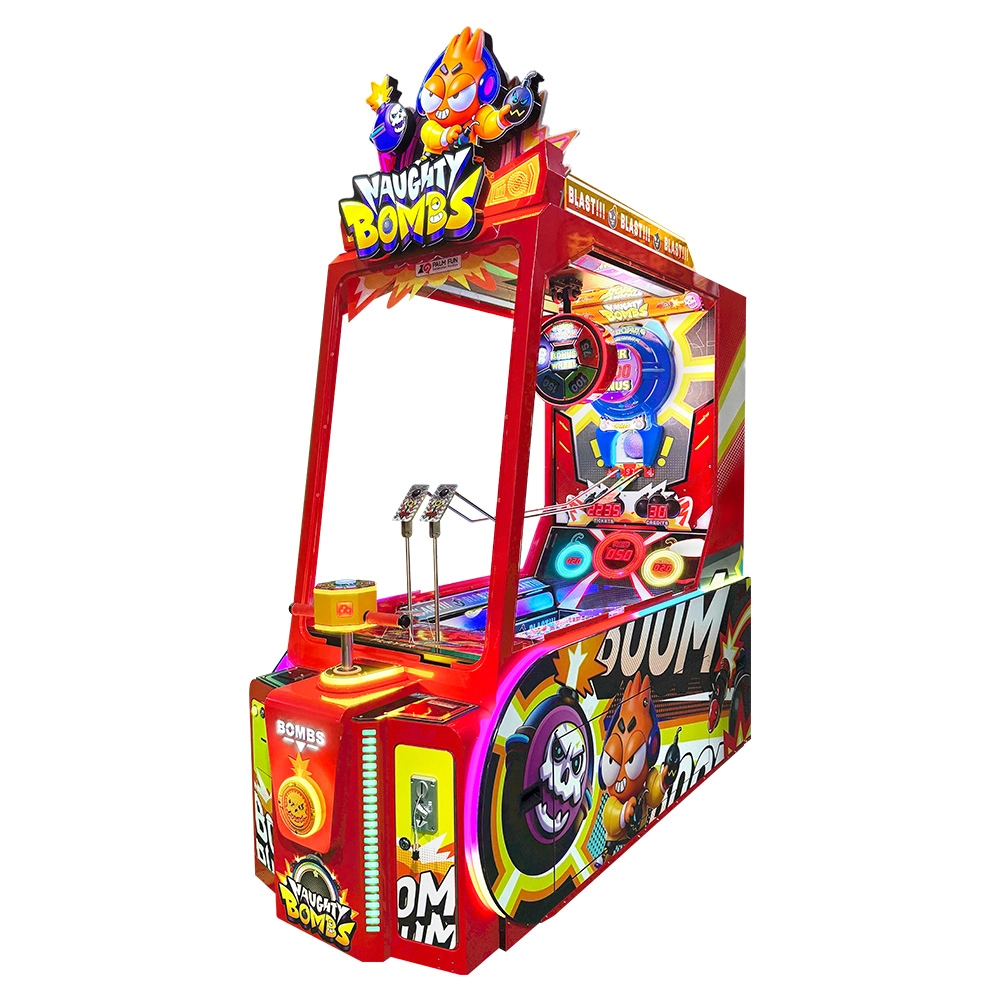
Naughty Bombs is a ball-drop redemption arcade game featuring rolling-ball gameplay, colored targets, ticket prizes, surprise bonus rewards, lighting and sound effects. Players use timing to launch and drop balls toward colored target areas. The product is presented for arcade, family entertainment center and other entertainment-venue projects, with customizable 110V / 220V AC voltage configuration.
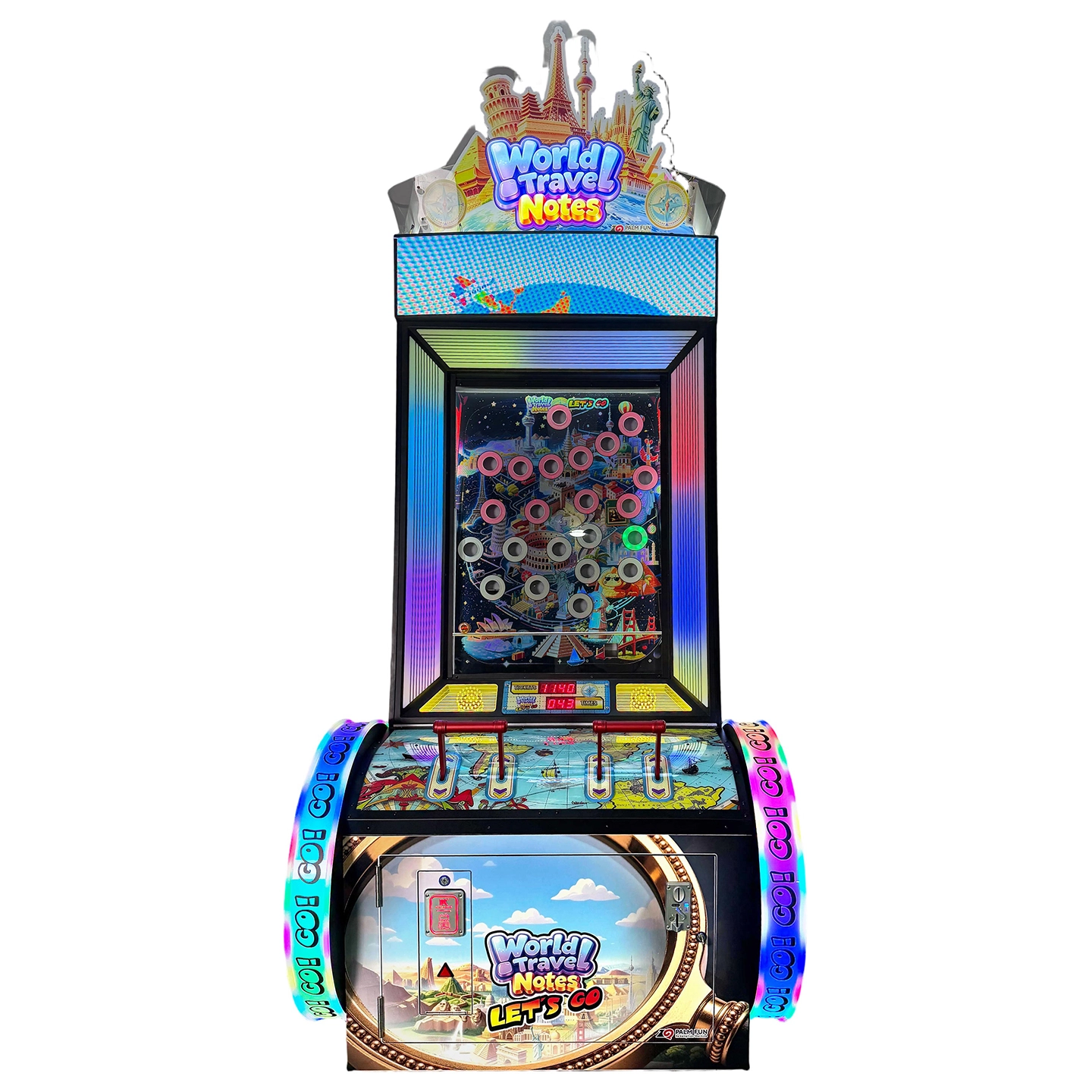
World Travel Notes is a skill-based balance ball redemption game with a fun world-travel theme. Players use two handles to control the balance bar and guide the ball into each target hole. As the game progresses, the targets become more challenging, leading players toward the final grand prize. With colorful world-travel graphics, dynamic RGB lighting, a live score display, and progressive difficulty, World Travel Notes is designed to attract attention and encourage repeat play in arcades, FECs, shopping malls, and other entertainment venues.
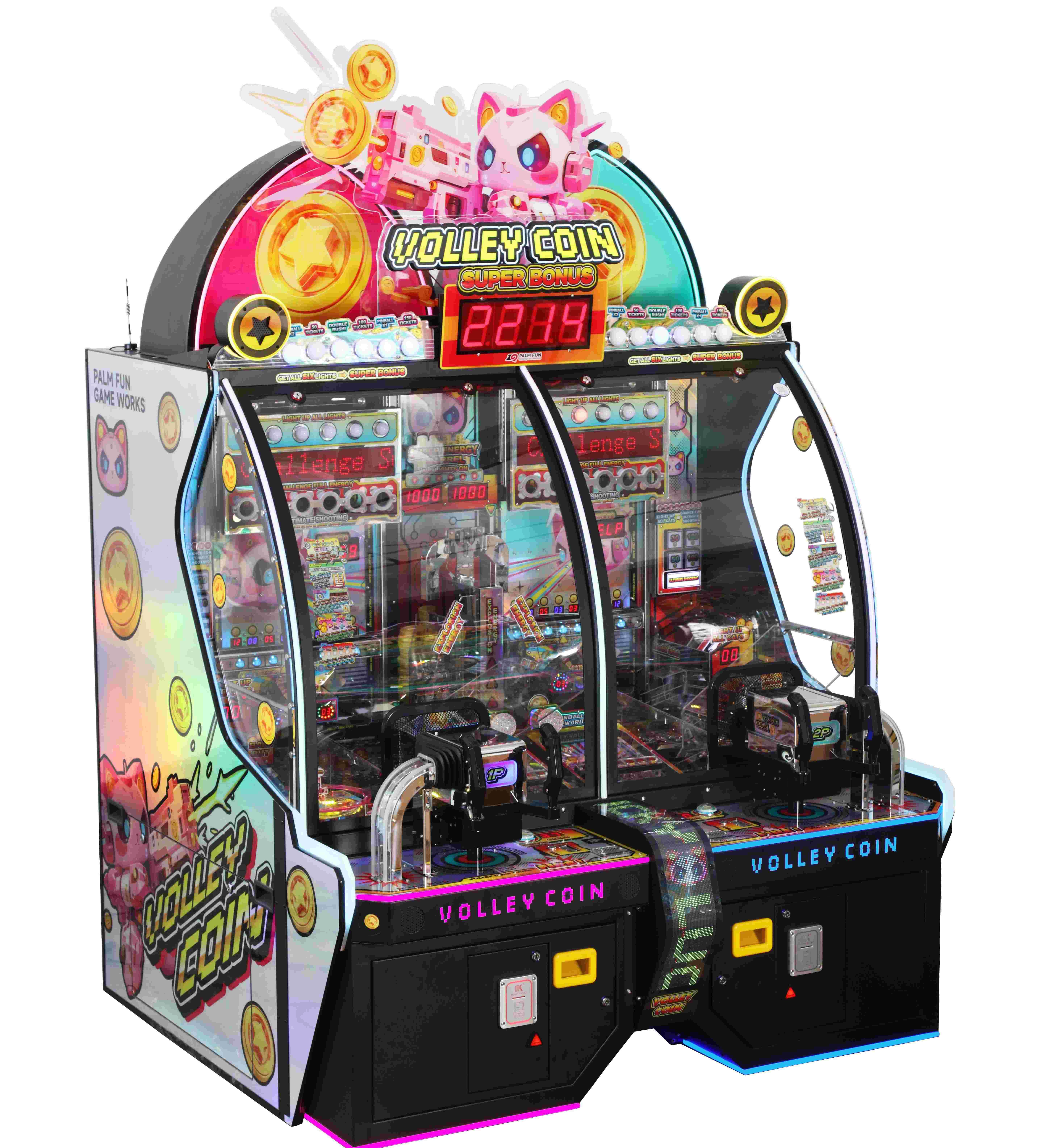
Volley Coin is an innovative arcade ticket redemption machine developed by Palm Fun Electronics. Combining the excitement of a fast-paced token shooter game with the proven earning power of a traditional coin pusher machine, Volley Coin offers a fresh and engaging gameplay experience that appeals to players of all ages.
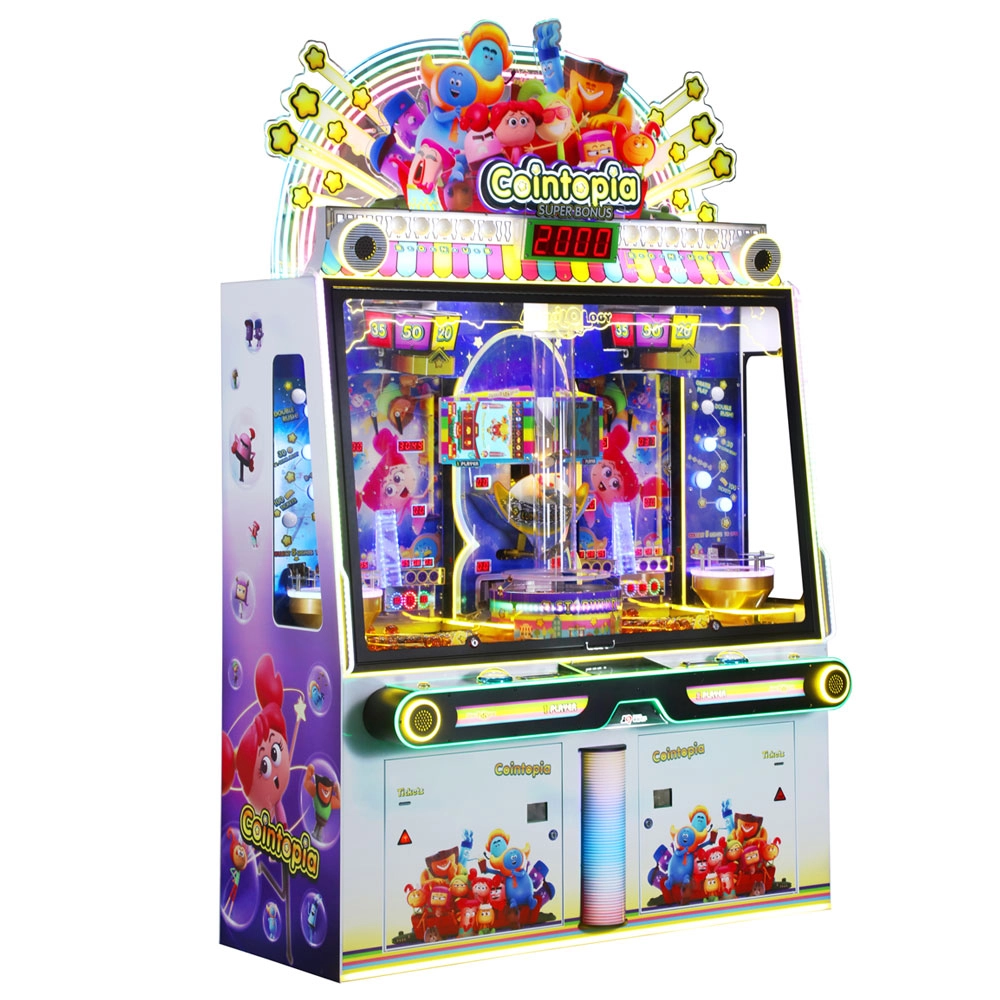
COINTOPIA by PALM FUN is an exciting redemption game machine where players enjoy fun with zodiac buddies in a utopia setting. This ticket redemption machine offers engaging gameplay and rewarding experiences, perfect for family entertainment centers and arcades seeking top-quality redemption games.
Copyright © 2026 PALM FUN All Rights Reserved. | Privacy Policy • Terms and Conditions | Sitemap
palmfunarcade
Palm Fun Arcade Game
Whatsapp: +8618126837443
PalmFun Arcade
PalmFun_Arcade
PALM FUN Redemption Machine