








Coin Pusher Arcade Machines: The Definitive 2025 Guide to Strategy, Mechanics, & Profitability
A comprehensive analysis of coin pusher arcade machines, covering their history (from Penny Falls to modern redemption), the physics of winning, operator profitability strategies, and the latest 2025 industry trends. Featuring expert insights on machine selection and maintenance from leading manufacturer PALM FUN.
- Introduction: The Enduring Allure of Coin Pusher Arcade Machines
- Understanding the Fundamentals: How Coin Pushers Work
- The Physics of the Push
- Key Components
- Player Strategies: Mastering the Art of the Coin Drop
- 1. The 'Waterfall' Technique
- 2. Avoiding the 'Dead Zones'
- 3. Rhythm and Rapid Fire
- The Operator's Edge: Designing for Profitability and Engagement
- Profit Margins and Prize Strategy
- The Manufacturing Impact on ROI
- A Deep Dive into Modern Coin Pusher Technology
- Digital Enhancements and IoT
- Selecting the Ideal Coin Pusher: A Buying Guide
- 1. Build Quality and Durability
- 2. Global Compliance and Support
- 3. Machine Type
- Setup, Placement, and Maintenance for Peak Performance
- Optimal Placement
- Routine Maintenance
- The Evolution: From Penny Falls to Global Phenomenon
- Conclusion: The Future is Bright
- Frequently Asked Questions
- Are coin pusher arcade machines legal?
- How do arcade owners make money from coin pushers?
- What makes a coin pusher machine 'high quality'?
- Can I really 'win' at a coin pusher, or is it pure luck?
- What is the lifespan of a typical commercial coin pusher machine?
- What are the latest technological advancements in coin pusher machines?
- How important is prize strategy for coin pusher profitability?
Introduction: The Enduring Allure of Coin Pusher Arcade Machines
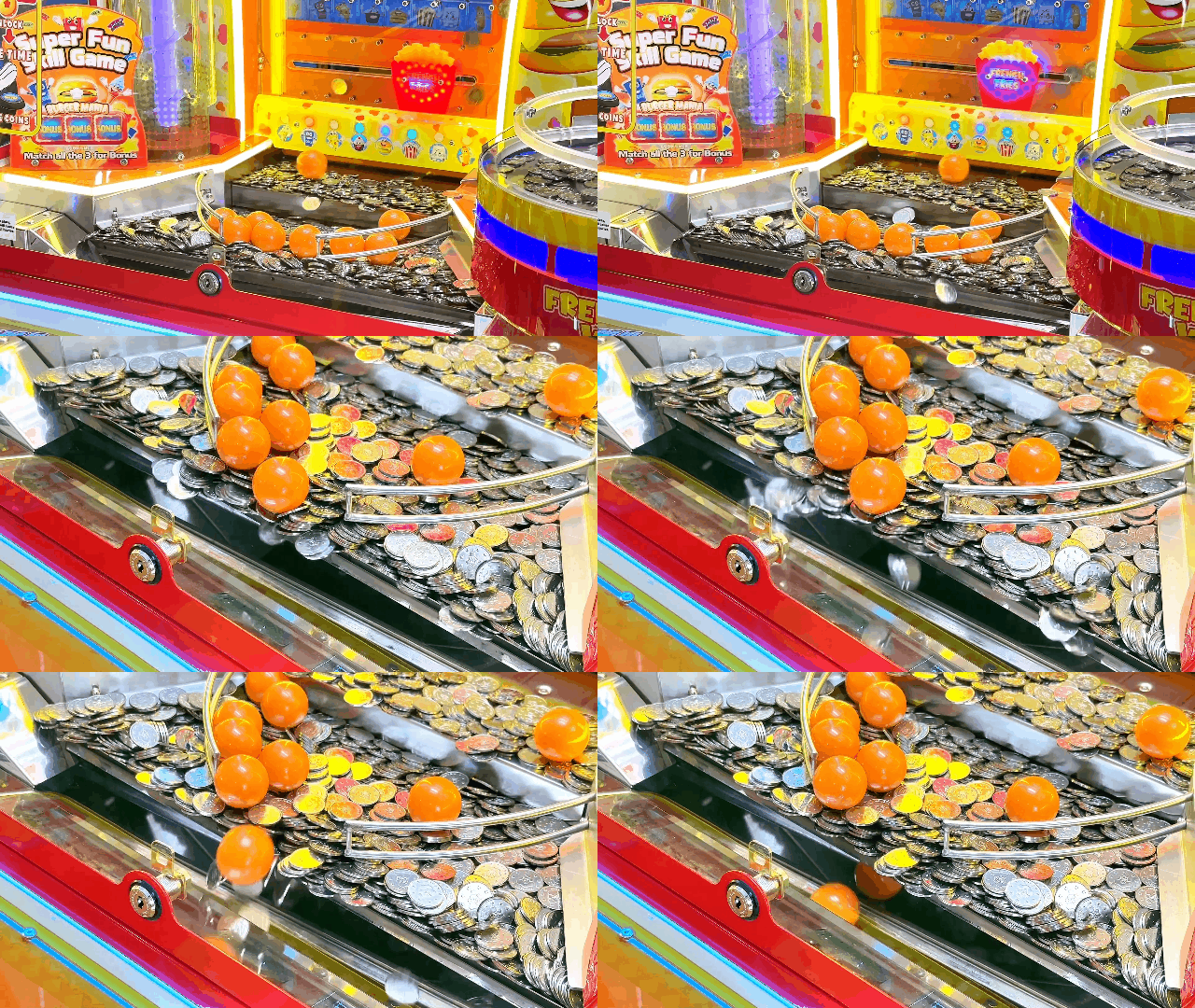
From the hypnotic rhythm of sliding coins to the suspense of a teetering tower of prizes, coin pusher arcade machines have captivated players for over six decades. As we move through 2025, these machines—often the centerpiece of Family Entertainment Centers (FECs) and "Barcades"—are experiencing a renaissance driven by modern technology and the booming redemption game market.
For players, the coin pusher is a test of timing and patience. For operators, it is a cornerstone of profitability, offering high replay value and consistent revenue. This definitive guide explores the industry from every angle: the physics behind the drop, the strategies that beat the house, and the business insights necessary for commercial success. We also integrate exclusive manufacturing expertise from PALM FUN, a global leader in mechanical redemption games, to reveal how high-quality design impacts both player experience and operator ROI.
Understanding the Fundamentals: How Coin Pushers Work
To master the machine, one must first understand the mechanics beneath the flashing lights. At its core, a coin pusher is a physics engine relying on gravity, friction, and displacement.
The Physics of the Push
According to principles of mechanics, the game operates on the interaction between static and dynamic friction. The "pusher shelf" (the moving upper tier) exerts force on the new coins dropped by the player. These coins, in turn, transfer energy to the accumulated pile. The goal is to overcome the static friction holding the bottom layer of coins in place, causing them to slide over the "front lip" and into the prize chute.
Key Components
· The Pusher Shelf: Driven by a high-torque motor, this platform moves back and forth in a constant rhythm.
· The Playfield Deck: Often slightly sloped (typically 3–5 degrees) to control the speed of coin movement.
· Side Gutters: This is the critical operator advantage. Coins that are pushed sideways fall into these hidden channels, bypassing the player payout tray and going directly to the house.
· Sensors and Logic: Modern machines use optical sensors to count coins and calculate ticket output.
PALM FUN leverages these principles in their R&D process, employing skilled development engineers to precision-tune the shelf speed and deck friction. This ensures a fair yet challenging experience that keeps players engaged while maintaining operator profitability.
Player Strategies: Mastering the Art of the Coin Drop
While often categorized as games of chance, coin pushers reward skill and observation. The following strategies maximize the probability of a payout.
1. The 'Waterfall' Technique
Experienced players look for the "waterfall"—a precarious stack of coins hanging over the edge. By timing the drop exactly when the pusher shelf is fully retracted, the new coin lands flat and is pushed forward with maximum force, transferring the most energy to the teetering stack.
2. Avoiding the 'Dead Zones'
Observe the side gutters. Coins near the extreme left or right edges are statistically more likely to fall into the house profit channels due to the lateral pressure of the pile. Focus your play on the center 60% of the playfield where the forward momentum is strongest.
3. Rhythm and Rapid Fire
Instead of dropping coins one by one, some players use a "rapid fire" technique to create a wave of momentum. However, this burns through credits quickly. A measured rhythm, matching the shelf's cycle, is often more effective for controlled wins.
The Operator's Edge: Designing for Profitability and Engagement
For arcade owners, the coin pusher is an investment vehicle. Profitability is determined by the "payout percentage," which is physically adjustable via the side gutters and the height of the front lip.
Profit Margins and Prize Strategy
According to industry reports, a well-tuned coin pusher can generate significant daily revenue. The key is balancing the "win rate" (to keep players happy) with the "house edge."
· Tiered Prizes: Combining low-value items (tickets) with high-value "whale" prizes (electronics, large plush) creates a visual draw.
· Ticket Redemption: Converting coin drops into digital tickets encourages extended play sessions, as players chase higher ticket counts for redemption counter rewards.
The Manufacturing Impact on ROI
This is where PALM FUN’s expertise becomes vital. Founded in 2015, PALM FUN specializes in high-quality mechanical lottery and coin pusher machines. For an operator, "high quality" means reliability. A jammed coin mechanism or a failed motor means downtime and lost revenue. PALM FUN’s 3,000-square-meter factory creates machines designed for 24/7 operation, minimizing maintenance costs and maximizing the machine's active lifespan.
A Deep Dive into Modern Coin Pusher Technology
The era of purely mechanical analog machines is evolving. The 2025 landscape involves sophisticated digital integration.
Digital Enhancements and IoT
Modern pushers feature vibrant LED lighting systems, interactive LCD touchscreens, and dynamic sound effects that react to payouts.
· Remote Monitoring: Operators can now track revenue, error codes, and refill needs remotely via IoT (Internet of Things) connections.
· Hybrid Systems: Many machines now accept digital credits or RFID cards while still dispensing physical tokens or marbles, bridging the gap between cashless payments and tactile gameplay.
As a company dedicated to R&D, PALM FUN stays ahead of these market trends, integrating innovative features that enhance the user experience (UX) while providing operators with the data they need to optimize performance.
Selecting the Ideal Coin Pusher: A Buying Guide
investing in arcade equipment requires due diligence. Whether you are outfitting a large FEC or a boutique game room, consider these criteria:
1. Build Quality and Durability
The constant friction of metal coins wears down inferior components. Look for manufacturers who use industrial-grade motors and reinforced chassis. PALM FUN, with its state-of-the-art production facility and team of skilled engineers, emphasizes durability to support long-term partnerships with clients.
2. Global Compliance and Support
Ensure the machine meets local electrical and safety standards. With products popular in over 50 countries worldwide, PALM FUN understands the diverse regulatory and technical requirements of the global market.
3. Machine Type
· Single-Player vs. Multi-Station: Multi-station machines (4, 6, or 8 players) act as social hubs and utilize floor space more efficiently.
· Prize vs. Ticket: Decide if you want a machine that dispenses physical merchandise (requires restocking) or tickets (lower maintenance).
Setup, Placement, and Maintenance for Peak Performance
Even the best machine requires proper setup.
Optimal Placement
Place coin pushers in high-traffic zones near the entrance or redemption counter. The sight of falling coins is a visual magnet. Grouping machines together creates a "zone of excitement."
Routine Maintenance
· Leveling: This is critical. A machine that is not perfectly level will cause coins to drift unnaturally to one side, frustrating players and potentially skewing payout math.
· Cleaning: Dust and coin residue can foul optical sensors. Regular cleaning prevents ticket dispensing errors.
· Lubrication: The pusher mechanism requires periodic lubrication to ensure smooth, quiet operation.
The Evolution: From Penny Falls to Global Phenomenon
The lineage of the modern coin pusher can be traced back to the 1960s. According to historical records, the "Penny Falls" machine, created by Alfred Crompton (Crompton’s Leisure Machines) in 1964, established the standard sliding-shelf design.
Initially considered a gambling device in many regions, the industry adapted by introducing "redemption" mechanics—awarding tickets rather than cash—transforming them into family-friendly entertainment. Today, companies like PALM FUN carry this torch, innovating on the classic concept with modern engineering to serve a global audience from the UK to Japan and the Americas.
Conclusion: The Future is Bright
The coin pusher remains a staple of the amusement industry because it perfectly balances skill, luck, and spectacle. As we look toward the future, the fusion of digital technology with satisfying mechanical gameplay will only deepen player immersion.
For operators, partnering with a recognized manufacturer like PALM FUN—whose vision is to become the world's leading manufacturer of redemption game machines—ensures access to the latest innovations and the reliable support needed to thrive in a competitive market. Whether you are a player looking for that jackpot edge or an investor seeking a recession-proof asset, the coin pusher remains a golden opportunity.
Frequently Asked Questions
Are coin pusher arcade machines legal?
Legality varies significantly by jurisdiction. In the UK, the Gambling Commission distinguishes between "gaming machines" (chance-based) and "skill with prizes" (SWP) machines. In the US, they are generally legal if operated as redemption games where prizes are non-cash merchandise of limited value. Always consult local regulations, as cash-payout machines are often classified strictly as gambling devices.
How do arcade owners make money from coin pushers?
Owners profit via the "house edge," primarily created by the side gutters (channels) on the playfield. Coins that fall into these gutters go directly to the operator's internal hopper and are not returned to the player. Operators also control profitability by adjusting the prize value relative to the cost of play.
What makes a coin pusher machine 'high quality'?
High-quality machines feature robust motors, jam-resistant coin acceptors, and durable playfield materials that resist wear from constant friction. Manufacturers like PALM FUN prioritize these elements in their R&D and production, ensuring machines can withstand continuous commercial use in over 50 countries.
Can I really 'win' at a coin pusher, or is it pure luck?
While luck is involved, skill plays a major role. Understanding physics concepts like friction and timing the drop to coincide with the shelf's movement can significantly improve your odds. Avoiding the side edges and focusing on the center also reduces the chance of losing coins to the house.
What is the lifespan of a typical commercial coin pusher machine?
With proper maintenance, a commercial-grade machine can last 10 to 15 years. Regular cleaning, motor servicing, and using genuine spare parts are essential. PALM FUN supports this longevity by providing comprehensive services and long-term partnership support to clients.
What are the latest technological advancements in coin pusher machines?
2025 trends include the integration of IoT for remote management, cashless payment systems (RFID/NFC), and hybrid video-mechanical gameplay where digital bonuses affect the physical coin pile. Enhanced LED lighting and immersive sound systems are now standard to attract modern players.
How important is prize strategy for coin pusher profitability?
Extremely important. A mix of "easy" small wins and "hard" large prizes keeps players engaged. If a machine is too stingy, players will abandon it; if it is too generous, it loses money. A balanced, tiered prize strategy ensures sustainable ROI.



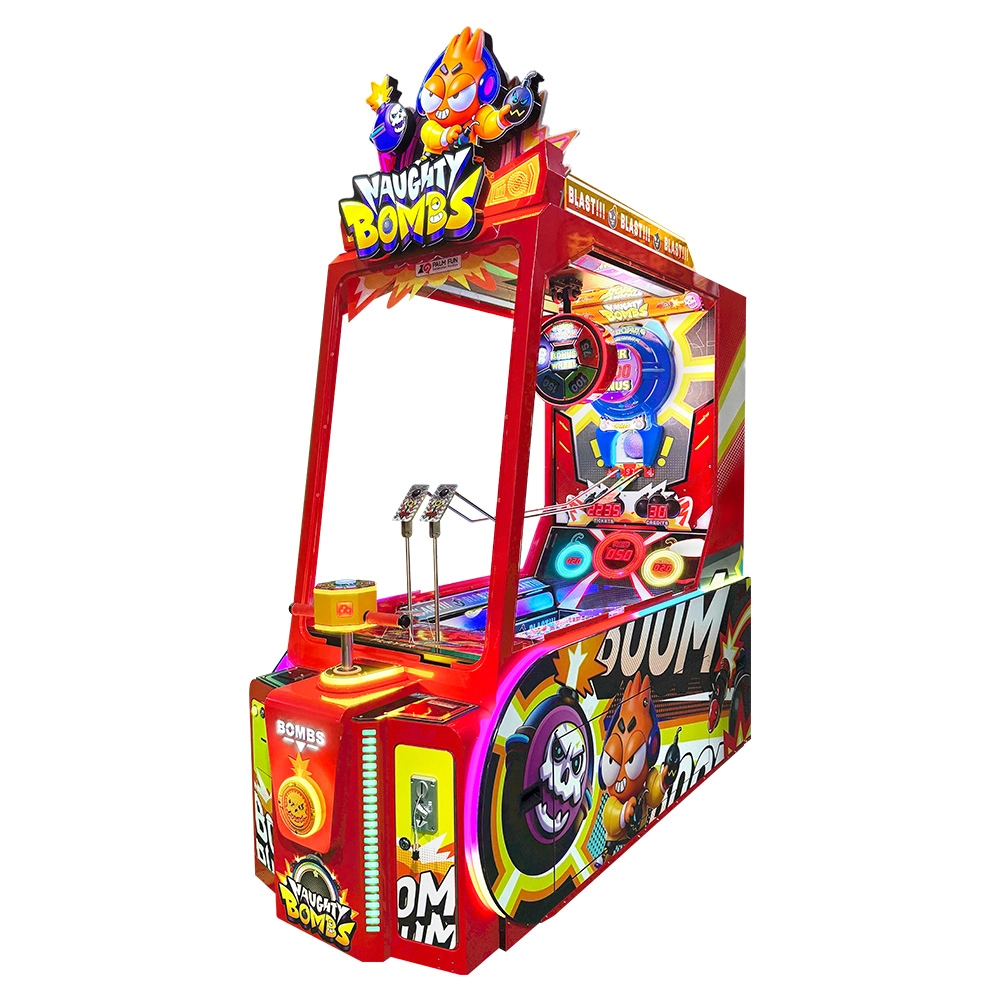
Naughty Bombs is an exciting redemption arcade game designed to capture attention and keep players coming back for more. Featuring a bright red cabinet, dynamic lighting, fun sound effects, and interactive rolling-ball gameplay, it delivers nonstop excitement in a compact footprint. Players test their timing skills by launching and dropping balls into colored targets to unlock surprise bonus rewards and ticket prizes. With easy-to-learn mechanics, engaging skill-based action, and strong visual appeal, Naughty Bombs is an ideal attraction for arcades, FECs, and entertainment venues looking to boost player engagement and revenue.
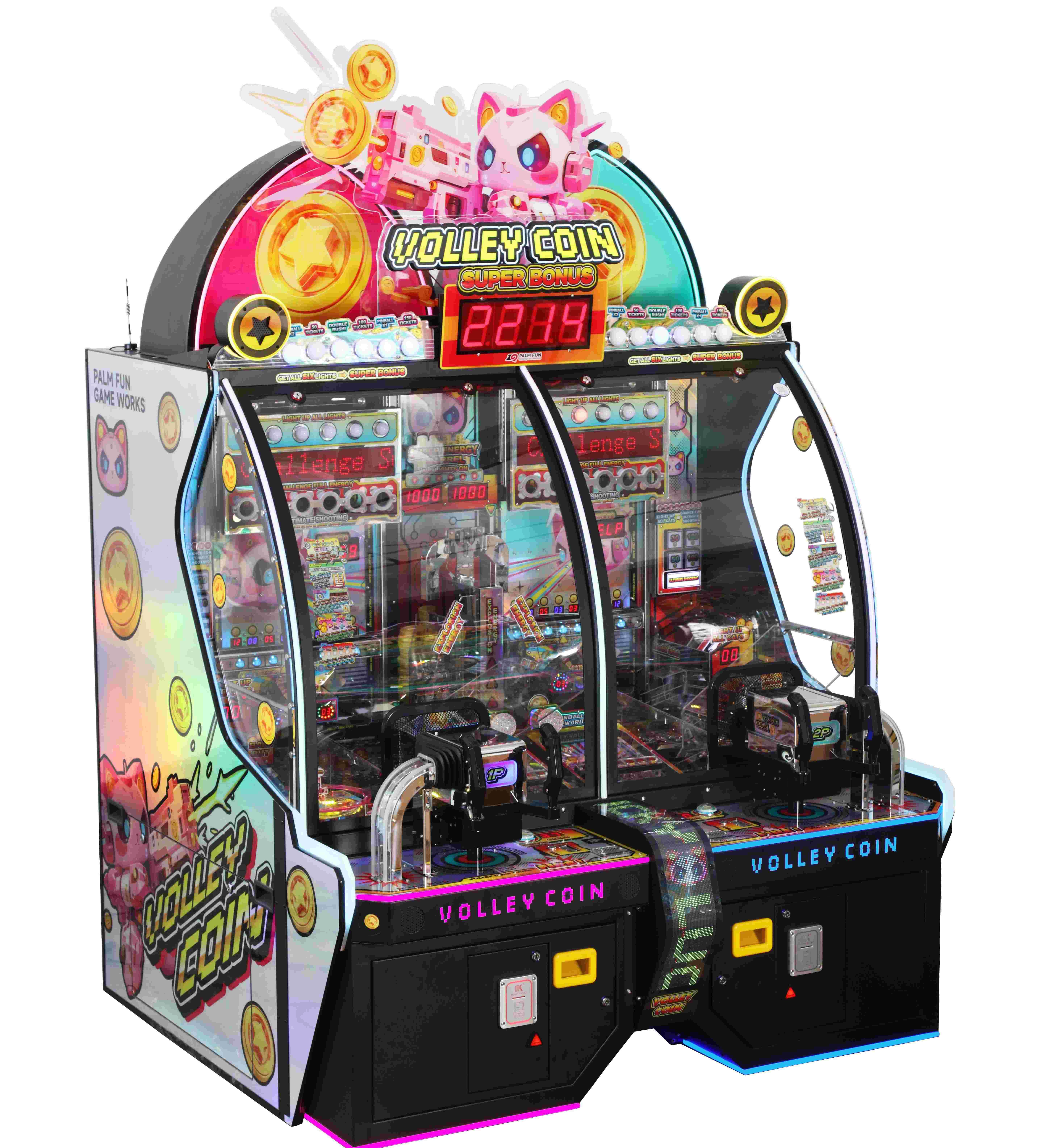
Volley Coin is an innovative arcade ticket redemption machine developed by Palm Fun Electronics. Combining the excitement of a fast-paced token shooter game with the proven earning power of a traditional coin pusher machine, Volley Coin offers a fresh and engaging gameplay experience that appeals to players of all ages.
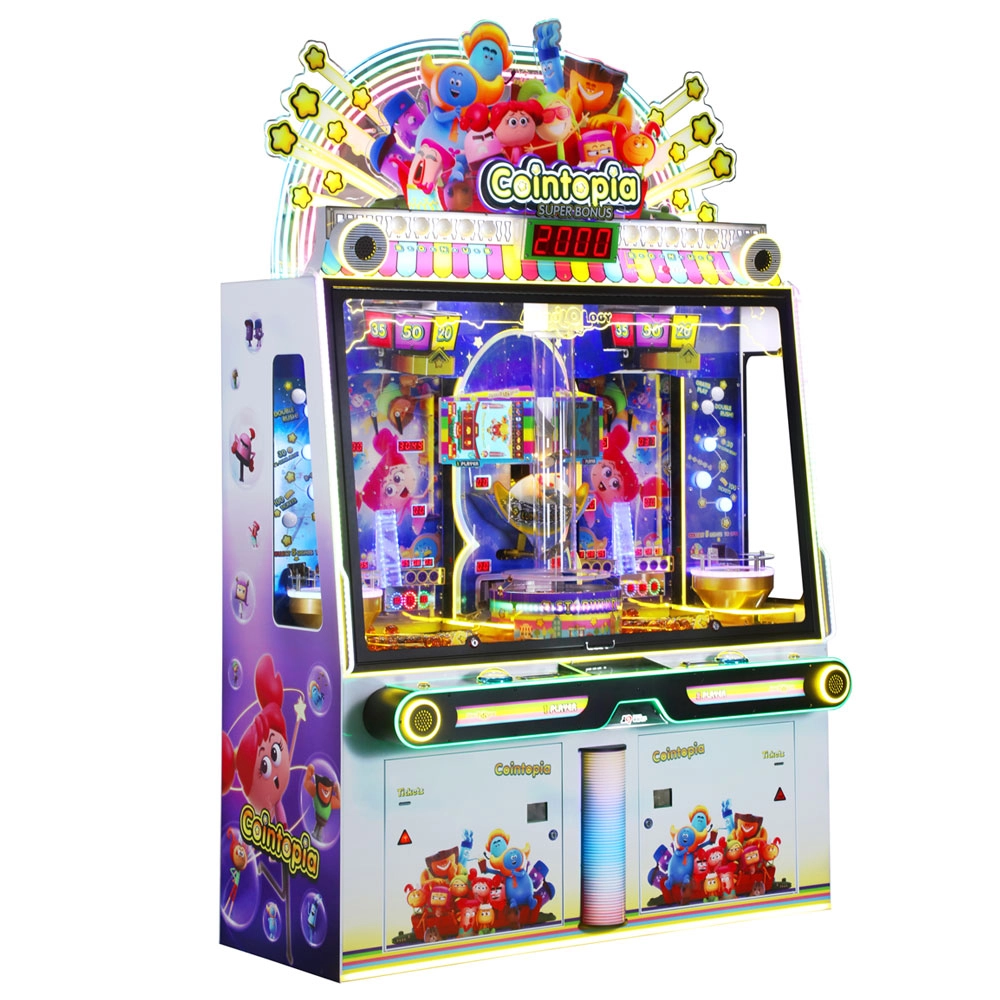
COINTOPIA by PALM FUN is an exciting redemption game machine where players enjoy fun with zodiac buddies in a utopia setting. This ticket redemption machine offers engaging gameplay and rewarding experiences, perfect for family entertainment centers and arcades seeking top-quality redemption games.

Copyright © 2026 PALM FUN All Rights Reserved. | Privacy Policy • Terms and Conditions | Sitemap
palmfunarcade
Palm Fun Arcade Game
Whatsapp: +8618126837443
PalmFun Arcade
PalmFun_Arcade
PALM FUN Redemption Machine