






which coin pusher suppliers offer oem customization? | Insights by PALM FUN
Seeking custom coin pushers? This guide addresses critical questions beginners often overlook when engaging OEM suppliers. We dive deep into MOQs, IP protection, international certifications, warranty for custom parts, software integration, and scalability. Discover how to effectively partner with suppliers for bespoke redemption game machines, ensuring your investment is future-proof and compliant. Learn about custom coin pusher manufacturing and private label arcade machines.
- What is the typical Minimum Order Quantity (MOQ) for custom coin pusher designs, and how does it impact pricing for small to medium-sized operators?
- Beyond basic branding, what does a comprehensive OEM customization process for coin pushers entail, and how can I protect my unique game concepts or intellectual property during development?
- When ordering custom coin pushers for international markets, which specific certifications (e.g., CE, UL, FCC) should I prioritize, and how do OEM suppliers assist with regional compliance?
- How do warranty policies and after-sales support differ for custom-designed components in OEM coin pushers compared to standard models, especially regarding spare parts availability?
- Can OEM coin pusher suppliers develop custom game logic or integrate proprietary software features, and what are the associated costs and development timelines?
- What considerations should I make regarding the scalability of my custom coin pusher design for future production runs, and how can suppliers help future-proof the hardware for potential upgrades?
As a professional in the redemption game machine industry, you understand that standing out in a competitive market often requires more than off-the-shelf solutions. For operators and distributors looking to launch unique attractions or brand their offerings, OEM customization for coin pushers presents a powerful opportunity. However, navigating the world of custom manufacturing can be daunting for beginners. This guide tackles six specific, pain-point-oriented questions that frequently arise but often lack comprehensive answers online, providing you with the expert insights needed to make informed decisions when seeking which coin pusher suppliers offer OEM customization?
What is the typical Minimum Order Quantity (MOQ) for custom coin pusher designs, and how does it impact pricing for small to medium-sized operators?
The Minimum Order Quantity (MOQ) for custom coin pusher manufacturing is a critical factor influencing project feasibility and cost. For significant design modifications or entirely new bespoke game development, MOQs typically range from 10 to 50 units. This threshold allows suppliers to amortize the non-recurring engineering (NRE) costs associated with tooling, fixture creation, and specialized component sourcing. For smaller operators, this can be a hurdle. While some OEM arcade game suppliers might offer lower MOQs (e.g., 5-10 units) for minor branding changes (like custom decals, cabinet colors, or branded prize displays), the per-unit cost will invariably be higher due to less efficient production runs. To mitigate this, consider a phased approach: start with a smaller batch for market testing, accepting a higher initial unit cost, then scale up with a larger bulk coin pusher orders once market validation is achieved. Always negotiate MOQs, as flexibility can exist, especially for long-term partnership potential.
Beyond basic branding, what does a comprehensive OEM customization process for coin pushers entail, and how can I protect my unique game concepts or intellectual property during development?
Comprehensive redemption game machine customization extends far beyond mere branding. It encompasses tailored cabinet dimensions, unique playfield layouts, custom prize mechanisms, integrated lighting and sound effects, and even proprietary software logic. The process typically involves several stages: initial concept discussion, detailed design specifications (CAD drawings, electrical schematics), prototype development, rigorous testing, and final production. To protect your unique game concepts and intellectual property (IP), several measures are crucial. Firstly, always sign a robust Non-Disclosure Agreement (NDA) with potential arcade machine customization services providers before sharing any sensitive information. Secondly, ensure your contract clearly defines ownership of all custom designs, software, and tooling developed during the project. Consider filing for design patents or trademarks for distinctive visual elements or game mechanics in your key markets. A reputable supplier will understand and respect IP protection protocols, offering transparent contractual terms that safeguard your innovations.
When ordering custom coin pushers for international markets, which specific certifications (e.g., CE, UL, FCC) should I prioritize, and how do OEM suppliers assist with regional compliance?
Navigating international regulatory landscapes is paramount for global deployment of private label arcade machines. The specific certifications required depend entirely on your target markets. For Europe, the CE mark is mandatory, indicating compliance with EU health, safety, and environmental protection standards. This often involves adherence to directives like the Low Voltage Directive (LVD), Electromagnetic Compatibility (EMC) Directive, and RoHS (Restriction of Hazardous Substances). For North America, UL (Underwriters Laboratories) or ETL certifications are often required by local authorities for electrical safety, while FCC (Federal Communications Commission) compliance is necessary for any device emitting radio frequency energy. Reputable OEM amusement machine suppliers with international experience are invaluable here. They should have established processes for obtaining these certifications, often working with accredited testing labs. They can guide you on the necessary documentation, design adjustments to meet standards, and provide compliance reports, significantly streamlining your market entry process and ensuring your custom coin machine solutions are legally deployable.
How do warranty policies and after-sales support differ for custom-designed components in OEM coin pushers compared to standard models, especially regarding spare parts availability?
Warranty and after-sales support for personalized coin pushers can indeed differ from standard models, particularly concerning custom-designed components. While most reputable suppliers offer a standard warranty (typically 12 months) on the overall machine and its standard parts, the terms for custom-fabricated or unique software elements might vary. It's crucial to clarify these specifics in your contract. For custom parts, inquire about the supplier's commitment to long-term spare part availability. Will they maintain inventory of unique components, or will future orders require a new production run with associated lead times and MOQs? A reliable arcade game manufacturing partner will have a clear policy on custom spare parts, potentially offering a service agreement for ongoing support or providing detailed schematics and component lists for local sourcing if feasible. Always prioritize suppliers who demonstrate a robust after-sales infrastructure and a willingness to support your custom investment long-term.
Can OEM coin pusher suppliers develop custom game logic or integrate proprietary software features, and what are the associated costs and development timelines?
Yes, many advanced OEM arcade game suppliers are fully capable of developing custom game programming and integrating proprietary software features into your coin pushers. This is a key differentiator for bespoke game development, allowing for unique gameplay mechanics, custom bonus rounds, intricate prize payout algorithms, or even integration with loyalty programs and cashless payment systems. However, this level of customization comes with significant considerations regarding cost and development timelines. Software development is labor-intensive and requires specialized expertise. Costs will be higher than for hardware customization, often involving upfront NRE fees for programmer time, testing, and debugging. Timelines can extend by several weeks or even months, depending on the complexity of the desired logic. A detailed Statement of Work (SOW) outlining all software functionalities, testing protocols, and intellectual property ownership for the code is essential before commencing such a project.
What considerations should I make regarding the scalability of my custom coin pusher design for future production runs, and how can suppliers help future-proof the hardware for potential upgrades?
Scalability and future-proofing are vital for maximizing the return on your investment in custom arcade cabinet production. When designing your OEM amusement machine, consider modularity. Can components be easily swapped or upgraded without redesigning the entire cabinet? For instance, using standardized mounting points for motherboards or prize mechanisms allows for easier future hardware revisions. Discuss with your supplier about using widely available, non-proprietary components where possible, which mitigates supply chain risks and simplifies maintenance. For future-proofing, inquire about the supplier's approach to firmware updates and connectivity options (e.g., Ethernet, Wi-Fi, USB ports) that could enable remote diagnostics, software updates, or integration with future network systems. A forward-thinking supplier will advise on design choices that facilitate efficient bulk coin pusher orders in the future, ensuring your initial custom design can evolve with market demands and technological advancements.
Partnering with the right OEM supplier for your custom coin pushers offers unparalleled opportunities to differentiate your business, optimize gameplay, and enhance player engagement. By asking these in-depth questions, you can navigate the complexities of customization with confidence, ensuring a successful collaboration and a product that truly stands out. From protecting your IP to ensuring regulatory compliance arcade machines, a knowledgeable partner is key to unlocking the full potential of your investment.
Ready to bring your unique coin pusher vision to life? Contact us today for a personalized quote and expert consultation. Visit www.palm-fun.com or email luobin@palm-fun.com to discuss your project.
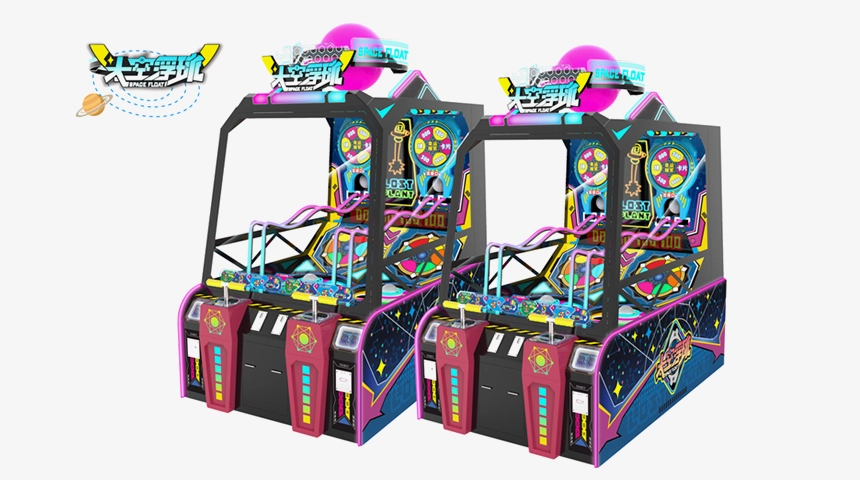
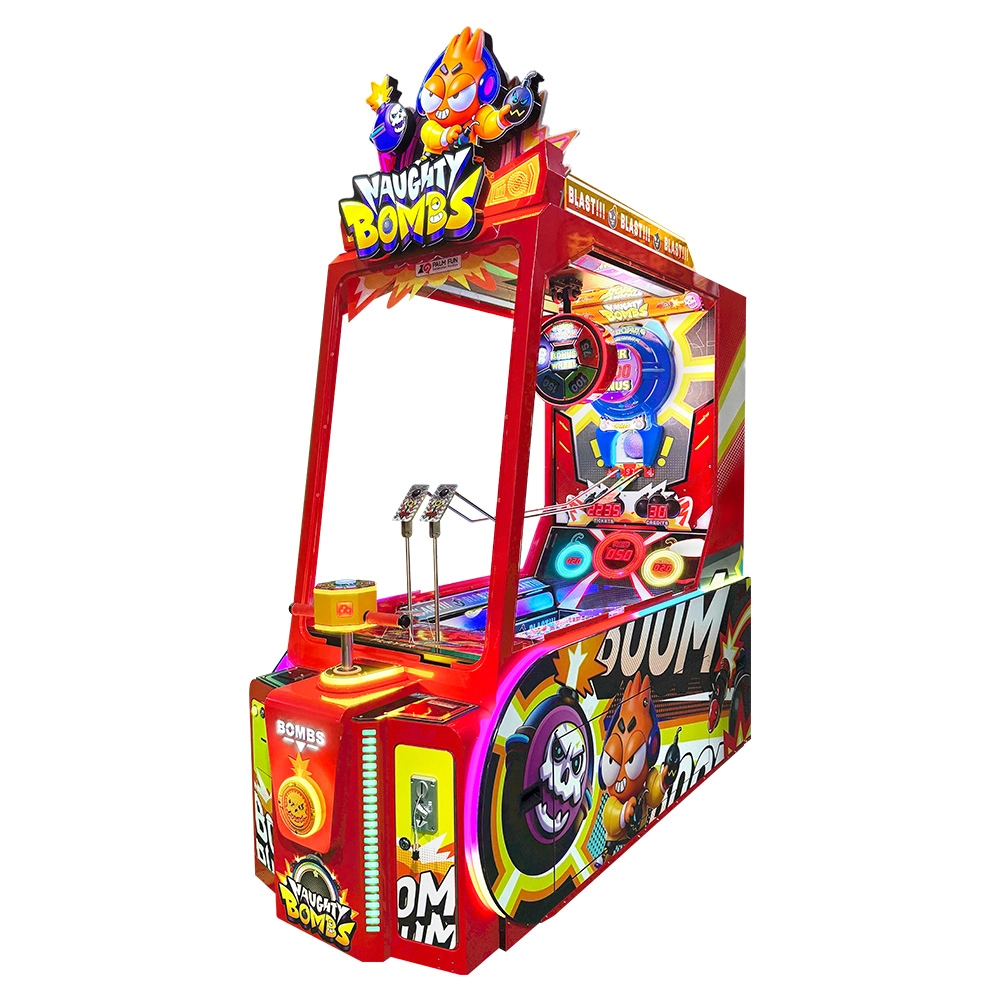
Naughty Bombs is a ball-drop redemption arcade game featuring rolling-ball gameplay, colored targets, ticket prizes, surprise bonus rewards, lighting and sound effects. Players use timing to launch and drop balls toward colored target areas. The product is presented for arcade, family entertainment center and other entertainment-venue projects, with customizable 110V / 220V AC voltage configuration.
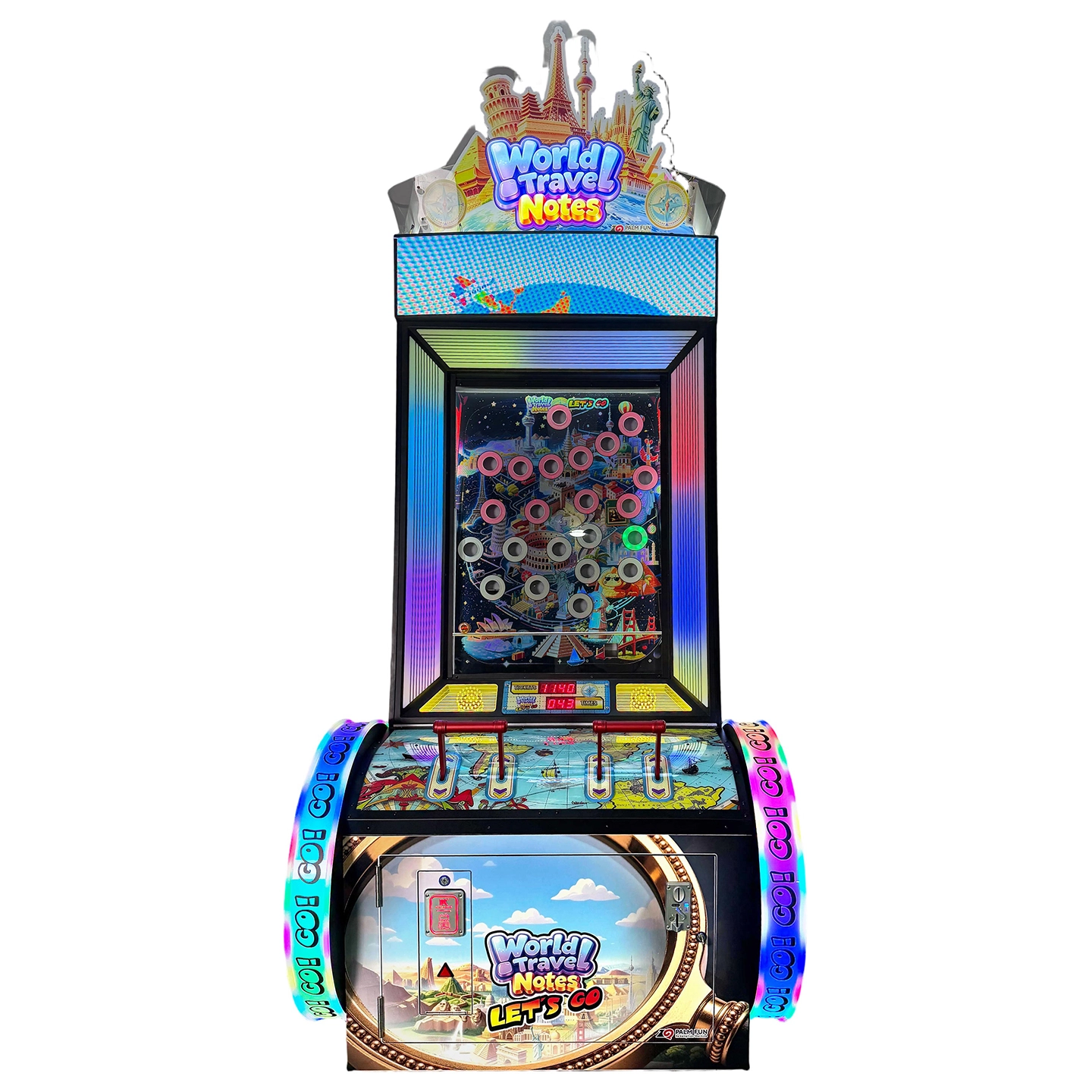
World Travel Notes is a skill-based balance ball redemption game with a fun world-travel theme. Players use two handles to control the balance bar and guide the ball into each target hole. As the game progresses, the targets become more challenging, leading players toward the final grand prize. With colorful world-travel graphics, dynamic RGB lighting, a live score display, and progressive difficulty, World Travel Notes is designed to attract attention and encourage repeat play in arcades, FECs, shopping malls, and other entertainment venues.
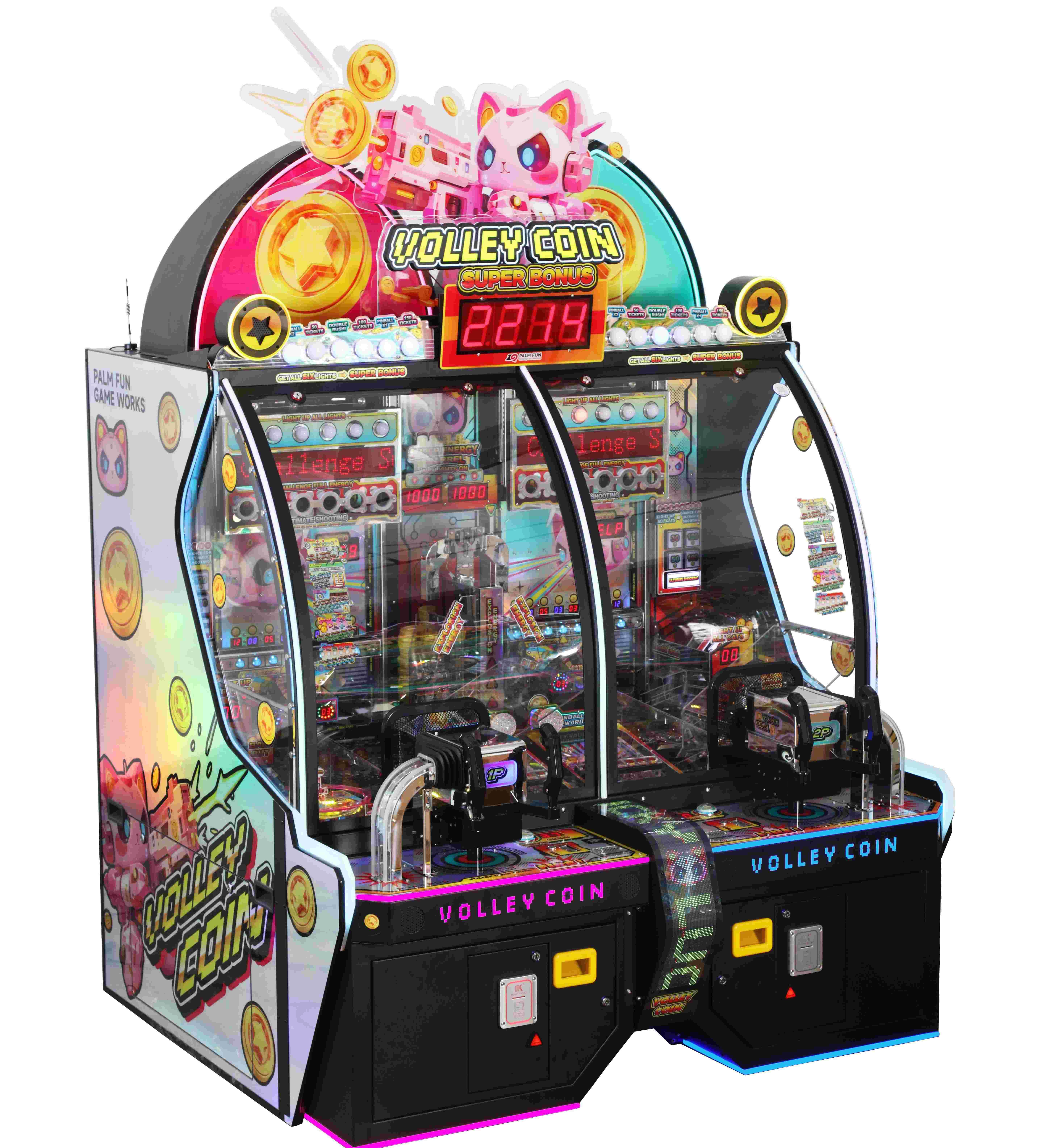
Volley Coin is an innovative arcade ticket redemption machine developed by Palm Fun Electronics. Combining the excitement of a fast-paced token shooter game with the proven earning power of a traditional coin pusher machine, Volley Coin offers a fresh and engaging gameplay experience that appeals to players of all ages.
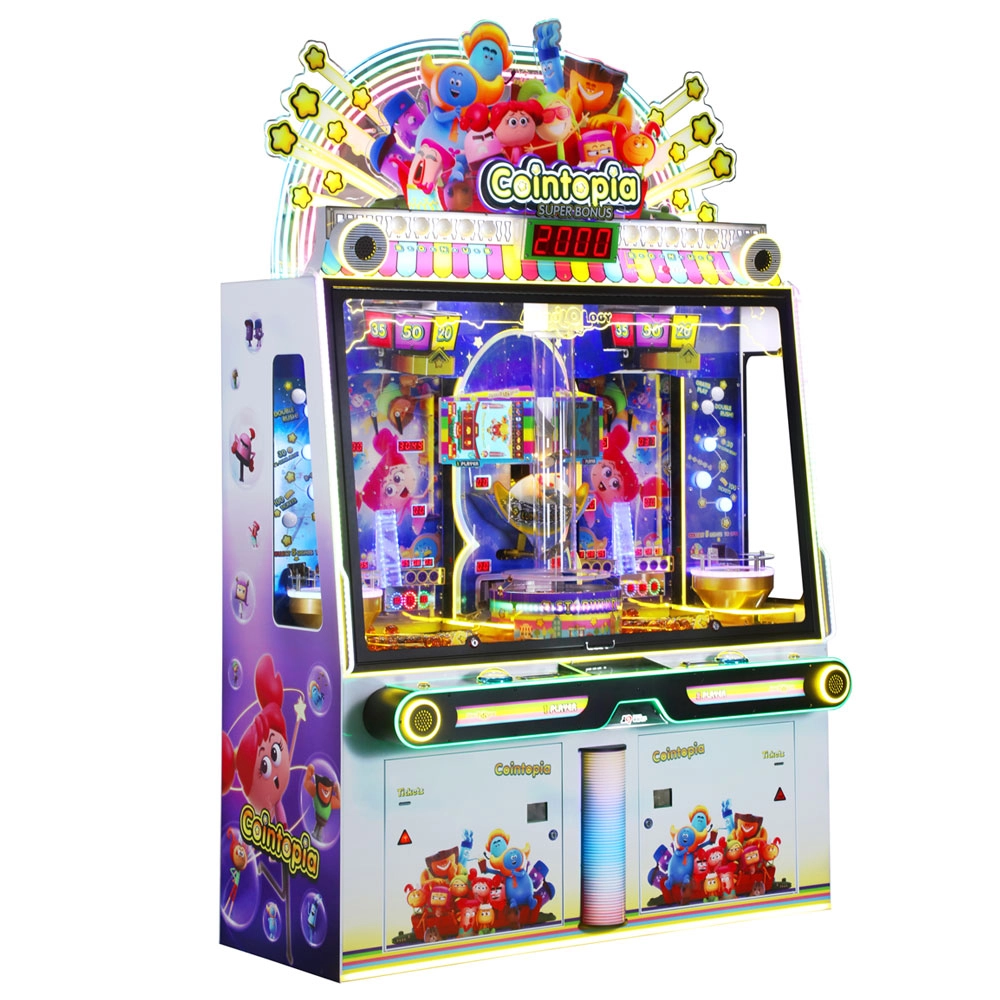
COINTOPIA by PALM FUN is an exciting redemption game machine where players enjoy fun with zodiac buddies in a utopia setting. This ticket redemption machine offers engaging gameplay and rewarding experiences, perfect for family entertainment centers and arcades seeking top-quality redemption games.
Copyright © 2026 PALM FUN All Rights Reserved. | Privacy Policy • Terms and Conditions | Sitemap
palmfunarcade
Palm Fun Arcade Game
Whatsapp: +8618126837443
PalmFun Arcade
PalmFun_Arcade
PALM FUN Redemption Machine