








How to Win at Coin Pusher Machines: Tips & Common Myths
A practical coin pusher gameplay guide explaining moving shelves, timing, myths about guaranteed wins, budgeting, and ticket redemption, with separate operator guidance.
- How Does a Coin Pusher Arcade Game Work?
- Coin Pusher Tips: What Can Players Actually Control?
- Watch the Moving Shelf and Read the Instructions
- Understand Why a Coin Near the Edge Is Not a Promise
- Keep Play Within a Predetermined Budget
- Common Coin Pusher Myths That Can Mislead Players
- How Do Ticket Redemption Coin Pushers Differ?
- What Should Arcade Owners Explain to Players?
- Frequently Asked Questions About Winning at Coin Pushers
- Is there a guaranteed way to win a coin pusher machine?
- Should I aim for coins that look close to falling?
- Does timing matter in coin pusher games?
- Can coin pushers award tickets instead of coins?
- What should I do if a coin pusher appears broken?
- Conclusion: Enjoy the Game Without Guaranteed-Win Claims
How do you win at a coin pusher arcade machine? Start by reading the machine's real rules, then observe the moving shelf, the placement of coins or tokens, and what the particular game awards. Timing a permitted input may affect the position of a newly released coin, but there is no reliable technique that guarantees a payout or allows a player to control the entire playfield. Whether the game awards tickets, points, prizes or another permitted reward depends on the machine's configuration.
Coin pushers are physical amusement games, not a promise of income. This explanation focuses on what a player can actually observe, what popular strategies misunderstand, and how a venue should present the game fairly. For family entertainment center (FEC) operators, distinguishing player-facing guidance from the technical operation of a commercial machine can also reduce disputes at the redemption counter.

How Does a Coin Pusher Arcade Game Work?
A traditional coin pusher has a moving platform that shifts coins, tokens or other pieces across a playfield. When a player inserts or releases a supported piece, it interacts with pieces already on the moving surface. The pusher continues its cycle and may move some pieces toward an edge or collection area. An individual input might produce little visible movement, while another can alter the position of several pieces. Neither result alone reveals the overall chance of earning a prize.
Commercial designs vary. Some machines use a coin or token input, while others incorporate ticket redemption, bonus events, electronic controls or other additional mechanisms. The payout or award may be recorded electronically instead of dispensing coins to the player. A guide that assumes every machine produces cash or follows the same input timing would be misleading. For equipment-specific mechanisms and buyer criteria, see the coin pusher arcade machine mechanics guide.
Coin Pusher Tips: What Can Players Actually Control?
The most useful actions are ordinary, permitted play decisions: understanding the controls, observing the playfield and setting a spending limit. These do not overcome the machine's design, but they help a player avoid misunderstandings about how a particular game functions. A few frequently discussed ideas require qualification because an attractive-looking stack at the edge is not proof of an imminent reward.
Watch the Moving Shelf and Read the Instructions
Before using a credit, identify where the play piece enters, what the controls do and how the machine signals a result. Observe several normal movement cycles so you can see how the platform travels and where coins or tokens tend to settle. Some machines accept an input at a chosen moment; others process credits or play actions in a different way. Do not assume a strategy described for one cabinet will work with another.
Understand Why a Coin Near the Edge Is Not a Promise
Players often focus on coins appearing close to the drop edge. But the visible distance does not reveal all the forces affecting the stack, and the next input may shift pieces sideways or leave them in place. A coin that appears ready to fall can remain there for multiple plays. The appearance of a “ready” playfield is not a sound basis for a guaranteed ticket or prize claim.
Keep Play Within a Predetermined Budget
Set a spending or play-credit limit before starting and stop when it is reached. Avoid treating credits already spent as a reason to continue: previous play does not create an entitlement to a future win. Observe the machine's prize system and consider whether the offered reward is important to you before deciding to play. Enjoyment and an understandable game are better expectations than an assured return.
Common Coin Pusher Myths That Can Mislead Players
A number of “winning tricks” are repeated online without evidence that they improve outcomes across different machines. In particular, phrases such as “guaranteed waterfall,” “always push at the last second,” or “the machine is due to pay out” should not be accepted as universal rules. The next game result depends on the actual mechanism, current playfield, supported player inputs and any programmed functions that apply to the model.
- Myth: Prizes at the edge must fall on the next play. Visibility is not a reliable prediction of the immediate result.
- Myth: Fast repetitive inputs always improve results. Input timing has different effects on different machines, and excessive credits can increase spending without ensuring a prize.
- Myth: A machine must award something after enough losing plays. Players should not infer a guaranteed payout cycle unless the specific published game rules actually establish one.
- Myth: Shaking or physically pushing the cabinet is a strategy. Interfering with the cabinet can be unsafe, damage equipment and breach venue rules; follow only the intended controls.
- Myth: All coin pusher games pay real money. Many commercial redemption formats use tickets, points, tokens or merchandise arrangements, with rules differing by product and jurisdiction.
Statements about “winning odds” or skill-versus-chance should be tied to the actual machine, not asserted for every coin pusher. Local legal classifications also vary, especially when monetary awards or certain prize mechanisms are involved. Venue operators must verify applicable requirements rather than advertise a machine as automatically exempt from regulation.
How Do Ticket Redemption Coin Pushers Differ?
In a ticket redemption pusher, the game result may be converted to tickets, electronic points or another specified reward that a guest can later exchange under venue rules. The physical pushing action and the way a prize is recorded are distinct parts of the game. A player may see a coin move and still need to consult the game's score or ticket display to understand the actual result. For this reason, the on-machine instructions and prize counter information should use the same terminology.
PALM FUN's Burger Mania Coin Pusher Machine is an example of the company's mechanical coin pusher redemption equipment. Its product description identifies coin-pushing gameplay, but does not justify promising a particular payout or success rate. The specific input system, reward settings, cabinet dimensions and service requirements should be confirmed with the supplier for the selected model. This distinction is as relevant to arcade buyers as it is to players.
When a venue uses electronic tickets, staff should explain where the player's earned value is displayed and how it is redeemed. When the system instead uses another reward mechanism, the instructions should reflect that. Clear display and staff guidance can prevent people from confusing gameplay animation with a guaranteed prize.
What Should Arcade Owners Explain to Players?
Operators should provide concise, accurate instructions rather than exaggerated promises about how to win. A practical game-side sign can explain the accepted input, the moving shelf, the scoring or reward rules and where a player can ask questions. Employees should be trained to distinguish earned tickets from purchased credits, identify a malfunction and direct unresolved issues to the responsible operator. Disclose significant restrictions or eligibility requirements where required.
For commercial coin pusher purchases, verify the real machine specification and venue compatibility before installation. Relevant checks include power requirements, floor space, player access, ticket or prize integration, servicing and spare-part support. Any claim about payback or profitability needs its own venue-specific operating data. The coin pusher operating costs and ROI article addresses the operator's separate financial question without mixing it with casual player tips.
If an arcade or distributor has a particular reward configuration or market requirement, they can ask PALM FUN for model-specific technical and commercial details. No machine configuration should be assumed lawful or profitable in every location without confirmation.
Frequently Asked Questions About Winning at Coin Pushers
Is there a guaranteed way to win a coin pusher machine?
No. Watching the platform and using permitted controls may help a player understand the mechanics, but no reliable approach guarantees a particular payout. Game design and current playfield conditions affect individual outcomes.
Should I aim for coins that look close to falling?
The position of coins near an edge is visible information, but it does not prove that the next input will produce a result. Pieces can shift sideways or remain in place over several plays. Avoid treating a near-edge stack as a promise.
Does timing matter in coin pusher games?
Some machine designs give players timing-related inputs, but the effect depends on the actual controls and mechanism. Not all machines allow the same actions. Read the rules and use only the intended player controls.
Can coin pushers award tickets instead of coins?
Yes. Some commercial redemption formats award tickets, points or permitted merchandise rather than dispensing coins to the player. Operators should confirm the specific game's configuration and the local rules that apply to its rewards.
What should I do if a coin pusher appears broken?
Stop playing and tell venue staff if controls are unresponsive, the platform is jammed or the displayed reward record seems incorrect. Do not shake or open the cabinet. Staff can follow the venue's service and dispute-resolution procedure.
Conclusion: Enjoy the Game Without Guaranteed-Win Claims
A coin pusher is based on visible mechanical movement, but the playfield cannot be controlled completely by a player. Observing the moving platform and understanding the rules can improve clarity about the experience; they cannot establish a guaranteed outcome. The sensible approach is to play within a chosen budget, follow the intended controls and treat tickets or prizes as possible game results rather than promised returns. Arcade operators can support this experience with clear instructions, maintained equipment and transparent redemption rules.



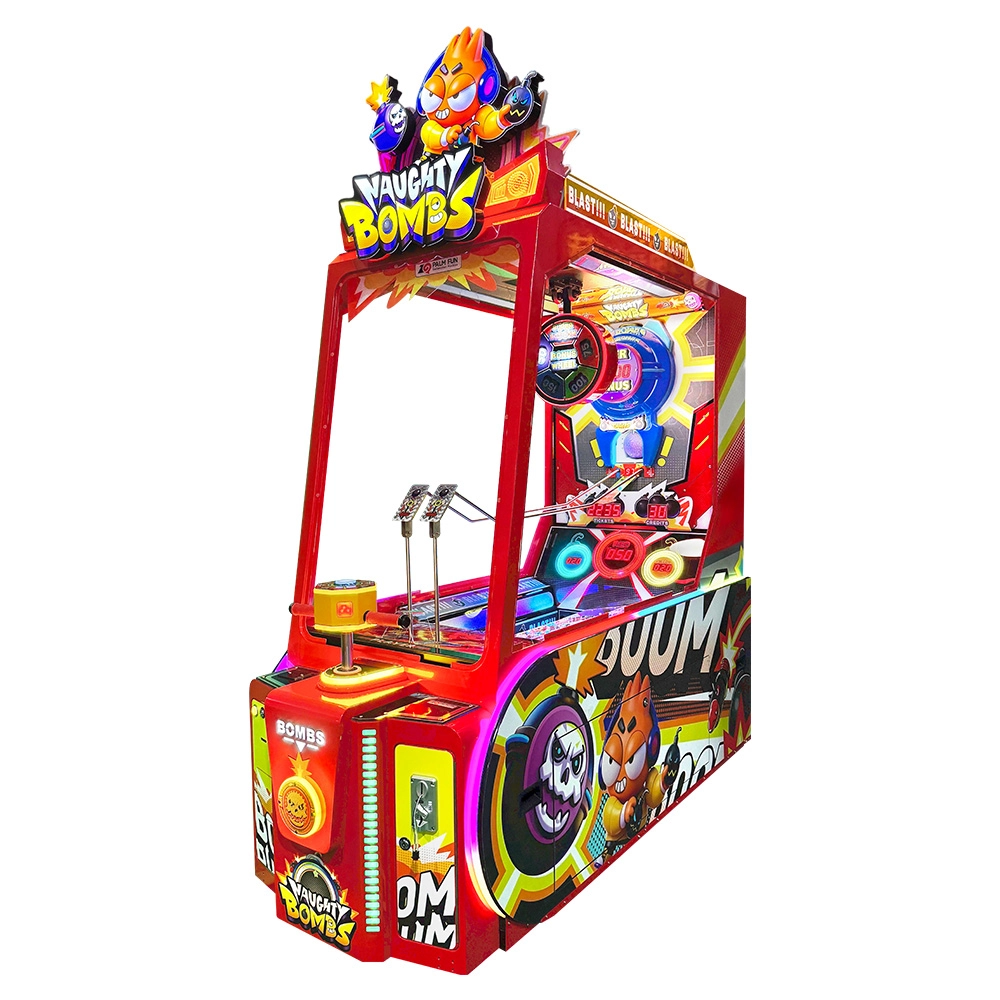
Naughty Bombs is a ball-drop redemption arcade game featuring rolling-ball gameplay, colored targets, ticket prizes, surprise bonus rewards, lighting and sound effects. Players use timing to launch and drop balls toward colored target areas. The product is presented for arcade, family entertainment center and other entertainment-venue projects, with customizable 110V / 220V AC voltage configuration.
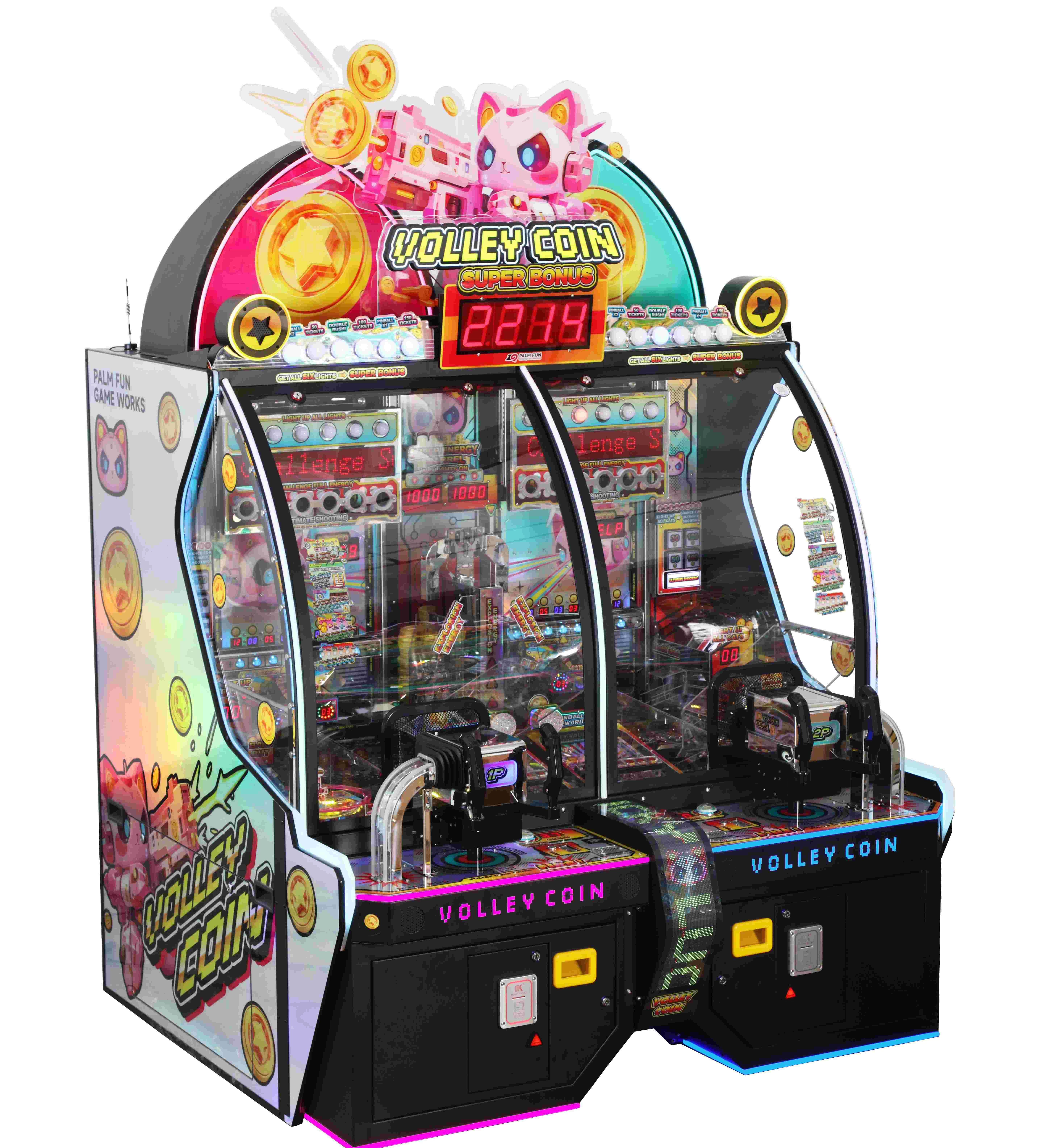
Volley Coin is an innovative arcade ticket redemption machine developed by Palm Fun Electronics. Combining the excitement of a fast-paced token shooter game with the proven earning power of a traditional coin pusher machine, Volley Coin offers a fresh and engaging gameplay experience that appeals to players of all ages.
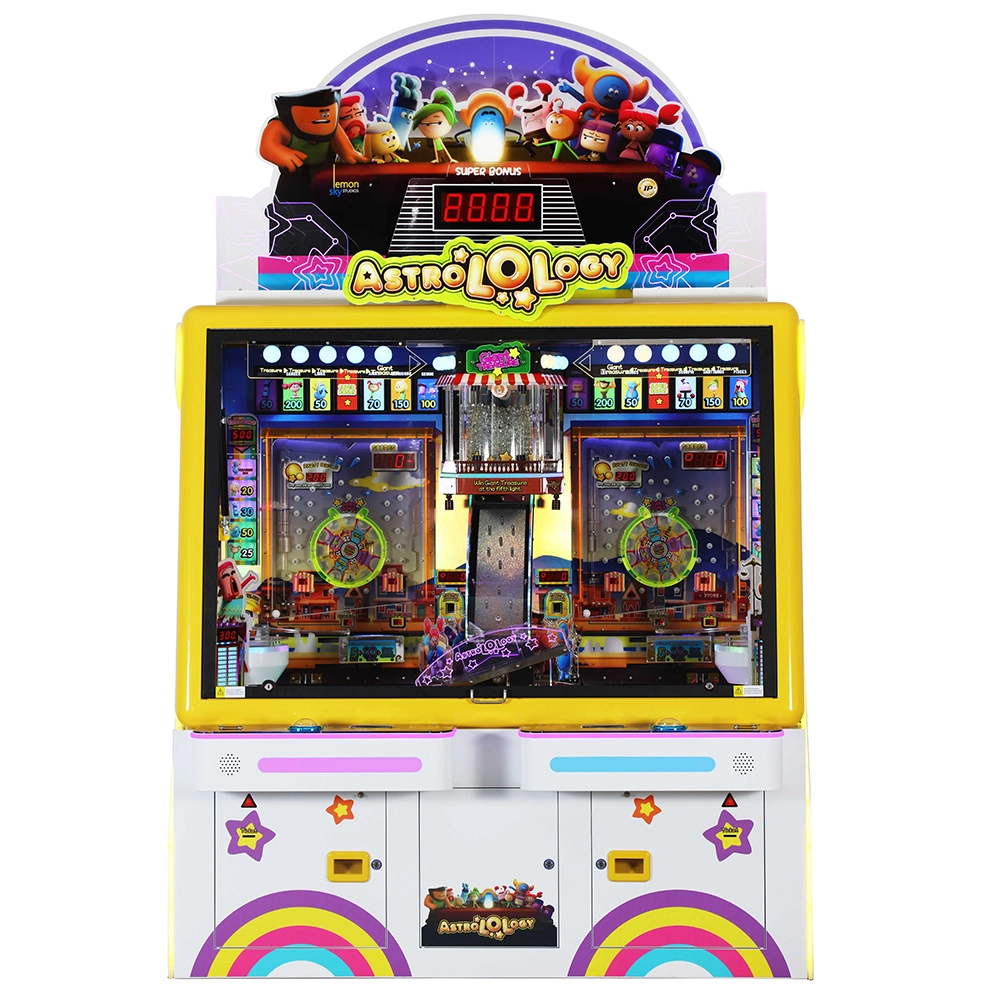
AstroLOLogy collaborates with the famous same-named animation IP copyright. It’s designed and developed by Palm Fun Electronics, an original product. AstroLOLogy has a small footprint (1750 mm * 1100 mm * 2650 mm), but it can generate very high earnings and popularity.
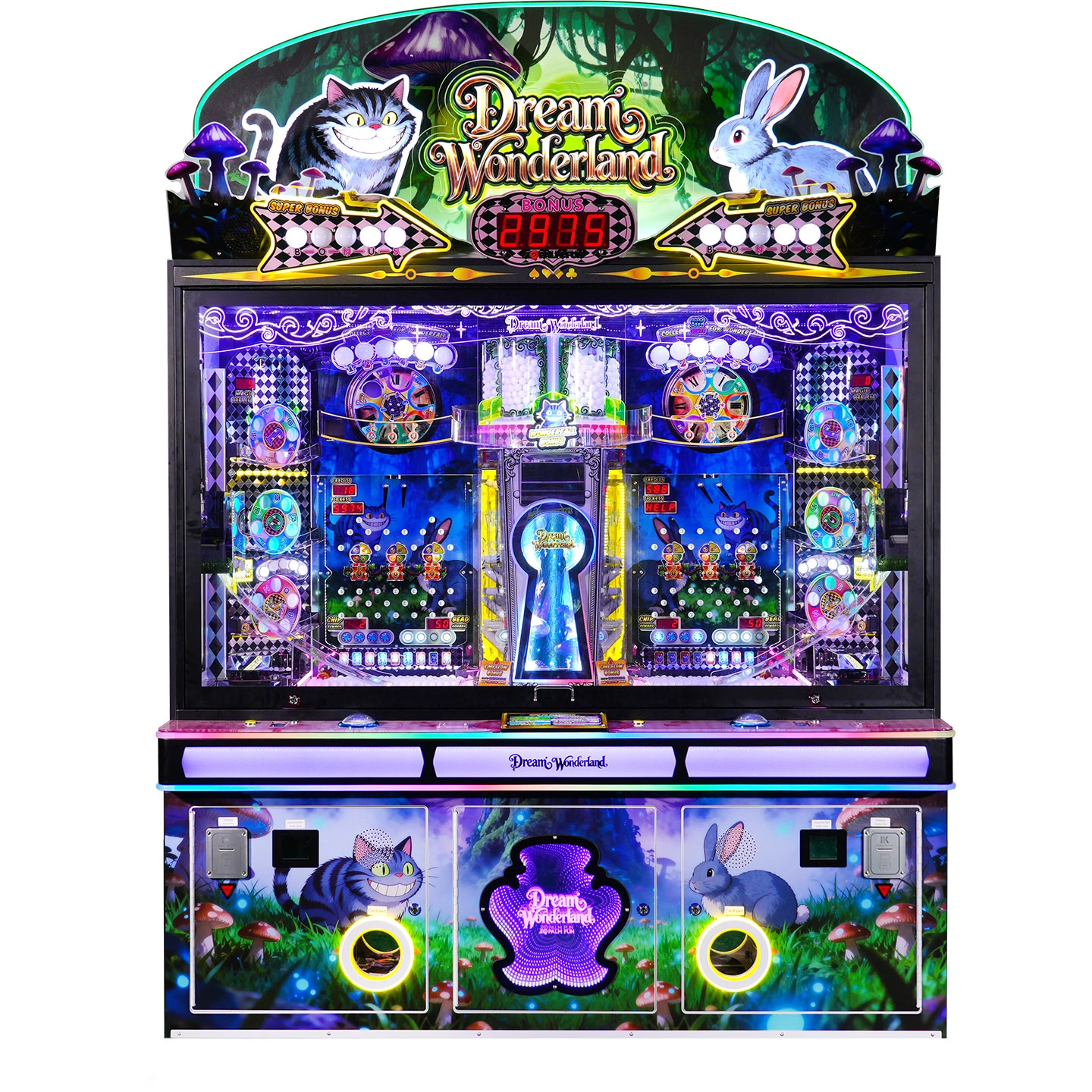
Enter Dream Wonderland — a magical marble pusher adventure filled with glowing lights, magic orbs, bonus wheels, collectible character cards, and exciting jackpot challenges.

Copyright © 2026 PALM FUN All Rights Reserved. | Privacy Policy • Terms and Conditions | Sitemap
palmfunarcade
Palm Fun Arcade Game
Whatsapp: +8618126837443
PalmFun Arcade
PalmFun_Arcade
PALM FUN Redemption Machine