







The Ultimate Coin Pusher Machine Guide: Working Principle, Profitability, Buying Guide, Maintenance & OEM/ODM Manufacturing for Arcade Business Succes
Whether you're running an arcade, planning your next equipment investment, or sourcing coin pusher machines through OEM/ODM channels, this guide walks you through working principles, profitability, buying decisions, and long-term maintenance — all in one place.
- 1. Introduction: Why Coin Pusher Machines Are Dominating Arcade Floors in 2026
- 2. Coin Pusher Machine Working Principle and Game Mechanics Explained
- How Coin Insertion Triggers Mechanical Movement
- Internal Structure: Pusher Board, Rails, and Payout Zone
- Coin Movement Logic and Randomness Mechanism
- Why Players Are Attracted to the Gameplay Psychology
- 3. Coin Pusher Machine Profitability and Arcade Business Revenue Potential
- Revenue Model of Coin Pusher Machines in Arcades
- ROI Estimation and Payback Period Analysis
- Key Factors Affecting Daily Income Performance
- Comparison With Claw Machines and Other Redemption Games
- 4. Coin Pusher Machine Buying Guide for Arcade Operators and Investors
- How to Choose the Right Machine for Your Arcade Business
- Key Technical and Commercial Features to Evaluate
- Machine Size, Capacity, and Payout System Selection
- Common Procurement Mistakes to Avoid
- 5. Coin Pusher Machine Manufacturer, OEM & ODM Production Solutions
- Role of a Professional Coin Pusher Machine Manufacturer
- OEM & ODM Customization Options for Arcade Business Models
- Product Design to Prototyping to Mass Production Workflow
- Quality Control and International Export Standards
- 6. Coin Pusher Machine Maintenance and Long-Term Operation Guide
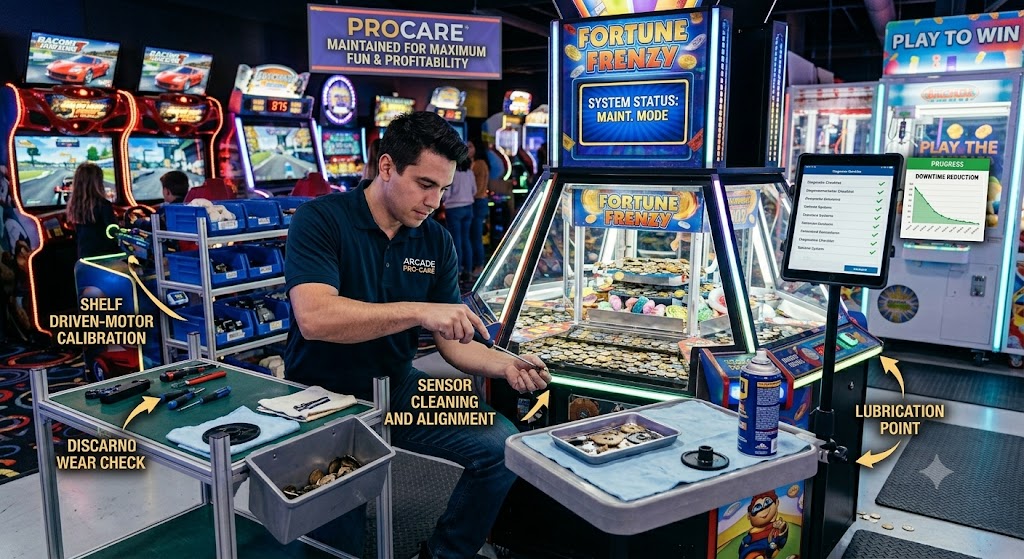
- Daily and Weekly Maintenance Checklist
- Common Mechanical and Electrical Issues
- Troubleshooting Methods for Arcade Operators
- Impact of Maintenance on Machine Uptime and Profitability
- 7. Conclusion: Building a Profitable Arcade Business with Coin Pusher Machines
Walk into any family entertainment center (FEC) or arcade today, and chances are a coin pusher machine is the first thing to catch your eye. The flashing lights, the rhythmic sound of coins sliding across a moving platform, and that satisfying moment when a pile tips over the edge — it's a simple formula, but it works like magic. Whether you're an arcade operator, an investor, or exploring OEM/ODM sourcing options, this guide covers everything you need to know.
1. Introduction: Why Coin Pusher Machines Are Dominating Arcade Floors in 2026
The global arcade and amusement machine market continues to grow steadily in 2026, driven by the resurgence of physical entertainment venues and the rise of indoor family activity centers. Among all game types, coin pusher machines stand out for their low barrier to play, broad demographic appeal, and strong operator ROI.
The concept hasn't changed much in decades — insert a coin, watch it push others toward the edge, win when they fall — but the machines themselves have evolved significantly. Modern coin pushers come with LED displays, digital prize dispensers, multi-player stations, and configurable payout systems that give operators far more control than ever before.
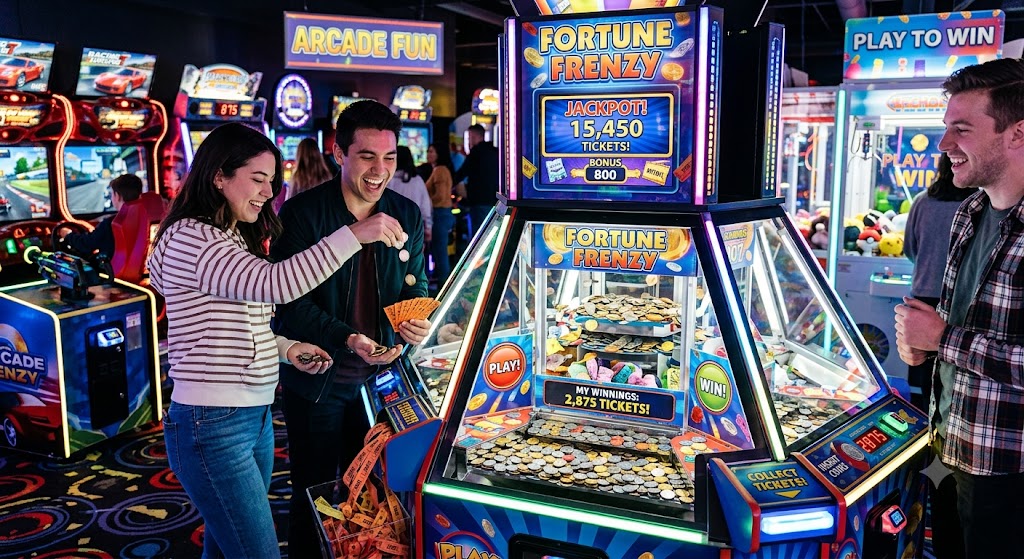
Whether you're buying your first machine for a small venue or planning a large-scale OEM partnership, understanding this industry from the ground up will help you make smarter, more profitable decisions.
2. Coin Pusher Machine Working Principle and Game Mechanics Explained
Before you invest in a machine — or put your first coin in — it helps to understand what's actually happening inside. Coin pusher machines are beautifully simple in concept, but surprisingly well-engineered under the hood.
How Coin Insertion Triggers Mechanical Movement
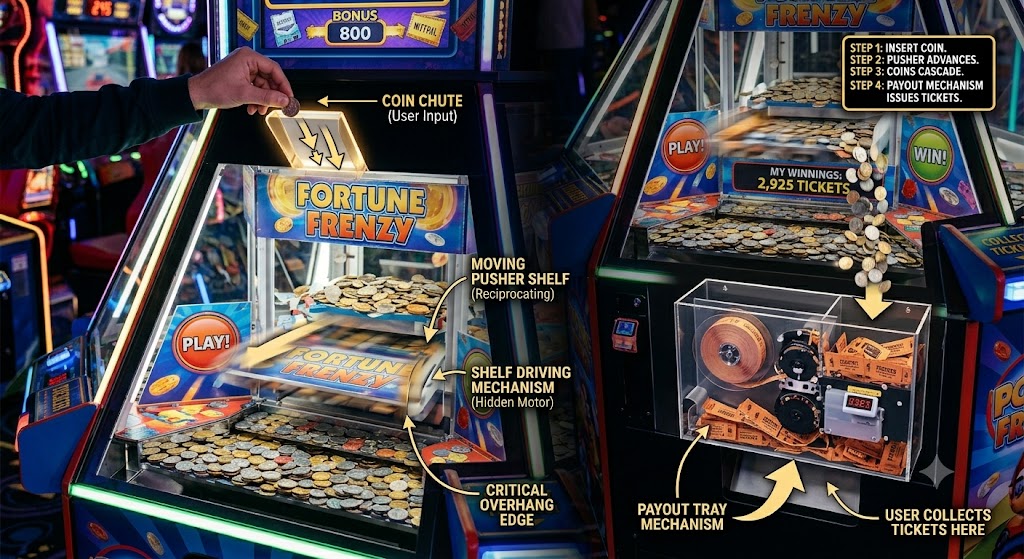
When a player inserts a coin, it rolls down a chute and lands on a moving pusher shelf — a flat platform that slides back and forth continuously. The timing of the drop determines exactly where the coin lands among the existing pile. That small variable is what creates excitement: no two plays are exactly the same.
Internal Structure: Pusher Board, Rails, and Payout Zone
The arcade coin pushing system consists of several key components working in unison:
- Pusher shelf: the main moving platform that creates the shoving action
- Fixed back wall: coins pile up against this, creating the pressure that eventually tips stacks forward
- Payout tray: located at the front edge — when coins (or tokens, tickets, prizes) fall here, the player wins
- Rails and guides: keep coins within the play field and direct payouts correctly
Higher-end machines may also feature multi-level platforms, rotating prize wheels, or digital prize dispensers — but the core coin pushing mechanism remains consistent across all models.
Coin Movement Logic and Randomness Mechanism
What makes coin pusher games so psychologically compelling is controlled randomness. The machine isn't purely luck — the placement of your coin matters — but the outcome is never fully predictable. This balance keeps players engaged without making the game feel rigged. Most commercial machines also include an operator-configurable payout rate, helping balance player satisfaction with business profitability.
Why Players Are Attracted to the Gameplay Psychology
Coin pushers tap into a well-documented concept called near-miss psychology. Players can see coins teetering at the edge, prizes almost falling — and that visual near-win triggers the same reward circuits as actually winning. It's engaging, tactile, and the reason players keep feeding coins. The gameplay is accessible to all ages, requires no skill, and delivers instant visual feedback — a rare combination in any entertainment format.
3. Coin Pusher Machine Profitability and Arcade Business Revenue Potential
Let's talk about the number one question every arcade operator has: how much money can a coin pusher machine actually make? The honest answer is "it depends" — but in a good way, because the variables are largely within your control.
Revenue Model of Coin Pusher Machines in Arcades
Most coin pusher machines operate on a token or coin economy. Players exchange cash for coins or tokens at a fixed rate, then feed them into the machine. The house retains a percentage of every coin inserted — this is known as the "hold percentage." Unlike slot machines in regulated casinos, there are no mandatory payout minimums for arcade games in most markets, giving operators meaningful control over margins.
Common revenue streams from coin pushers include:
- Direct coin/token revenue from gameplay
- Ticket-based prize redemption (players exchange tickets for merchandise)
- Upsell opportunities from nearby food, merchandise, or other games
ROI Estimation and Payback Period Analysis
A mid-range coin pusher machine typically costs between $3,000 and $8,000 USD depending on features and manufacturer. In a busy arcade or FEC with high foot traffic, a single machine can generate $200–$600 per week in gross revenue. At that rate, operators often see full payback within 6 to 18 months. For a deeper look at how arcade operators structure their business models, the IAAPA industry resource library provides useful benchmarks on FEC revenue performance across global markets.
Key Factors Affecting Daily Income Performance
Not all machines perform equally. The biggest factors influencing coin pusher machine profitability are:
- Location: High-traffic spots like shopping malls dramatically outperform low-traffic venues
- Machine appeal: Bright displays, prize visibility, and theme relevance all drive more plays
- Payout calibration: Too stingy and players walk away; too generous and margins disappear
- Maintenance uptime: A machine that's broken or out of coins earns nothing
Comparison With Claw Machines and Other Redemption Games
Compared to claw machines, coin pushers generally have lower operating costs, more predictable payout rates, and stronger replay value. Compared to video arcade games, they require less software maintenance and have broader age appeal. For most FEC operators, coin pushers serve as reliable, high-volume revenue generators that complement the rest of the floor.
4. Coin Pusher Machine Buying Guide for Arcade Operators and Investors
Ready to invest? The buying process for a coin pusher machine is more nuanced than it looks. Here's what to consider before you sign a purchase order.
How to Choose the Right Machine for Your Arcade Business
Start by matching the machine to your venue. A children's FEC needs a colorful, prize-dispensing model with ticket output. A standalone arcade bar might do better with a sleek token-only pusher with a digital display. Consider your target demographic, floor space, and preferred payout type before shortlisting models.
Key Technical and Commercial Features to Evaluate
When reviewing specs, pay close attention to:
- Number of player stations (single vs. multi-player units)
- Coin capacity and hopper size — larger hoppers mean less frequent refills
- Payout rate adjustability — can you customize the hold percentage?
- Display type — LED lighting and digital screens significantly increase player attraction
- Build quality — cabinet materials, motor quality, and component durability
Machine Size, Capacity, and Payout System Selection
Coin pusher machines come in a wide range of sizes, from compact 2-player countertop units to large 6-player floor models. Larger machines generate more revenue per square foot in busy venues but require more maintenance. Decide whether you want a coin-payout system, a ticket redemption system, or a physical prize dispenser — each has different operational costs and player engagement profiles.
Common Procurement Mistakes to Avoid
Many first-time buyers fall into these traps:
- Choosing price over quality: Cheap machines break down faster and cost more in repairs long-term
- Skipping supplier verification: Always request factory certifications, export compliance documentation, and sample units before bulk orders
- Ignoring after-sales support: A manufacturer without spare parts availability or technical support is a liability
- Underestimating shipping logistics: Arcade machines are large and heavy — plan for freight costs and realistic delivery timelines
5. Coin Pusher Machine Manufacturer, OEM & ODM Production Solutions
If you're sourcing at volume, building your own brand, or want machines customized for your market, working directly with a coin pusher machine manufacturer via OEM or ODM is the smart move.
Role of a Professional Coin Pusher Machine Manufacturer
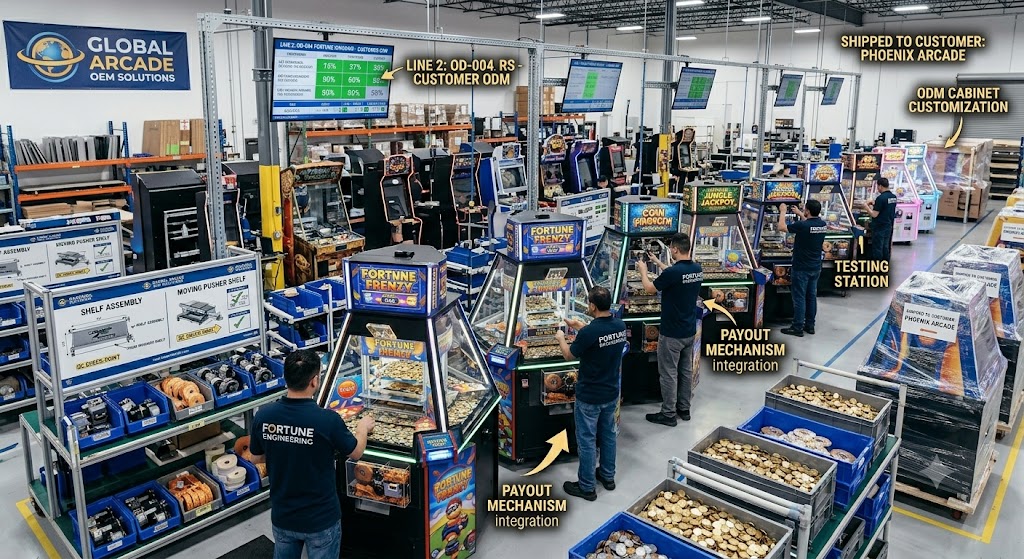
A professional arcade machine factory doesn't just build the hardware — they handle component sourcing, electronic integration, safety compliance, and packaging for international shipment. The best manufacturers have dedicated R&D teams continuously improving gameplay mechanics and electronic reliability. For businesses looking for a vertically integrated coin pusher supplier with global export experience, palm-fun.com offers comprehensive OEM and ODM partnerships tailored to each market.
OEM & ODM Customization Options for Arcade Business Models
OEM (Original Equipment Manufacturer) allows you to brand an existing machine design under your own label — ideal for distributors and operators who want a consistent product identity without building from scratch.
ODM (Original Design Manufacturer) goes further: the factory designs a machine to your specifications. This suits businesses that need unique gameplay features, custom cabinet dimensions, exclusive prize mechanisms, or region-specific themes.
Typical customization options include:
- Cabinet color, shape, and graphic wraps
- Custom coin/token denomination settings
- Branded display screens and sound effects
- Unique prize or ticket payout mechanisms
- Language and currency localization for different markets
Product Design to Prototyping to Mass Production Workflow
A reliable OEM/ODM manufacturer will guide you through a clear process: design consultation → CAD rendering and approval → prototype build → testing and iteration → final approval → mass production → quality inspection → export shipping. This typically takes 8–16 weeks depending on customization complexity.
Quality Control and International Export Standards
Reputable coin pusher manufacturers adhere to international safety and quality standards, including CE certification (Europe), FCC compliance (North America), and ISO manufacturing processes. When evaluating a factory, ask about their in-house testing protocols, defect rate tracking, and how they handle warranty claims for export clients.
6. Coin Pusher Machine Maintenance and Long-Term Operation Guide
A coin pusher machine is a mechanical and electronic system running for hours every day. Without proper maintenance, even the best machine will underperform or break down unexpectedly. Here's how to keep yours earning at full capacity.
Daily and Weekly Maintenance Checklist
Daily tasks (10–15 minutes per machine):
- Empty coin hoppers and count/bank the revenue
- Wipe down cabinet surfaces and coin trays
- Check for stuck coins in the chute or pusher mechanism
- Verify display lights and audio are functioning correctly
Weekly tasks:
- Lubricate pusher shelf rails and motor linkage points
- Inspect electrical connections for wear or corrosion
- Calibrate payout rate if needed based on weekly revenue reports
- Check ticket dispenser (if applicable) for paper jams or low supply
Common Mechanical and Electrical Issues
The most frequent problems arcade operators encounter:
- Coin jams in the chute — usually caused by foreign objects or bent coins
- Pusher motor stuttering or stopping — often a worn gear or electrical fault
- Coin sensor failures — causing the machine to not register inserted coins
- LED display flickering — usually a loose connection or failing driver board
Troubleshooting Methods for Arcade Operators
Most modern coin pusher machines include a diagnostic mode accessible through the operator panel, displaying error codes that correspond to specific component failures. Keep your machine's service manual on-site and maintain a small inventory of common spare parts: coin sensors, pusher belts, fuses, and LED strips. For issues beyond basic troubleshooting, always contact your manufacturer's technical support team before attempting internal repairs — improper fixes can void warranties.
Impact of Maintenance on Machine Uptime and Profitability
7. Conclusion: Building a Profitable Arcade Business with Coin Pusher Machines
Coin pusher machines have endured as arcade staples for decades because they deliver something genuinely rare: simple, engaging gameplay that appeals to all ages, with a revenue model that works for operators at every scale.
In 2026, the arcade business opportunity is stronger than it has been in years. Physical entertainment is making a clear comeback, FEC development is accelerating globally, and operators who invest in the right equipment — with the right manufacturing partners — are well-positioned to capitalize.
Here's a quick summary of the key takeaways from this guide:
- Understanding the working principle helps you explain and position coin pushers more effectively
- Profitability is real and predictable — choose your location wisely and calibrate your machines correctly
- The buying guide framework helps you avoid the most common procurement mistakes
- OEM & ODM manufacturing gives you flexibility, brand control, and competitive pricing at scale
- Consistent maintenance is the single most impactful thing you can do to protect your investment
Whether you're buying your first machine or planning a multi-unit rollout, the right manufacturing partner makes all the difference. Partner with a trusted coin pusher supplier
Ready to Start? Explore OEM & ODM Solutions at palm-fun.com Visit palm-fun.com →Explore More Topics

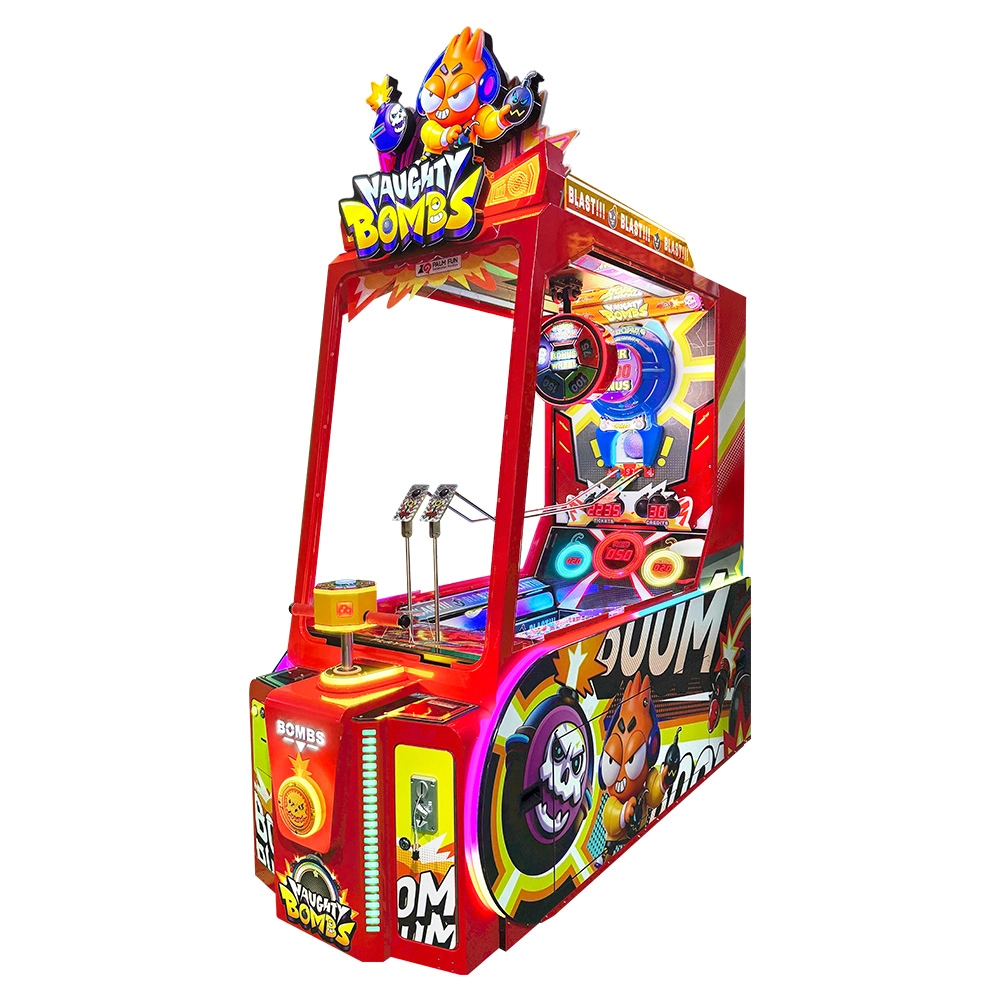
Naughty Bombs is an exciting redemption arcade game designed to capture attention and keep players coming back for more. Featuring a bright red cabinet, dynamic lighting, fun sound effects, and interactive rolling-ball gameplay, it delivers nonstop excitement in a compact footprint. Players test their timing skills by launching and dropping balls into colored targets to unlock surprise bonus rewards and ticket prizes. With easy-to-learn mechanics, engaging skill-based action, and strong visual appeal, Naughty Bombs is an ideal attraction for arcades, FECs, and entertainment venues looking to boost player engagement and revenue.
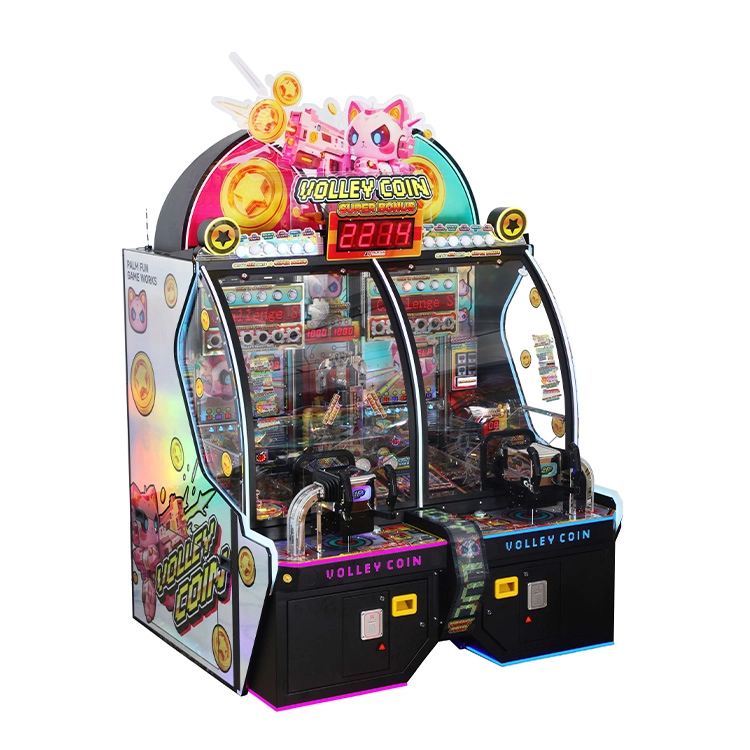
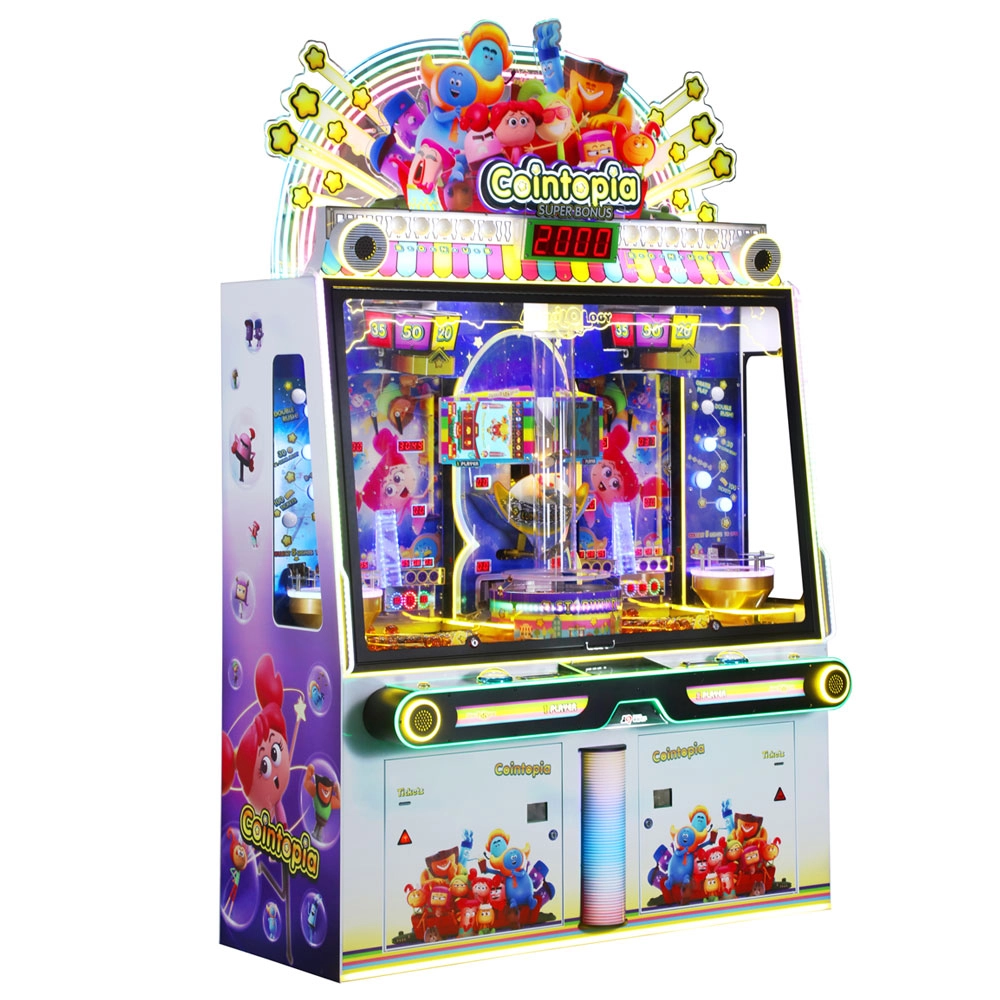
COINTOPIA by PALM FUN is an exciting redemption game machine where players enjoy fun with zodiac buddies in a utopia setting. This ticket redemption machine offers engaging gameplay and rewarding experiences, perfect for family entertainment centers and arcades seeking top-quality redemption games.
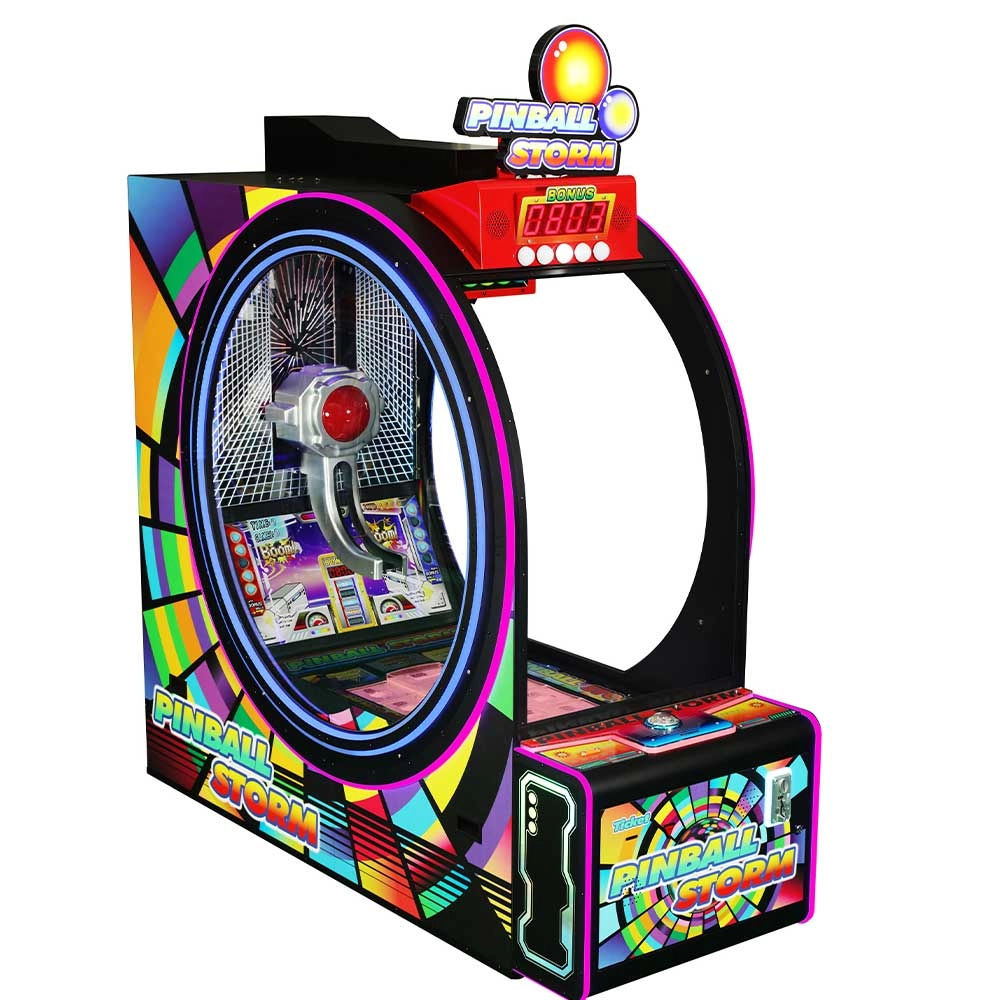
Classic pinball reimagined! Hit, bounce, and win prizes. Trigger the Pinball Storm for an epic multi-ball blast!
Copyright © 2026 PALM FUN All Rights Reserved. | Privacy Policy • Terms and Conditions | Sitemap
palmfunarcade
Palm Fun Arcade Game
Whatsapp: +8618126837443
PalmFun Arcade
PalmFun_Arcade
PALM FUN Redemption Machine