








Coin Pusher Arcade Machine Investment: Costs & Risks
A B2B coin pusher investment checklist covering total ownership costs, demand validation, downtime, reward expenses and supplier risk rather than promised earnings.
- What Makes a Coin Pusher Investment Different?
- Check Venue Demand Before Choosing a Coin Pusher
- Compare the Full Delivered Cost, Not Only the Cabinet Price
- Test Revenue and Reward Assumptions With Real Records
- Play Revenue and Machine Availability
- Award and Prize Costs
- Operating Contribution and Payback
- Maintenance and Downtime Are Investment Risks
- Match the Coin Pusher Model to the Venue
- Coin Pusher Supplier and Procurement Due Diligence
- Frequently Asked Questions About Coin Pusher Investment
- Are coin pusher machines profitable for every arcade?
- What should I check before buying a used coin pusher?
- Do ticket redemption settings guarantee higher revenue?
- Is the cheapest coin pusher the best investment?
- Can a supplier guarantee a coin pusher payback period?
- Conclusion: Buy for Operating Fit, Not a Guaranteed Return
Is buying a coin pusher arcade machine a good investment? It can be suitable for a commercial arcade or family entertainment center (FEC), but no machine guarantees a profit or fixed payback period. A purchase decision depends on real demand, upfront delivered cost, operating expenses, award liabilities, uptime and the equipment's service support. A coin pusher with an attractive playfield is not automatically more profitable than another format or a machine already on the venue floor.
This article focuses on coin pusher investment due diligence: how to compare acquisition choices, estimate the risks of owning and maintaining the machine, and ask the supplier useful questions. Detailed formulas for revenue, contribution and payback belong in the arcade machine ROI and profitability guide. Here the central issue is whether the proposed machine is a sensible fit for the buyer's business, not how to win a game.

What Makes a Coin Pusher Investment Different?
A traditional mechanical coin pusher contains a moving shelf or platform that interacts with coins or tokens already on the playfield. Some commercial products add electronic displays, themed bonus activities or a ticket redemption system. These features can affect the play sequence and how a venue records awards. The game may be sold as a mechanical redemption product, but its actual prize configuration and destination-market rules must be established separately.
Investors should distinguish a coin pusher from a traditional flipper pinball table, a ball-drop redemption machine and a video arcade game. They can serve different audiences and involve different maintenance costs. A cabinet's external design does not establish its earnings, player capacity or electrical requirements. Request the correct specification and gameplay demonstration for the exact machine that will be supplied.
Check Venue Demand Before Choosing a Coin Pusher
Start with the venue's existing traffic and game mix rather than a claim that coin pushers are universally popular. A family-oriented arcade may have different visitors and spending patterns from a tourist site or an adult-focused amusement venue. Observe how similar game formats perform at your own location when possible. For a new facility, record assumptions explicitly and avoid claiming they are verified facts.
Useful demand information includes typical paid plays during quiet and peak periods, time spent at the game, repeat use, queueing and whether visitors understand the controls and prize process. Comparisons should use like-for-like operating days and pricing. A high number of plays in one event does not establish steady demand for the whole year. Consider whether the machine complements existing attractions or duplicates games that are already struggling.
Placement can also affect the opportunity. A machine hidden behind queues or placed without adequate player clearance may be underused regardless of its design. Include player positions, visibility, staff supervision and permitted access routes in the evaluation. Do not attempt to increase machine count by ignoring building, fire or accessibility requirements.
Compare the Full Delivered Cost, Not Only the Cabinet Price
A factory quotation may cover the cabinet alone, while the buyer also pays for shipping, customs arrangements, installation, power and payment integration, staff training and initial spare parts. Other expenses may include prize stock, insurance or building work depending on the project. Compare suppliers on the same scope and destination; an apparently cheaper offer may omit critical services that another quotation includes.
| Cost or risk | Buyer question | Evidence to request |
|---|---|---|
| Machine and configuration | What is included in the exact model? | Current specification and quotation |
| Transport and installation | Who pays, delivers and installs? | Written delivery and commissioning terms |
| Credits and reward system | Will it work with this venue? | Supported interface and approval details |
| Repair and spare parts | How will faults be handled? | Service documentation and support terms |
| Compliance and suitability | Can it operate at the destination? | Applicable technical records and local review |
Make sure the product description distinguishes the accepted input method from the reward delivered. A ticket redemption cabinet is not proof that a third-party card reader or digital points system is compatible. Shipping terms and installed voltage should be confirmed for the destination market. Do not rely on unspecified claims that a machine has a fixed low operating cost.
Test Revenue and Reward Assumptions With Real Records
Play Revenue and Machine Availability
Estimate paid plays, effective revenue per play and the number of days the machine will be available. Real operating data is preferable to seller examples, which may reflect a different venue or machine setup. If no reliable data exists, calculate conservative, expected and higher-demand scenarios and label them as assumptions. Downtime should be included because a machine that is unavailable cannot deliver the planned play volume.
Award and Prize Costs
A mechanical game may award tickets, electronic points or other permitted prizes according to its configuration. Those rewards create costs for an arcade, and their economic effect cannot be inferred from the number of tickets alone. Use the venue's actual prize purchase costs and redemption patterns when calculating contribution. Staff must also be able to explain the available rewards without implying a prize is guaranteed on every play.
Operating Contribution and Payback
Revenue minus the relevant direct and allocated costs provides a more useful operating measure than gross collections. To assess capital recovery, compare the full initial investment against a positive, defensible period contribution. This is a scenario calculation, not a guaranteed month of payback. Shared occupancy costs, payment fees, maintenance, prize losses and major future repairs may require separate treatment depending on the operator's accounting method.
Maintenance and Downtime Are Investment Risks
Moving platforms, input hardware, sensors and ticket interfaces may require inspection, servicing or eventual replacement. No general statement that coin pushers need 'almost no maintenance' is supported for every cabinet. Ask the supplier about preventive checks, authorized repair procedures, replaceable components and the warranty boundary. A machine with a lower purchase price could become expensive when critical parts are difficult to obtain.
The arcade machine daily maintenance checklist gives operators staff-level visual checks and escalation guidance. Internal mechanical and electrical service is separate, and should be completed by qualified personnel using the machine's exact documentation. Do not alter a moving shelf or reward-control setting solely to try to increase profits; it can affect safety, fairness, reliability or regulatory treatment.
Track the frequency, duration and causes of downtime after installation. Record which faults can be resolved through approved operator procedures and which require qualified technicians. This information helps the buyer decide whether the supplier's after-sales support meets the actual needs of the site. An untested claim of long service life does not replace an equipment warranty or parts agreement.
Match the Coin Pusher Model to the Venue
PALM FUN's Burger Mania Coin Pusher Machine is a commercial mechanical redemption product based on coin-pushing gameplay. The available product information supports that basic classification, but it does not establish fixed earnings, a universal ticket payout or the configuration of every delivered unit. A buyer should request model-specific dimensions, player positions, accepted inputs, power and reward options before treating the cabinet as suitable.
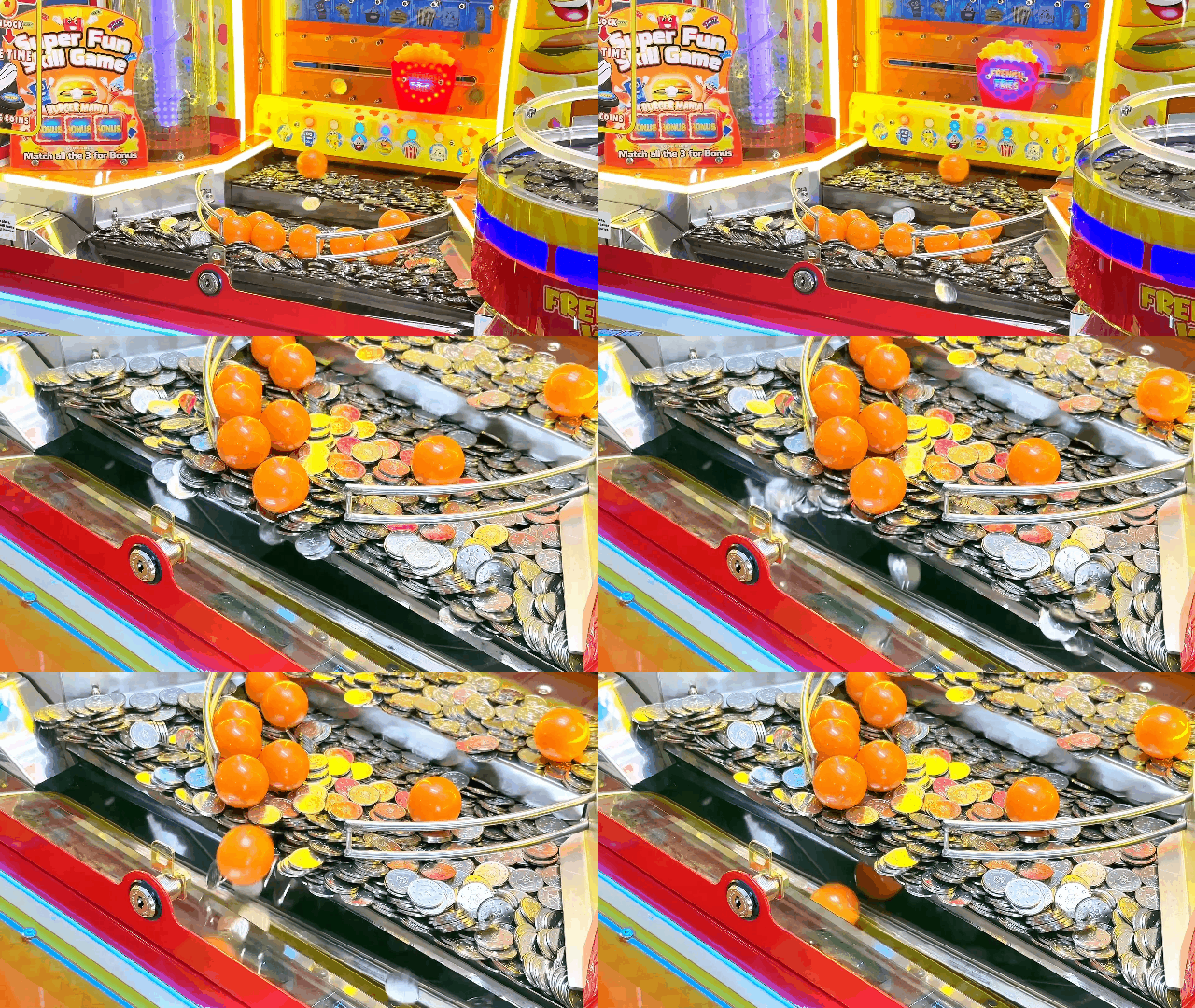
The physical gameplay is only one part of the purchasing assessment. Consider where players will stand, whether the cabinet creates a queue and how staff will reach service panels. If a venue already uses an electronic ticket system, obtain written confirmation of supported integration rather than assuming it works. Market-specific amusement and prize rules should be checked with the relevant local authorities or qualified advisers.
Coin Pusher Supplier and Procurement Due Diligence
Ask the supplier whether it makes the actual machine, distributes it or supplies a configured version assembled from other components. Confirm the responsible business for warranty, installation support and spare parts. Any claimed certifications or safety conformity must be verified for the specific model and destination. A company profile, photograph or promotional video alone cannot establish every technical or legal requirement of an imported machine.
For repeat purchasing, request a written bill of scope: machine identification, chosen configuration, included accessories, shipping responsibilities, testing arrangements, support contacts and spare-part supply. Establish how a delivery fault or missing component will be handled. A buyer can reduce misunderstandings by comparing these written details across shortlisted suppliers instead of treating a percentage ROI promise as the deciding factor.
If a distributor or arcade owner needs a proposal for a specific venue, contact PALM FUN with the destination, cabinet quantity, available space and desired reward system. Any changes to input, artwork, payment or rewards should be confirmed as supported options for the actual order rather than presented as guaranteed customization.
Frequently Asked Questions About Coin Pusher Investment
Are coin pusher machines profitable for every arcade?
No. Profit depends on demand, pricing, reward and operating costs, equipment availability and the initial investment. The same model can perform differently across venues. Use real records or clearly labeled scenarios, not universal income claims.
What should I check before buying a used coin pusher?
Inspect the physical mechanism, cabinet condition, documented repairs and supported credit and reward systems. Ask for working demonstrations, identification information, available parts and the seller's written return or service conditions.
Do ticket redemption settings guarantee higher revenue?
No. Award formats can affect guest experience while creating prize costs and integration needs. A change to ticket settings should follow the supported configuration and applicable rules, with its effect assessed through actual operating data.
Is the cheapest coin pusher the best investment?
Not necessarily. Include delivered cost, service access, equipment reliability, parts availability, downtime and venue suitability. A cheaper quote that excludes installation or support may not result in a lower total ownership cost.
Can a supplier guarantee a coin pusher payback period?
No credible universal payback period applies to every arcade. A calculation depends on the purchase price, the actual location's revenue and the relevant costs over time. Request evidence and test more than one operating scenario.
Conclusion: Buy for Operating Fit, Not a Guaranteed Return
A coin pusher machine may be an appropriate commercial investment when its gameplay suits the audience and its expected operating contribution justifies the delivered cost and service obligations. The purchase decision should use a model-specific technical review, a consistent cost comparison and conservative revenue assumptions. Avoid claims that every pusher is low-maintenance, that skill guarantees a win or that buying any one cabinet ensures profit.

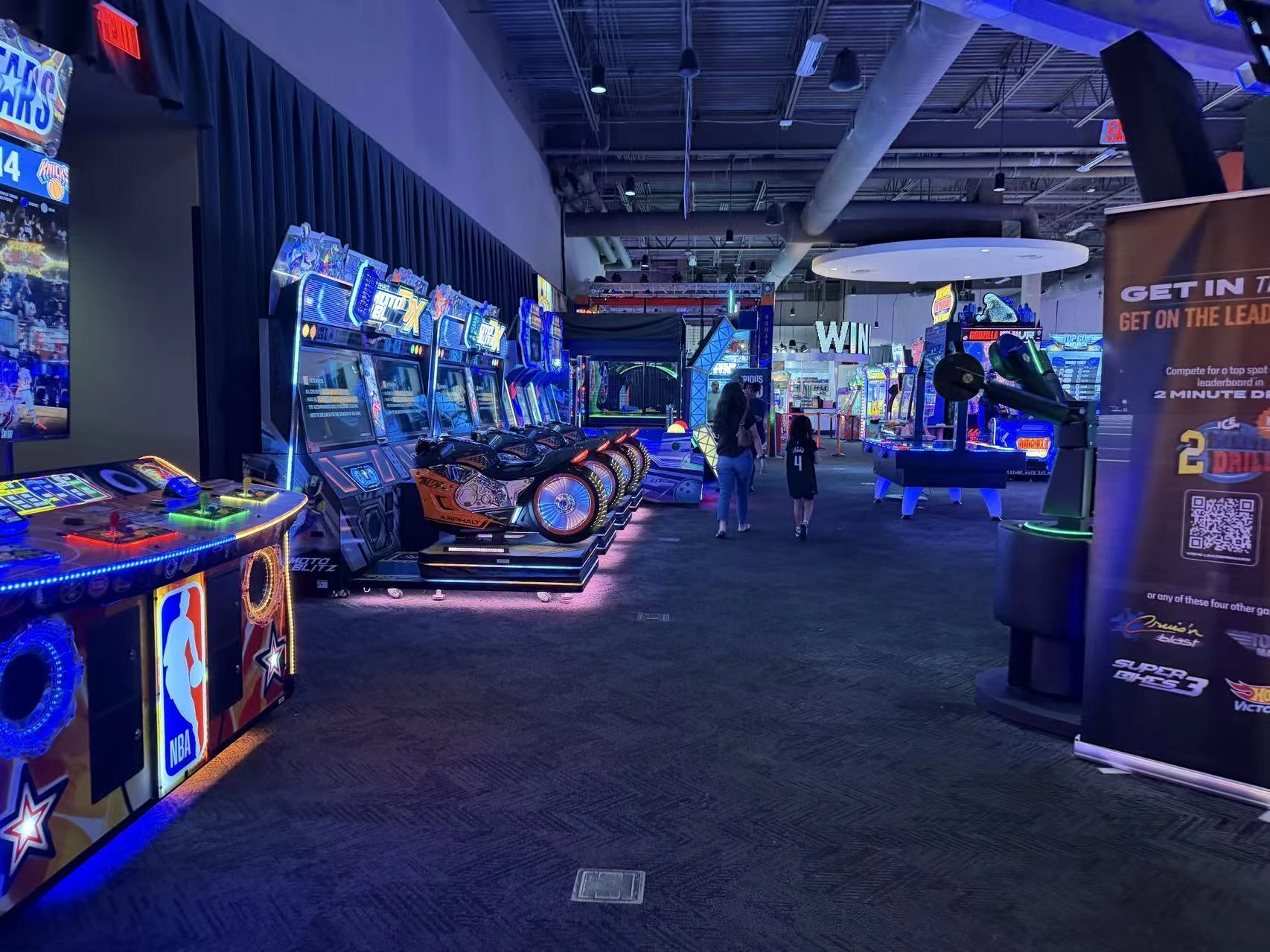

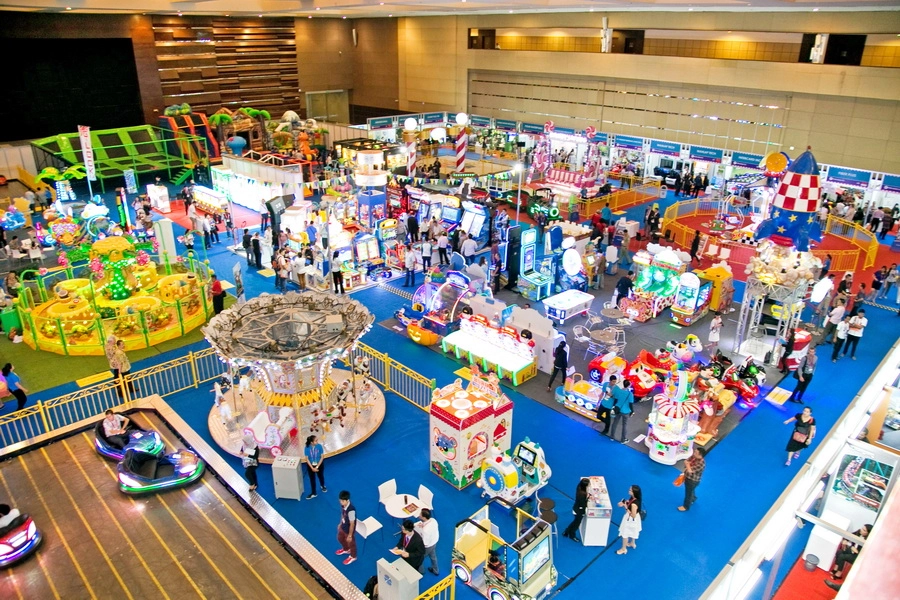
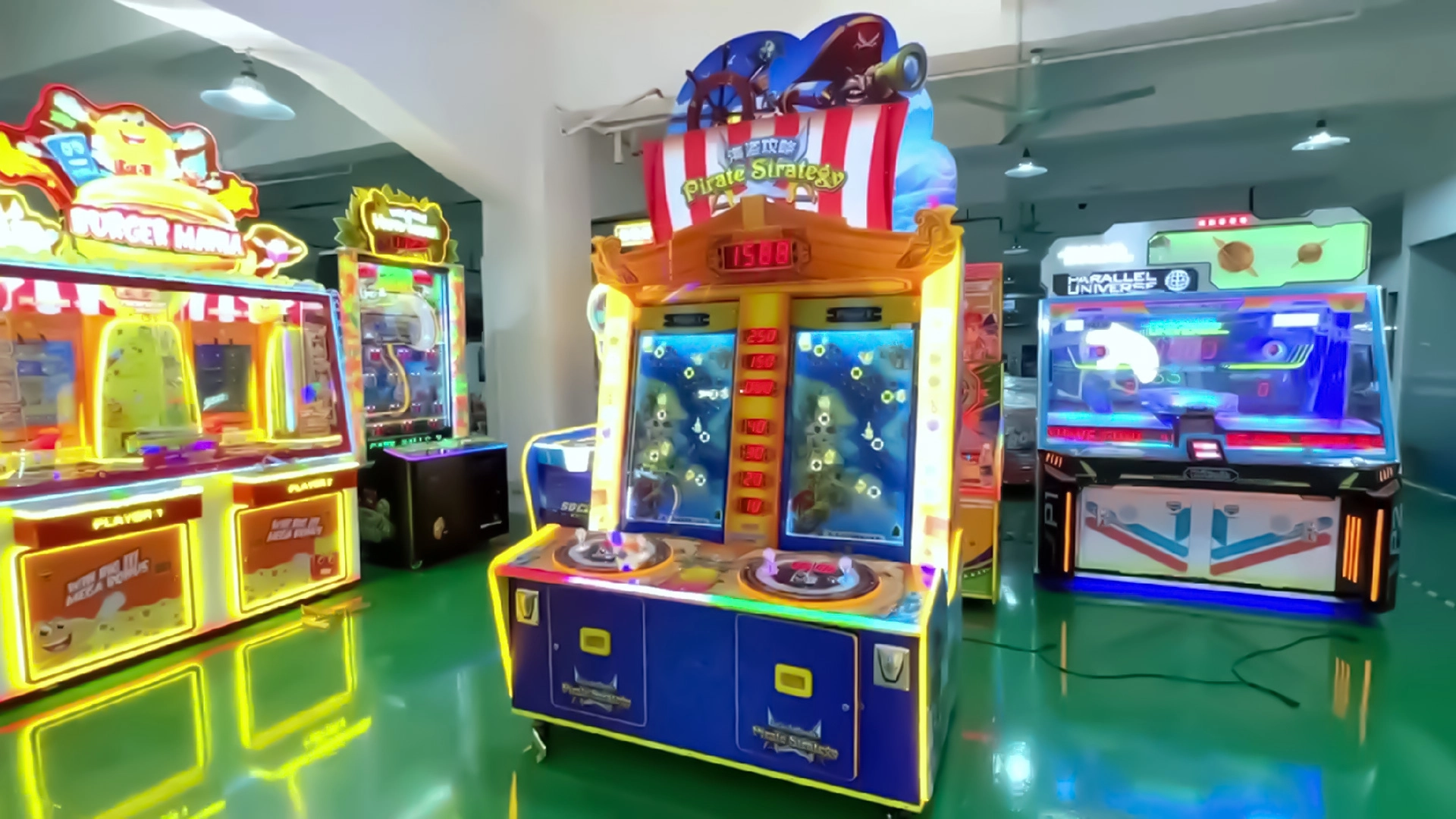
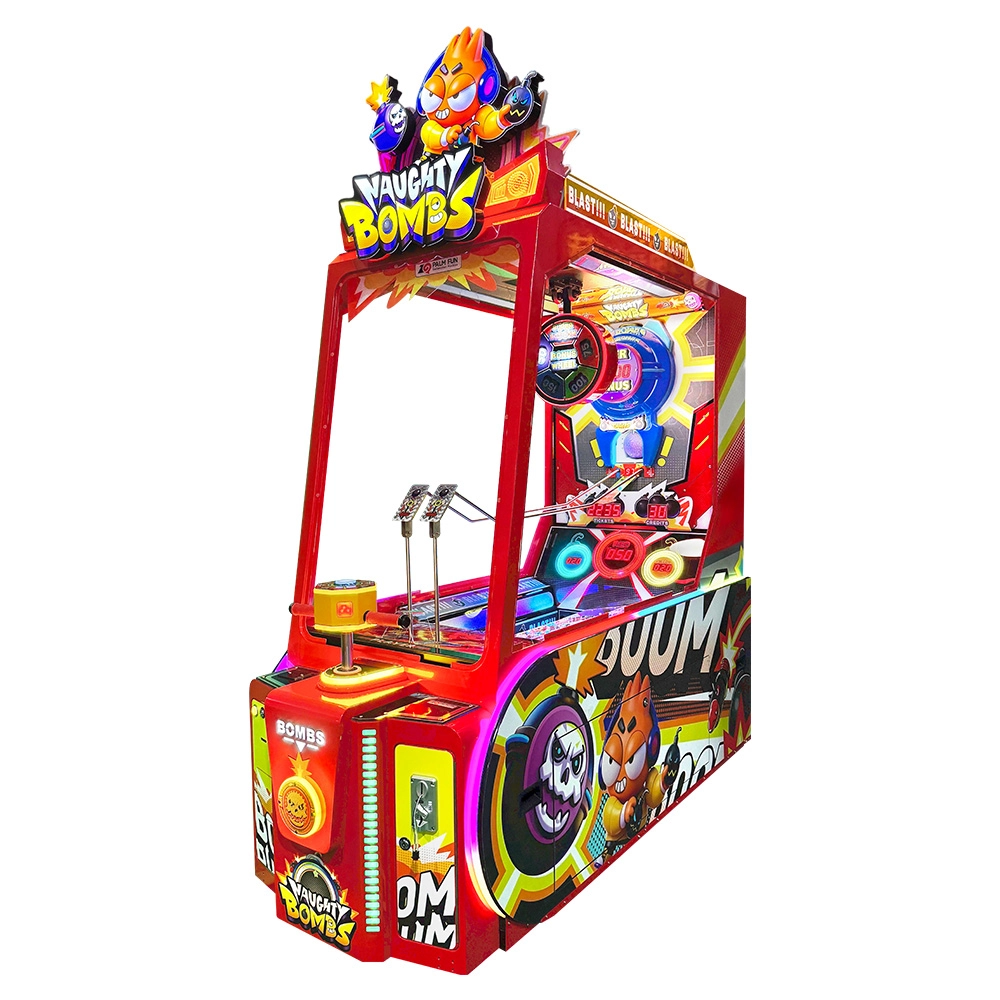
Naughty Bombs is a ball-drop redemption arcade game featuring rolling-ball gameplay, colored targets, ticket prizes, surprise bonus rewards, lighting and sound effects. Players use timing to launch and drop balls toward colored target areas. The product is presented for arcade, family entertainment center and other entertainment-venue projects, with customizable 110V / 220V AC voltage configuration.
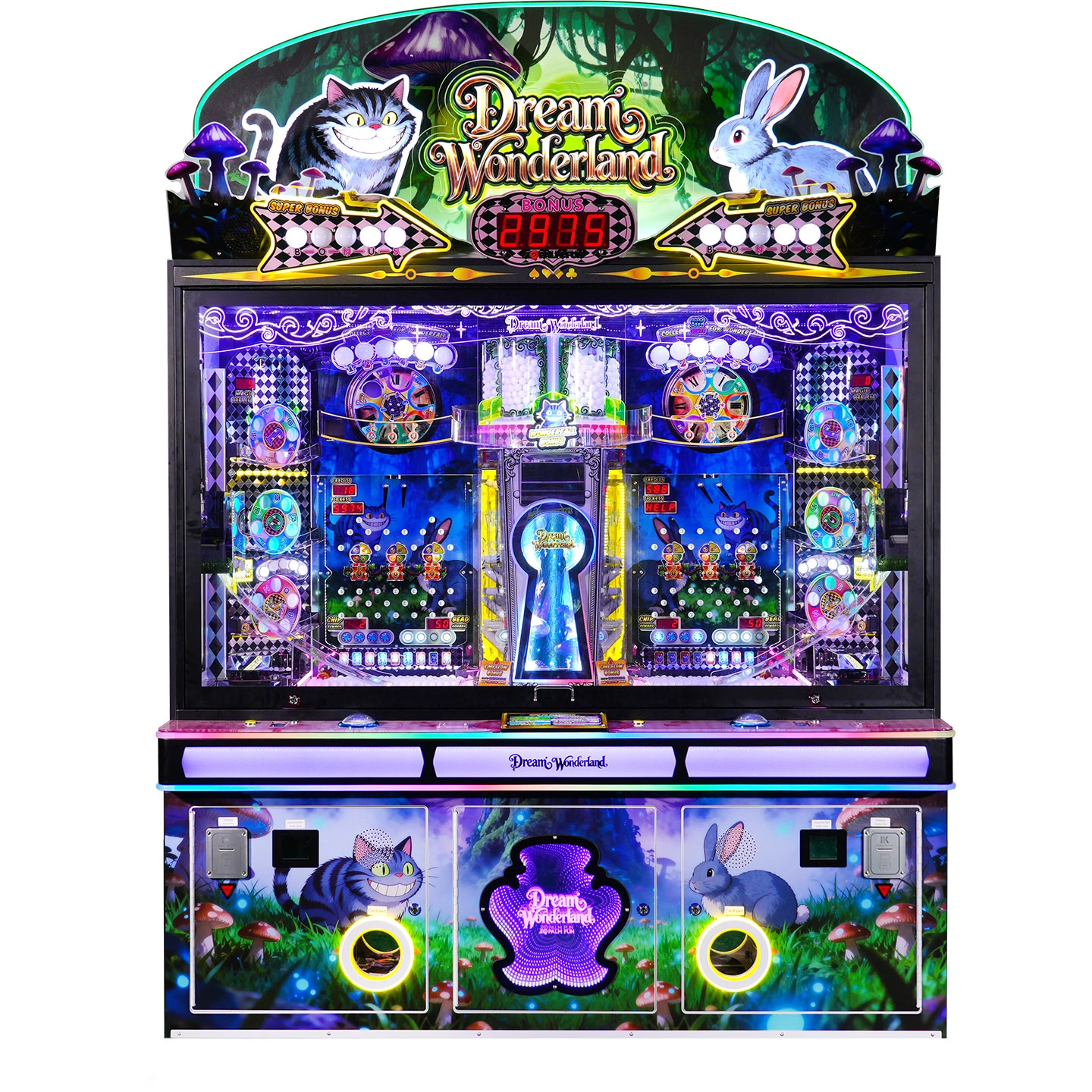
Enter Dream Wonderland — a magical marble pusher adventure filled with glowing lights, magic orbs, bonus wheels, collectible character cards, and exciting jackpot challenges.
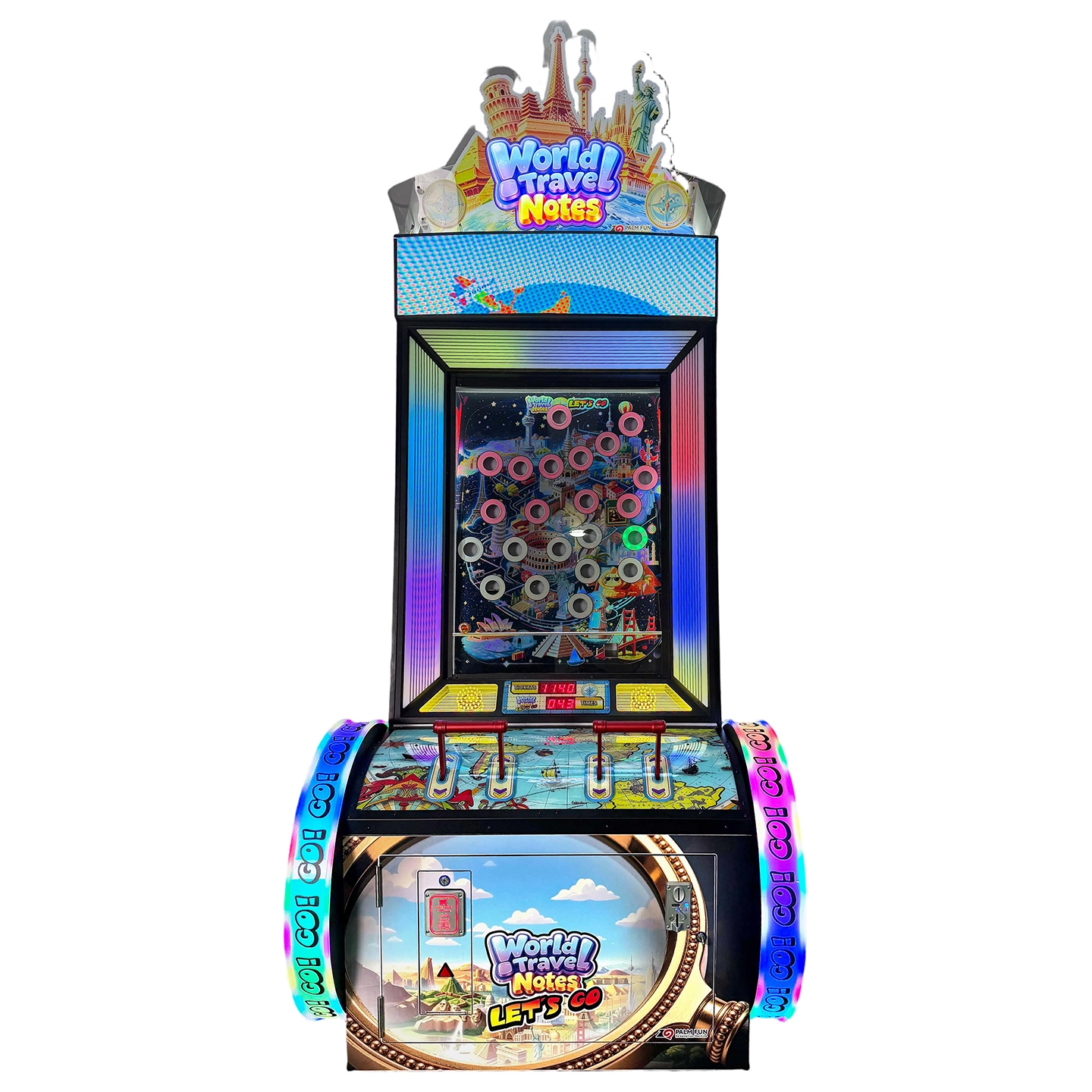
World Travel Notes is a skill-based balance ball redemption game with a fun world-travel theme. Players use two handles to control the balance bar and guide the ball into each target hole. As the game progresses, the targets become more challenging, leading players toward the final grand prize. With colorful world-travel graphics, dynamic RGB lighting, a live score display, and progressive difficulty, World Travel Notes is designed to attract attention and encourage repeat play in arcades, FECs, shopping malls, and other entertainment venues.

Copyright © 2026 PALM FUN All Rights Reserved. | Privacy Policy • Terms and Conditions | Sitemap
palmfunarcade
Palm Fun Arcade Game
Whatsapp: +8618126837443
PalmFun Arcade
PalmFun_Arcade
PALM FUN Redemption Machine