


Do Coin Pushers Pay Real Money? Cash vs Tickets Explained
Coin pusher money payouts explained: differences between cash, tickets, points and tokens, regional regulations, online games and commercial buyer checks.
- How Does a Coin Pusher Work, and What Can You Win?
- Real Money vs. Tickets vs. Tokens: What's the Difference?
- Are Cash-Paying Coin Pushers Legal?
- Are Online Coin Dozer Games and Viral Cash Videos Real?
- Can Timing or Skill Guarantee a Cash Payout?
- What Should Arcade Owners Check Before Buying a Coin Pusher?
- Frequently Asked Questions About Coin Pushers and Real Money
- Do coin pushers give you the money that falls?
- Are high-limit coin pusher videos proof of real cash prizes?
- Can a coin pusher game pay cash legally?
- Does a coin dozer mobile game pay real money?
- Does PALM FUN guarantee real-money payouts?
- Conclusion: A Coin Pusher Is Not Automatically a Cash Machine
Do coin pusher machines pay real money? Some regulated coin pusher configurations can award money where the applicable law and permitted machine category allow it, but many commercial arcade coin pushers provide tickets, points, tokens for play or merchandise-related rewards rather than cash. The words “coin pusher” describe a moving-shelf game mechanism, not a guaranteed method of earning cash. Always check the particular machine's rules, reward output and location before deciding what a win means.
A physical coin pusher in a family entertainment center is also different from an online coin-dozer app or a viral video claiming huge cash winnings. A game's marketing and visible stacks of money do not prove that the player will receive real currency. For arcade and FEC operators, the practical questions are whether the chosen reward system is permitted, what the equipment records, and how guests are told about awards.
How Does a Coin Pusher Work, and What Can You Win?
A conventional mechanical coin pusher has a moving shelf or platform and a field of coins, tokens or game pieces. A player inserts or releases a piece using the intended controls, and the shelf transfers force through the existing pieces. Some pieces may shift toward the edge, while other plays produce little visible movement. This mechanical result is separate from how a particular commercial machine credits a prize, ticket or other award.
Some models are configured to dispense or award tickets, others can register electronic points, and certain regulated categories may have money prizes. An operator should not infer reward type from the cabinet shape or the physical coins displayed inside. Even similar-looking machines may have different payout systems, control software and market restrictions. For an explanation of machine components and game operation, read how coin pusher mechanisms work.
Real Money vs. Tickets vs. Tokens: What's the Difference?
Cash, redemption tickets and play tokens are not interchangeable. Cash is money paid as a permitted prize; tickets or points normally represent value that can be exchanged under the venue's redemption policy; and game tokens may be usable only to activate games. A displayed number of coins or a virtual prize animation does not necessarily create a cash entitlement. Players should check the game rules and the venue's redemption conditions before spending money.
| Game result | What it means | Key check |
|---|---|---|
| Real cash prize | Money awarded under an applicable permitted game configuration | Licensing, permitted prize and stake rules |
| Paper tickets | Tickets used in the venue's supported redemption process | Exchange rules and eligible prizes |
| Electronic points | Recorded reward balance subject to the venue system | Account, card and redemption compatibility |
| Tokens or virtual coins | May represent game credits or simulated play pieces | Whether they are actually cash-redeemable |
At a typical ticket redemption counter, the operator should display how tickets or points are accumulated and what they can purchase. Do not assume that a gift card, token or third-party merchandise can legally be converted into cash in every market. If a reward appears inconsistent with the machine's displayed result, ask the venue staff to review the record rather than manipulate the cabinet.
Are Cash-Paying Coin Pushers Legal?
The legal answer is jurisdiction- and configuration-specific. A machine's moving mechanism does not determine its regulatory status on its own. Rules may consider the amount paid to play, whether chance influences the outcome, the type and maximum value of a prize, required permissions and the venue's eligibility. A skill-influenced game is not automatically exempt from gaming regulation, and a ticket-based format should not be presumed compliant without checking local requirements.
For a concrete example, Great Britain's Gambling Commission lists coin pushers (penny falls) among certain Category D gaming machines. Its official Category D guidance describes permitted combinations involving money and non-money prizes as well as premises restrictions. This confirms that some regulated coin pusher categories can involve cash; it does not mean such a machine can operate without the applicable permissions or that the same rules apply in the United States, China or another market.
For U.S. arcades, the relevant state and local requirements should be checked for the exact type of game, prize and site. Different states may categorize otherwise similar amusement products differently. Manufacturers can provide machine documentation, but the local operator should secure appropriate legal or regulatory advice before making cash-prize or high-stakes claims.
Are Online Coin Dozer Games and Viral Cash Videos Real?
Online coin-dozer games can simulate shelves, piles of coins, jackpots and prize collections while operating under app-specific rules. The coins visible on the screen may represent virtual currency rather than money withdrawable to a bank account. Even a game that advertises rewards may impose eligibility, withdrawal, identity-verification or regional restrictions. Never infer that a video or screenshot demonstrates a reliable way to make money.
Viral videos showing large notes or stacks of cash inside unusual cabinets can also omit important context. They may depict demonstrations, special installations, regulated gaming formats or scenes that cannot be independently verified. Before trusting a claim, check an identified operator, current published rules and independent evidence of lawful payout. Avoid sharing financial information or paying additional fees based only on an unverified “guaranteed withdrawal” promise.
Can Timing or Skill Guarantee a Cash Payout?
No. A player may observe the pusher shelf and use supported controls more deliberately, but that does not give control over every coin, token or moving part. Small changes in a stack can affect whether a piece moves toward the edge or remains in place. Even when a game involves timing or observation, a favorable result is not assured and the available award depends on the actual machine configuration.
Claims such as “every coin near the edge must fall next,” “the machine is due to pay,” or “this sequence guarantees a cash win” should not be treated as universal advice. A sensible player reads the rules, sets a spending limit and uses only intended controls. An arcade operator should avoid displaying guaranteed-win marketing unless the specific rule genuinely provides the stated outcome. More gameplay detail appears in coin pusher tips and common myths.
What Should Arcade Owners Check Before Buying a Coin Pusher?
Commercial buyers should identify the intended audience and permitted reward arrangement before selecting a model. Ask for documented gameplay, cabinet dimensions, electrical requirements, player positions, actual ticket or point interface, maintenance access, spare-parts arrangements and the responsibilities for delivery and support. A machine advertised as a “cash pusher” may require a completely different regulatory assessment from ordinary FEC ticket equipment.
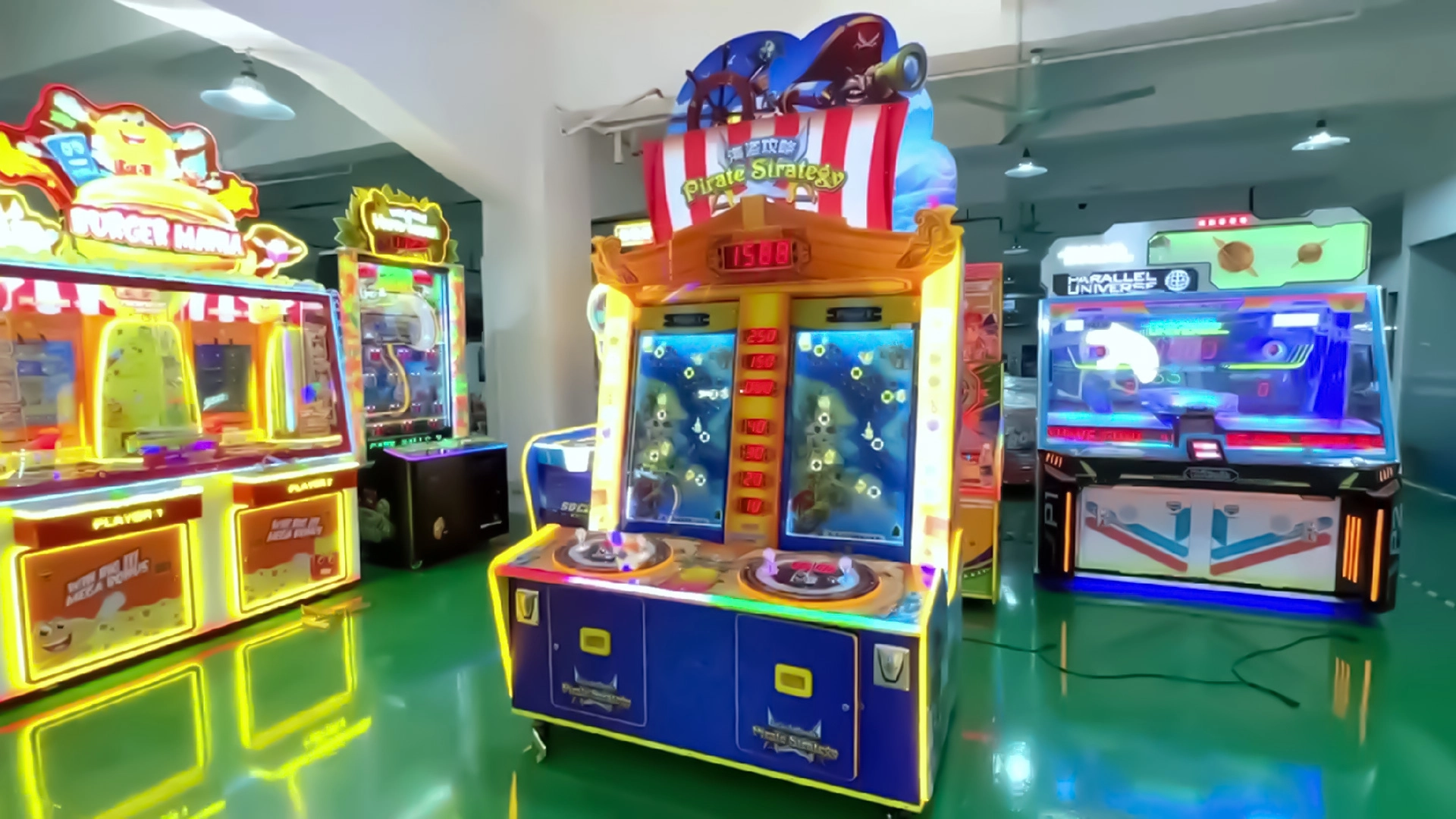
PALM FUN's Burger Mania Coin Pusher Machine is an example of mechanical redemption equipment. Its product name and visible coin-pushing playfield should not be interpreted as a promise of direct cash payouts. Buyers must confirm the model-level reward configuration and destination-market rules instead of assuming the game produces real-money winnings. The company can discuss those details when an operator provides the venue location, required gameplay and expected quantity.
Frequently Asked Questions About Coin Pushers and Real Money
Do coin pushers give you the money that falls?
Not necessarily. A visible fall may produce a result in a ticket, token or points system rather than physical cash. Check the particular machine's published rules to understand what can be collected and redeemed.
Are high-limit coin pusher videos proof of real cash prizes?
No. A video alone does not establish the operator's identity, legal conditions or whether a purported cash award was paid. Verify the venue and the actual game rules independently.
Can a coin pusher game pay cash legally?
Some specifically regulated configurations can, as shown by Great Britain's Category D guidance. Whether a particular machine is lawful depends on its market, venue, prize conditions and permissions. The rules are not interchangeable across countries or states.
Does a coin dozer mobile game pay real money?
Do not assume that virtual coins represent withdrawable cash. Review the app's official eligibility, payment and withdrawal rules, and look for independent verification. A simulated cash animation is not evidence of an actual payout.
Does PALM FUN guarantee real-money payouts?
No. PALM FUN's current coin pusher product listing describes mechanical redemption gameplay, not an unconditional cash-payout promise. Commercial buyers should request the exact model's documented reward settings and check destination-market requirements.
Conclusion: A Coin Pusher Is Not Automatically a Cash Machine
Some regulated coin pushers can award money, but many commercial arcade games instead use tickets, points, tokens or other configured rewards. The mechanical action on the shelf does not alone answer whether a player receives cash. For safe and accurate purchasing decisions, verify the actual machine, local rules, payout format and redemption process before making claims about real-money wins. Operators who need a model-specific redemption quotation can contact PALM FUN with their venue and destination-market requirements.



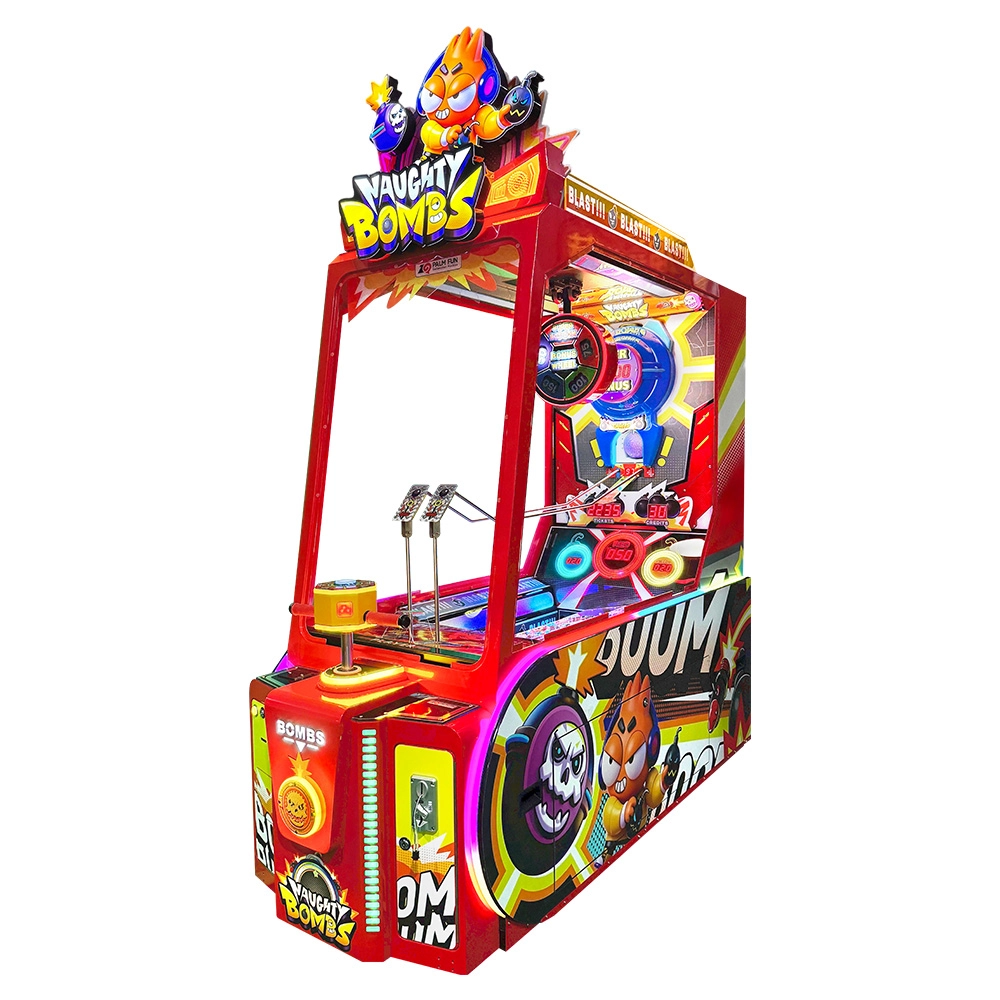
Naughty Bombs is a ball-drop redemption arcade game featuring rolling-ball gameplay, colored targets, ticket prizes, surprise bonus rewards, lighting and sound effects. Players use timing to launch and drop balls toward colored target areas. The product is presented for arcade, family entertainment center and other entertainment-venue projects, with customizable 110V / 220V AC voltage configuration.
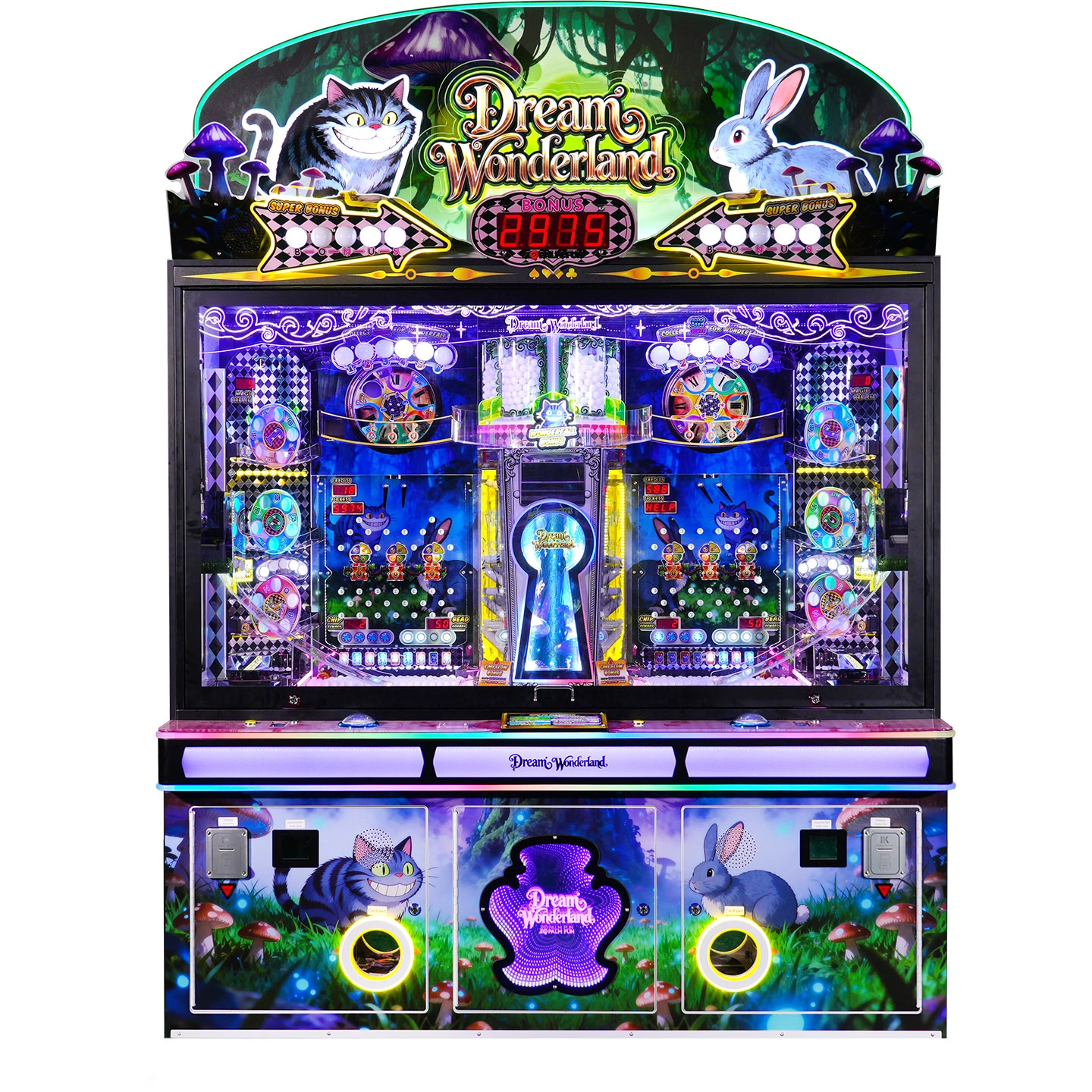
Enter Dream Wonderland — a magical marble pusher adventure filled with glowing lights, magic orbs, bonus wheels, collectible character cards, and exciting jackpot challenges.
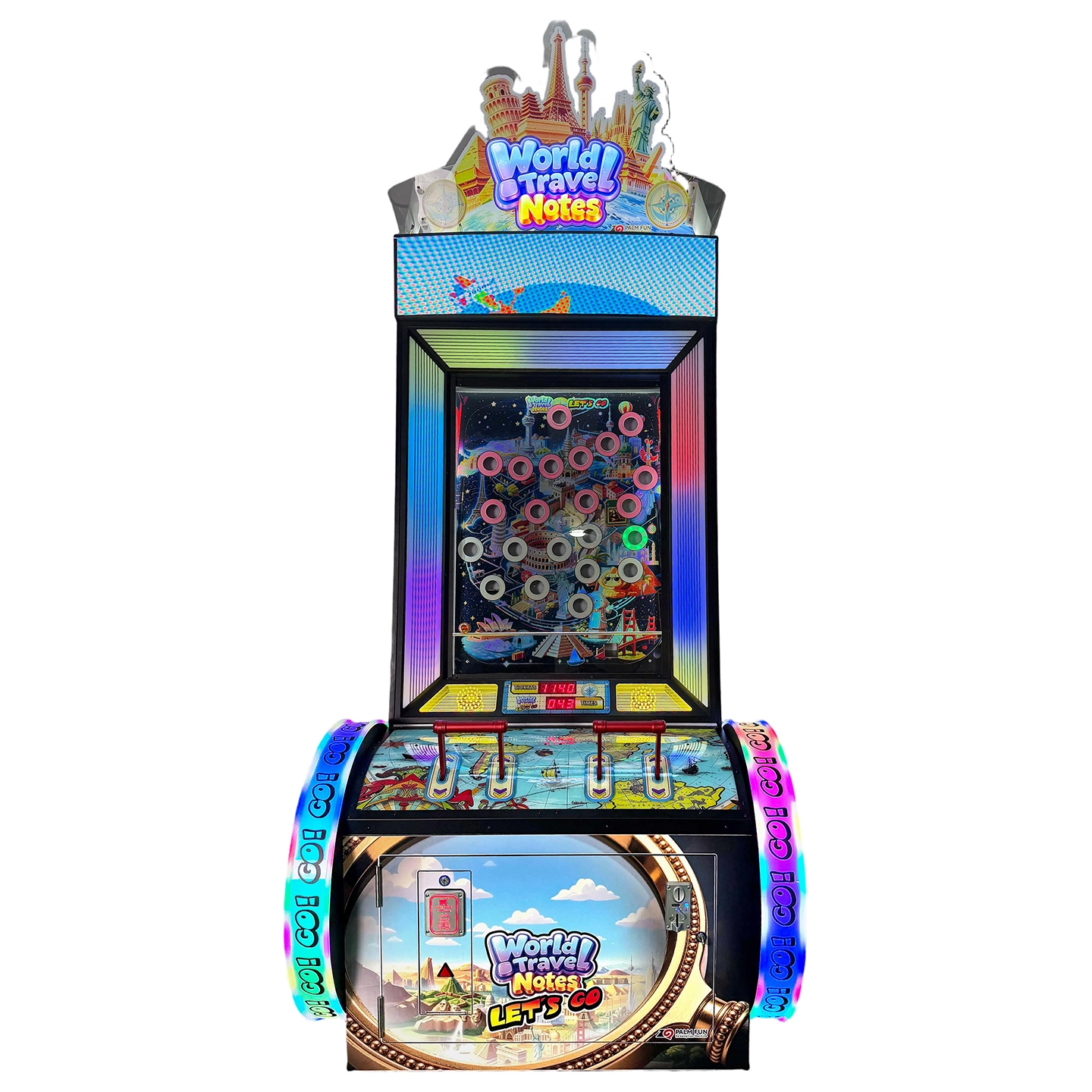
World Travel Notes is a skill-based balance ball redemption game with a fun world-travel theme. Players use two handles to control the balance bar and guide the ball into each target hole. As the game progresses, the targets become more challenging, leading players toward the final grand prize. With colorful world-travel graphics, dynamic RGB lighting, a live score display, and progressive difficulty, World Travel Notes is designed to attract attention and encourage repeat play in arcades, FECs, shopping malls, and other entertainment venues.
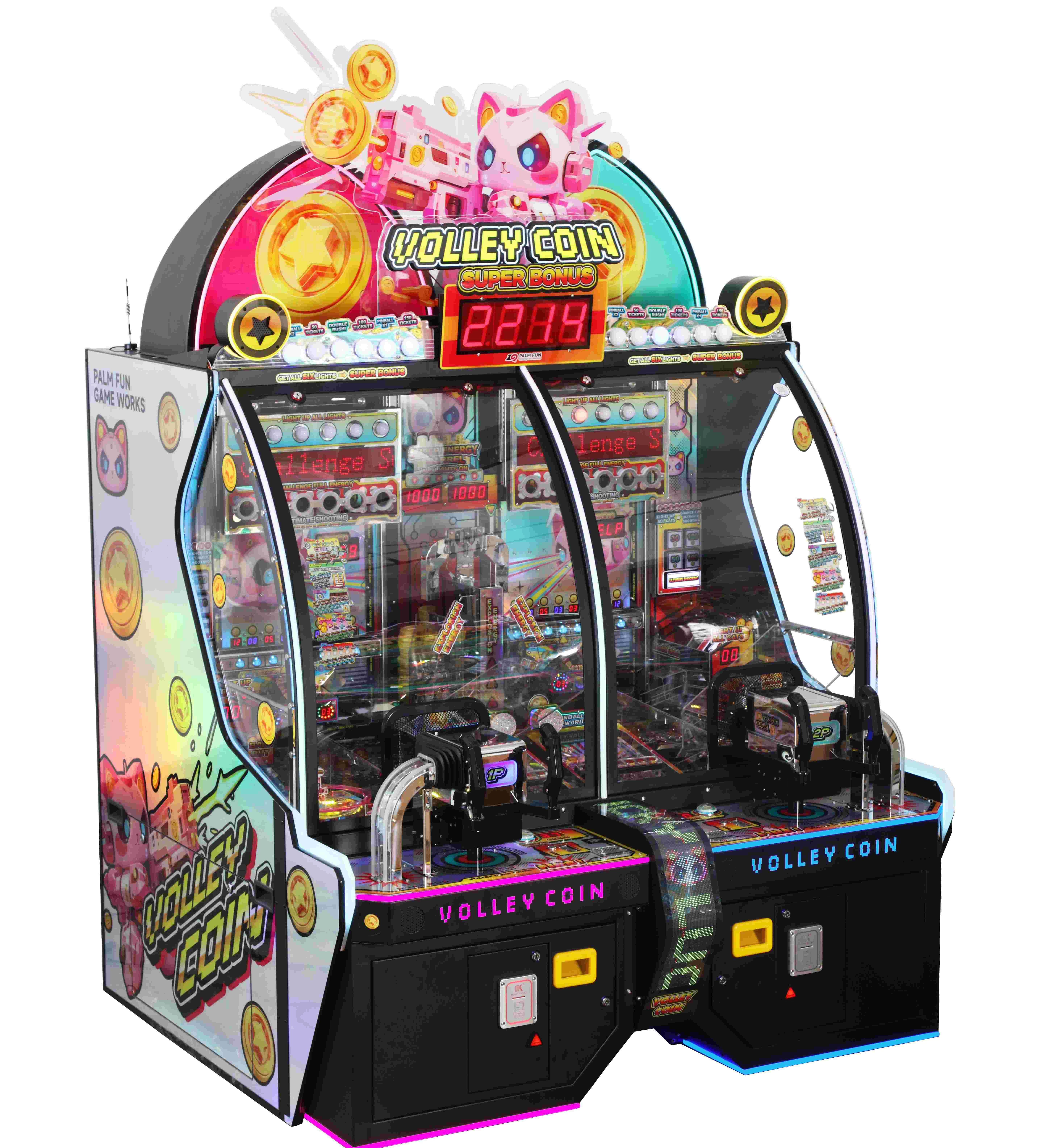
Volley Coin is an innovative arcade ticket redemption machine developed by Palm Fun Electronics. Combining the excitement of a fast-paced token shooter game with the proven earning power of a traditional coin pusher machine, Volley Coin offers a fresh and engaging gameplay experience that appeals to players of all ages.

Copyright © 2026 PALM FUN All Rights Reserved. | Privacy Policy • Terms and Conditions | Sitemap
palmfunarcade
Palm Fun Arcade Game
Whatsapp: +8618126837443
PalmFun Arcade
PalmFun_Arcade
PALM FUN Redemption Machine