








How to Explain Ticket Redemption to Arcade Players: FEC Operator Guide
A practical guide for arcade and FEC operators on explaining the play-to-prize cycle, improving ticket and prize signage, training staff and monitoring redemption systems.
- 1. Explain the Play–Ticket–Prize Cycle
- 2. Use Clear Signs, Screens and Staff Explanations
- 3. Make Prize Goals Understandable Without Overpromising
- 4. Teach Players Through Demonstrations and Hands-On Help
- 5. Train Staff to Handle Common Redemption Questions
- 6. Monitor the Player Experience and Operating Costs
- Frequently Asked Questions About Arcade Ticket Redemption
- How do arcade tickets work?
- What is the best way to explain ticket redemption to first-time players?
- Can players save or combine arcade tickets?
- How can staff resolve ticket or prize disputes?
- Do redemption arcade machines all use the same ticket system?
- Conclusion: Make the Play-to-Prize Journey Clear

How should arcade operators explain ticket redemption to new players? Show the complete play-to-prize process before a player begins: how game results produce tickets or points, where that balance appears, which prizes are available and how to redeem them. Use visible instructions near machines, short staff explanations and an easy-to-find redemption counter. The exact reward rules depend on the venue and game, so signage should describe the real system rather than promise a particular number of tickets.
A clear ticket redemption experience helps guests understand what they are collecting and what to do next. For venue operators, the objective is not simply to make players collect more tickets; it is to reduce confusion, set fair expectations and make the journey between gameplay and prize selection easier. This approach works for an arcade, family entertainment centre (FEC) or another venue with ticket-based redemption games.
1. Explain the Play–Ticket–Prize Cycle
Players need to understand four separate steps: starting a game, receiving its result, accumulating redeemable value and choosing a prize. A ticket redemption game can provide paper tickets, electronic tickets or points according to its configuration. A prize counter or supported redemption system then converts that accumulated value into a reward under the venue's rules. When these steps are explained together, visitors can follow the experience without guessing what a game result means.
Display a simple sequence where it is easy to read: Play a game → Earn eligible tickets or points → Check your balance → Choose a qualifying prize. If your venue supports saving value across visits, pooling balances or using cards, explain those options and any restrictions. If it does not, do not imply that such features are available. Every statement on the sign should match the actual operation of the machines and prize counter.
Operators who need a broader definition of the equipment and reward loop can refer to what redemption arcade games are and how their reward systems work. This article instead concentrates on the practical instructions that venue staff can provide to players.
2. Use Clear Signs, Screens and Staff Explanations
Place basic instructions at the point where guests first encounter a redemption game, with more detailed rules near the prize area. The game-side message should explain how to start, what the result means and where to see earned tickets or points. The redemption counter should display current prize requirements and the steps for exchanging a balance. Staff should be able to explain the same rules in ordinary language without contradicting the signage.
Text should be readable at the distance from which a guest approaches the machine. Use simple labels and a consistent vocabulary: avoid switching between “ticket,” “credit,” “point” and “token” as though they are always interchangeable. Where appropriate, use icons or a short demonstration to help families, first-time players and visitors who speak different languages. Check that electronic screens, printed signs and the system itself show the same information when prize requirements change.
| Guest touchpoint | Essential message | Operator check |
|---|---|---|
| Game cabinet | How play starts and how the result is recorded | Instructions match this machine and reward configuration |
| Ticket or point balance | Where guests can see and verify earned value | Display or card system is functioning correctly |
| Prize area | Available prizes, required balances and redemption steps | Labels, inventory and actual prize rules agree |
| Staff assistance | How to answer questions and resolve missing or disputed value | A clear escalation and correction procedure exists |
3. Make Prize Goals Understandable Without Overpromising
Reward displays can help guests understand why tickets matter, but they should be accurate and easy to compare. Organize prizes so guests can find the ticket or point requirement without searching through unrelated information. Mark unavailable items and explain whether prizes can be substituted. If the venue offers different reward tiers, show what each level actually requires rather than suggesting that repeated play always leads to a specific prize.
Promotions and incentives need clear terms. Operators may choose to communicate event-specific offers or redemption options, provided they are genuinely supported by the venue system and comply with applicable rules. Avoid statements that imply guaranteed wins or that obscure the real cost of trying again. The purpose of prize communication is to give players usable information and keep their expectations aligned with the actual redemption experience.
Staff can also explain that the tickets earned on one game are not necessarily the same as the number needed for a particular prize. A player may choose to redeem immediately or retain eligible value where the venue's policy permits it. When ticket requirements are visible, guests can make choices without feeling misled at the counter. Regular checks help ensure display labels remain consistent with available stock and system settings.
4. Teach Players Through Demonstrations and Hands-On Help
Some guests understand the redemption process best by watching a brief demonstration. A staff member can show where play credits appear, which screen reports a game result and how a ticket balance is checked. For paper-ticket systems, demonstrate where tickets are collected and presented. For electronic systems, explain the card, wristband or account step if that is how the particular venue operates.
Demonstrations should use the actual game and payment system rather than a generic description copied from another cabinet. Let guests see the difference between playing a game and redeeming a reward. For younger visitors, explain the process in short steps while leaving purchasing and supervision decisions to the accompanying adult. If a machine has a malfunction or the balance cannot be confirmed, staff should follow the venue's correction procedure instead of offering an unsupported guarantee.

Ball-drop and mechanical redemption games provide useful examples because the game result can be visually connected to the reward display. PALM FUN's Naughty Bombs Ball Drop Redemption Arcade Game Machine, for example, is listed in its current product information as a timing-based rolling-ball game featuring ticket prizes and bonus rewards. The exact ticket and bonus setup should still be checked for the purchased configuration. Teaching staff to distinguish gameplay from prize redemption helps prevent confusion about what a moving ball or game result actually awards.
5. Train Staff to Handle Common Redemption Questions
A good ticket-redemption explanation should be consistent across the game floor and prize counter. Prepare a short script covering where tickets come from, where the balance is shown, how current prize requirements are checked and whom a guest should contact if something looks wrong. The explanation should be specific to the venue's rules, not built around a generic assumption that all game machines behave identically. Train staff to avoid promising ticket amounts, prize availability or results that they cannot verify.
Common service situations include a visitor who cannot find a balance, a paper ticket that does not scan, a reward shown on a sign that is no longer in stock, or a player who misunderstands the difference between credits and tickets. Staff should know how to check the system, document an issue when appropriate and escalate exceptions to the responsible operator. Resolving these questions clearly is part of the player experience. It can also reveal signage or process problems that need attention across the venue.
6. Monitor the Player Experience and Operating Costs
After placing signs and training staff, operators should check whether guests can actually complete the redemption journey. Observe where first-time players ask questions, how often staff need to explain the same step, whether the prize display matches the current system and whether machines record ticket or point outcomes correctly. Repeated questions at one location can indicate that a sign is unclear or placed too far from the relevant equipment. These observations can guide small operational improvements without requiring a complete layout redesign.
Ticket redemption also creates operating costs that must be monitored independently from guest satisfaction. Track actual prize costs, the value awarded by the configured games, stock availability, equipment service needs and any time spent resolving redemption errors. A popular reward programme is not automatically a profitable one, and a higher number of issued tickets should not be treated as a success metric by itself. Use venue-level records to balance an understandable reward experience with sustainable operating costs.
- Instruction clarity: Record repeated player questions and identify the point at which confusion occurs.
- System accuracy: Check that game results, ticket balances and redemption records align.
- Prize availability: Reconcile displayed prizes and their requirements with actual inventory.
- Support workload: Review machine incidents, counter disputes and time spent resolving them.
- Operating economics: Compare play revenue with relevant reward, maintenance and venue costs; avoid interpreting ticket count as profit.
Frequently Asked Questions About Arcade Ticket Redemption
How do arcade tickets work?
Eligible ticket redemption games award paper tickets, electronic tickets or points according to their configured rules and game results. Guests collect that value and may exchange it for qualifying prizes through the venue's redemption process. The way a balance is stored and transferred depends on the local system. Signs and staff explanations should reflect what the installed equipment actually supports.
What is the best way to explain ticket redemption to first-time players?
Use a short sequence that connects playing, earning redeemable value, checking the balance and choosing a prize. Show the current prize requirements and tell guests where to ask questions. A brief demonstration can help when the system uses cards or electronic tickets. Avoid promising a guaranteed result from any game.
Can players save or combine arcade tickets?
It depends on the venue's ticket, card or account system and its published policies. Some systems may support stored value or other options, while others require a different redemption process. Operators should explain relevant conditions clearly at the counter and on player-facing signs. Never advertise a feature that the installed system does not support.
How can staff resolve ticket or prize disputes?
Staff should first check the recorded game result or balance and the prize requirement shown in the current system. If a discrepancy appears, follow the venue's established correction and escalation procedure. Document recurring issues so the operator can check equipment and signage. Do not make unverified promises about awards or refunds.
Do redemption arcade machines all use the same ticket system?
No. Different machines and venues can use paper tickets, digital balances, points or other supported reward formats. Even two mechanical games may require different redemption settings and equipment interfaces. Buyers should verify compatibility with the venue's existing reward and payment systems before placing an order. Local legal and technical requirements should also be checked.
Conclusion: Make the Play-to-Prize Journey Clear
Helping players understand ticket redemption starts with accurate information, not more promotional language. Explain the steps at the machine, repeat them consistently through staff and signage, and make the prize counter easy to understand. Review how the system works in practice and correct points of confusion before they become recurring complaints. This makes the process easier for guests to navigate while giving operators a better view of service quality and reward costs.

For arcade and FEC projects, machine selection is only one part of the redemption experience. Operators must also confirm their prize system, ticket handling, available space, maintenance access and the requirements of their destination market. Buyers comparing PALM FUN's mechanical redemption equipment can discuss the venue's gameplay and reward-system requirements before choosing a model or configuration.



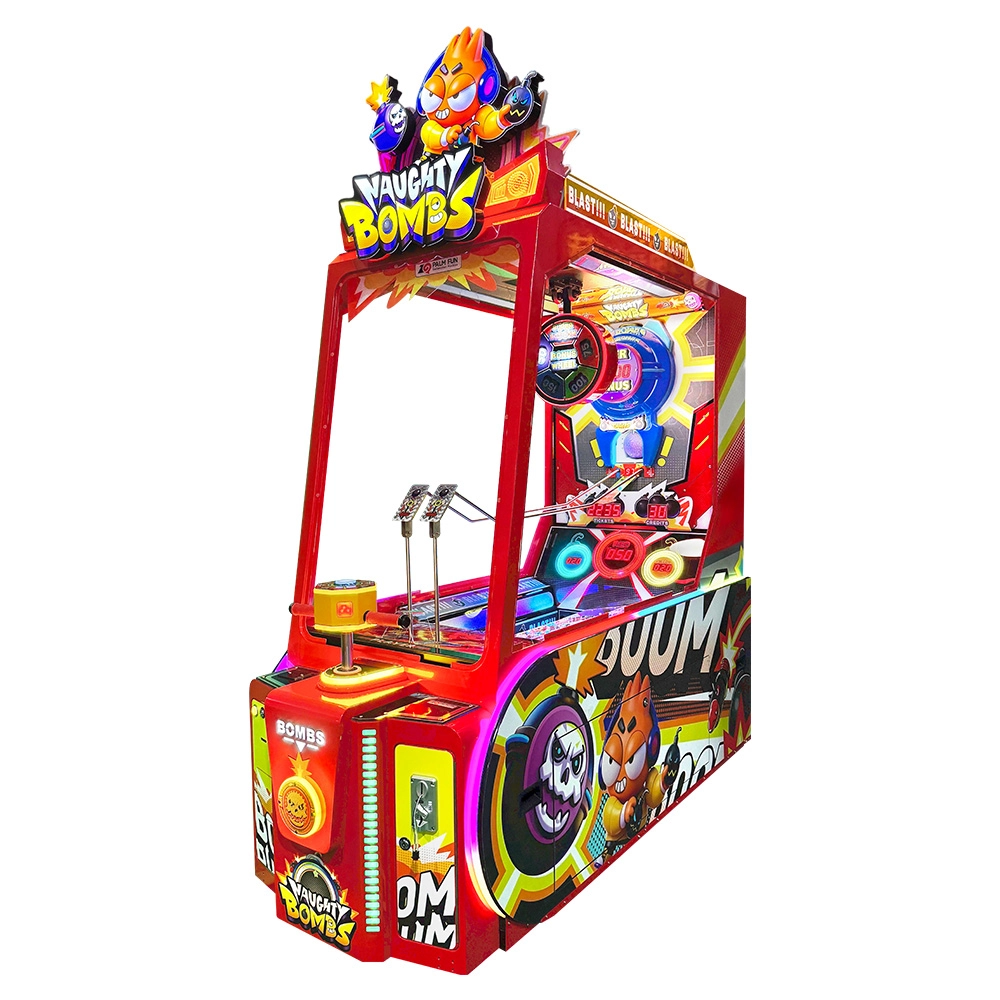
Naughty Bombs is a ball-drop redemption arcade game featuring rolling-ball gameplay, colored targets, ticket prizes, surprise bonus rewards, lighting and sound effects. Players use timing to launch and drop balls toward colored target areas. The product is presented for arcade, family entertainment center and other entertainment-venue projects, with customizable 110V / 220V AC voltage configuration.
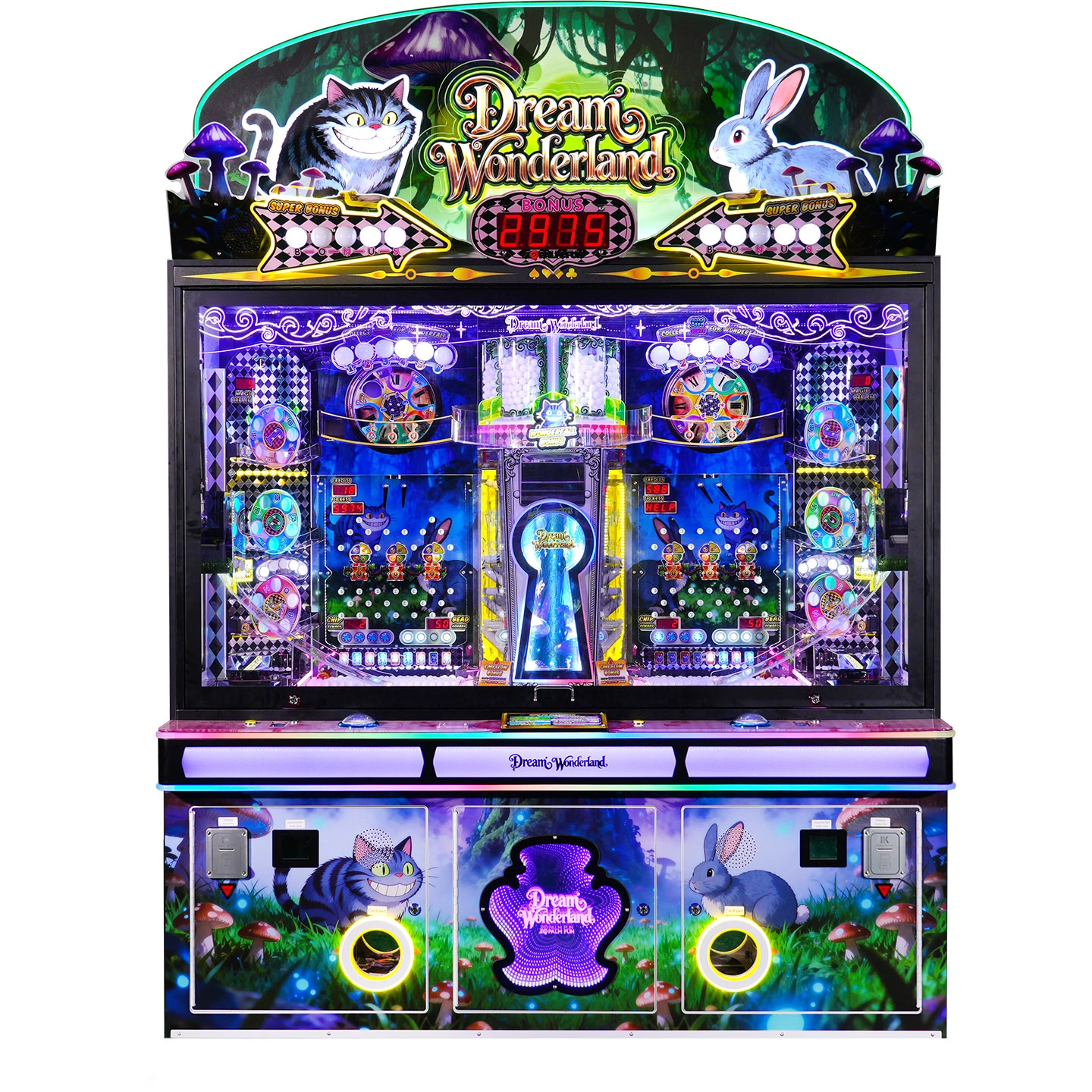
Enter Dream Wonderland — a magical marble pusher adventure filled with glowing lights, magic orbs, bonus wheels, collectible character cards, and exciting jackpot challenges.
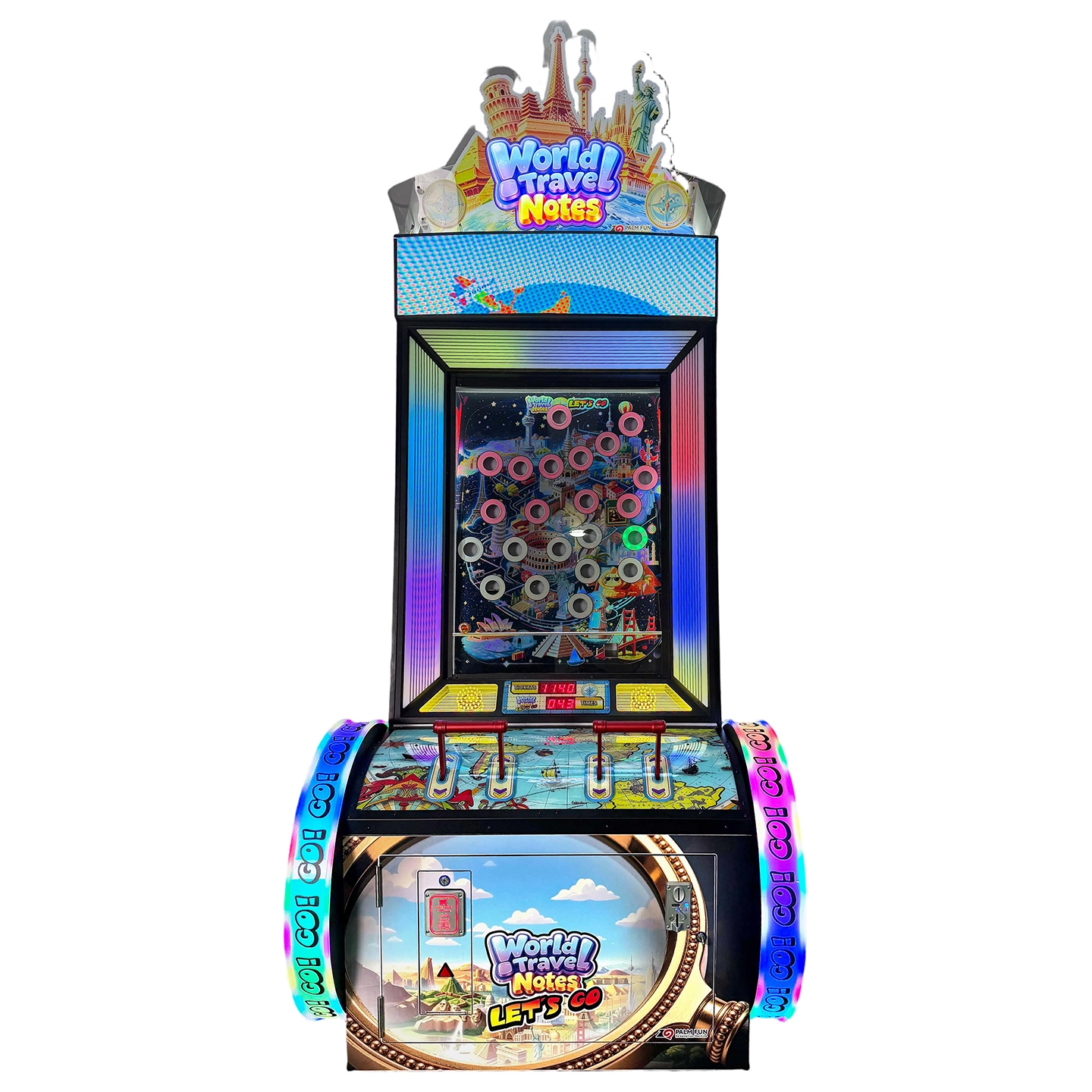
World Travel Notes is a skill-based balance ball redemption game with a fun world-travel theme. Players use two handles to control the balance bar and guide the ball into each target hole. As the game progresses, the targets become more challenging, leading players toward the final grand prize. With colorful world-travel graphics, dynamic RGB lighting, a live score display, and progressive difficulty, World Travel Notes is designed to attract attention and encourage repeat play in arcades, FECs, shopping malls, and other entertainment venues.
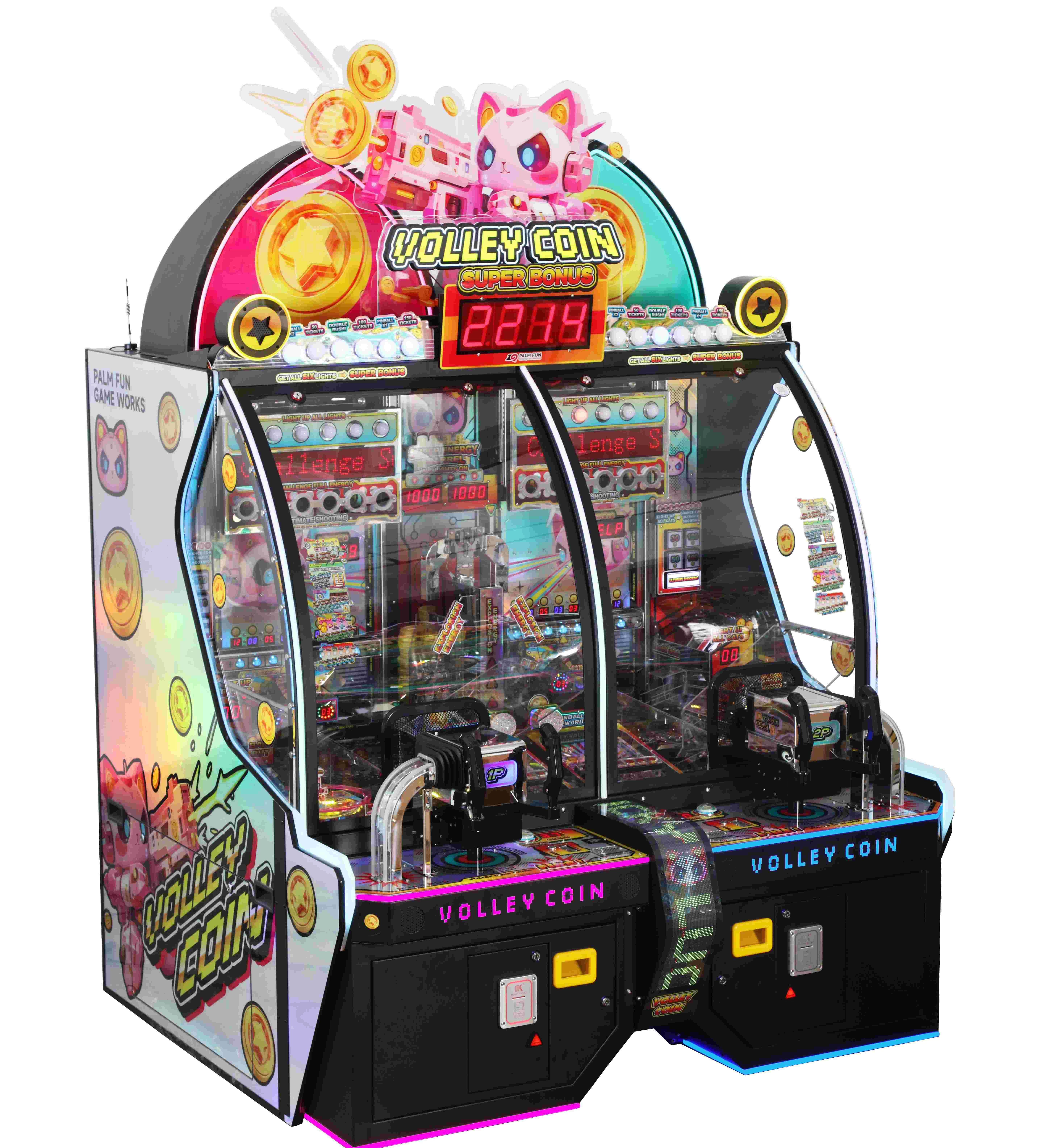
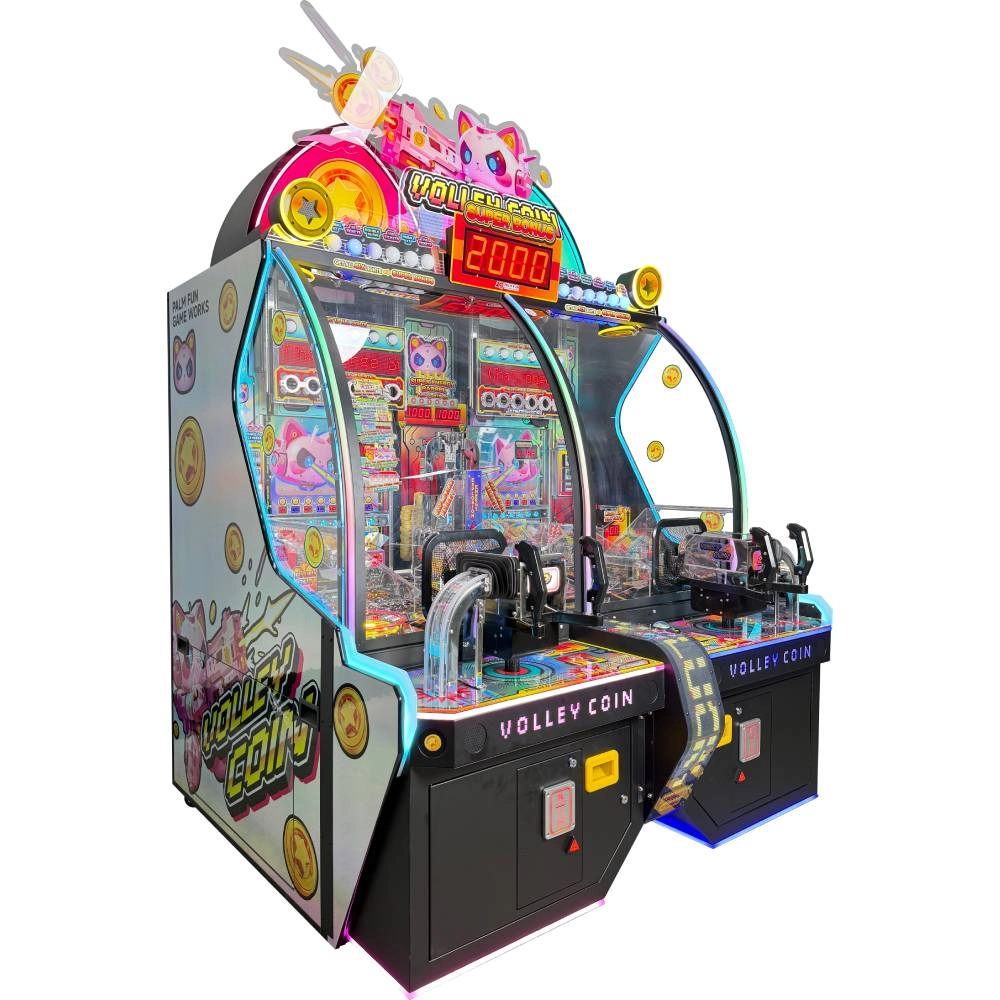
Volley Coin is an innovative arcade ticket redemption machine developed by Palm Fun Electronics. Combining the excitement of a fast-paced token shooter game with the proven earning power of a traditional coin pusher machine, Volley Coin offers a fresh and engaging gameplay experience that appeals to players of all ages.

Copyright © 2026 PALM FUN All Rights Reserved. | Privacy Policy • Terms and Conditions | Sitemap
palmfunarcade
Palm Fun Arcade Game
Whatsapp: +8618126837443
PalmFun Arcade
PalmFun_Arcade
PALM FUN Redemption Machine