


Redemption Arcade Game Categories: FEC Game Mix & Costs
An FEC operator guide to redemption game categories, comparing mechanical coin pushers, ball-drop games, hybrids and merchandisers without unsupported top-earning claims.
- Quick Answer: Which Redemption Games Suit Different FECs?
- Compare Common Arcade Redemption Game Categories
- Mechanical Coin Pushers: Physical Play and Multiplayer Formats
- Ball-Drop and Timing-Based Redemption Games
- Hybrid Redemption: Shooting and Pushing Combined
- How Prize Merchandisers and Ticket Games Fit the Floor
- How to Estimate Revenue and Costs for Each Redemption Category
- Practical FEC Game Mix and Supplier Selection Checklist
- Frequently Asked Questions About Redemption Game Categories
- Which arcade redemption game type earns the most money?
- Are coin pushers more profitable than claw machines?
- What is the difference between a ball-drop game and a coin pusher?
- Do all FEC redemption machines use paper tickets?
- What should a distributor ask before sourcing redemption machines?
- Conclusion: Build a Balanced Redemption Arcade Game Mix
Which redemption game categories should an FEC include to improve its arcade game mix? Coin pushers, ball-drop games, aiming and timing-based redemption games, hybrid mechanical games, and prize merchandisers can all play different roles in a family entertainment center. Their revenue potential depends on actual paid plays, guest preferences, ticket and prize costs, cabinet space, uptime and local rules. There is no independently verified universal ranking that makes one category the highest earning for every location.
The right starting point is to classify games by player action and reward system rather than by claims of guaranteed returns. A coin pusher creates a moving physical playfield; a ball-drop game asks players to time or aim a release; a hybrid game combines mechanics; and a claw machine may deliver an item directly. These formats need different purchase and operating assessments. The following comparison is intended for FEC operators, distributors and venue planners evaluating an actual commercial floor.
Quick Answer: Which Redemption Games Suit Different FECs?
There is no single best revenue-producing redemption game category. Choose categories that support the venue's customer groups, available space, staff capacity and reward infrastructure. A compact arcade corner may need a small, understandable range of machines, while a larger family entertainment center can offer several play styles and a separate redemption counter. An operator should measure performance per installed game and floor area rather than infer profit from a machine's appearance.
Industry guidance from IAAPA's Funworld discusses why venues often combine ticket redemption, merchandise attractions and video games rather than filling every position with the same format. The IAAPA article on building an arcade offers an industry practitioner's example of category-mix planning, not a mandatory proportion that applies to every project. Actual game selection should be tested against the location's guest demand and cost model.

Compare Common Arcade Redemption Game Categories
The differences below are based on gameplay and operator responsibilities, not an unsupported ranking of machine profits. For each category, verify the exact product's credit input, award system, game duration, number of players and space requirements. A name such as “pinball,” “lottery,” or “coin-operated” may describe a theme rather than the same physical mechanism or legal category across all suppliers.
| Game category | Typical player experience | FEC buying consideration |
|---|---|---|
| Mechanical coin pusher | Coins or tokens interact with a moving playfield | Player positions, moving parts and reward settings |
| Ball-drop / rolling-ball | Timed launch or release toward scoring targets | Ball paths, targets, sensors and accessible instructions |
| Hybrid action / pusher | Shooting, timing or pushing mechanics combined | Controls, player learning curve and service access |
| Ticket skill games | Aiming, shooting or repeated score-based play | Score-to-ticket rules and replay experience |
| Prize crane / merchandiser | Guest attempts to collect a displayed item | Prize stock, permitted award rules and servicing |
Not every format produces paper tickets, and some merchandisers dispense the prize directly rather than issuing a redeemable balance. Video and sports games can complement a venue even when they do not use the same reward loop. Operators should understand those distinctions before buying a category mix or connecting equipment to a central prize system.
Mechanical Coin Pushers: Physical Play and Multiplayer Formats
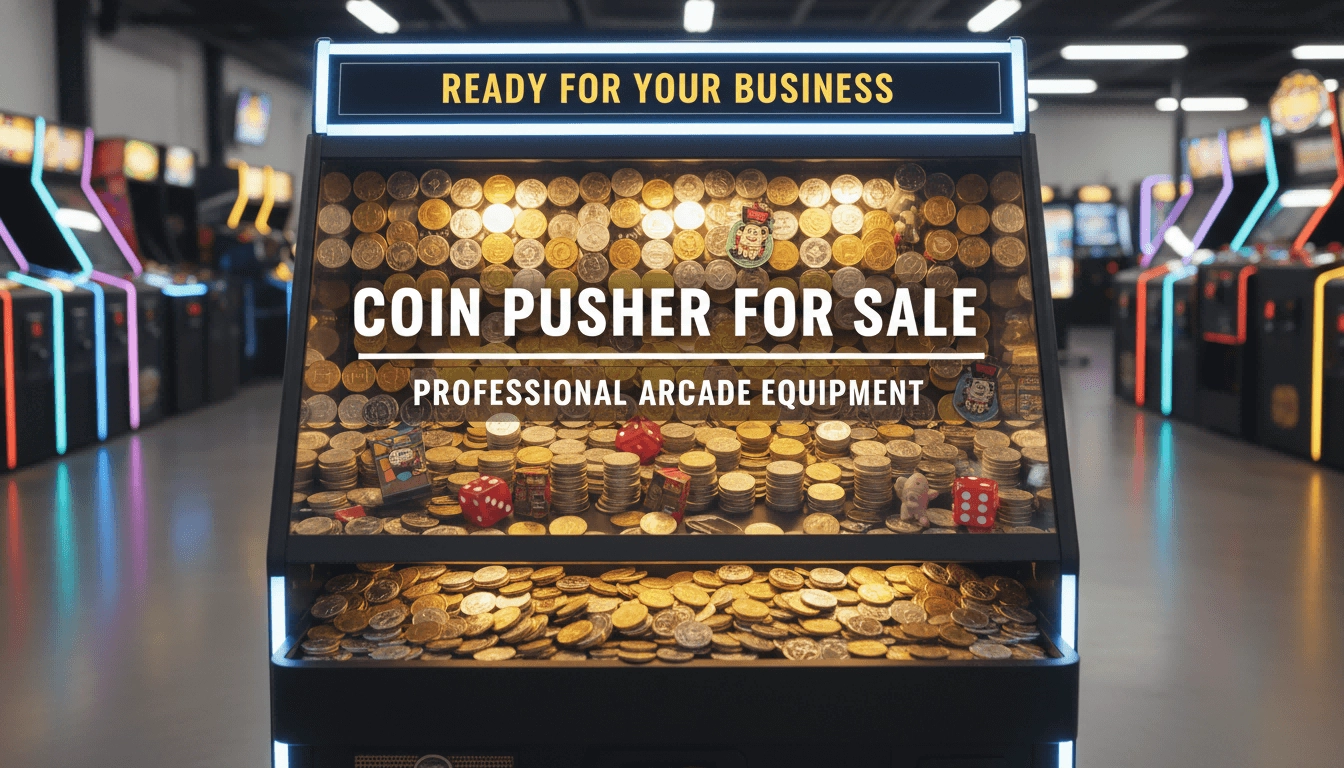
Mechanical coin pushers create visible movement as a player inserts or releases coins or tokens using the intended controls. A moving shelf transfers force through the pieces already on the playfield. Some cabinets introduce bonus actions, lighting or multiplayer competition, but their actual award mechanisms vary. A physical coin falling is not necessarily a cash prize. The operator should confirm the game and ticket settings, cleaning access and service responsibilities for each model.
PALM FUN's Burger Mania Coin Pusher Machine illustrates mechanical coin-pushing redemption gameplay. The Larva Series is separately listed as a four-player mechanical coin pusher ticket redemption game with a rising Super Bonus. A venue comparing them should obtain actual cabinet sizes, maximum power requirements, safe player positions and relevant ticket-system details; these specifications are not interchangeable between models.
Coin pusher popularity may be influenced by the visibility of the physical result and the way spectators can follow a play, but it cannot be translated into a guaranteed revenue-per-square-foot statement. A high-ticket machine can also have material reward costs. Calculate the actual revenue and fulfillment expense over comparable days, including downtime and operational support, before deciding whether a coin pusher earns its place in a particular venue.
Ball-Drop and Timing-Based Redemption Games
Ball-drop machines generally ask players to release, launch or direct a ball toward a target area. The game can involve timing, aim, physical obstacles and a scoring system that determines the result. A ball-drop redemption machine may share a visible ball mechanism with another amusement format while using a completely different ticket process. To assess it properly, look at the specific player action, number of participating players, ball circulation and how awards are recorded.
PALM FUN's Naughty Bombs Ball Drop Redemption Arcade Game is currently described as timing-based rolling-ball gameplay with colored targets, ticket prizes and surprise bonus rewards. The manufacturer record also lists customizable 110V / 220V voltage options, subject to order confirmation. It is not a classic coin pusher, and its operational needs should be considered separately from a moving-shelf cabinet.
For FECs serving families or first-time players, staff explanations and clear visual instructions can help guests understand the controls. Do not assume a short learning curve or “easy win” merely because the game uses a ball. Monitor real questions, repeated faults and guest demand. The best fit depends on the venue's audience, not a universal claim that ball-drop games generate the highest margins.
Hybrid Redemption: Shooting and Pushing Combined
Hybrid redemption games use more than one mechanical player action. A game may combine a timed shot with a physical pushing result, creating a different sequence from a basic coin pusher or ball-drop machine. That can diversify a venue's game mix, but complexity may also change the staff training, installation and servicing required. Buying teams should evaluate the whole game cycle and how it connects to the reward system.
PALM FUN lists Volley Coin as a coin pusher ticket redemption machine that combines shooting and pushing actions. Its specifications are listed for the individual model; they do not establish a default for every hybrid arcade cabinet. Buyers should confirm player position, allowed inputs, electrical settings and ticket configuration from the actual product documentation.
Hybrid mechanics may offer variety to returning guests, but their commercial success cannot be predicted from the number of features alone. A proposed attraction should be tested against the venue's capacity to keep it operational. Ask who can diagnose controller, sensor and physical gameplay faults, whether the spare parts are available, and what configuration options the supplier will actually support.
How Prize Merchandisers and Ticket Games Fit the Floor
Crane machines and other merchandise attractions can offer direct physical prizes, while ticket games generally award value to redeem separately. That distinction changes how costs and customer expectations are managed. A direct-prize machine needs accurate inventory records and replenishment procedures; a ticket counter needs a reliable balance and redemption workflow. Neither format should be described as more profitable without cost and play data from a real venue.
Some FECs combine machines from several manufacturers to reach different guest groups. This may include sports and skill redemption games, physical pushers, video attractions and merchandisers. PALM FUN's verified offering in this article is its mechanical redemption equipment, not a claim that it manufactures every category mentioned. A purchasing team should separately source any product type not present in the live PALM FUN catalogue.
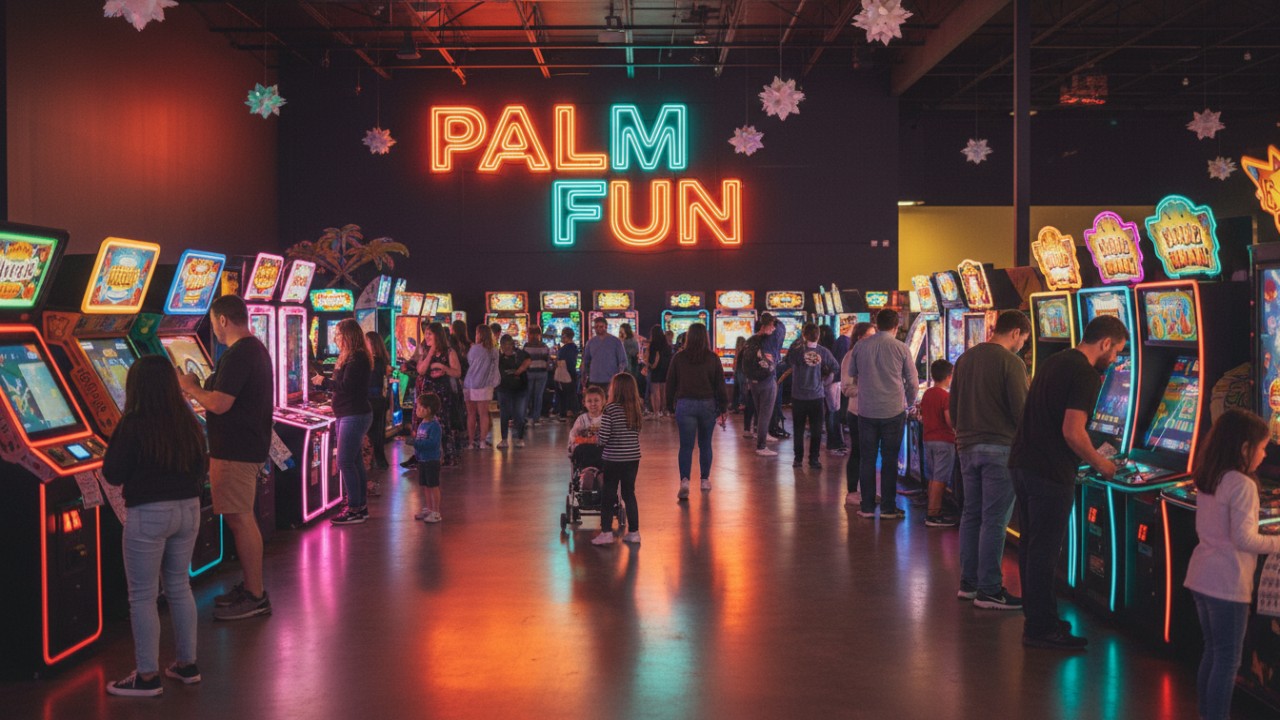
Guest experience also depends on wayfinding: where players buy credits, how they read ticket or point awards, and where prizes can be redeemed. Clear signage and accurate stock displays help reduce uncertainty but do not guarantee increased sales. Operators should compare the space, staffing and prize-handling demands of each category rather than rely on a single promotional claim about engagement.
How to Estimate Revenue and Costs for Each Redemption Category
Compare operating contribution, not gross play revenue alone. A venue can record paid plays and net revenue per play for a specified period, then subtract the relevant prize acquisition costs, payment fees, service expenses, staffing and allocated site costs. Where several games contribute to one ticket balance, define how cost is attributed. The difference between tickets awarded and tickets redeemed matters for accurate accounting and future obligations.
A comparison table should use the same reporting window and cost definitions for all machines. High machine utilization may raise gross revenue while also increasing maintenance, reward expense or queue management demands. A category can perform differently on weekends, during holidays or after a promotion. Review actual records before making permanent decisions about floor allocation or award settings.
For detailed formula examples rather than game-mix planning, use the separate Coin Pusher Profitability and ROI Guide. Machine-level ROI is not an inherent property of “mechanical lottery” or “high-yield coin pusher” labels. Where technical or local prize rules constrain the game settings, those limits must be respected even when financial modeling suggests a different target.
Practical FEC Game Mix and Supplier Selection Checklist
Begin with the venue's usable floor plan, expected guest profile, game-credit infrastructure and the reward types that are permitted. Build a shortlist by category, then confirm each model's size, player capacity, electrical requirements, sound, sightlines and maintenance access. If the design includes a central prize counter, ask the supplier whether the machine's actual ticket or point system can connect to the intended setup. Do not assume every redemption cabinet accepts third-party card readers.
Prepare a written comparison covering full delivered cost, service documentation, parts availability, warranty scope and venue installation responsibilities. Include possible downtime and repairs in the operating plan. If the manufacturer offers customization, establish the scope, quantity, timing and technical approval needed for that particular model rather than infer blanket OEM or ODM capability from marketing language.
A successful game mix is assessed by measured operating results and the customer's experience, not by a predetermined category quota. The buying team can contact PALM FUN with the venue type, destination market, available floor space and preferred mechanical redemption formats for model-level information. The commercial decision remains with the venue operator and its local advisers.
Frequently Asked Questions About Redemption Game Categories
Which arcade redemption game type earns the most money?
No one category consistently earns the most in every venue. Performance depends on traffic, pricing, prize costs, downtime, game placement and the audience. Compare real operating contribution and customer experience for the installed models.
Are coin pushers more profitable than claw machines?
A useful comparison requires the actual play revenue and prize, maintenance, floor-space and staffing costs for each model. Coin pushers and claw merchandisers have different game and reward systems, so the result cannot be determined by category name alone.
What is the difference between a ball-drop game and a coin pusher?
A typical ball-drop game uses a launch or release toward targets, while a traditional coin pusher shifts pieces on a moving shelf. Some hybrid products combine mechanics. Verify the exact gameplay and award rules of each model.
Do all FEC redemption machines use paper tickets?
No. Some support electronic points, paper tickets or other compatible reward arrangements; merchandisers may deliver items directly. Supported interfaces must be confirmed for each machine and venue.
What should a distributor ask before sourcing redemption machines?
Request model-specific gameplay, cabinet dimensions, power and payment requirements, reward compatibility, available documentation, warranty terms, freight responsibilities and relevant destination-market compliance information.
Conclusion: Build a Balanced Redemption Arcade Game Mix
Mechanical coin pushers, ball-drop games, hybrid redemption machines and prize merchandisers offer different play experiences and operating needs. Their relative earning potential cannot be established by a generic “top earning” ranking. Family entertainment centers should compare real models, guest demand, prize cost, available space and support capacity, then adjust the floor based on recorded results. PALM FUN's current coin pusher and ball-based redemption products provide examples of distinct mechanical options for that evaluation.
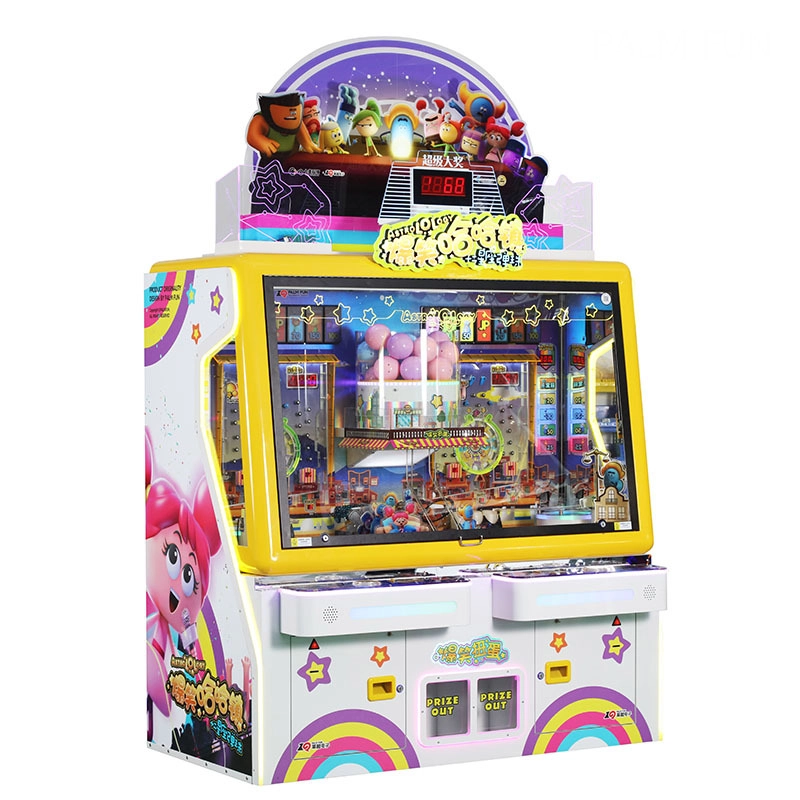
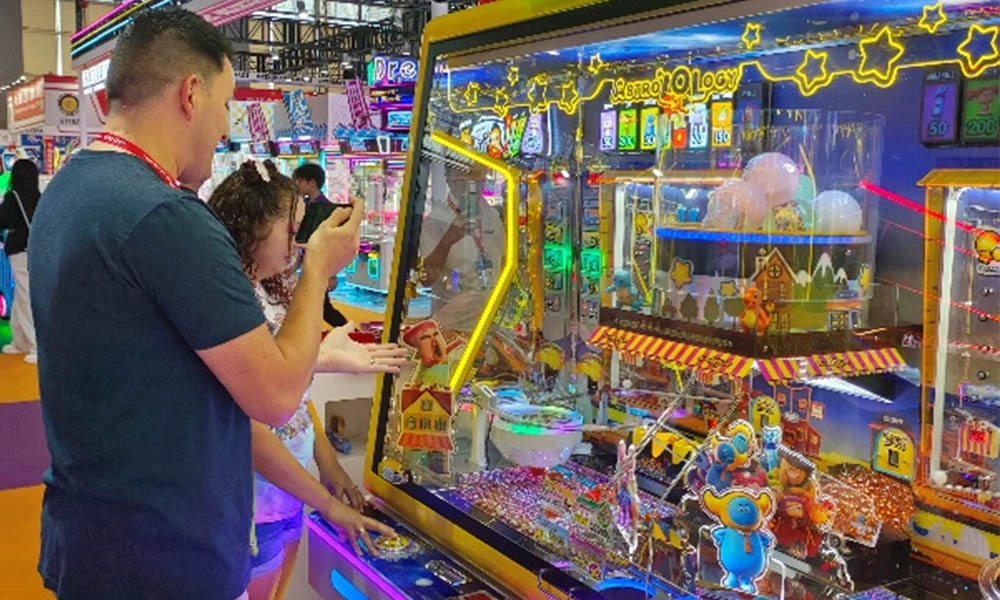
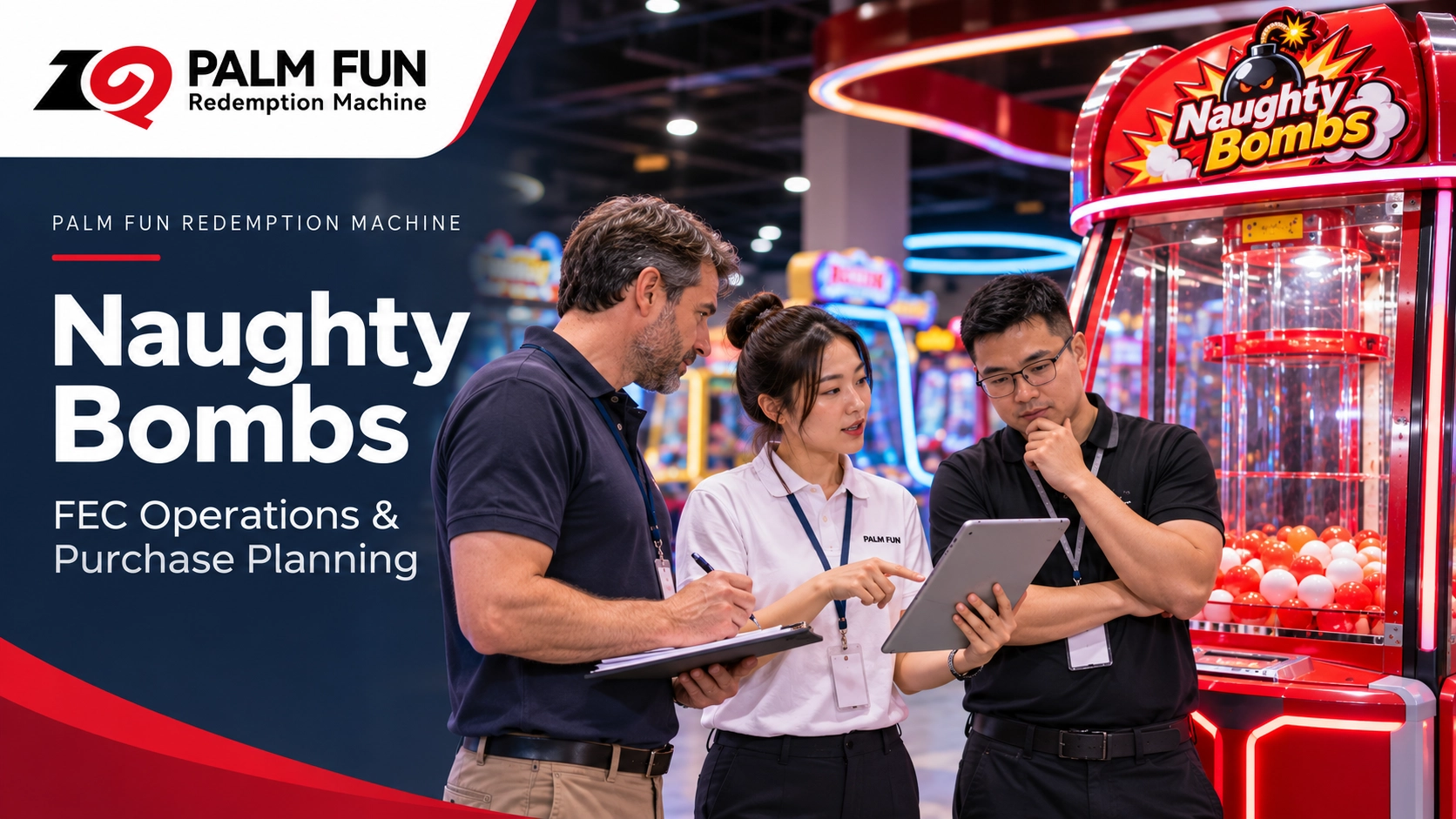
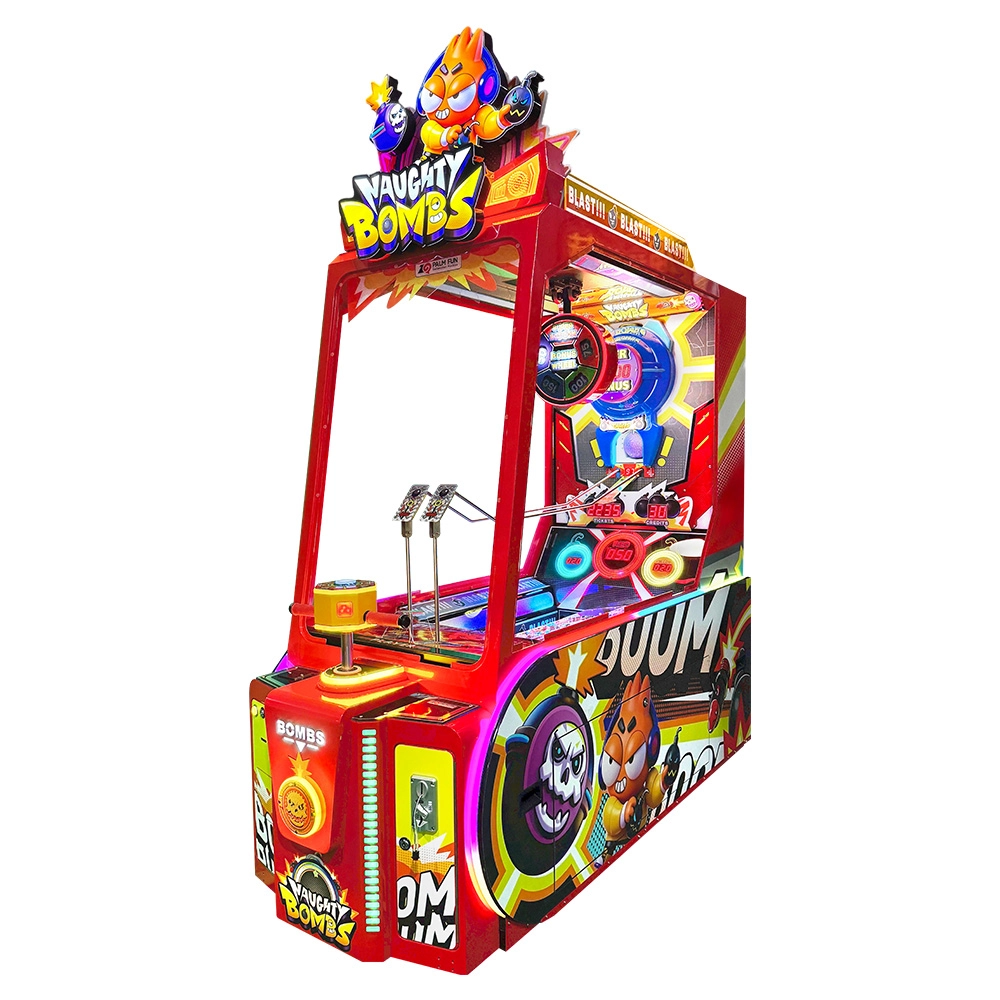
Naughty Bombs is a ball-drop redemption arcade game featuring rolling-ball gameplay, colored targets, ticket prizes, surprise bonus rewards, lighting and sound effects. Players use timing to launch and drop balls toward colored target areas. The product is presented for arcade, family entertainment center and other entertainment-venue projects, with customizable 110V / 220V AC voltage configuration.
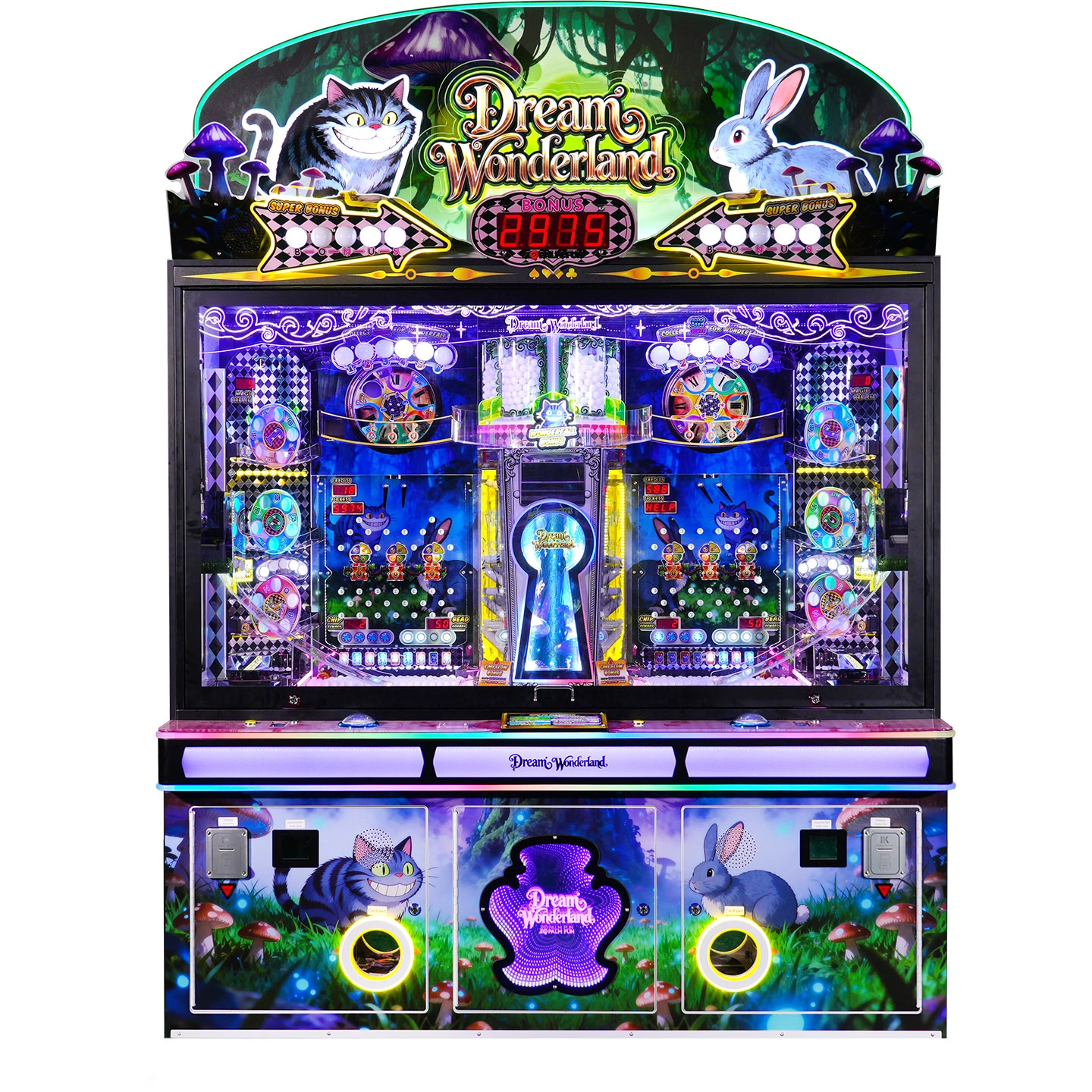
Enter Dream Wonderland — a magical marble pusher adventure filled with glowing lights, magic orbs, bonus wheels, collectible character cards, and exciting jackpot challenges.
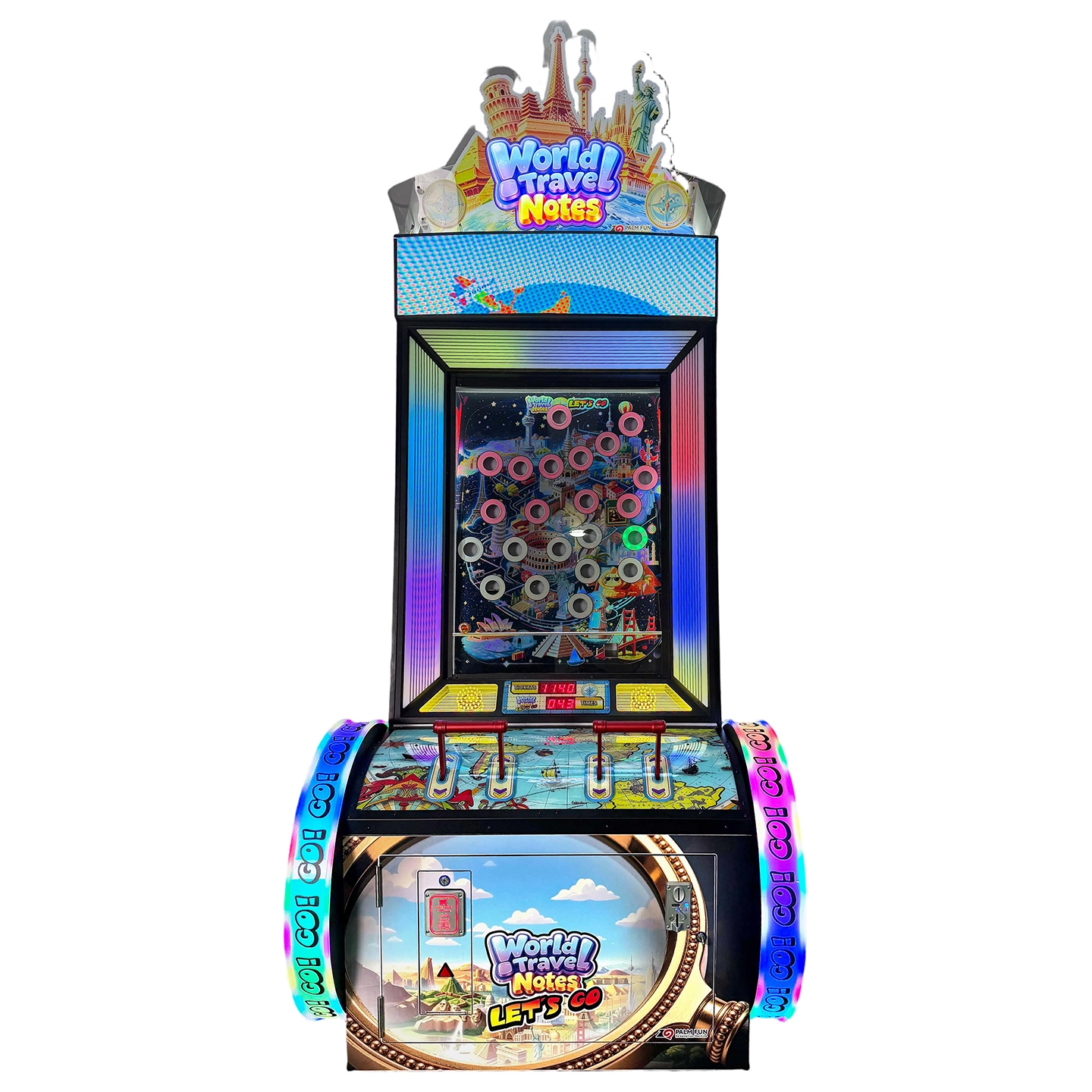
World Travel Notes is a skill-based balance ball redemption game with a fun world-travel theme. Players use two handles to control the balance bar and guide the ball into each target hole. As the game progresses, the targets become more challenging, leading players toward the final grand prize. With colorful world-travel graphics, dynamic RGB lighting, a live score display, and progressive difficulty, World Travel Notes is designed to attract attention and encourage repeat play in arcades, FECs, shopping malls, and other entertainment venues.
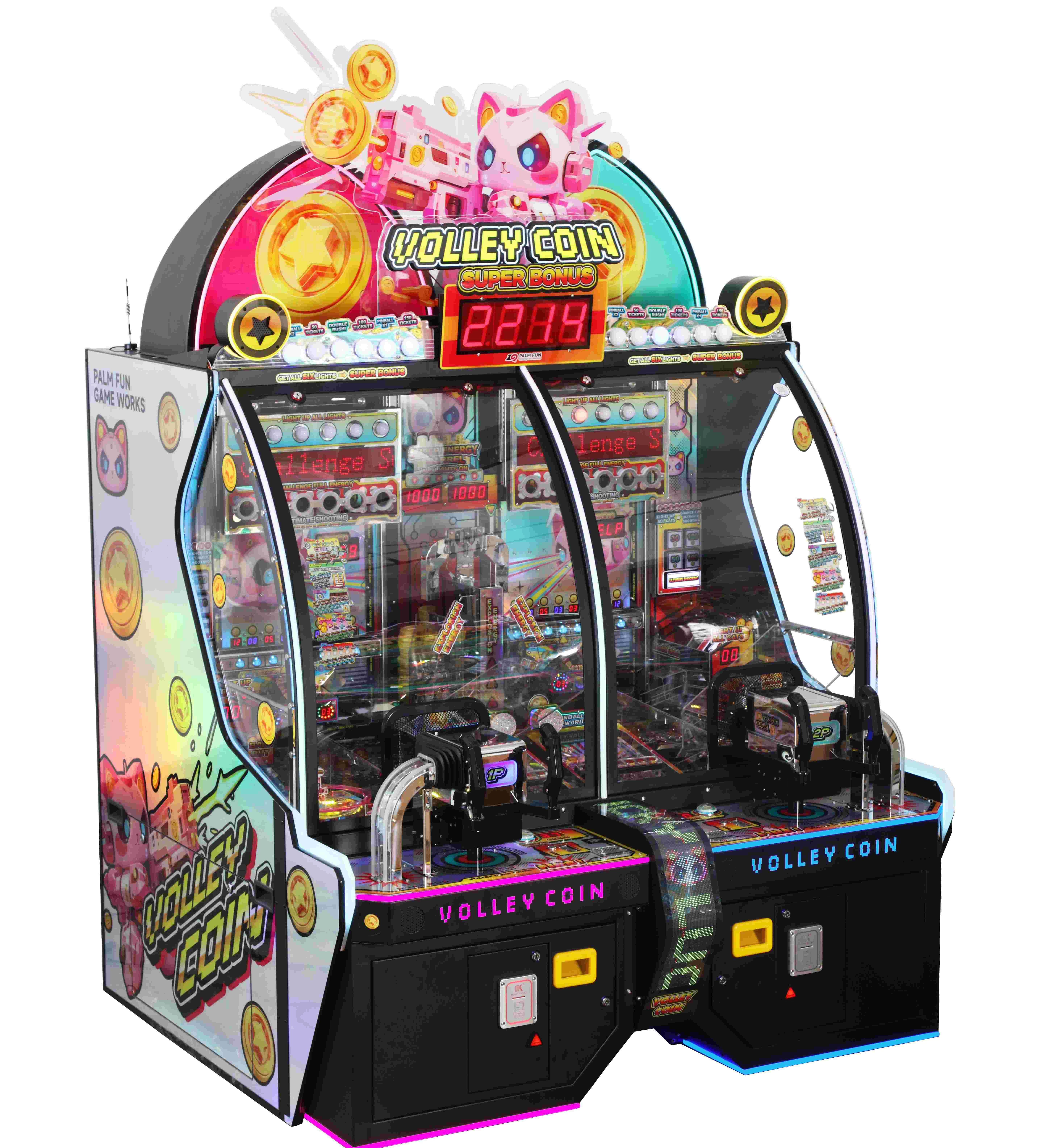
Volley Coin is an innovative arcade ticket redemption machine developed by Palm Fun Electronics. Combining the excitement of a fast-paced token shooter game with the proven earning power of a traditional coin pusher machine, Volley Coin offers a fresh and engaging gameplay experience that appeals to players of all ages.

Copyright © 2026 PALM FUN All Rights Reserved. | Privacy Policy • Terms and Conditions | Sitemap
palmfunarcade
Palm Fun Arcade Game
Whatsapp: +8618126837443
PalmFun Arcade
PalmFun_Arcade
PALM FUN Redemption Machine