








Balancing Ticket Payouts and Profitability in Redemption Centers (2026 Guide)
Discover the 2026 guide to balancing ticket payouts and profitability in redemption centers. Learn how to manage COGS, optimize your ticket-to-prize ratio, and leverage high-quality arcade machines for maximum ROI.
- What is an Arcade Redemption Payout Percentage?
- Key Takeaways & Quick Summary
- The Math Behind Profitability: Calculating COGS and Ticket Values
- Ticket-to-Prize Ratio & COGS Example Table
- The Golden Rule: Hitting the 20-25% Payout Sweet Spot
- Psychology of the Win: Balancing Guest Satisfaction with Margins
- How Reliable Hardware Stabilizes Payouts: The PALM FUN Advantage
- Expert Tips & Common Mistakes in Redemption Management
- Future Trends: High-Yield Games and Redemption Optimization for 2026+
- Conclusion
- FAQs About Balancing Ticket Payouts and Profitability in Redemption Centers
- What is the ideal payout percentage for an arcade redemption center?
- How do I calculate the real value of a redemption ticket?
- Why are my arcade payouts hurting my bottom line?
- How does COGS affect arcade prize pricing?
- What is the difference between perceived value and actual cost in arcade prizes?
- How do high-quality coin pusher machines improve FEC ROI?
- Should I use a cashless card system for redemption management?
- How often should I adjust my arcade game payout settings?
Running a successful Family Entertainment Center (FEC) requires more than just flashing lights and loud music; it demands precise financial management and strategic foresight. At the core of your operational success is Balancing Ticket Payouts and Profitability in Redemption Centers. If you give away too many tickets, your margins collapse and your business bleeds money; if you give away too few, guests leave feeling cheated and will likely never return. In 2026, finding that exact sweet spot requires a sophisticated mix of data-driven inventory management, psychological pricing strategies, and ultra-reliable arcade hardware.
Modern arcade guests are more discerning than ever. They want immersive experiences and tangible rewards. For operators, the challenge lies in delivering that high-value experience without compromising the bottom line. This comprehensive guide will walk you through the essential mathematics of ticket valuation, the psychology of prize merchandising, and the role that world-class equipment plays in sustaining long-term profitability.
What is an Arcade Redemption Payout Percentage?
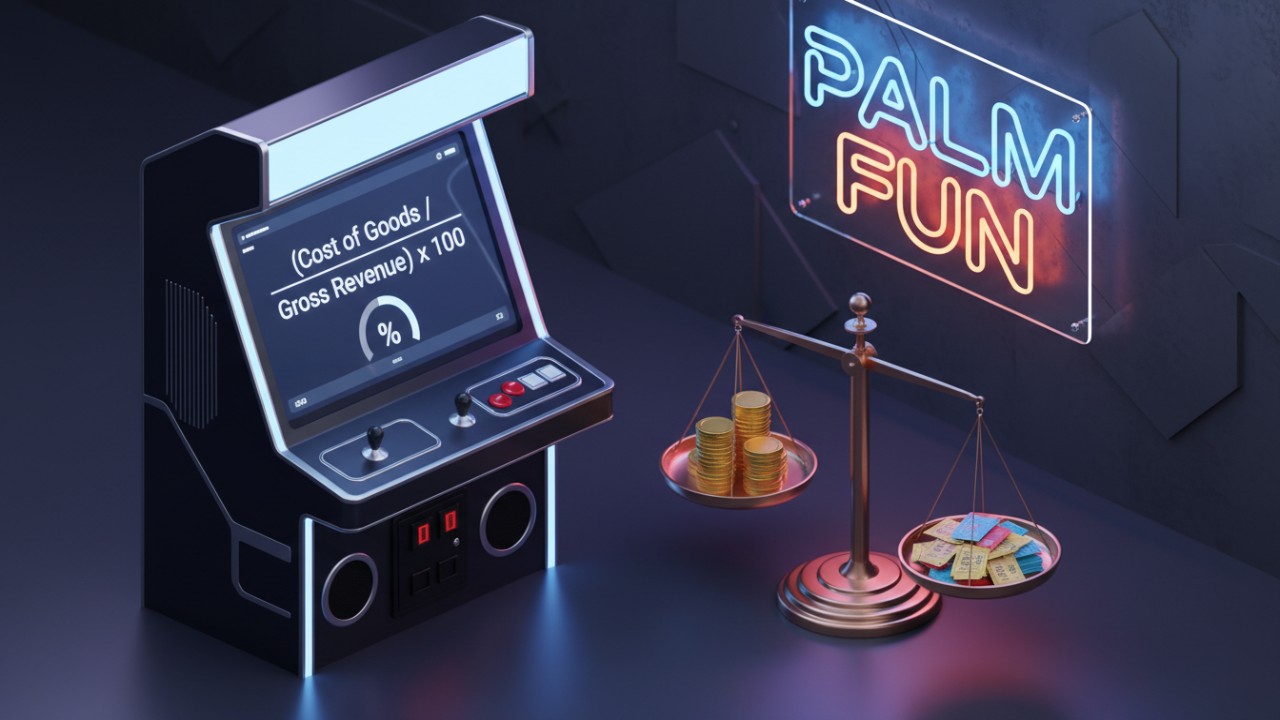
An arcade redemption payout percentage is the ratio of the wholesale cost of prizes awarded to guests compared to the total revenue generated by the games. It is calculated by dividing your Cost of Goods Sold by gross game revenue, then multiplying by 100.
This metric is the foundational pulse of FEC profitability metrics. Without rigorously tracking it, operators risk invisible revenue leaks that can slowly bankrupt a facility. To put this into perspective, if an arcade game generates $1,000 in a weekend, and the wholesale cost of the prizes won from that specific game amounts to $200, your payout percentage is exactly 20%.
Understanding this formula—(Cost of Goods Sold / Gross Game Revenue) x 100 = Payout Percentage—is non-negotiable for arcade managers. It provides a clear, objective lens through which you can evaluate the performance of every single machine on your floor. When you monitor this metric closely, you can make informed decisions about game calibration, prize purchasing, and floor layout optimization.
Key Takeaways & Quick Summary
The most critical takeaways for optimizing redemption centers involve maintaining a 20-25% payout sweet spot, leveraging perceived value over actual cost, and combining robust software tracking with highly reliable arcade hardware. Choosing the right game mix directly impacts your long-term profitability and guest retention.
To ensure you are fully prepared to optimize your operations in 2026, keep these core principles in mind:
- The 20-25% Rule: The industry standard "sweet spot" for redemption payouts is strictly between 20% and 25%. Straying from this range is dangerous.
- Perception is Reality: Guest satisfaction relies heavily on perceived value rather than the actual wholesale cost of the prize.
- Hardware Trumps Software: Software tracking is vital, but hardware reliability (machine quality) is what actually prevents physical payout errors and revenue loss.
- Game Variety Matters: Choosing the right mix of skill-based games, games of chance, and mechanical coin pusher games drastically impacts long-term profitability and Arcade game ROI optimization.
The Math Behind Profitability: Calculating COGS and Ticket Values
Calculating profitability requires understanding COGS in family entertainment centers, which encompasses the total expenses of acquiring arcade prizes, including hidden fees like shipping and shrinkage. Establishing a standardized baseline ticket value, typically $0.01 per ticket, allows operators to accurately price inventory and monitor margins.
Breaking down your Cost of Goods Sold (COGS) is the first step toward financial clarity. COGS isn't just the sticker price you pay your merchandise vendor. It is the "landed cost," which includes freight shipping, customs duties, warehouse storage, and shrinkage (items that are lost, damaged, or stolen). If you only calculate the base wholesale price, your margins will appear healthier than they actually are, leading to dangerous financial miscalculations.
To standardize pricing across the redemption counter, operators must establish a strict ticket-to-prize ratio. The golden rule in the industry is to assign a baseline value of $0.01 (one cent) to a single ticket. This simple conversion makes it incredibly easy to calculate inventory costs and set ticket prices for new merchandise. Furthermore, the widespread adoption of e-tickets and cashless card systems in 2026 has revolutionized this process, allowing operators to track real-time ticket inflation and adjust game payouts instantly without the mess of paper tickets.
Ticket-to-Prize Ratio & COGS Example Table
| Prize Category | Wholesale Cost (Actual) | Target Ticket Price ($0.01/ticket) | Perceived Value | Margin Health |
|---|---|---|---|---|
| Impulse (Candy/Small Toys) | $0.10 | 50 Tickets ($0.50) | Low | Excellent |
| Mid-Tier (Plush/Mugs) | $2.50 | 750 Tickets ($7.50) | Medium | Very Good |
| High-Tier (Electronics) | $50.00 | 20,000 Tickets ($200.00) | High | Fair |
The Golden Rule: Hitting the 20-25% Payout Sweet Spot
Hitting the 20-25% payout sweet spot means balancing your game revenue against prize costs to ensure sustainable profitability. Dropping below 20% makes games feel unrewarding and hurts customer loyalty, while exceeding 25% quickly erodes your bottom line and leads to unsustainable family entertainment center operations.
Why is this specific range so critical? According to industry benchmarks highlighted by CenterEdge Software, maintaining an 18-24% (or generally 20-25%) payout is the standard for healthy operations. If your payout drops below 20%, the mathematical probability of a guest winning a meaningful prize becomes too low. When games feel "rigged" or impossibly difficult, guests experience frustration instead of joy, prompting them to spend their entertainment budget at competing venues.
Conversely, allowing payouts to creep above 25% is a surefire way to kill your bottom line. To maintain this delicate equilibrium, operators must master the art of balancing inventory. You need a mix of low-value "impulse" prizes, which carry a massive markup and protect your margins, alongside high-value "aspirational" prizes. Aspirational items like gaming consoles or giant licensed plush toys have lower markups, but they serve as the ultimate visual bait, driving intense, repeated gameplay.
Psychology of the Win: Balancing Guest Satisfaction with Margins
Balancing guest satisfaction with margins involves leveraging the psychology of the win, where the perceived value of a prize vastly outweighs its actual wholesale cost. Engaging the human reward circuitry through tactile gameplay and ticket fever encourages repeat visits without inflating your operational expenses.
The consumer behavior behind the arcade experience is deeply rooted in human psychology. When a guest plays a game and wins, their brain's reward circuitry lights up. They love the flashing lights, the celebratory sounds, and the tactile feedback of winning tickets or watching coins cascade down a pusher machine. This emotional high is what you are truly selling—not just the plastic toy at the redemption counter.
This is where the concept of perceived value becomes your most powerful tool. Actual cost is what you pay the vendor; perceived value is what the guest believes the item is worth. For example, a massive, brightly colored plush toy might cost you only $5 wholesale, but to a child, it feels like a $20 or $30 treasure. By stocking your redemption center with visually impressive, highly desirable items that boast a low actual cost, you create a "Ticket Fever" atmosphere. Guests feel incredibly rewarded, and you maintain pristine profit margins.
How Reliable Hardware Stabilizes Payouts: The PALM FUN Advantage

Reliable hardware stabilizes payouts by preventing mechanical failures and sensor errors that lead to invisible revenue leaks and accidental over-dispensing of tickets. While software tracks data, high-quality machines ensure that the physical payout matches the mathematical calibration, protecting your arcade's long-term profitability and margins.
A massive gap in many competitor analyses is the over-reliance on software. Cashless card systems and digital tracking software are fantastic for monitoring data, but they cannot fix a physically broken machine. If a low-quality coin pusher has a faulty sensor and dispenses double the tickets it is supposed to, your software will simply report the loss after the fact. Poor-quality machines cause physical payout errors and constant maintenance downtime that absolutely ruin margins.
This is exactly where Guangzhou Palm Fun Electronics Co., Ltd. provides an unbeatable advantage. Founded in 2015, PALM FUN specializes in the R&D, design, production, and sales of high-quality mechanical lottery machines, coin pusher machines, and raffle machines. Operating out of a state-of-the-art 3,000 square meter factory, our team of skilled development engineers is committed to advancing technology to ensure every machine delivers consistent, mathematically sound win frequencies.
Our products are recognized and popular in over 50 countries worldwide because they solve the hardware reliability problem. Deploying PALM FUN’s meticulously engineered arcade machines helps operators lock in their desired payout percentages effortlessly. When your hardware is fail-proof and requires minimal maintenance, your Redemption Game ROI skyrockets, allowing you to focus on growing your business rather than fixing broken equipment.
Expert Tips & Common Mistakes in Redemption Management
Effective redemption management requires continuous auditing of game calibrations and strategic prize selection to avoid margin erosion. Common mistakes include adopting a "set it and forget it" mentality, over-valuing premium electronics, and ignoring the financial impact of mechanical downtime on your overall revenue generation.
According to financial benchmarks for the leisure industry from Startup Financial Projection, tightly controlling your merchandise metrics directly impacts your overall EBITDA margin. To ensure you stay on the right track, here are several expert tips and common pitfalls to avoid:
- Mistake: "Set it and forget it" game calibration. Many operators set their game payouts once and never check them again. Tip: Regularly audit both mechanical and digital win settings. Wear and tear on physical machines can alter win probabilities over time. Review your payout reports weekly and make adjustments monthly.
- Mistake: Over-valuing premium electronics. Stocking too many iPads or gaming consoles can tie up your capital in slow-moving inventory. Tip: Focus on proprietary, trendy, or unique toys that cannot be easily price-checked on Amazon. This protects the perceived value of your prizes.
- Mistake: Ignoring game downtime. A broken machine earns zero revenue but still occupies expensive floor space. Tip: Invest in premium, durable machines—like the innovative coin pushers from PALM FUN—to maximize uptime and ensure continuous revenue generation.
- Tip: Benchmark against seasonal trends. Guest spending habits change during holidays and summer breaks. Benchmark your payout data against these seasonal trends and adjust your prize inventory ratios accordingly to maximize profits during peak times.
Future Trends: High-Yield Games and Redemption Optimization for 2026+
Future trends for 2026 highlight a major shift toward highly immersive mechanical redemption games and advanced coin pushers with integrated video elements. Additionally, global supply chain shifts will demand stricter data-driven inventory management and an increased reliance on fail-proof arcade hardware to maintain profitability.
As we look ahead, the arcade landscape is evolving rapidly. Players are demanding more sophisticated entertainment. We are seeing a massive surge in the popularity of hybrid games—machines that combine the tactile thrill of mechanical coin pushers with stunning digital video displays. These high-yield games attract a wider demographic and encourage longer play sessions.
Furthermore, global supply chain shifts are expected to continue impacting prize shipping costs. As freight becomes more expensive, your COGS will naturally rise. To offset these costs without raising ticket prices to unreasonable levels, machine reliability becomes your ultimate shield. The future of redemption optimization lies in the seamless merger of data-driven inventory software with flawless mechanical game performance.
Conclusion

Balancing ticket payouts and profitability requires a strategic blend of mathematical precision, psychological prize pricing, and dependable arcade hardware. Achieving the optimal 20-25% margin ensures your family entertainment center remains highly profitable while consistently delivering an exciting, rewarding experience that keeps guests coming back. By understanding your COGS, optimizing your ticket-to-prize ratio, and investing in high-quality machines, you can secure long-term success.
Contact us today to optimize your Balancing Ticket Payouts and Profitability in Redemption Centers strategy.
FAQs About Balancing Ticket Payouts and Profitability in Redemption Centers
What is the ideal payout percentage for an arcade redemption center?
The industry standard for an arcade redemption center is generally between 20% and 25%. Staying within this range ensures that the business remains profitable while guests still feel they are being fairly rewarded for their gameplay.
How do I calculate the real value of a redemption ticket?
To calculate ticket value, divide the wholesale cost of a prize by the number of tickets required to win it. Many operators aim for a standard ticket value of $0.01 (one cent) per ticket to simplify inventory pricing and margin calculations.
Why are my arcade payouts hurting my bottom line?
Your payouts may be hurting your bottom line if machines are dispensing too many tickets (improper calibration) or if your prize markups are too low. Additionally, mechanical failures or "shrinkage" (stolen or lost inventory) can artificially inflate your perceived payout costs.
How does COGS affect arcade prize pricing?
Cost of Goods Sold (COGS) dictates how many tickets a prize must cost to maintain your target margin. If the COGS (including shipping and handling) rises, you must proportionally increase the ticket price of the item to maintain your 20-25% payout ratio.
What is the difference between perceived value and actual cost in arcade prizes?
Actual cost is the wholesale amount the operator pays for the item, while perceived value is how much the customer thinks the item is worth. Maximizing perceived value with visually impressive, low-cost items allows operators to keep customers happy while maintaining high profit margins.
How do high-quality coin pusher machines improve FEC ROI?
High-quality coin pushers, like those manufactured by PALM FUN, improve Return on Investment (ROI) by offering high replay value and requiring minimal maintenance. Their reliable mechanics ensure that the payout frequency remains consistent, preventing accidental profit loss from machine malfunction.
Should I use a cashless card system for redemption management?
Yes, cashless card systems allow operators to track e-tickets instantly, completely eliminating the cost and mess of physical paper tickets. They also provide real-time data on exactly which machines are paying out too much or too little.
How often should I adjust my arcade game payout settings?
Operators should review their payout reports weekly and adjust physical or software settings on machines at least monthly. Frequent audits ensure games stay within the optimal 20-25% range and quickly identify any hardware requiring maintenance.


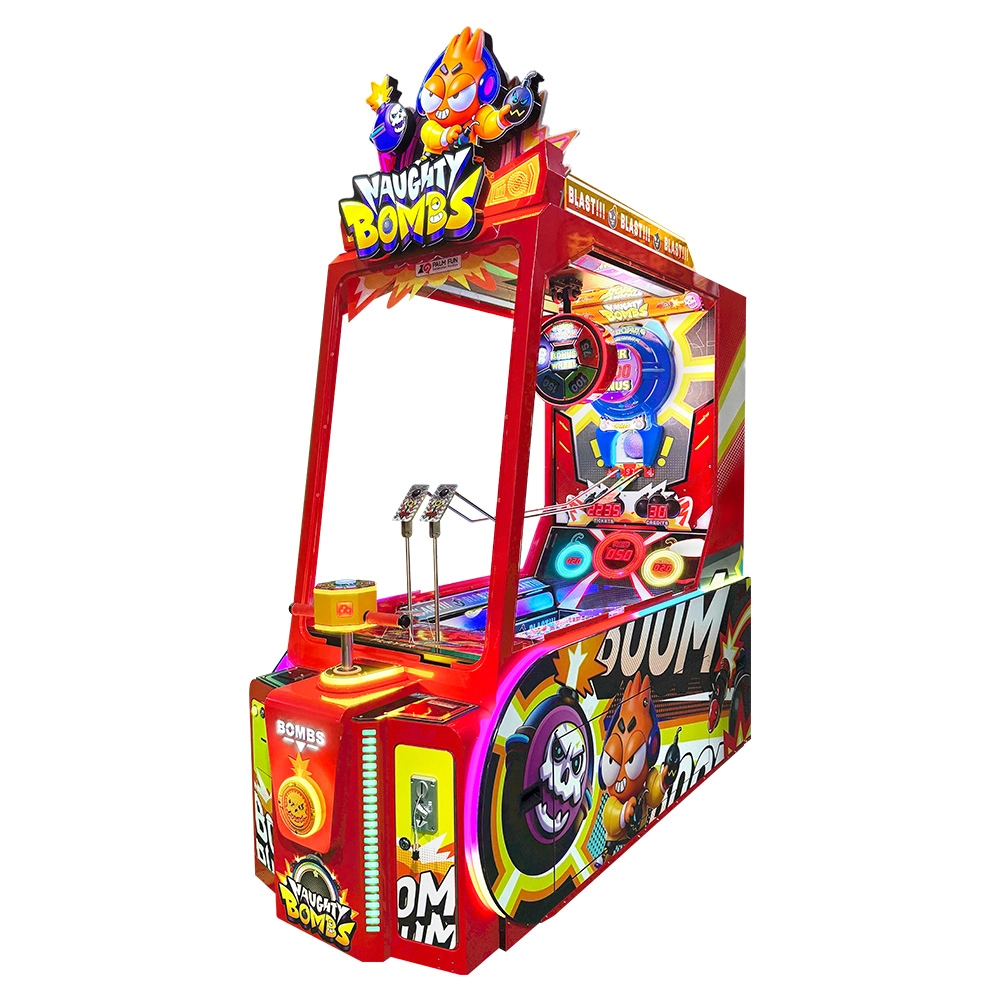
Naughty Bombs is a ball-drop redemption arcade game featuring rolling-ball gameplay, colored targets, ticket prizes, surprise bonus rewards, lighting and sound effects. Players use timing to launch and drop balls toward colored target areas. The product is presented for arcade, family entertainment center and other entertainment-venue projects, with customizable 110V / 220V AC voltage configuration.
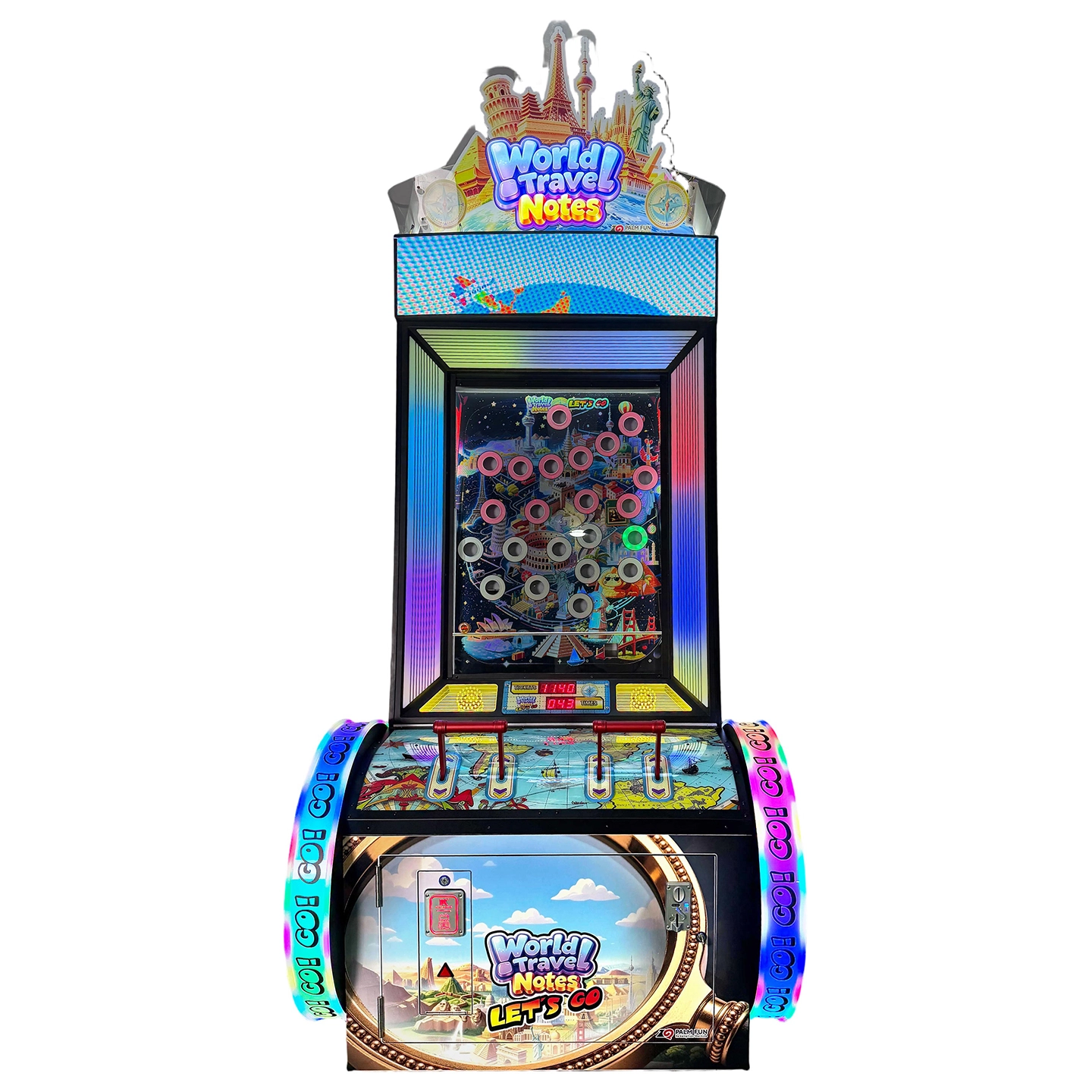
World Travel Notes is a skill-based balance ball redemption game with a fun world-travel theme. Players use two handles to control the balance bar and guide the ball into each target hole. As the game progresses, the targets become more challenging, leading players toward the final grand prize. With colorful world-travel graphics, dynamic RGB lighting, a live score display, and progressive difficulty, World Travel Notes is designed to attract attention and encourage repeat play in arcades, FECs, shopping malls, and other entertainment venues.
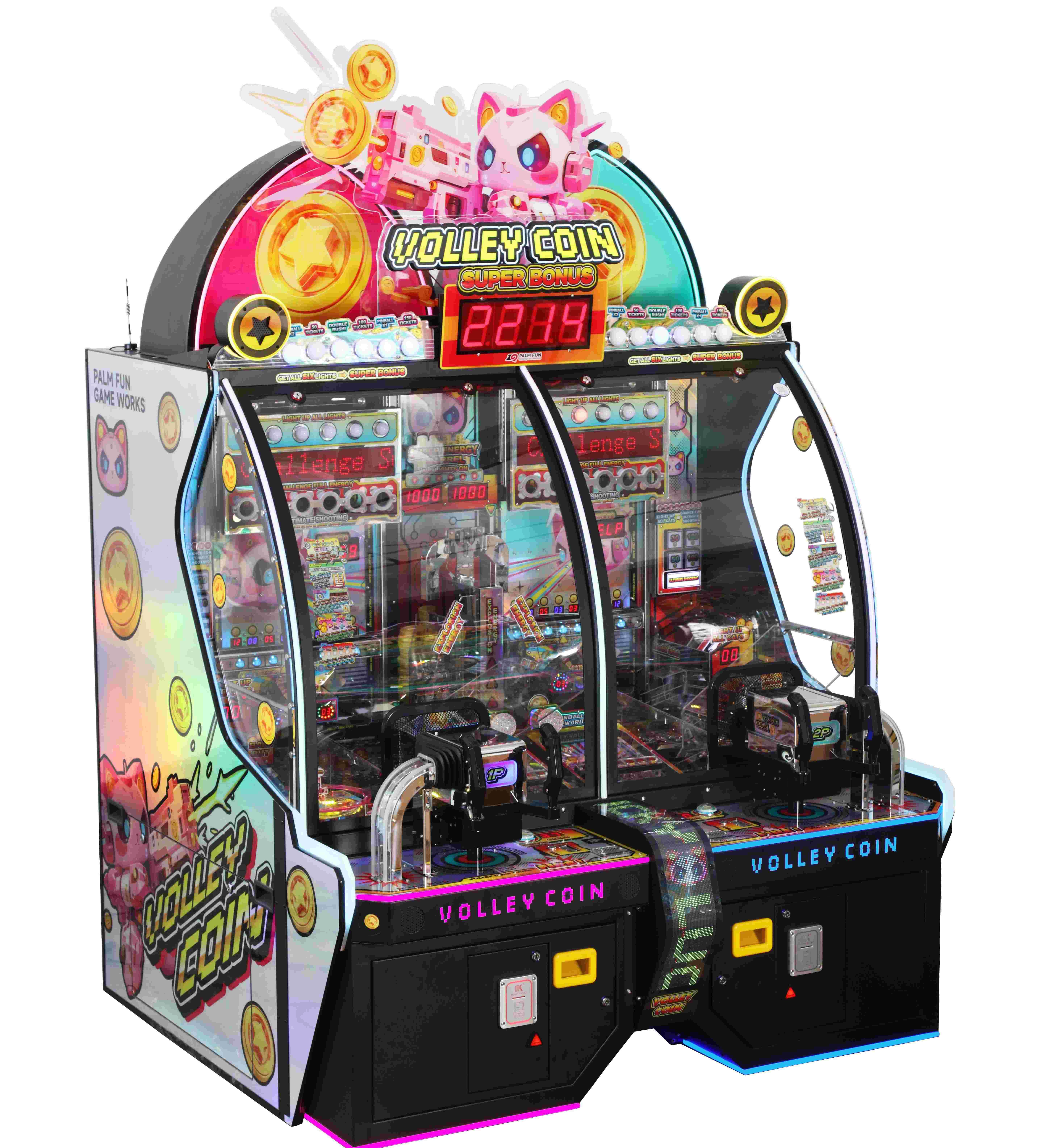
Volley Coin is an innovative arcade ticket redemption machine developed by Palm Fun Electronics. Combining the excitement of a fast-paced token shooter game with the proven earning power of a traditional coin pusher machine, Volley Coin offers a fresh and engaging gameplay experience that appeals to players of all ages.
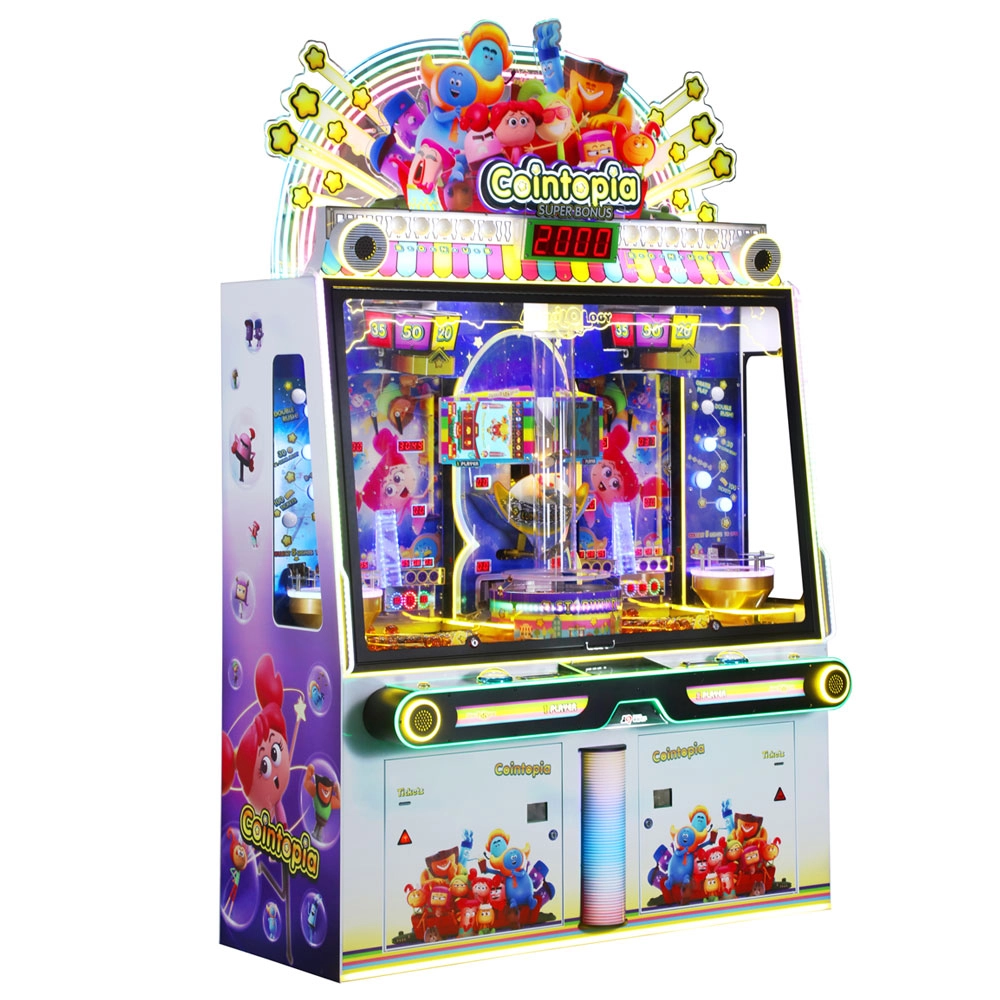
COINTOPIA by PALM FUN is an exciting redemption game machine where players enjoy fun with zodiac buddies in a utopia setting. This ticket redemption machine offers engaging gameplay and rewarding experiences, perfect for family entertainment centers and arcades seeking top-quality redemption games.

Copyright © 2026 PALM FUN All Rights Reserved. | Privacy Policy • Terms and Conditions | Sitemap
palmfunarcade
Palm Fun Arcade Game
Whatsapp: +8618126837443
PalmFun Arcade
PalmFun_Arcade
PALM FUN Redemption Machine