






what payment terms do coin pusher arcade suppliers accept? | Insights by PALM FUN
Embarking on your coin pusher arcade venture? Understanding payment terms from suppliers is crucial. This guide demystifies complex international payment methods, progressive schedules, deposit risks, currency impacts, and dispute resolution strategies. Learn to secure your investment and streamline your arcade equipment purchases, ensuring a smooth procurement process from trusted coin pusher machine manufacturers.
- Beyond the Standard T/T, What Less Common but Secure Payment Methods Do Reputable Coin Pusher Suppliers Offer for International Bulk Orders, and What Are Their Pros and Cons for a New Arcade Owner?
- When Purchasing Multiple Coin Pusher Machines, How Do Suppliers Typically Structure Progressive Payment Schedules, and What Milestones Trigger These Payments?
- For First-Time Buyers of Coin Pusher Arcade Equipment from Overseas, What Are the Specific Risks Associated with Requesting a Low Deposit (e.g., 10-20%) Versus a Standard 30-50% Deposit, and How Can These Risks Be Mitigated?
- How Do Currency Exchange Rates and International Bank Transfer Fees Impact the Final Cost of Coin Pusher Machines, and What Strategies Can Beginners Use to Minimize These Additional Charges?
- What Are the Typical Payment Terms for Spare Parts and After-Sales Support for Coin Pusher Machines, and Do These Differ Significantly from the Initial Machine Purchase Terms?
- In the Event of a Dispute Over Machine Quality or Delivery Delays, What Payment Term Clauses (e.g., Escrow, Final Payment Holdback) Can a Buyer Negotiate to Protect Their Investment When Dealing with Coin Pusher Suppliers?
Navigating Payment Terms: A Beginner's Guide to Coin Pusher Arcade Supplier Agreements
For aspiring arcade owners and seasoned operators looking to expand their collection of redemption game machines, especially popular coin pushers, understanding the intricacies of supplier payment terms is paramount. The global market for arcade equipment, particularly from leading manufacturers in regions like China, offers competitive pricing but often comes with unique payment structures. As experts in both the redemption game machine field and international trade, we’ve identified common pain points for beginners. Here are six specific, frequently asked questions that delve deeper than typical online advice, providing in-depth answers to help you secure the best deals and protect your investment.
Beyond the Standard T/T, What Less Common but Secure Payment Methods Do Reputable Coin Pusher Suppliers Offer for International Bulk Orders, and What Are Their Pros and Cons for a New Arcade Owner?
While Telegraphic Transfer (T/T), also known as a wire transfer, remains the most common payment method for international trade, accounting for an estimated 80-90% of B2B transactions due to its speed and relatively low cost, it offers minimal buyer protection upfront. For substantial or bulk coin pusher machine orders, especially when dealing with new suppliers, exploring more secure payment options is advisable for new arcade owners seeking robust supplier payment agreements.
- Letter of Credit (L/C): This is a highly secure instrument, particularly for the buyer. An L/C is a financial guarantee from a bank (your bank) to the supplier's bank, ensuring payment will be made once specific, pre-agreed conditions are met and documented proof (e.g., shipping documents, inspection certificates) is presented.
- Pros: Offers the highest level of security for the buyer, as payment is contingent on the supplier fulfilling their contractual obligations. It builds trust, especially for large-value international trade payment methods for arcade games.
- Cons: L/Cs are complex, involve significant bank fees (typically 1-3% of the transaction value, split between buyer and seller), and require meticulous documentation. They are often not practical for orders under $20,000-$30,000 due to cost and administrative burden.
- Escrow Services (e.g., Alibaba Trade Assurance): These platforms act as a trusted third party, holding your payment until you confirm receipt and satisfaction with the coin pusher machine payment options.
- Pros: Provides a good balance of security and convenience for medium-sized orders. It offers dispute resolution mechanisms and protection against non-delivery or significant quality discrepancies.
- Cons: Fees can still apply, and the scope of protection might be limited compared to an L/C. Not all suppliers participate, and the service primarily covers goods, not necessarily performance guarantees beyond delivery.
For beginners, starting with a trusted supplier and potentially using an escrow service for initial larger orders can be a prudent step before committing to the complexities of an L/C.
When Purchasing Multiple Coin Pusher Machines, How Do Suppliers Typically Structure Progressive Payment Schedules, and What Milestones Trigger These Payments?
For bulk order payment terms of arcade equipment, especially custom or large-volume orders, suppliers rarely demand 100% upfront. A progressive payment schedule is standard practice, allowing both parties to manage cash flow and mitigate risk. This structure for arcade equipment financing is crucial for transparency and accountability.
Typical milestones and payment triggers include:
- Initial Deposit (30-50%): This payment is made upon order confirmation and signing the Proforma Invoice (PI) or Sales Contract. It secures your production slot and covers the supplier's initial costs for raw materials (e.g., cabinet wood, electronic components) and preliminary manufacturing. For a typical coin pusher machine, this could be around 30% to 40%.
- Mid-Production Payment (Optional, 20-30%): For very large or complex orders, an additional payment might be requested once significant manufacturing milestones are reached. This could be triggered by:
- Completion of cabinet assembly.
- Installation of core electronic components (e.g., mainboard, coin mechanisms).
- Successful internal quality control checks at a specific stage.
- Final Balance (50-70% - minus initial deposit): The remaining balance is typically due upon completion of manufacturing and successful pre-shipment inspection (PSI), usually before the goods are loaded for shipment. Payment is often made against a copy of the Bill of Lading (B/L) or Air Waybill (AWB), proving the goods have been dispatched. Some suppliers might require full payment before the original B/L is released, which is necessary for you to claim the goods at the destination port.
Always ensure these progressive payment schedules and their triggers are explicitly detailed in your purchase agreement to avoid misunderstandings.
For First-Time Buyers of Coin Pusher Arcade Equipment from Overseas, What Are the Specific Risks Associated with Requesting a Low Deposit (e.g., 10-20%) Versus a Standard 30-50% Deposit, and How Can These Risks Be Mitigated?
While a lower initial deposit might seem appealing for cash flow, it carries significant risks for both the buyer and the supplier, especially for first-time buyers navigating deposit requirements for coin pushers.
- Supplier's Perspective: A very low deposit (e.g., 10-20%) signals low commitment from the buyer and increases the supplier's financial risk. They bear most of the upfront cost for materials and labor. Reputable suppliers with full order books might deprioritize such orders or outright refuse, as their standard operating procedure often requires a 30-50% deposit to cover initial production costs and ensure buyer commitment.
- Buyer's Perspective (Hidden Risks):
- Attracting Less Reputable Suppliers: Suppliers willing to accept unusually low deposits might be less financially stable or less scrupulous. This could lead to quality issues, use of inferior materials, production delays, or even non-delivery, as they might lack the capital to complete the order.
- Reduced Leverage: With less of your money invested, you might have less leverage in case of disputes over quality or delivery, as the supplier has less to lose if the deal falls through.
- Quality Compromise: To offset their higher upfront risk, some suppliers might cut corners on materials or manufacturing quality if they feel the buyer's commitment is low.
Mitigation Strategies:
- Build Trust Gradually: Start with a smaller, standard-deposit order to establish a relationship.
- Thorough Vetting: Conduct extensive due diligence on the supplier (factory audits, references, business licenses, online reviews) before negotiating payment terms.
- Use Secure Payment Methods: If a lower deposit is negotiated, combine it with a Letter of Credit or a robust escrow service for the remaining payments to provide a safety net.
- Clear Contract: Ensure the sales contract meticulously details quality standards, delivery timelines, and dispute resolution mechanisms, regardless of the deposit amount.
ly, a standard 30-50% deposit with a reputable supplier often provides a more secure and reliable path for your arcade game machine acquisition.
How Do Currency Exchange Rates and International Bank Transfer Fees Impact the Final Cost of Coin Pusher Machines, and What Strategies Can Beginners Use to Minimize These Additional Charges?
When purchasing coin pusher arcade equipment internationally, currency exchange rates and bank transfer fees can add significant, often overlooked, costs to your final invoice. Understanding these elements is key to managing your budget for importing arcade games payment.
- Currency Exchange Rates: These rates constantly fluctuate. If you're paying in a currency different from your supplier's (e.g., USD to CNY), the rate on the day of payment can differ from the rate on the day of quotation, potentially increasing your cost. A 1-2% shift in the exchange rate can mean hundreds or thousands of dollars on a large order.
- International Bank Transfer Fees: Banks charge fees for sending and receiving international wires. These can include:
- Originating Bank Fees: Charged by your bank (e.g., $25-$50 per transfer).
- Intermediary Bank Fees: If the transfer passes through correspondent banks, each might deduct a fee (e.g., $10-$30 per bank).
- Receiving Bank Fees: The supplier's bank might also charge a fee to receive the funds.
Strategies to Minimize Costs:
- Clarify All Fees Upfront: Ask your supplier for a Proforma Invoice that clearly states who is responsible for which bank fees (e.g., 'all bank charges at buyer's side'). Also, inquire with your bank about their outgoing and potential intermediary fees.
- Negotiate in Supplier's Local Currency (Sometimes): While often quoted in USD, if you have access to favorable exchange rates or a multi-currency account, paying in the supplier's local currency might sometimes be more cost-effective. However, this requires careful calculation.
- Use Specialized Foreign Exchange (Forex) Services: Companies like Wise (formerly TransferWise) or OFX often offer more competitive exchange rates and lower transfer fees compared to traditional banks for B2B transactions. Ensure they support the transaction size and destination.
- Consolidate Payments: If you have multiple orders or parts purchases, try to consolidate them into fewer, larger transfers to reduce per-transaction fees.
- Monitor Exchange Rates: If possible, time your payments for when the exchange rate is more favorable, though this can be speculative.
Always factor in these potential additional charges when calculating the total cost of your arcade equipment.
What Are the Typical Payment Terms for Spare Parts and After-Sales Support for Coin Pusher Machines, and Do These Differ Significantly from the Initial Machine Purchase Terms?
Yes, payment terms for spare parts and after-sales support for coin pusher machines typically differ significantly from the initial machine purchase terms, reflecting the smaller transaction values and different logistical requirements.
- Spare Parts:
- 100% Upfront: For most spare parts orders, especially smaller quantities or individual components, suppliers usually require 100% payment upfront via T/T or PayPal. This is due to the relatively low value of individual parts and the administrative cost of processing smaller, credit-based transactions.
- Credit Terms (Rare for New Buyers): For established, long-term customers with a consistent order history, a supplier might offer credit terms (e.g., Net 30, meaning payment due 30 days after invoice) for recurring spare parts orders. This is built on trust and a proven payment record.
- Shipping Costs: Often, shipping costs for spare parts are also paid upfront by the buyer, as they can be a significant portion of the total cost for small items.
- After-Sales Support:
- Warranty Period: During the standard warranty period (typically 6-12 months for most coin pusher machines), basic technical support and replacement of defective parts (excluding wear and tear or misuse) are usually covered by the initial machine purchase price. Shipping costs for warranty parts might still be borne by the buyer, depending on the supplier's policy.
- Out-of-Warranty Support: For support beyond the warranty period or for issues not covered by warranty, it's typically a 'pay-per-service' model. This could involve charges for diagnostic services, replacement parts (at cost), and potentially labor. Payment for these services is usually required upfront or upon completion of the service, similar to spare parts.
- Service Contracts: Some larger operators might negotiate annual service contracts with suppliers for ongoing maintenance and support, paid periodically (e.g., monthly, annually). This is less common for individual arcade owners.
The key difference lies in the scale and nature of the transaction. Initial machine purchases are capital investments requiring more flexible payment structures, while parts and support are operational expenses often requiring immediate payment.
In the Event of a Dispute Over Machine Quality or Delivery Delays, What Payment Term Clauses (e.g., Escrow, Final Payment Holdback) Can a Buyer Negotiate to Protect Their Investment When Dealing with Coin Pusher Suppliers?
Protecting your investment against potential disputes over machine quality or delivery delays requires proactive negotiation and specific clauses within your payment terms and contract. These trade finance for arcade operators strategies are vital for risk management.
- Escrow Services: As mentioned, an escrow service (like Alibaba Trade Assurance) holds your payment until you confirm satisfactory receipt of the goods. If a dispute arises (e.g., quality issues, non-delivery), the funds remain with the third party, providing leverage for negotiation or resolution. The service's dispute resolution process can mediate between buyer and seller.
- Letter of Credit (L/C) with Specific Conditions: An L/C can be structured to protect the buyer significantly. You can stipulate that payment will only be released by the bank upon presentation of specific documents, such as:
- Third-Party Inspection Certificate: From an independent inspection agency confirming quality and quantity before shipment.
- Proof of On-Time Shipment: Bill of Lading with a specific date.
- Performance Bond/Guarantee: In very large projects, the supplier might provide a bank guarantee that can be claimed if they fail to meet contractual obligations.
- Final Payment Holdback: This is a powerful negotiation tool for wholesale coin pusher terms. You can negotiate to hold back a percentage of the final payment (e.g., 10-20%) until a specified period after delivery and successful installation/testing of the coin pusher machines at your location. This gives you time to identify any latent defects or issues that weren't apparent during pre-shipment inspection. The contract must clearly define the conditions for releasing this holdback.
- Detailed Contractual Clauses: Beyond payment terms, your sales contract should include robust clauses for:
- Quality Standards: Specific technical specifications, material grades, and acceptable defect rates.
- Delivery Timelines: Clear dates for production completion and shipment, with penalties for delays.
- Warranty and Returns: Detailed terms for warranty claims, returns, and remedies for defective goods.
- Dispute Resolution: Specify the governing law and preferred method of dispute resolution (e.g., arbitration in a neutral country) to avoid costly litigation.
These clauses provide a framework for secure payment for arcade machines and give you recourse should issues arise, making your arcade supplier credit terms more favorable.
Navigating the payment terms for coin pusher arcade suppliers requires diligence and a clear understanding of international trade practices. By familiarizing yourself with these specific questions and their in-depth answers, you can approach your procurement with confidence, ensuring secure transactions and fostering long-term relationships with reputable manufacturers. Understanding these nuances will significantly streamline your purchasing process, minimize risks, and ly contribute to the success of your arcade business.
Ready to equip your arcade with top-quality coin pusher machines? Contact us today for a personalized quote and discuss payment terms that suit your business needs. Visit www.palm-fun.com or email us at luobin@palm-fun.com.


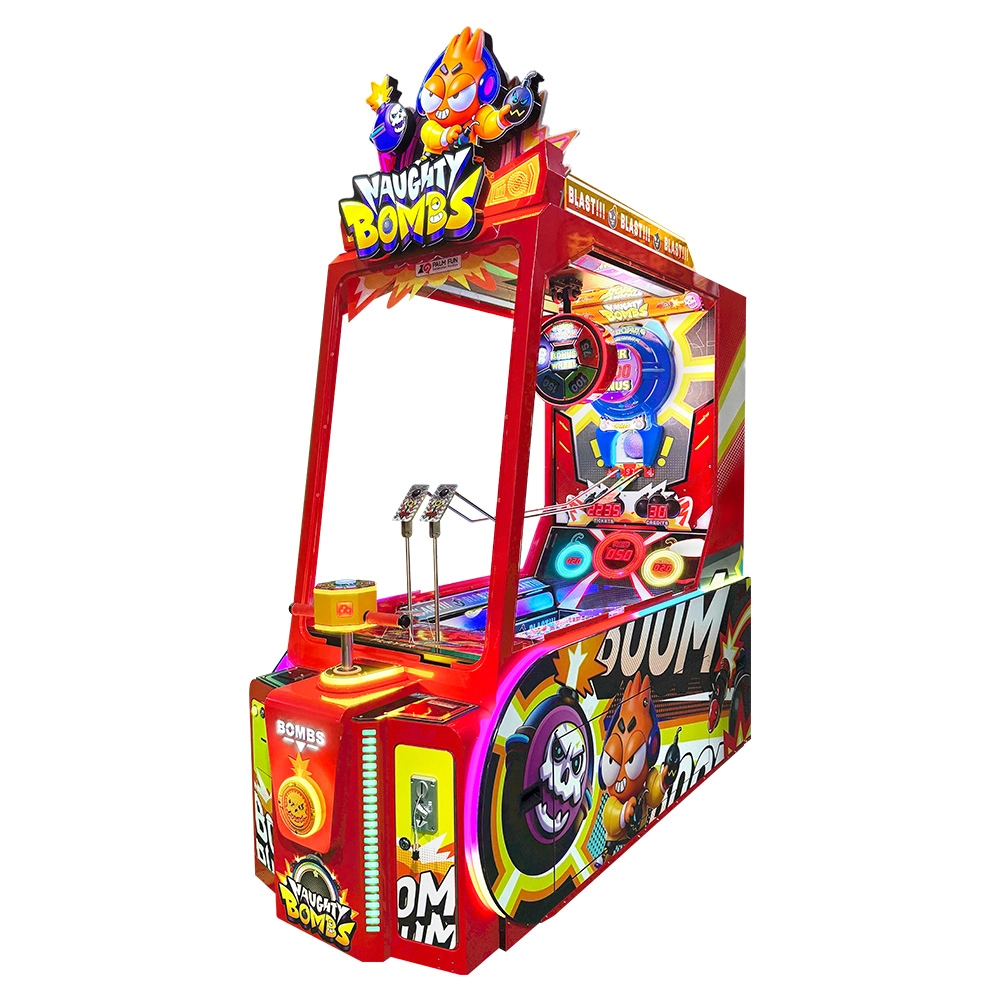
Naughty Bombs is a ball-drop redemption arcade game featuring rolling-ball gameplay, colored targets, ticket prizes, surprise bonus rewards, lighting and sound effects. Players use timing to launch and drop balls toward colored target areas. The product is presented for arcade, family entertainment center and other entertainment-venue projects, with customizable 110V / 220V AC voltage configuration.
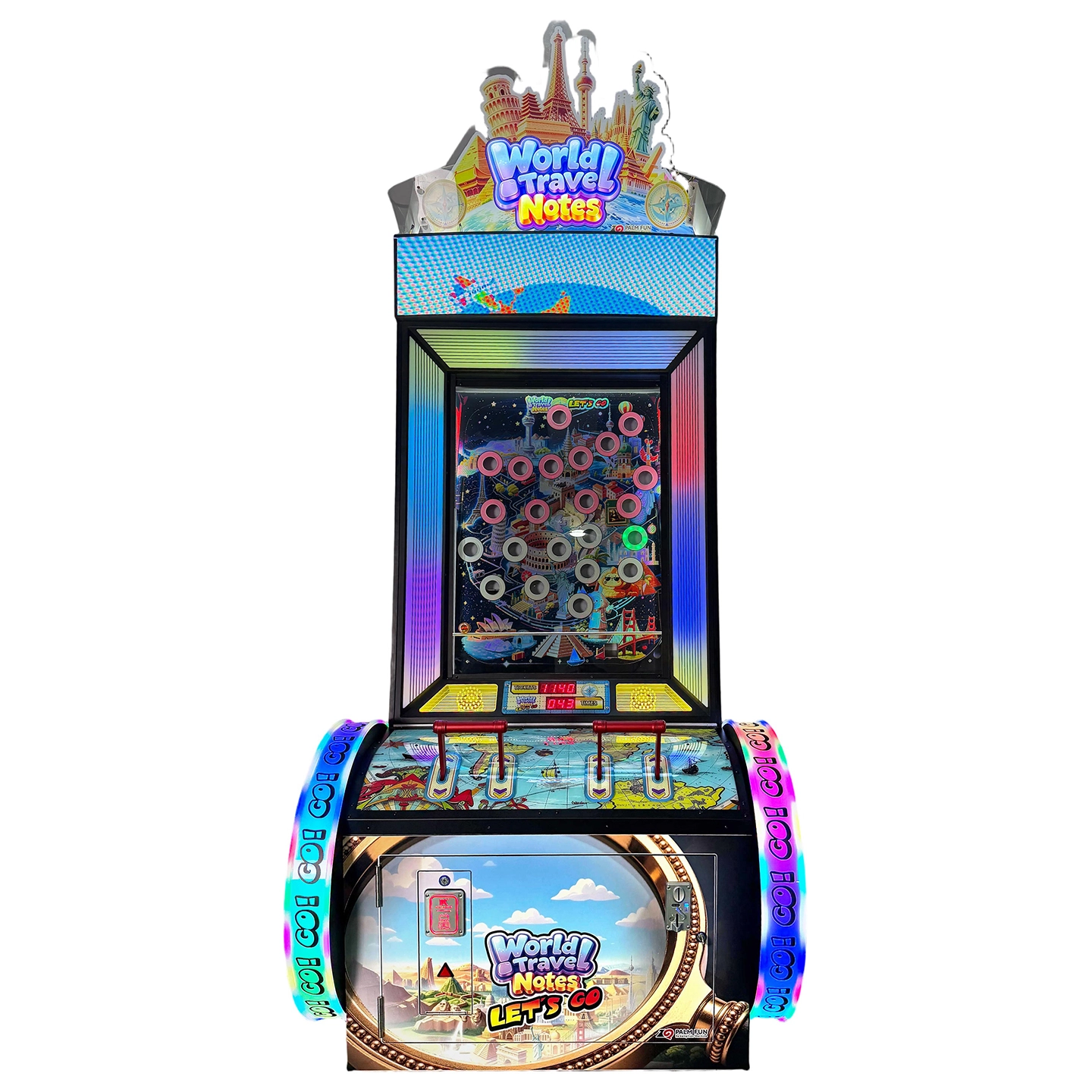
World Travel Notes is a skill-based balance ball redemption game with a fun world-travel theme. Players use two handles to control the balance bar and guide the ball into each target hole. As the game progresses, the targets become more challenging, leading players toward the final grand prize. With colorful world-travel graphics, dynamic RGB lighting, a live score display, and progressive difficulty, World Travel Notes is designed to attract attention and encourage repeat play in arcades, FECs, shopping malls, and other entertainment venues.
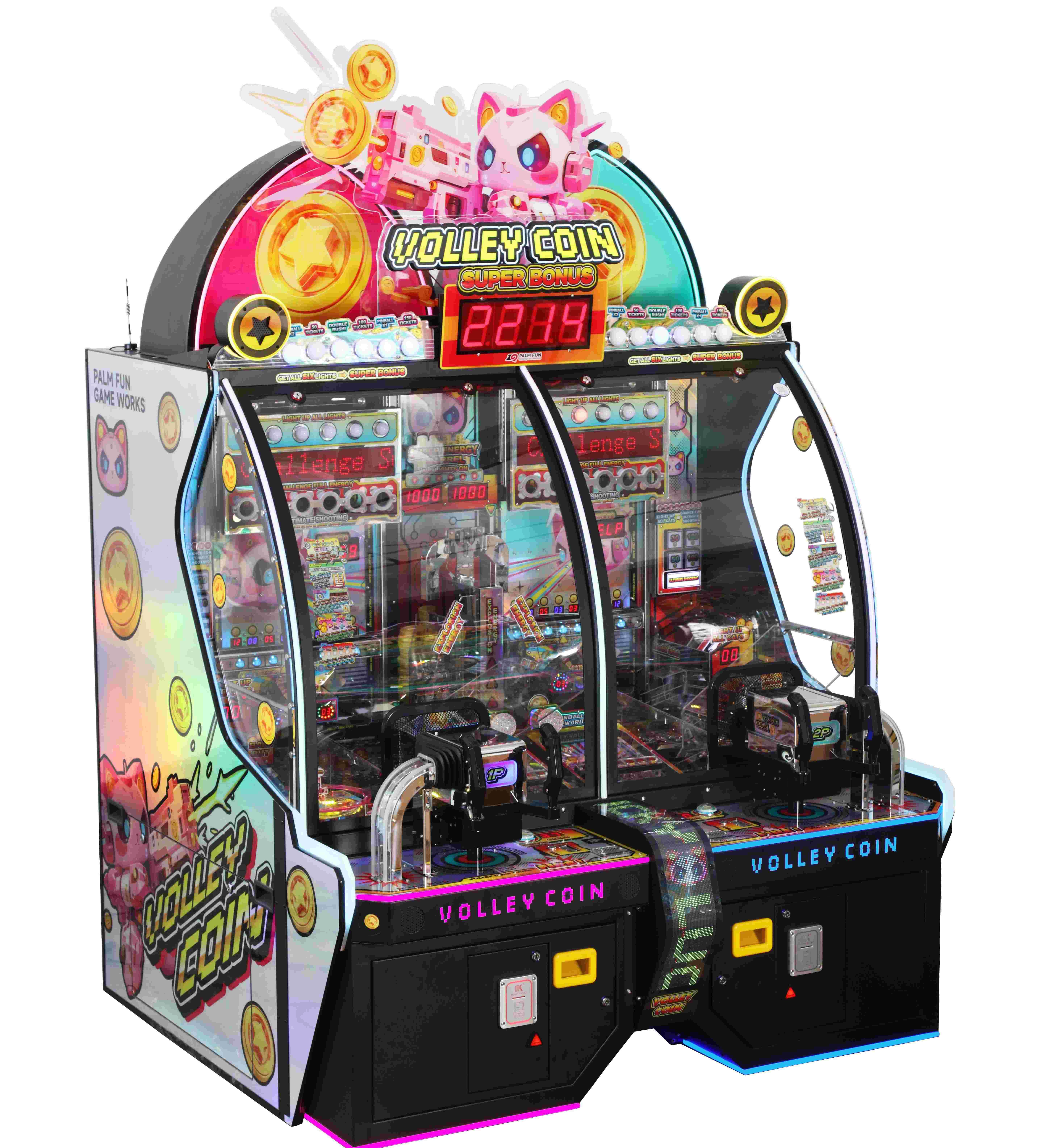
Volley Coin is an innovative arcade ticket redemption machine developed by Palm Fun Electronics. Combining the excitement of a fast-paced token shooter game with the proven earning power of a traditional coin pusher machine, Volley Coin offers a fresh and engaging gameplay experience that appeals to players of all ages.
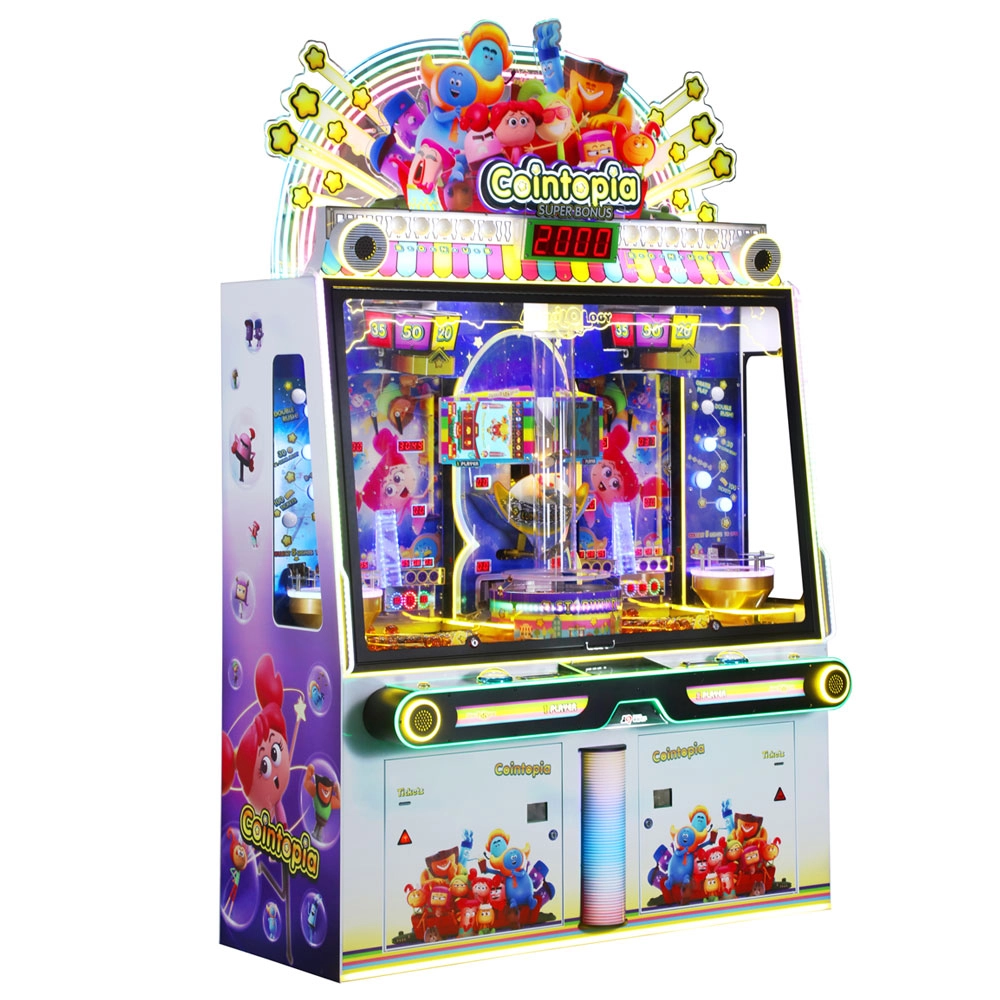
COINTOPIA by PALM FUN is an exciting redemption game machine where players enjoy fun with zodiac buddies in a utopia setting. This ticket redemption machine offers engaging gameplay and rewarding experiences, perfect for family entertainment centers and arcades seeking top-quality redemption games.
Copyright © 2026 PALM FUN All Rights Reserved. | Privacy Policy • Terms and Conditions | Sitemap
palmfunarcade
Palm Fun Arcade Game
Whatsapp: +8618126837443
PalmFun Arcade
PalmFun_Arcade
PALM FUN Redemption Machine