


Redemption Arcade Game Types: FEC Equipment Buying Guide
Compare redemption arcade game types and purchasing factors for FECs and distributors, with verified PALM FUN coin pusher and ball-drop examples.
- How Does a Redemption Arcade Game Work?
- Types of Redemption Arcade Games for Commercial Venues
- Mechanical Coin Pushers vs. Ball-Drop Redemption Machines
- How to Choose Redemption Games for Your FEC Audience
- Redemption Machine Purchasing Checklist for Distributors
- Operating Costs and Ticket Redemption Management
- Frequently Asked Questions About Redemption Arcade Equipment
- What is the difference between an arcade game and a redemption game?
- Do all redemption games give paper tickets?
- Are coin pushers and ball-drop arcade games the same?
- Which redemption arcade machine is best for an FEC?
- What should I ask a redemption game machine supplier?
- Conclusion: Compare Redemption Formats Before Buying
What is a redemption arcade game? It is an amusement game that can award tickets, points, prizes or another permitted reward according to its game result and installed configuration. Players may accumulate eligible value and exchange it for items under the venue's rules. Redemption machines include mechanical, ball-based and electronic formats, and not every game uses the same credit input or prize-delivery system.
For arcade and family entertainment center (FEC) buyers, a useful question is not only how the game works, but also which machine category fits the venue's players, floor space and ticket or prize system. This article focuses on comparing types of redemption arcade games and practical equipment-selection criteria. For a more general introduction to the play-to-prize loop, see what redemption arcade games are.
How Does a Redemption Arcade Game Work?
The guest starts an eligible play using a supported credit or input system. The machine then runs its gameplay cycle and records the result according to its rules. A mechanical game may use moving coins, tokens or balls; an electronic game may use software-driven controls. The award, if any, is communicated through a ticket mechanism, account balance, prize interface or another supported method. The venue's redemption process determines how accumulated value can be exchanged.
Gameplay mechanics and the reward interface are separate buying considerations. A game may use a moving platform without paying out physical coins, and a ball-drop machine may award tickets without physically pushing paper tickets. Buyers should ask suppliers to demonstrate the real game sequence and the exact reward configuration. An advertisement stating “ticket redemption” does not establish compatibility with every payment or prize-management system.
Types of Redemption Arcade Games for Commercial Venues
Redemption equipment spans multiple categories. The distinctions below help operators ask better purchasing questions, but these are broad descriptive labels rather than worldwide standardized legal or technical classes. In particular, coin pushers and ball-based games can use different inputs and award arrangements, while claw or video redemption products may have little mechanical similarity to either type.
| Type | Typical play | What the buyer verifies |
|---|---|---|
| Coin pusher redemption | Moving shelf shifts coins, tokens or game pieces | Input, physical mechanism, reward settings and maintenance access |
| Ball-drop or rolling-ball redemption | Player releases or aims a ball at a scoring target | Game sequence, targets, player positions and ticket compatibility |
| Claw and prize merchandising | Controls move a grabber or prize-delivery mechanism | Prize type, controls, stock access and venue rules |
| Video and hybrid redemption | Electronic or mixed physical gameplay produces a result | Controls, system integration, service and reward format |
These are market-wide categories. PALM FUN should not be assumed to manufacture every type merely because it is discussed here. Confirm the current product range before recommending any model. The best venue mix depends on visitors, gameplay preferences, system compatibility and the economics of the actual installed equipment, not a universal list of the most profitable games.
Mechanical Coin Pushers vs. Ball-Drop Redemption Machines
A coin pusher commonly uses a moving platform that shifts coins or tokens through the playfield. A ball-drop game instead uses a ball path, release or launch action and scoring targets. These differences affect the player experience, which parts require servicing and how a guest understands the result. Both formats may support redemption rewards, but the award method must be confirmed at the model level.
PALM FUN's Burger Mania Coin Pusher Machine is a current example of mechanical coin-pushing equipment. Its product information identifies coin pusher redemption gameplay, but does not justify a claim about universal payout rates or profitability. Operators should request actual cabinet dimensions, player capacity, available input and reward options, and service information before placing it on a floor plan.
Another current example is the Naughty Bombs Ball Drop Redemption Arcade Game. Its backend description identifies timing-based rolling-ball gameplay with colored target areas, ticket prizes and bonus awards. Those details distinguish it from a sliding-shelf pusher. The exact game settings, dimensions and destination-market requirements should still be confirmed for the order and installation.
How to Choose Redemption Games for Your FEC Audience
Begin with the people who will use the equipment. A venue serving families with younger children may need simple instructions, clear visibility and manageable staff supervision. A location with older guests or mixed-age groups may prefer a broader game mix. Audience assumptions should be checked against actual visitor data where possible, rather than assuming that any one category appeals equally to every age or country.
Compare game length, player capacity and available floor space alongside the theme. A cabinet requires more than its physical footprint: guests need room to approach, play and wait, and technicians need safe service access. A game with several play stations can create a different circulation pattern from a single-player unit. Include actual manufacturer measurements, building constraints and accessibility requirements in the decision.
Venue operators should also evaluate reward expectations. For ticket-based play, check how guests see the value they have earned and where they exchange it. The counter must show current prize requirements and the venue's rules. If a proposed game uses a payment or ticket system not supported by the location, the cost and feasibility of integration should be determined before purchase.
Redemption Machine Purchasing Checklist for Distributors
For wholesale and commercial procurement, confirm the specific game, not just the category. Ask the manufacturer or distributor for an accurate product description, cabinet dimensions, required installation space and electrical information. Identify which payment and redemption features are included in the offer, and which require separate equipment or customization. Request model-specific service instructions and replacement-parts arrangements.
- Gameplay and player capacity: Confirm what actions players perform, how results are recorded and the supported number of simultaneous users.
- Rewards and venue integration: Check paper tickets, electronic points, prize systems and any relevant compatibility claims.
- Installation: Obtain model dimensions, access clearance, power requirements and delivery responsibility.
- Service and support: Request maintenance documents, spare-parts access, warranty coverage and escalation procedures.
- Commercial terms: Confirm minimum order quantity, production timing, payment and shipping terms for the actual order.
- Local requirements: Verify applicable amusement, electrical, prize and gaming rules for the specific jurisdiction and configuration.
A clear purchasing record makes it easier to compare models and prevent unexpected installation costs. A supplier should not promise that a machine is lawful everywhere or that a specific ticket setting guarantees revenue. If a venue or distributor has requirements to discuss, contact PALM FUN with the destination market, venue type and preferred redemption format for a model-level conversation.
Operating Costs and Ticket Redemption Management
The initial equipment price is one part of the total cost of operating a redemption machine. Buyers should include installation, shipping, ticket or prize handling, power, maintenance, staffing and possible downtime in their estimates. A high play count is not the same as a high profit contribution, especially when reward costs also increase. Track paid plays and actual redemption expenses rather than relying on general claims about repeat play.
Make sure reward settings and player communication remain aligned. When staff change a prize requirement or when a machine has a recording fault, guests need a clear process for checking balances and resolving discrepancies. Some systems may allow balances to be saved, while others may have restrictions. Never advertise features that the installed system does not provide. A sound operating process is useful regardless of the model's theme or cabinet size.
The legal distinction between amusement games and regulated gaming machines also varies by market. A skill element or a noncash prize does not automatically establish a regulatory exemption. Local rules should be checked before installing a coin pusher or other reward-based equipment. Suppliers can provide technical information, but legal classification and venue permission must be addressed for the actual destination.
Frequently Asked Questions About Redemption Arcade Equipment
What is the difference between an arcade game and a redemption game?
An arcade game can be designed primarily for scores, entertainment or competition. A redemption game adds an award mechanism such as tickets, points or another permitted prize-related result. Whether a particular model counts as regulated gaming equipment depends on local law and the configured operation.
Do all redemption games give paper tickets?
No. Some may award paper tickets, while others record electronic points or use another supported reward format. The installed venue system determines how eligible value is stored and exchanged. Check the actual product configuration and counter rules before ordering.
Are coin pushers and ball-drop arcade games the same?
No. A traditional coin pusher uses a moving shelf and coins or tokens, while a ball-drop game uses a ball launch or release toward scoring areas. Both can use redemption rewards, but their mechanics, player inputs and service needs differ.
Which redemption arcade machine is best for an FEC?
There is no universal best choice. Compare the target audience, cabinet footprint, gameplay, supported reward system, maintenance and vendor terms. The right mix depends on the venue's real requirements and actual operating costs.
What should I ask a redemption game machine supplier?
Request the model's gameplay description, size, power requirements, player capacity, reward and payment options, service documentation, parts availability, warranty and delivery terms. Check destination-market compliance separately and do not rely on a generic profitability promise.
Conclusion: Compare Redemption Formats Before Buying
Redemption arcade games connect gameplay results with tickets, points, merchandise or other permitted rewards, but they do not all use the same mechanisms. Coin pushers, ball-drop games, claw machines and hybrid formats need different equipment and operating checks. Arcade and FEC buyers should begin with the intended audience and venue, verify the specific machine's capabilities, and compare total ownership costs alongside the supplier's service commitments. Clear information about gameplay, rewards and local rules makes purchasing decisions more reliable.

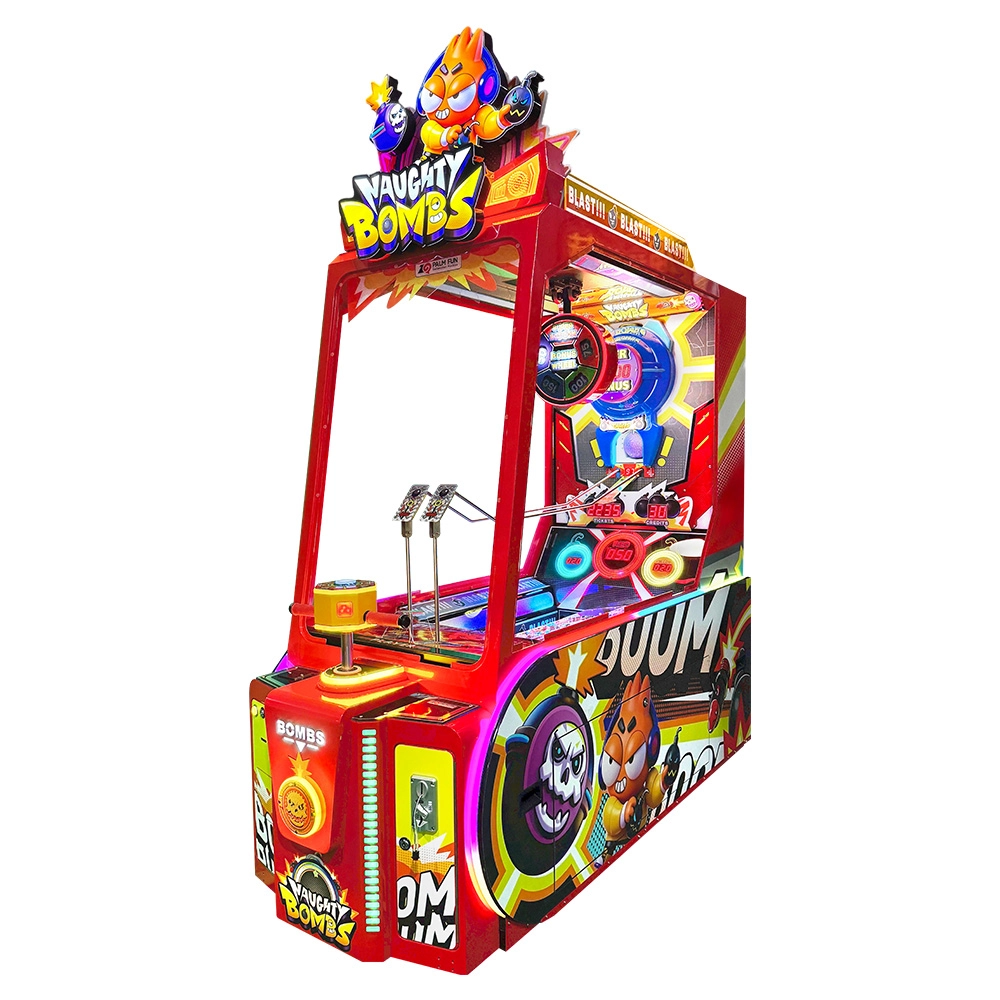
Naughty Bombs is a ball-drop redemption arcade game featuring rolling-ball gameplay, colored targets, ticket prizes, surprise bonus rewards, lighting and sound effects. Players use timing to launch and drop balls toward colored target areas. The product is presented for arcade, family entertainment center and other entertainment-venue projects, with customizable 110V / 220V AC voltage configuration.
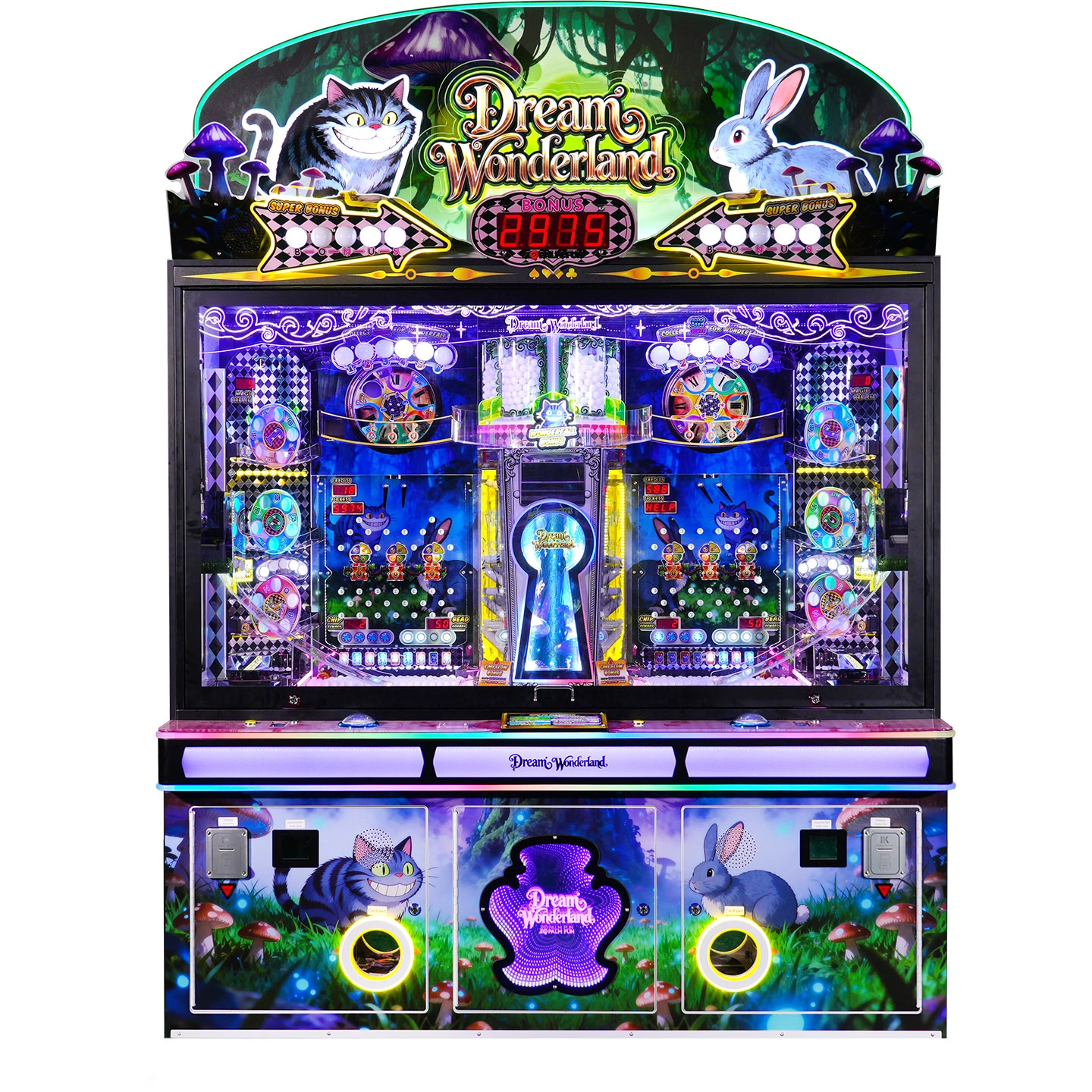
Enter Dream Wonderland — a magical marble pusher adventure filled with glowing lights, magic orbs, bonus wheels, collectible character cards, and exciting jackpot challenges.
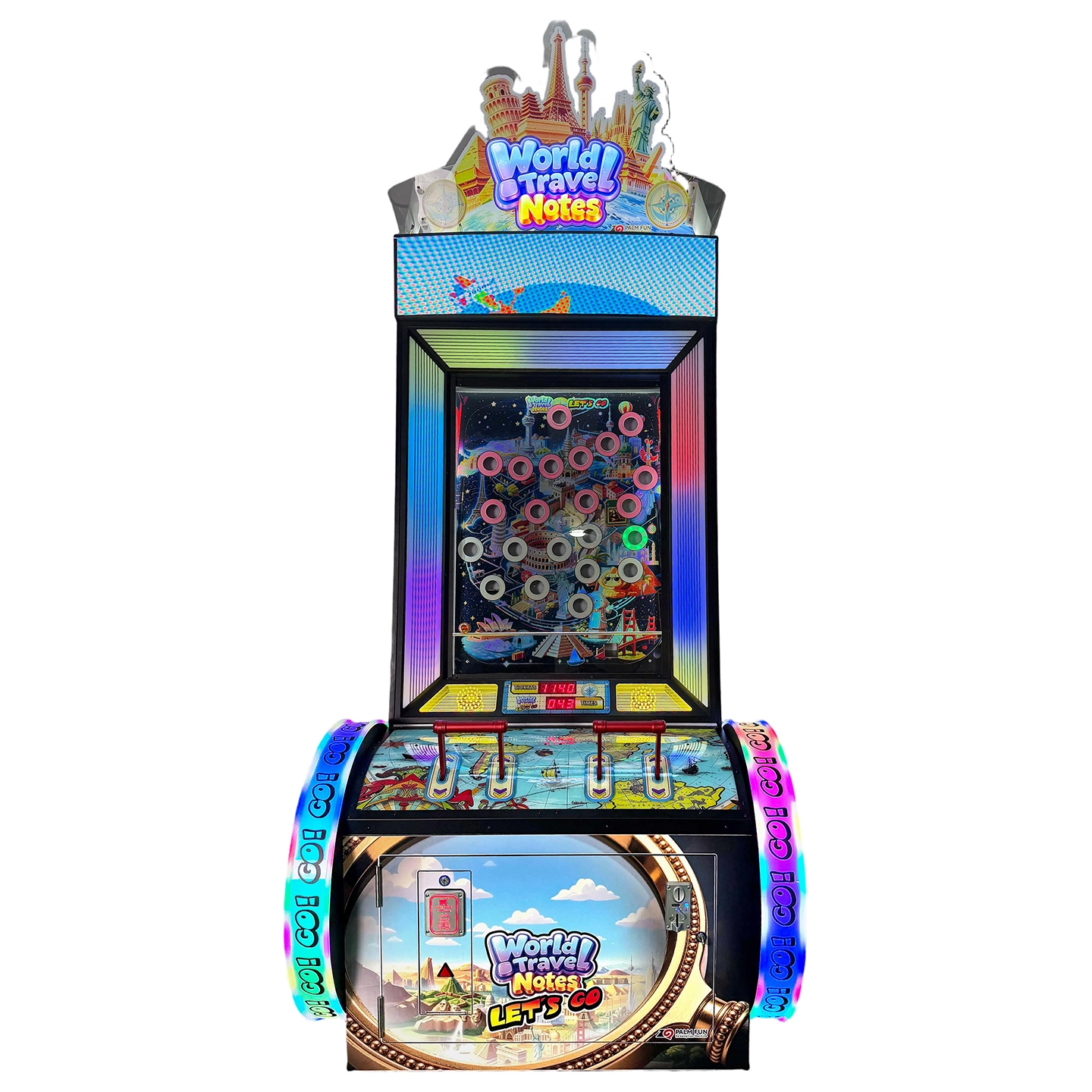
World Travel Notes is a skill-based balance ball redemption game with a fun world-travel theme. Players use two handles to control the balance bar and guide the ball into each target hole. As the game progresses, the targets become more challenging, leading players toward the final grand prize. With colorful world-travel graphics, dynamic RGB lighting, a live score display, and progressive difficulty, World Travel Notes is designed to attract attention and encourage repeat play in arcades, FECs, shopping malls, and other entertainment venues.
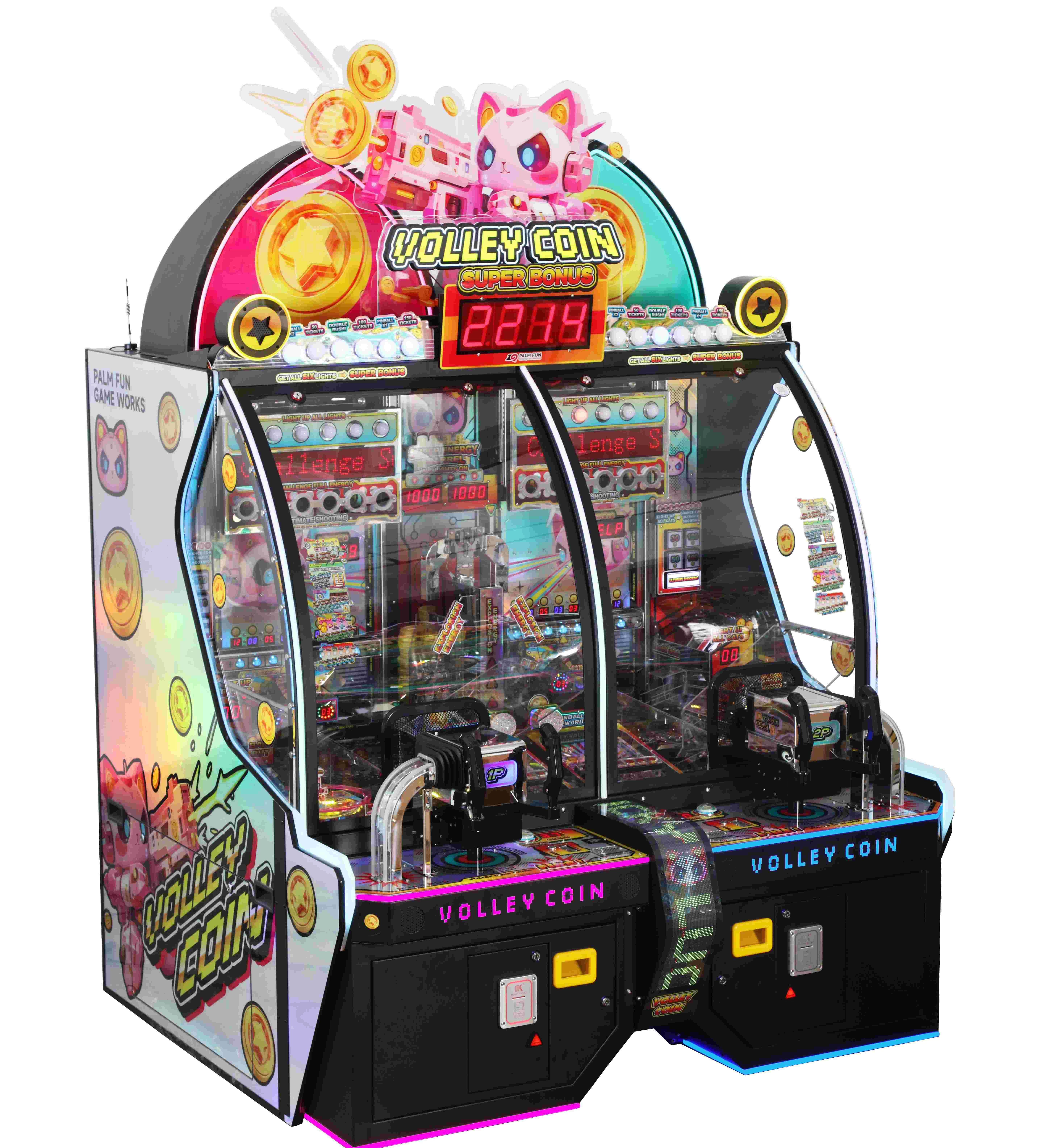
Volley Coin is an innovative arcade ticket redemption machine developed by Palm Fun Electronics. Combining the excitement of a fast-paced token shooter game with the proven earning power of a traditional coin pusher machine, Volley Coin offers a fresh and engaging gameplay experience that appeals to players of all ages.

Copyright © 2026 PALM FUN All Rights Reserved. | Privacy Policy • Terms and Conditions | Sitemap
palmfunarcade
Palm Fun Arcade Game
Whatsapp: +8618126837443
PalmFun Arcade
PalmFun_Arcade
PALM FUN Redemption Machine