








Dream Wonderland Marble Pusher: FEC Operations, Gameplay & Buying Criteria
An operational and B2B purchasing assessment of PALM FUN Dream Wonderland marble pusher, covering game features, footprint, ticket interfaces, maintenance and pre-shipment checks.
- 1. What Dream Wonderland Adds to a Commercial Redemption Floor
- 2. How Marble Movement and Collection Objectives Work
- 2.1 Why Progress Indicators Matter
- 3. Multi-Level Bonuses, Cards, and Reward Progression
- 4. Match the Machine to the Right Venue and Player Mix
- 5. Cabinet Dimensions, Access, and Delivery Planning
- 5.1 Receiving-Route Checks
- 6. Evaluate Payment, Ticketing, and Localized Configuration
- 6.1 Confirm Integration Details
- 7. Manage Ticket Liabilities Without Guessing at ROI
- 8. Routine Inspection and Service Preparation
- 9. Compare Dream Wonderland with Simpler Redemption Formats
- 9.1 The Operational Comparison
- 10. Manufacturer Questions and Pre-Shipment Acceptance
- 11. A Practical Rollout and Performance Review
- 12. RFQ Checklist for Dream Wonderland Buyers
Dream Wonderland is a PALM FUN marble pusher redemption game with a themed physical playfield, visible collection objectives, multi-stage bonus activity, and character-card progression. Its purchasing value depends on matching the game to an FEC's visitors, floor plan, ticket operation, and service resources—not on an unverified return-on-investment claim.
For commercial buyers, the published cabinet measures 1,855 mm wide, 1,030 mm deep and 2,500 mm high, with an approximate machine weight of 480 kg. Reward and payment settings should be confirmed for the ordered configuration.
1. What Dream Wonderland Adds to a Commercial Redemption Floor
Dream Wonderland is a commercial marble pusher redemption machine built around a physical playfield and several collectible reward objectives. Marbles move across the pushing area while illuminated targets, a bonus wheel, special balls, keys, and character cards provide different events to follow. The visual theme is fantasy-oriented rather than an ordinary coin shelf. For an operator, that changes how the game is demonstrated, merchandised, monitored, and explained to visitors.
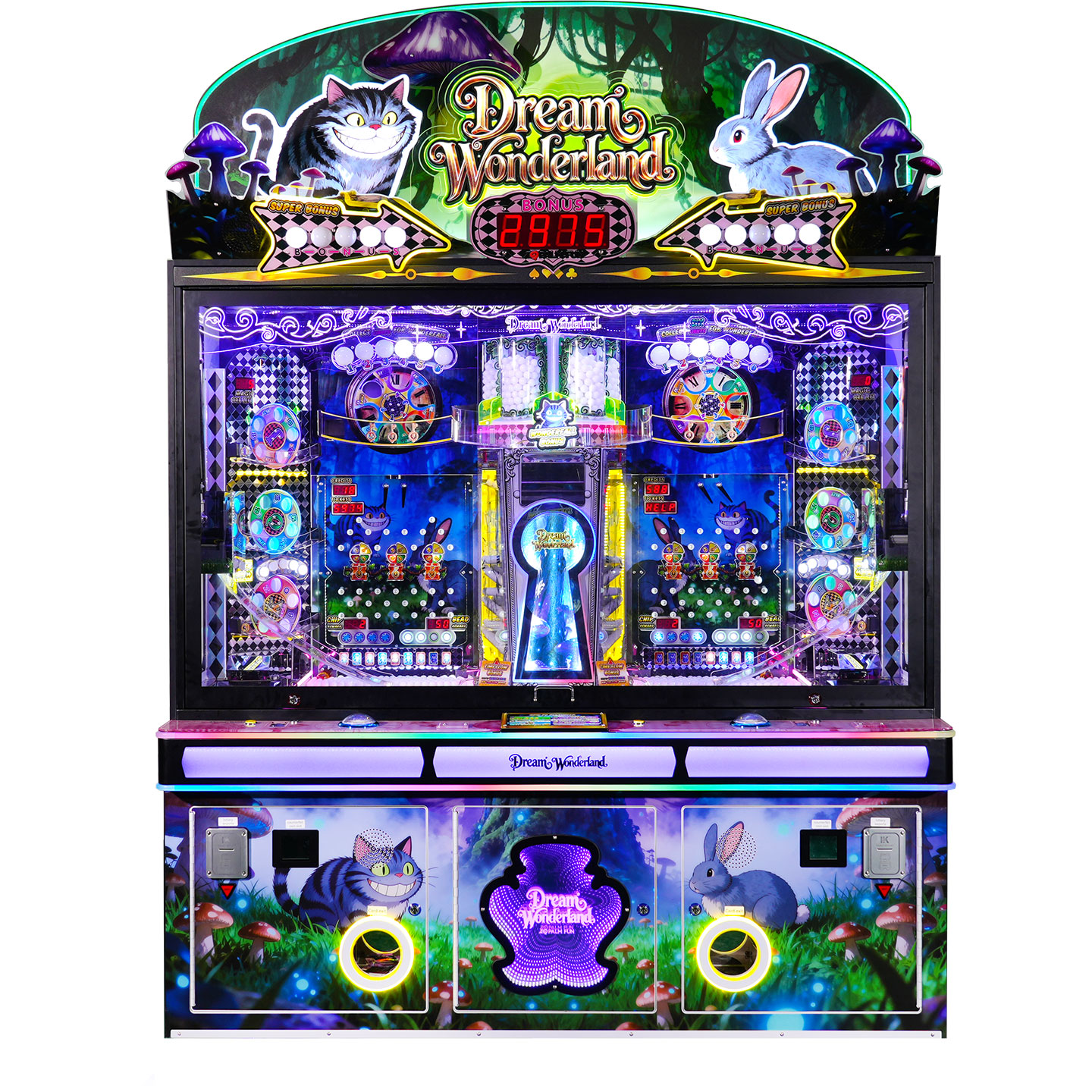
Traditional pusher attractions often communicate their objective almost immediately: an item advances toward an edge and a reward follows. Dream Wonderland retains that recognizable physical action, then adds longer sequences with visible progress. A guest can understand immediate marble movement while also noticing partially completed lamps or collection objectives. These two timescales matter because a short attempt and an extended session can appeal to different players without requiring the operator to change the surrounding prize counter.
2. How Marble Movement and Collection Objectives Work
At the playfield, players release marbles and watch them interact with the moving pusher. The timing of a release changes what may happen next; the progression remains visible through the cabinet glass. The playfield's nine collection lamps are divided into four for marble rewards, four for chip rewards, and one center lamp for a special bonus ball. The currently published gameplay presentation describes a Time Flow Bonus once all nine lamps are lit. The lamp arrangement is not the same as the ticket payout schedule; event conditions and reward values should be checked for the purchased software configuration.
2.1 Why Progress Indicators Matter
The practical benefit of these visual milestones is that players can see more than a simple pile moving forward. A partly completed lamp sequence gives a visible state; a special ball entering another area provides a separate moment of anticipation. In operational terms, clear states may help a parent or new player follow the game after a short demonstration. Conversely, a machine with many simultaneous indicators can confuse guests if local instructions are difficult to read or the artwork makes important controls hard to distinguish.
3. Multi-Level Bonuses, Cards, and Reward Progression
Our Dream Wonderland gameplay presentation includes a three-level bonus wheel, a special-ball route, key collection, character cards, a Super Bonus, and a feature called Wonderfall. In the published example, the bonus ball advances through two NEXT outcomes before reaching the K Bonus level, where five BONUS lamps relate to the Super Bonus objective. A separate collection route uses three keys to activate a wheel, while eight character cards complete a stated 5,000-ticket collection reward. Wonderfall involves its own six-lamp objective. These are distinct mechanisms; buyers should verify the reward chart and software settings delivered for their market.
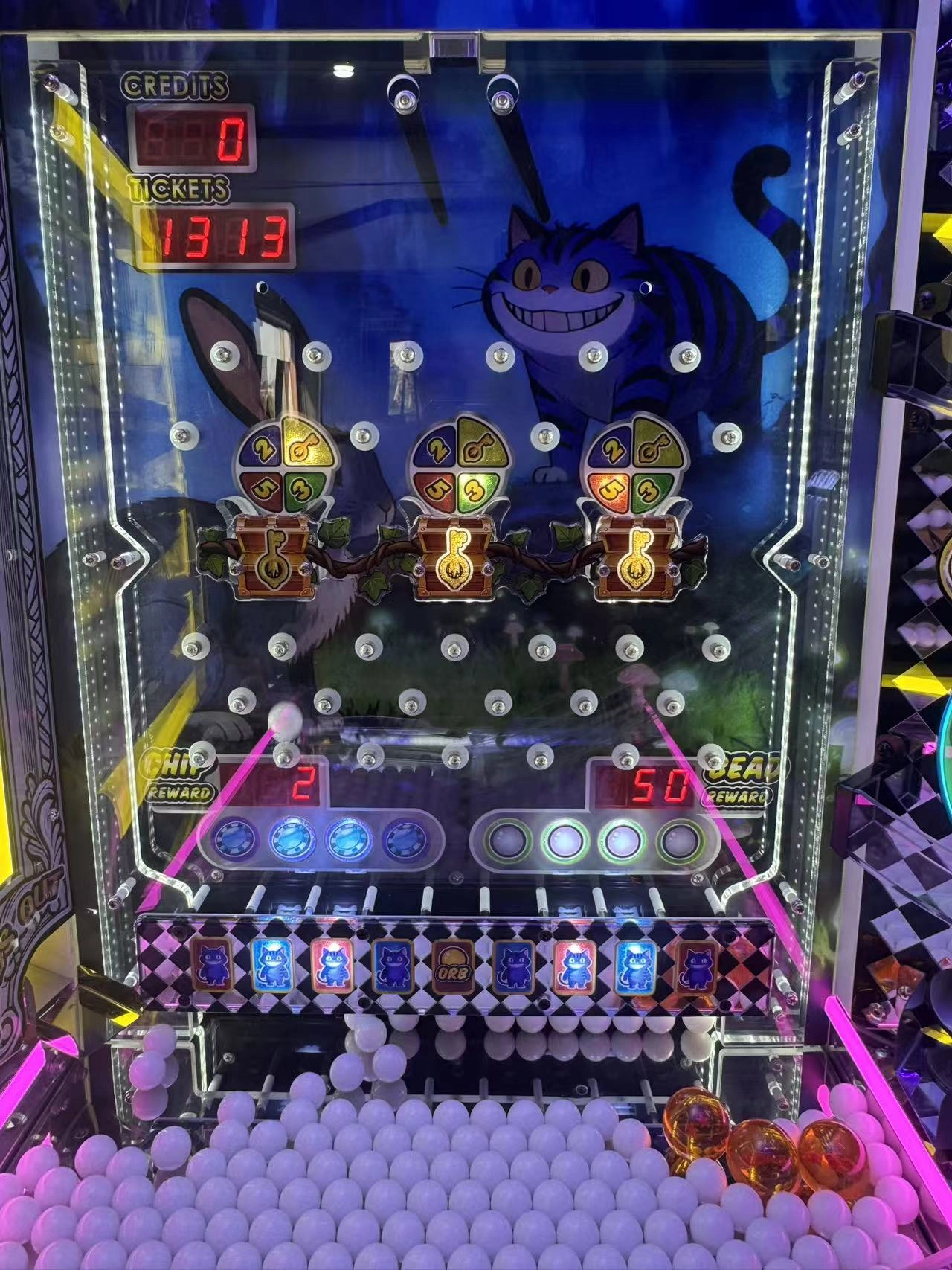
Operators benefit from separating progression into observable categories: playfield events, staged bonus events, and collection milestones. Clear distinctions help staff explain the machine's observable events without implying a guaranteed result from any individual marble or wheel movement. It also helps procurement teams ask meaningful questions about counters, displays, stored progress, recovery after power interruption, and the way unused credits are handled. None of these behaviors should be assumed merely because a marketing image shows a partially completed collection.
4. Match the Machine to the Right Venue and Player Mix
An FEC with families and mixed-age groups may value a cabinet that can be noticed from a distance and explained with a brief demonstration. Dream Wonderland uses colorful marble motion, lighting, artwork, and bonus-wheel activity as attention signals. An arcade with experienced redemption players may instead place more emphasis on whether repeated attempts reveal additional objectives. Shopping-mall entertainment zones also need to consider casual visitors who make their decision while walking past, often without a long opportunity to study the screen.
Venue fit can be assessed by watching how players behave around comparable machines already on the floor. Record whether guests tend to play a short round, remain beside one machine, or move between several related games. Note whether queues form around the cabinet and whether spectators stand in the service aisle. Observed behavior is a more dependable starting point than a generic claim that one title suits every age group or guarantees strong earnings.
5. Cabinet Dimensions, Access, and Delivery Planning
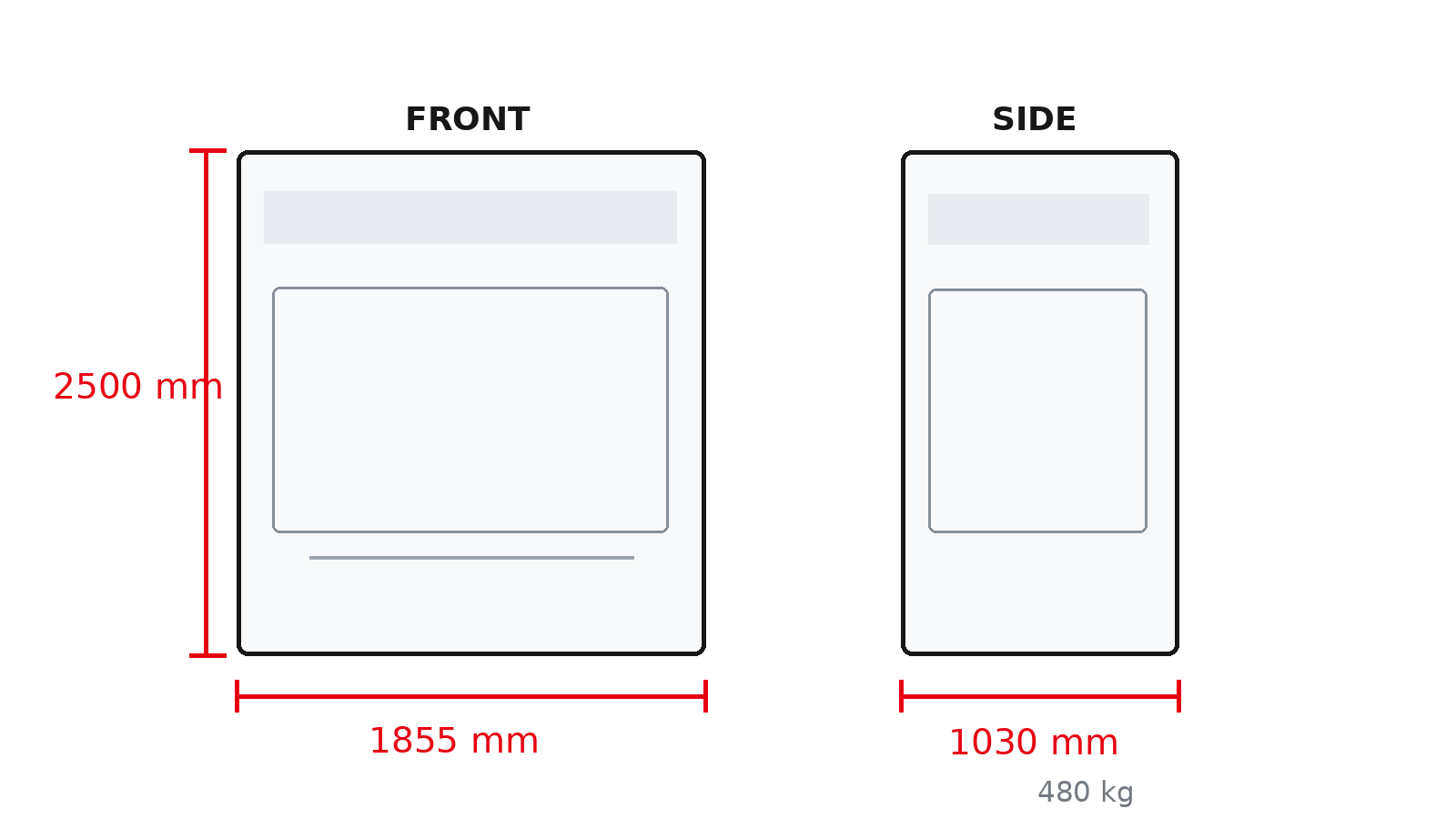
Our published Dream Wonderland cabinet dimensions are 1,855 mm wide, 1,030 mm deep, and 2,500 mm high, with an approximate machine weight of 480 kg. These are machine dimensions, not a complete installation envelope. A purchasing team also needs to account for packaging, handling equipment, doors, turns along the route, the installed power connection, safe customer circulation, and the access needed to open service panels. The cabinet should never be ordered solely from a floor-space sketch.
5.1 Receiving-Route Checks
Before shipment, request a drawing identifying the transport position, removable elements if any, lifting or handling points, and the precise final assembly dimensions. Compare the documented measurements with the narrowest site door and the delivery route, including elevators, ramps, floor load restrictions, and overhead obstructions. A 2,500 mm tall machine can be incompatible with a location even when its footprint appears acceptable. If a vendor offers a special transportation arrangement, it should be documented for that specific unit.
| Specification | Published figure | What to verify |
|---|---|---|
| Width | 1,855 mm | Doors and installation route |
| Depth | 1,030 mm | Player and service clearances |
| Height | 2,500 mm | Ceiling and freight access |
| Machine weight | Approx. 480 kg | Floor and handling plan |
6. Evaluate Payment, Ticketing, and Localized Configuration
Commercial redemption games must work within an operator's actual payment and prize system. Coin and token handling, a card reader, redemption-ticket output, and local electrical arrangements are not interchangeable merely because each can appear on a quotation. For Dream Wonderland, we can discuss configuration options, including payment arrangements, branding, language labels, voltage, and ticket settings. Buyers should treat these as configuration questions to resolve in writing, not as proof that every variant is included in the standard unit.
6.1 Confirm Integration Details
A useful quotation identifies the accepted form of payment, the interfaces needed for the venue's existing system, the reward-output method, and any third-party hardware that must be supplied locally. If a venue operates on electronic credits, the order should define how the game reports completed sessions and tickets to that system. If physical tickets are retained, staff should test the dispensing path with the actual ticket stock used on site. The specifications of the installed redemption-management system matter as much as the cabinet itself.
7. Manage Ticket Liabilities Without Guessing at ROI
A multi-stage redemption game creates several distinct accounting questions. A standard play may issue one kind of award, a bonus wheel another, and a collection milestone a larger prize. Operators need to understand which events generate redeemable value and how their system records that value. A headline jackpot alone cannot predict profitability; neither can a quoted purchase price. The real operating outcome depends on plays, actual ticket awards, prize redemption costs, staffing, machine availability, and local demand.
Track basic measurements over a representative test period: paid sessions, available operating hours, tickets issued, redemption value, service interventions, and any unusual payout events. For each period, compare ticket value with the corresponding sales recorded by the payment system. A machine that appears busy but experiences repeated interruptions may produce a very different result from one with similar player interest and stable availability. Operators should also separate introductory promotional credits from ordinary paid transactions.
8. Routine Inspection and Service Preparation
Physical marbles, transparent playfield surfaces, moving components, input controls, sensors, and ticket interfaces all create inspection tasks. The maintenance routine should begin with safe shutdown and the procedure specified for the exact machine. Staff can then check accessible areas for stray objects, obstructed movement, visibly loose parts, dirty viewing surfaces, damaged cables, and abnormal sounds. Any internal electrical repair belongs to appropriately qualified personnel, not an unsupervised attendant.
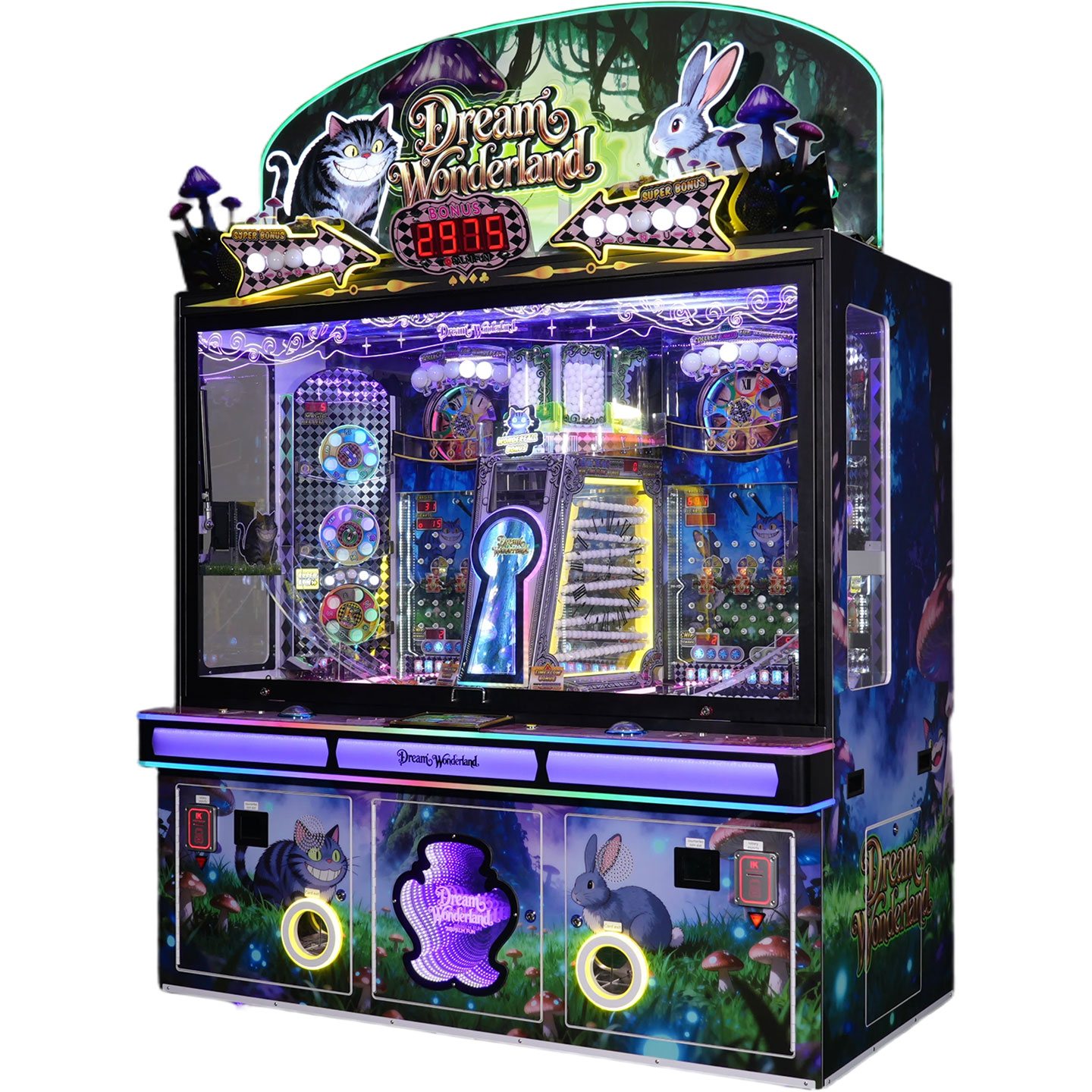
Make a short opening checklist that distinguishes observations from repairs. Confirm that the cabinet is stable, essential instructions are readable, controls respond, lights and displays operate as expected, and the machine completes a test round without a jam. Record the time, the symptom, and any error indication if something fails. Frequent small events, such as a delayed ball release or inconsistent bonus recognition, may matter even if the machine can still accept payment.
9. Compare Dream Wonderland with Simpler Redemption Formats
A conventional marble or coin pusher gives immediate feedback through visible movement on a shelf. Dream Wonderland adds themed artwork and several reward objectives that require more explanation. Neither arrangement is inherently superior for every location. A simple format may be convenient in a high-turnover area where guests want a fast and familiar experience. A layered format may be attractive when visitors are comfortable following collection progress and observing bonus events.
9.1 The Operational Comparison
The comparison should be based on a defined operating role. Evaluate the level of staff explanation required, the time needed to finish a demonstrable play cycle, the physical access available for service, the payment and ticket interfaces, and the expected visitor mix. Observe play rather than scoring features by how impressive they sound in an advertisement. A prize counter with limited capacity may prefer a straightforward reward flow, while a larger dedicated redemption zone may support more elaborate collecting and bonus sequences.
| Decision factor | Basic pusher | Dream Wonderland |
|---|---|---|
| Immediate action | Visible pushing | Visible pushing and collection |
| Game objectives | Short feedback loop | Layered bonus and card collection |
| Guest instruction | Basic operation | May require bonus explanation |
| Procurement checks | Mechanism and payout | Interfaces, staged rewards and service |
10. Manufacturer Questions and Pre-Shipment Acceptance
A factory quotation should identify the specific Dream Wonderland variant and the equipment supplied with it. Ask for a game-rule or reward-configuration sheet that distinguishes the nine-lamp Time Flow sequence, the three-level bonus wheel, card collection, and Wonderfall; the marketing description alone does not define the settings of every delivered cabinet. Require written confirmation of cabinet measurements, operating voltage, maximum electrical load for that configuration, payment interface, redemption-output method, language, packaging arrangement, and warranty and service procedures. Photographs of the quoted version help prevent a buyer from assuming that every feature seen in a trade-show demonstration will ship with every order.
Before paying the final balance, agree on an acceptance test with a measurable checklist. The test can include power-on behavior, start and payment sequence, marble release and movement, lamp and bonus recognition, display behavior, ticket dispensing, and recovery after an ordinary authorized shutdown. Request a video of the actual completed unit when an on-site visit is impractical. A demonstration of a different model or an early prototype does not prove that the purchased configuration has passed.
11. A Practical Rollout and Performance Review
Start deployment with a controlled acceptance period rather than a sudden change across an entire arcade. Position the cabinet where guests can approach safely, test the actual payment and ticket system, and have staff observe several complete sessions. Record which steps require explanation and whether the game's collection indicators can be understood from the normal standing position. Confirm the service team can open and inspect the required panels without moving other equipment.
During commissioning, also confirm that the rules displayed for nine collection lamps, three-key activation, and the separate bonus-wheel and Wonderfall milestones match the actual cabinet. During the opening period, separate technical incidents from commercial observations. A ball feed problem or delayed payout is an equipment issue; a visitor leaving after a quick attempt is an engagement observation. Both are useful, but they call for different actions. Review transaction logs alongside the opening checklist and prize-counter reports. Changes to reward settings should follow the documented rules and be reviewed before they are placed into service.
12. RFQ Checklist for Dream Wonderland Buyers
A complete request for quotation makes supplier responses easier to compare. Include the proposed venue type, country, available floor and access measurements, required payment system, desired ticket integration, electrical supply, display language, approximate delivery period, and any brand or artwork requirements. Identify which changes are mandatory and which are only preferred. Attach photographs or a floor plan if the installation route could be difficult.
Request confirmation of the exact cabinet version, included accessories, packaging dimensions and gross shipping weight, setup documentation, recommended spares, technical contact process, and warranty scope. Ask for a clear distinction between features included as standard and items that require an extra configuration or local purchase. Where a bonus or collectible system matters to the business model, obtain the actual reward-rule sheet for the unit being quoted rather than relying on general promotional descriptions.
Our Dream Wonderland marble pusher combines a moving marble playfield with collection milestones and staged reward objectives. In an arcade that already operates conventional pushers, the relevant decision is whether guests can understand its different interaction patterns and whether the venue can support the actual payment, reward and maintenance configuration.

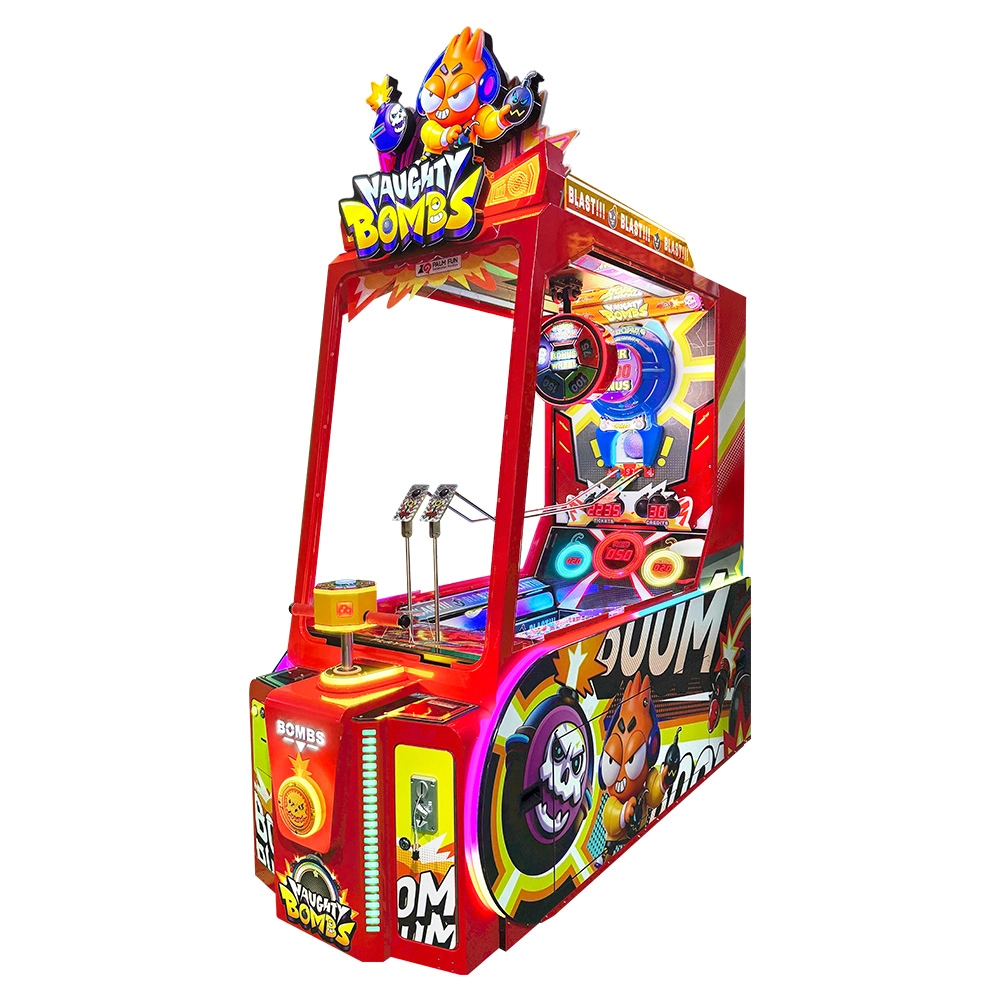
Naughty Bombs is a ball-drop redemption arcade game featuring rolling-ball gameplay, colored targets, ticket prizes, surprise bonus rewards, lighting and sound effects. Players use timing to launch and drop balls toward colored target areas. The product is presented for arcade, family entertainment center and other entertainment-venue projects, with customizable 110V / 220V AC voltage configuration.
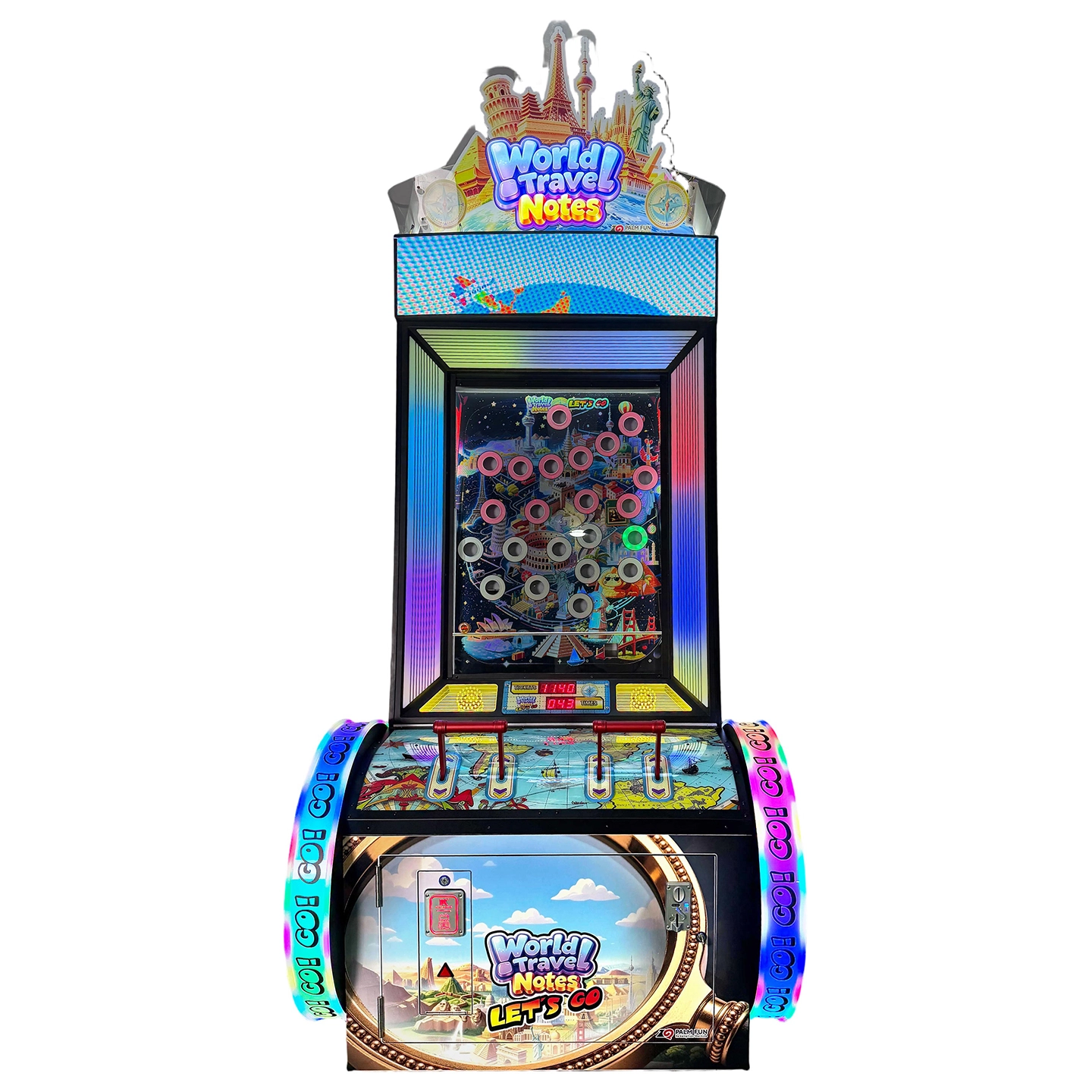
World Travel Notes is a skill-based balance ball redemption game with a fun world-travel theme. Players use two handles to control the balance bar and guide the ball into each target hole. As the game progresses, the targets become more challenging, leading players toward the final grand prize. With colorful world-travel graphics, dynamic RGB lighting, a live score display, and progressive difficulty, World Travel Notes is designed to attract attention and encourage repeat play in arcades, FECs, shopping malls, and other entertainment venues.
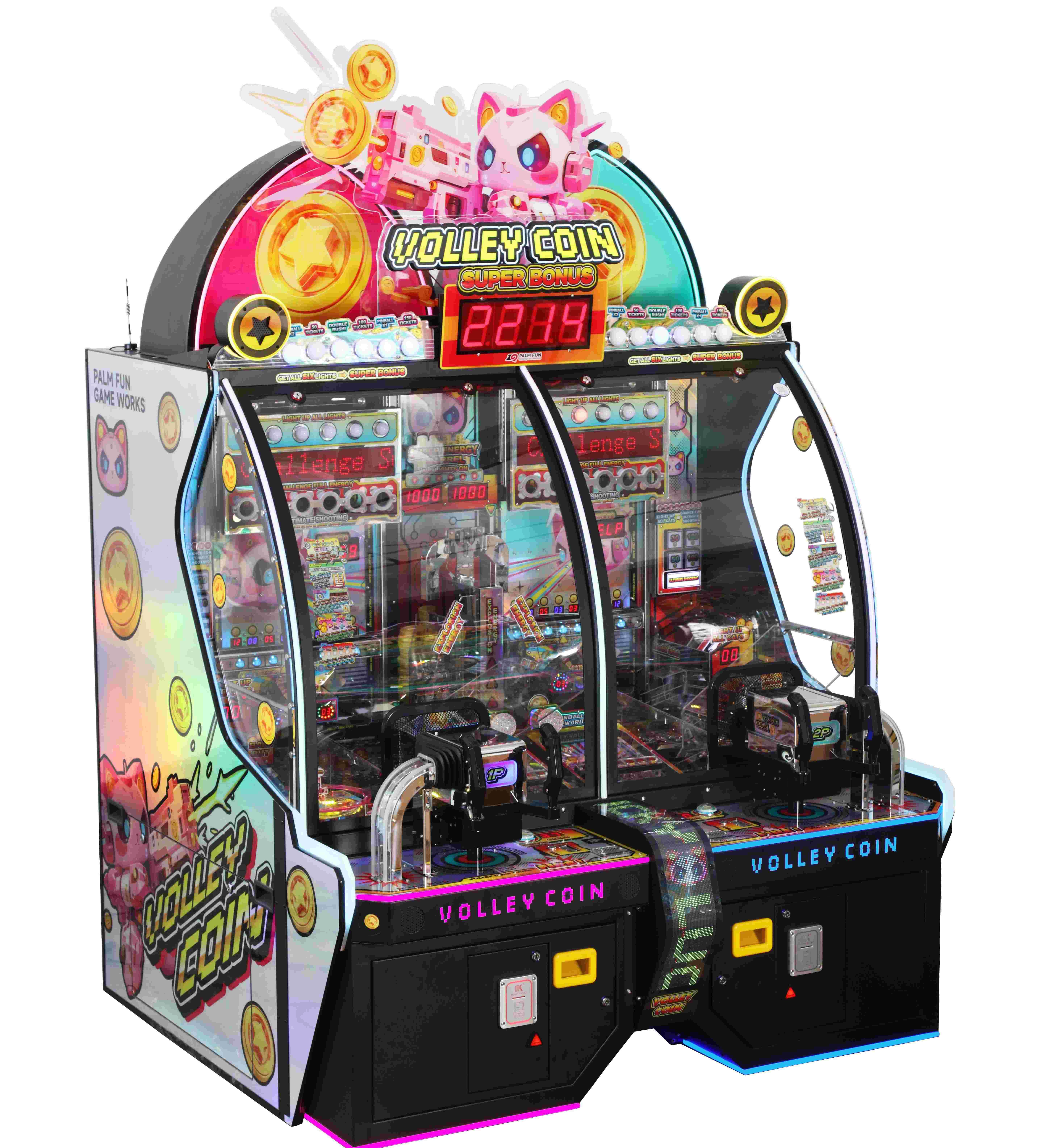
Volley Coin is an innovative arcade ticket redemption machine developed by Palm Fun Electronics. Combining the excitement of a fast-paced token shooter game with the proven earning power of a traditional coin pusher machine, Volley Coin offers a fresh and engaging gameplay experience that appeals to players of all ages.
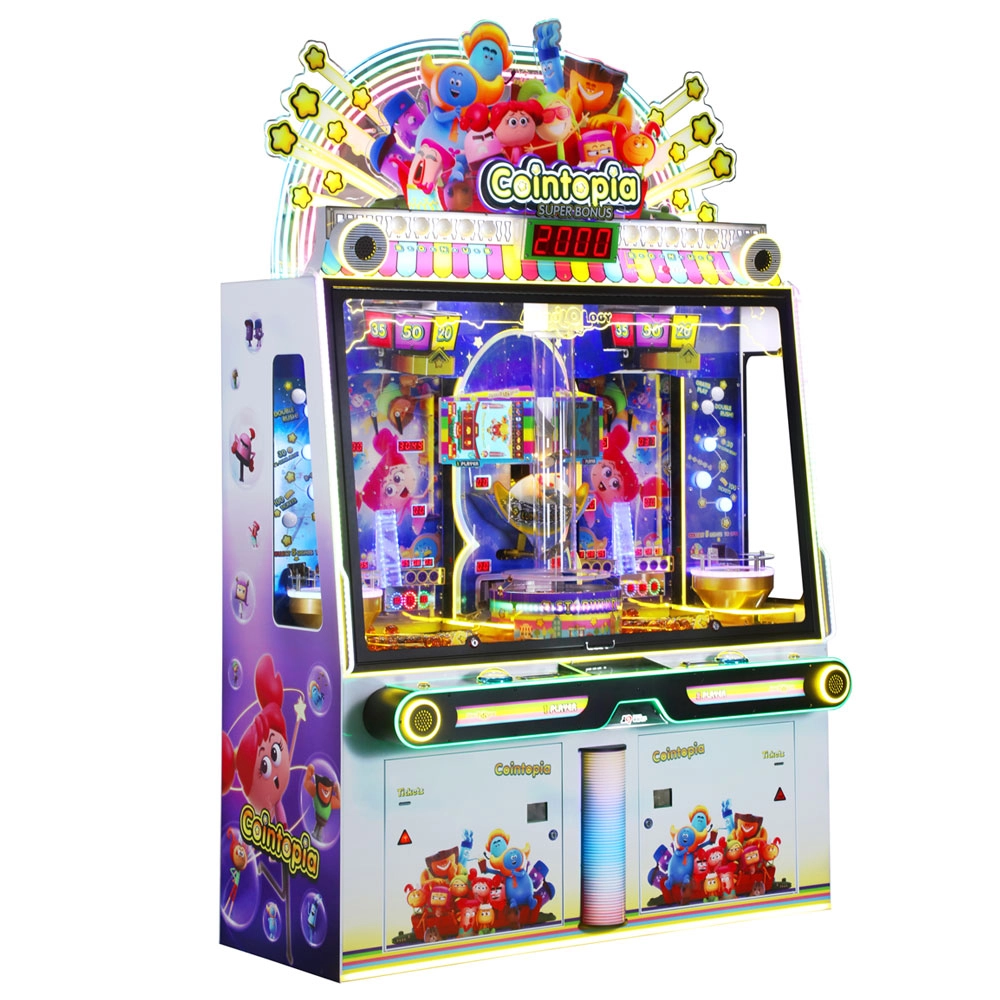
COINTOPIA by PALM FUN is an exciting redemption game machine where players enjoy fun with zodiac buddies in a utopia setting. This ticket redemption machine offers engaging gameplay and rewarding experiences, perfect for family entertainment centers and arcades seeking top-quality redemption games.

Copyright © 2026 PALM FUN All Rights Reserved. | Privacy Policy • Terms and Conditions | Sitemap
palmfunarcade
Palm Fun Arcade Game
Whatsapp: +8618126837443
PalmFun Arcade
PalmFun_Arcade
PALM FUN Redemption Machine