








52% of UK Arcade Visitors Now Prefer Cashless — What It Means for Your Game Floor
Cashless has overtaken cash among UK arcade visitors for the first time. The question for operators is no longer whether to move — it is how fast, and what to do with the machines already standing on your floor.
Cashless has overtaken cash among UK arcade visitors for the first time. The question for operators is no longer whether to move—it is how fast, and what to do with the machines already standing on your floor.
New research from Nayax, the global commerce enablement, payments, and loyalty platform, surveyed more than 2,350 people in the UK who visit arcades and family entertainment centers. The headline finding: 52 percent now prefer a cashless way to pay and play, against 43 percent who still choose cash. The remaining five percent have no preference.
That single number matters more than it looks. Payment preference decides how long a customer stays, how often they top up, and whether they come back—and for anyone buying or running redemption equipment, it also decides what the machines on your floor need to be able to do.
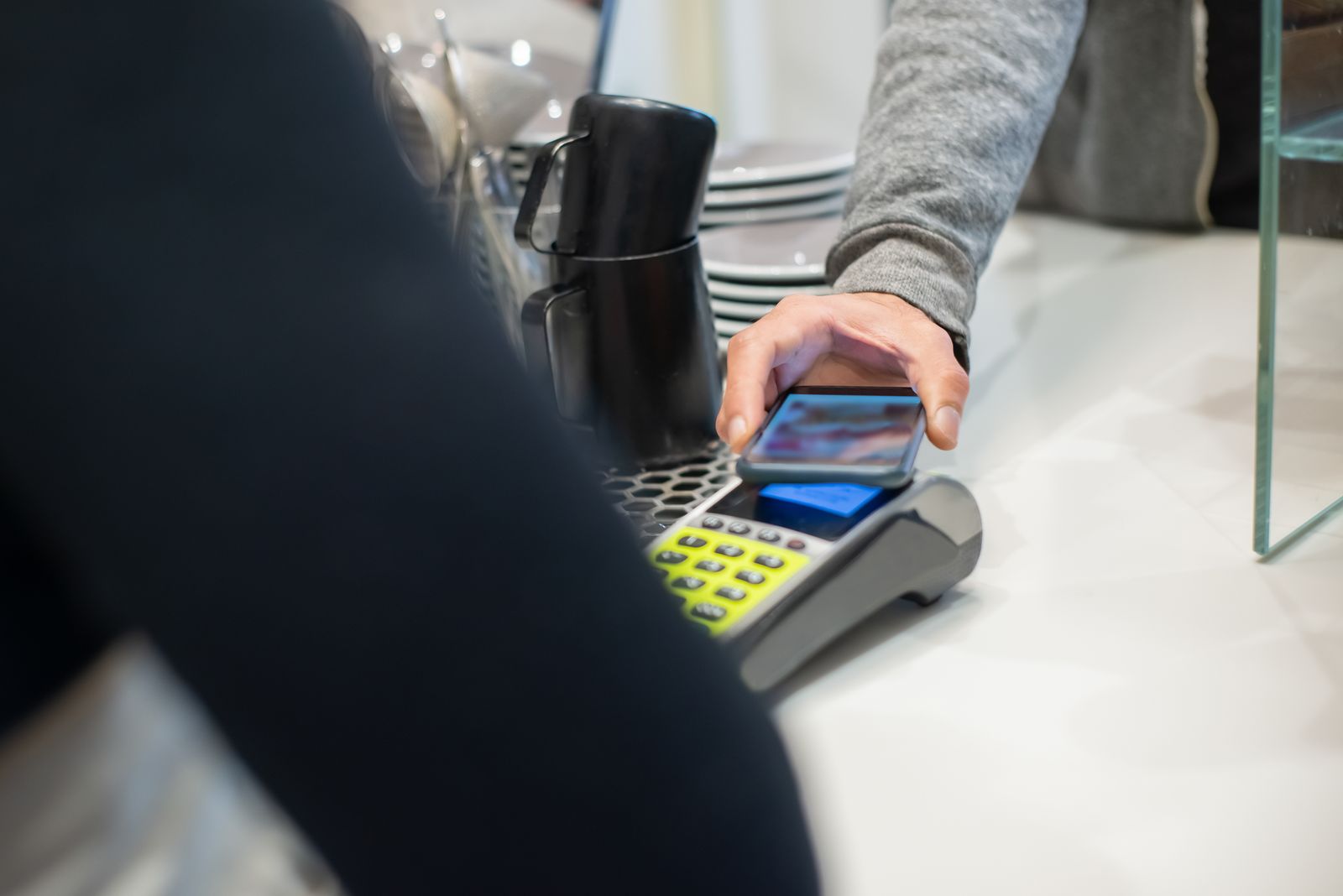
What the UK Research Found
|
Payment method preferred by UK arcade and FEC visitors |
Share |
|
Cashless (total) |
52% |
|
Contactless bank card |
34% |
|
Mobile wallet (Apple Pay, Google Pay) |
15% |
|
Prepaid game card |
3% |
|
Cash |
43% |
|
No preference |
5% |
Two details are worth reading carefully. First, contactless bank cards alone (34 percent) are nearly as popular as cash (43 percent)—this is not a niche behaviour; it is mainstream. Second, prepaid game cards sit at only three percent, which tells you something useful: visitors do not want a special-purpose card they have to buy first; they want to pay with whatever is already in their pocket or phone.
The Age Gap Is the Real Story
The generational split is sharper than the headline figure:
· Aged 25 to 34: 75 percent prefer cashless—contactless card, mobile wallet, or prepaid game card—against 20 percent who choose cash.
·Aged 65 and over: 68 percent still prefer cash—but more than a quarter of this group (26 percent) now prefer a cashless option.
Read together, these two lines rule out the two most common operator mistakes. Going fully cashless today would turn away a large share of older visitors who still arrive with coins. Staying fully coin-operated would put friction in front of the three-quarters of 25-to-34s who expect to tap and play—and that is the age group that fills a floor on a Saturday.
The practical conclusion is a dual-track floor: the same venue, the same machines, accepting both. A cabinet that can only take one of the two is turning away paying customers at the door. And the good news is that on modern redemption equipment this is not a choice between two machines — it is a choice between two parts, and the part can be changed.

Top-Up Speed Is a Revenue Line, Not a Convenience
The research also asked what would have the greatest effect on how much visitors spend during a visit. The answers were dominated by friction:
|
What would most increase visitor spending? |
Share |
|
Instant top-up of credits using a phone or card |
25% |
|
Shorter queues at kiosks and redemption areas |
19% |
|
A loyalty or rewards program |
16% |
|
Personalized offers or discounts |
15% |
Almost half of all responses—44 percent—point at the same thing: remove the wait, and the spend goes up. Instant top-up (25 per cent) and shorter queues (19 per cent) are both friction problems, not marketing problems. A player standing in a queue is a player not playing, and each minute in that queue is lost revenue that no discount will recover afterwards.
Loyalty (16 percent) and personalized offers (15 percent) matter too, but note the order: they only work after the payment layer works. A rewards program that requires a customer to carry a separate card—when only three percent of visitors want a prepaid game card—is a program that will not be used.
What This Means for the Machines You Buy
This is where a payment trend becomes a purchasing decision. If your floor has to accept both cash and cashless, your equipment has to support both—and the specifications that make that possible should be confirmed before the order is placed, not after the machines land.
1. One position, two options
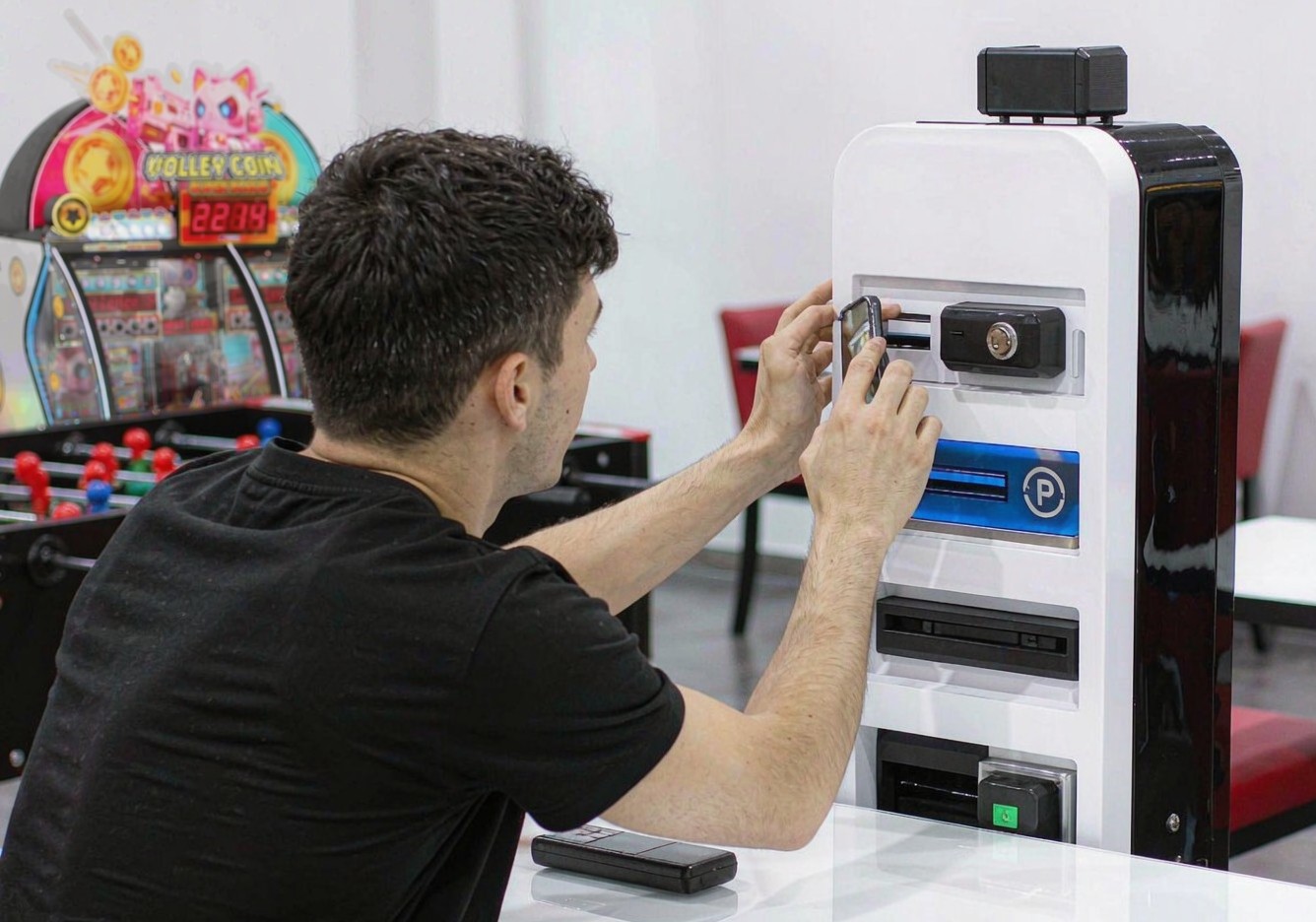
On most redemption machines the coin acceptor and the card reader share the same mounting position on the front door. That means a machine can be built for coins, or built for a card reader — and it can be switched later, provided the cabinet was prepared for it. Ask for the reader mounting position to be left open and a blank panel fitted for transport, so the opening stays sealed until your card system provider installs their reader on site.
2. Pulse output versus full integration
There are two levels of connection between a card reader and a game machine, and they are not interchangeable:
·Pulse output—the reader sends a credit signal to the machine for each tap. This is the standard, universal setup, and it handles coin-in only.
·Serial integration (RS232 / USB)—two-way communication, so the ticket count can be written back to the customer's card as electronic credits (an e-ticket system). This requires protocol documents from your card system provider and is a custom integration—cost and lead time should be confirmed in advance.
If your venue runs entirely on cards with no paper tickets, you will want the second option. Ask for it early.
3. Do not get locked into one system
Card systems differ by market—Intercard and Embed dominate in the US, Sacoa and Intercard in the Middle East, Semnox in India, and Nayax itself operates across multiple regions. A machine that is "cashless ready" in the generic sense is worth less than one built to your reader's actual cut-out dimensions, power requirement and interface type. Confirm which system you are on before the order is released.
A Practical Three-Phase Transition
Nothing in the research suggests operators should rip out coin handling overnight. A staged approach captures the cashless majority early while keeping the cash minority playing:
|
Phase |
What you do |
Why |
|
Phase 1 |
Keep coins and tokens fully live. Add card readers to your highest-traffic machines first. |
Tests real behavior on your floor with your customers—not a national average—while 43% of visitors keep playing exactly as before. |
|
Phase 2 |
Card-first layout: readers at eye level, coin slots still available. Add a second instant top-up point to cut queues. |
Instant top-up (25%) and shorter queues (19%) are the two biggest stated spend drivers. This is where the revenue lift comes from. |
|
Phase 3 |
Loyalty and offers tied to the card account. E-ticket payout instead of paper. |
Loyalty (16%) and personalized offers (15%) only convert once the payment layer is frictionless and identifiable. |
UK arcade visitors have crossed a line: 52 percent now prefer to pay and play without cash, and among 25- to 34-year-olds, that figure reaches 75 percent. Cash is not disappearing—it is becoming one of two expected options rather than the only one.
For operators, that means equipment should be bought for a dual-track floor. For anyone specifying machines right now, the practical question is simple: can this cabinet take a card reader today, and can it take a coin acceptor tomorrow? Machines that answer yes to both will not need replacing when the next payment shift arrives.


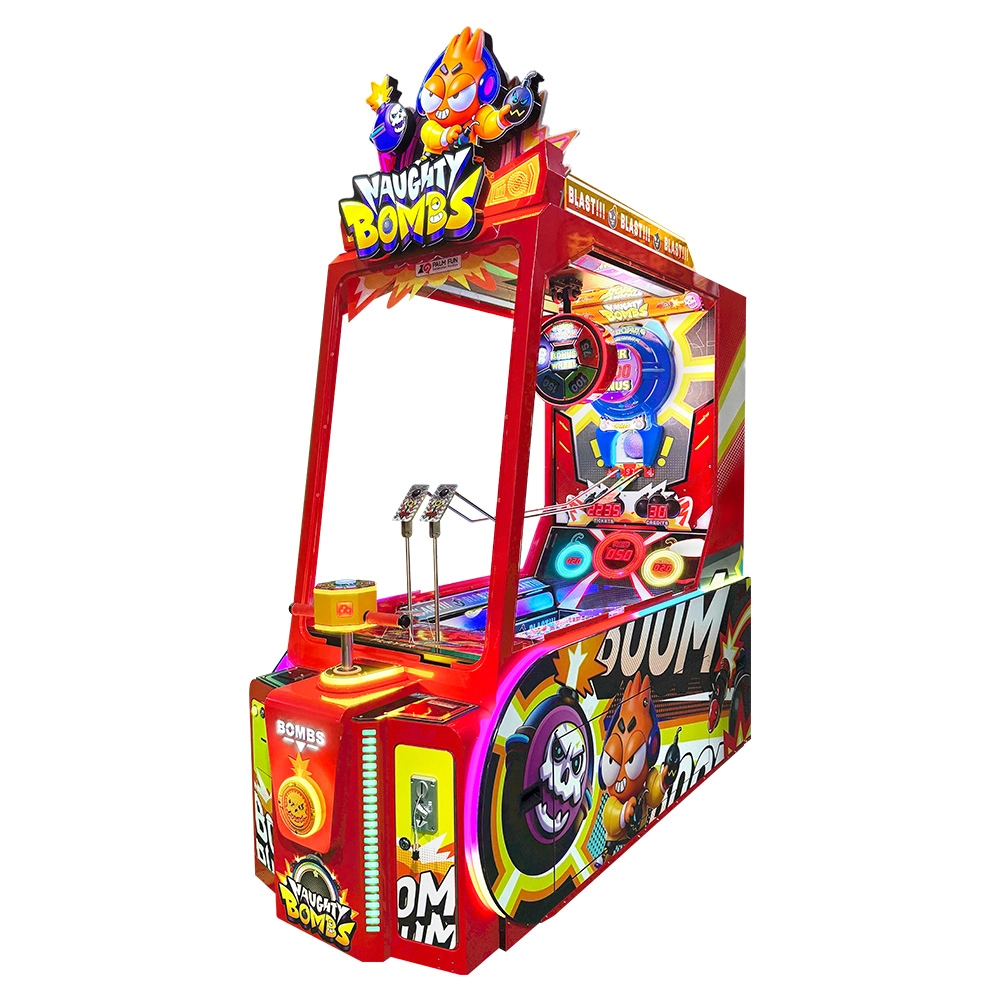
Naughty Bombs is a ball-drop redemption arcade game featuring rolling-ball gameplay, colored targets, ticket prizes, surprise bonus rewards, lighting and sound effects. Players use timing to launch and drop balls toward colored target areas. The product is presented for arcade, family entertainment center and other entertainment-venue projects, with customizable 110V / 220V AC voltage configuration.
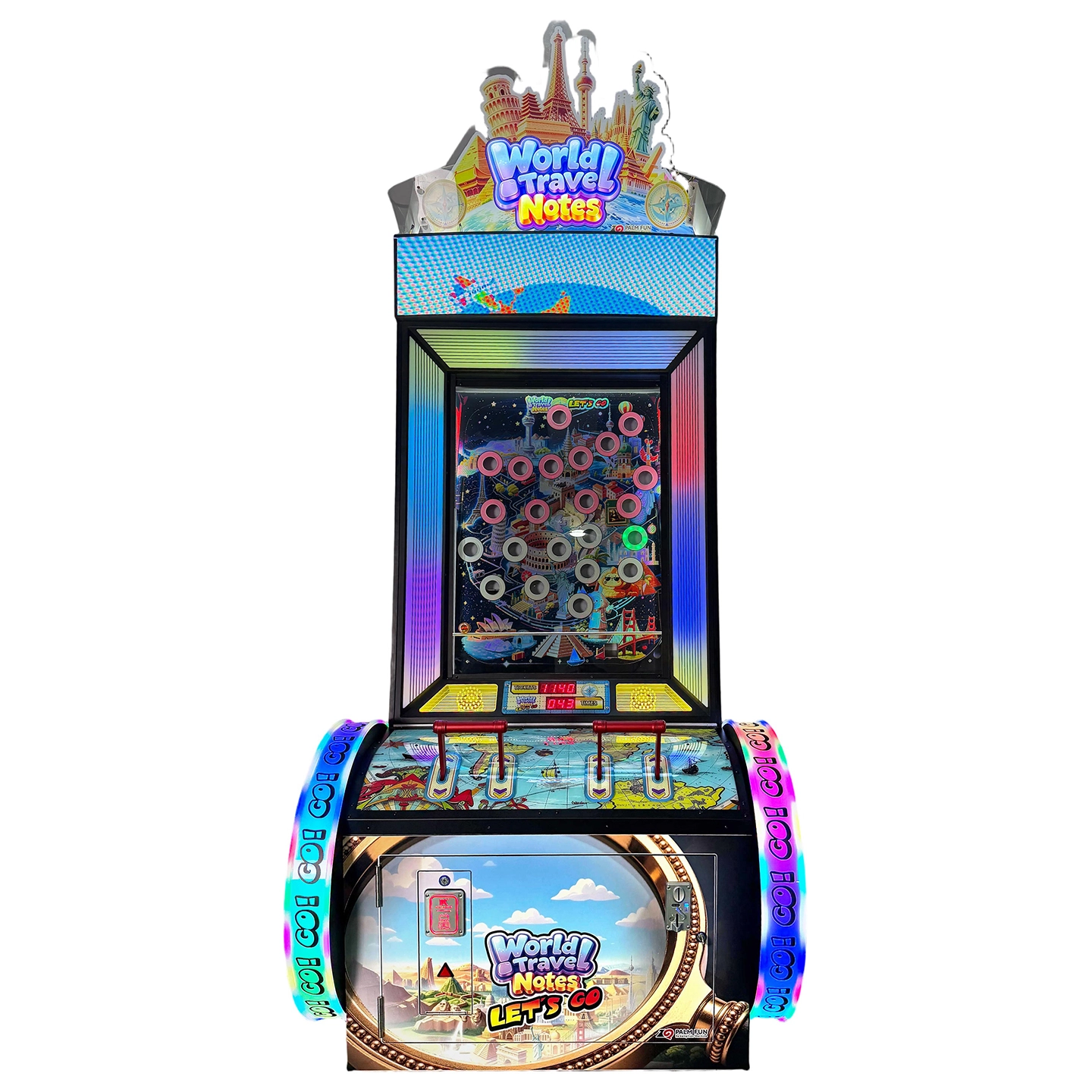
World Travel Notes is a skill-based balance ball redemption arcade game that turns every play into a journey around the world. Players take control of two handles to tilt the balance board, guiding a rolling ball across a world-map playfield toward the glowing target hole. Each cleared stage raises the difficulty, and only the most skilled players reach the highest hole to claim the grand prize. With its colorful world-travel theme, dynamic RGB lighting, live score display, and progressive challenge design, World Travel Notes is an eye-catching centerpiece for arcades, family entertainment centers, and shopping malls looking to boost player engagement and revenue.
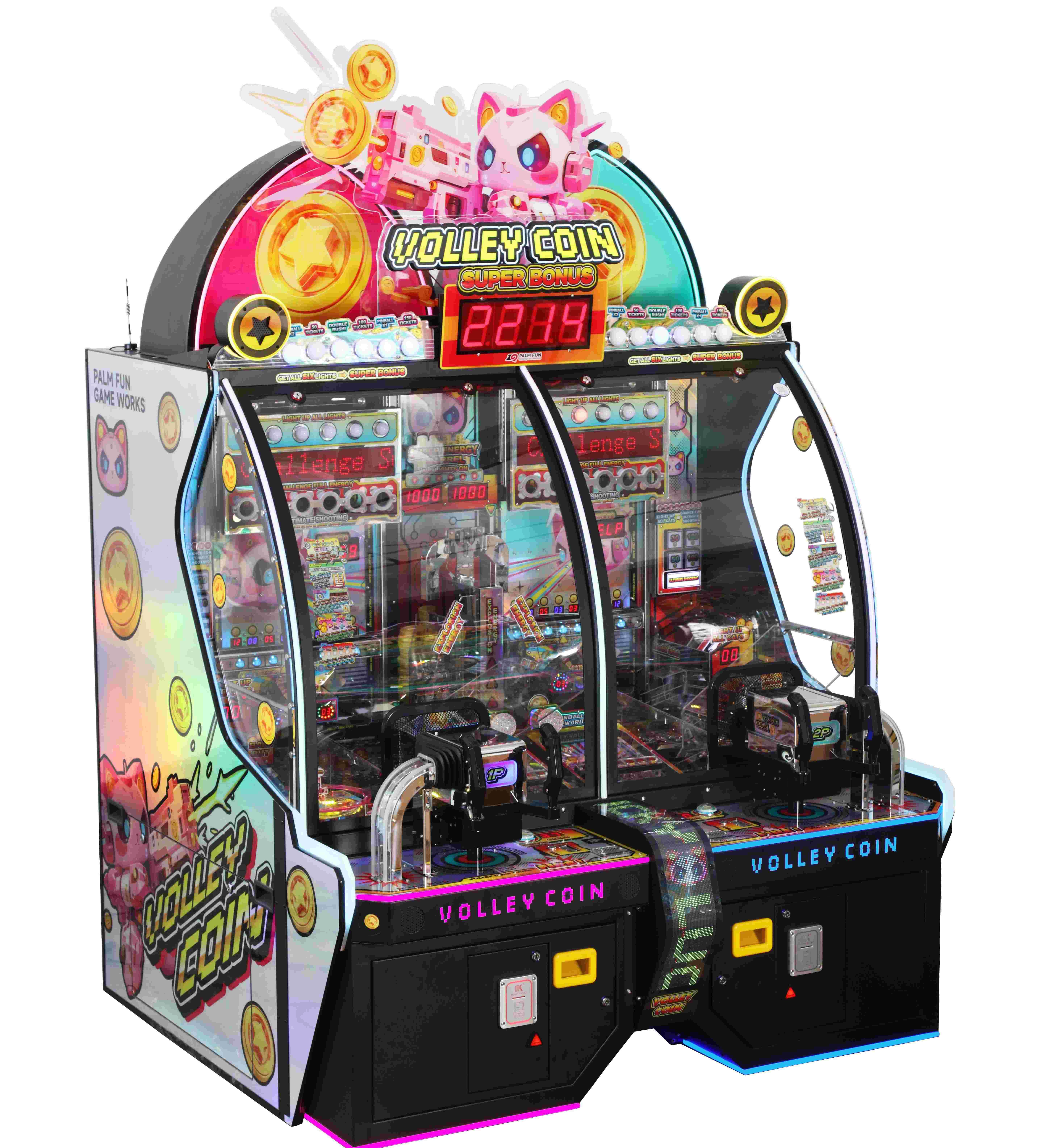
Volley Coin is an innovative arcade ticket redemption machine developed by Palm Fun Electronics. Combining the excitement of a fast-paced token shooter game with the proven earning power of a traditional coin pusher machine, Volley Coin offers a fresh and engaging gameplay experience that appeals to players of all ages.
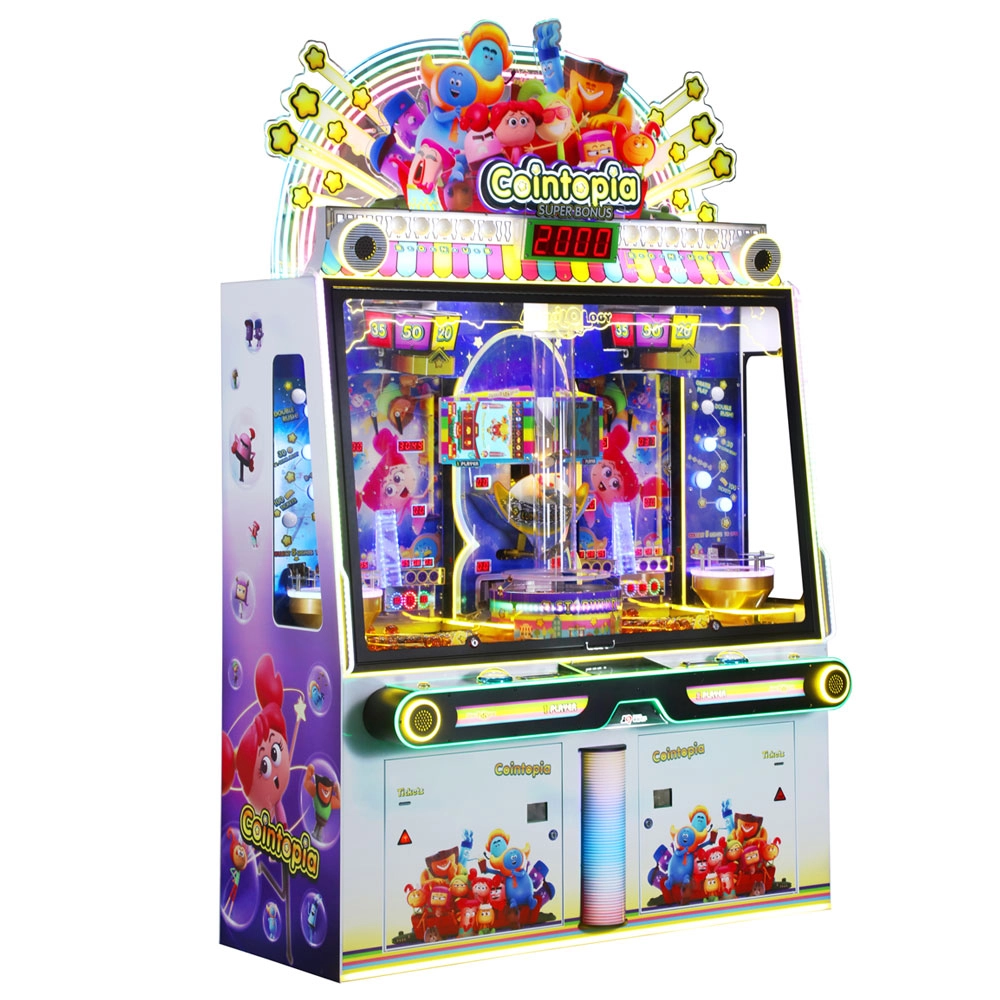
COINTOPIA by PALM FUN is an exciting redemption game machine where players enjoy fun with zodiac buddies in a utopia setting. This ticket redemption machine offers engaging gameplay and rewarding experiences, perfect for family entertainment centers and arcades seeking top-quality redemption games.

Copyright © 2026 PALM FUN All Rights Reserved. | Privacy Policy • Terms and Conditions | Sitemap
palmfunarcade
Palm Fun Arcade Game
Whatsapp: +8618126837443
PalmFun Arcade
PalmFun_Arcade
PALM FUN Redemption Machine