







Redemption Arcade Machine Guide: Types, Selection, ROI, OEM & Maintenance
Redemption game machine insights from PALM FUN cover types, selection criteria, ROI analysis, OEM options, and maintenance tips. Learn how to choose the right ODM arcade machine and partner with a reliable arcade machine manufacturer to maximize profitability and operational efficiency.
- 1. What Is a Redemption Arcade Machine?
- 2. Main Types of Redemption Arcade Machines
- 2.1 Coin Pusher Redemption Machines
- 2.2 Ball Drop Arcade Games
- 2.3 Ball Rolling and Ball Redemption Games
- 2.4 Pinball-Style Redemption Machines
- 2.5 Skill-Based Mechanical Redemption Games
- 2.6 Hybrid Redemption Machines
- 2.7 Multiplayer and Family Redemption Games
- 3. How to Select the Right Redemption Machine for Your Venue
- 3.1 Start With the Venue Model and Player Demographics
- 3.2 Decide What Role the Machine Should Play
- 3.3 Evaluate Gameplay Simplicity and Replay Value
- 3.4 Compare Footprint, Throughput, and Floor Efficiency
- 3.5 Review Payout Control and Reward Compatibility
- 3.6 Check Durability and Serviceability, Not Just Materials
- 3.7 Confirm Destination-Market Requirements
- 4. ROI and Profitability: How to Evaluate Real Performance
- 4.1 Start With the Full Initial Investment
- 4.2 Separate Gross Play Revenue From Net Operating Contribution
- 4.3 Track the Revenue Drivers That Operators Can Actually Influence
- 4.4 Understand Payout, Ticket Value, Prize Cost, and COGS
- 4.5 Calculate Payback Period and Annual ROI
- 4.6 Compare Scenarios, Not One Optimistic Forecast
- 4.7 The Impact of Digital Payments
- 4.8 Machine Density and Floor Efficiency
- 5. Standard, OEM, or ODM: Choosing the Right Sourcing Model
- 5.1 Standard Machines: Best for Faster Deployment
- 5.2 What OEM Means for Arcade Machine Buyers
- 5.3 What ODM Means for Arcade Machine Buyers
- 5.4 Standard vs. OEM vs. ODM Comparison
- 5.5 Typical Customization Options
- 5.6 A Practical OEM/ODM Development Workflow
- 6. Maintenance and After-Sales: Keeping Machines Earning
- 6.1 Daily Operator Checks
- 6.2 Weekly Preventive Maintenance
- 6.3 Monthly Mechanical and Electrical Inspection
- 6.4 Common Problems Operators Should Watch For
- 6.5 Build a Spare-Parts and Documentation System
- 6.6 Understand Warranty and After-Sales Responsibilities
- 6.7 Use Maintenance KPIs to Protect ROI
- 7. Choosing the Right Manufacturing Partner
- 8. Managing the Full Machine Lifecycle
- 8.1 Use the First 30–90 Days to Build a Baseline
- 8.2 Optimize Before You Replace
- 8.3 Know When Refreshing or Replacement Is More Rational
- 9. Conclusion: Choose for the Full Operating Lifecycle
- FAQ
For any family entertainment center (FEC), arcade hall, or amusement venue, the redemption arcade machine is more than just a game — it is one of the primary engines of floor revenue. The way these machines are selected, placed, operated, and maintained can have a major effect on how efficiently a game room converts foot traffic into repeat play. This guide walks through everything a venue owner, distributor, or OEM/ODM buyer needs to know in 2026: the major machine types, how to choose equipment for your space and audience, how to model ROI, what customization options exist, and how to keep machines earning at full capacity for years.
1. What Is a Redemption Arcade Machine?
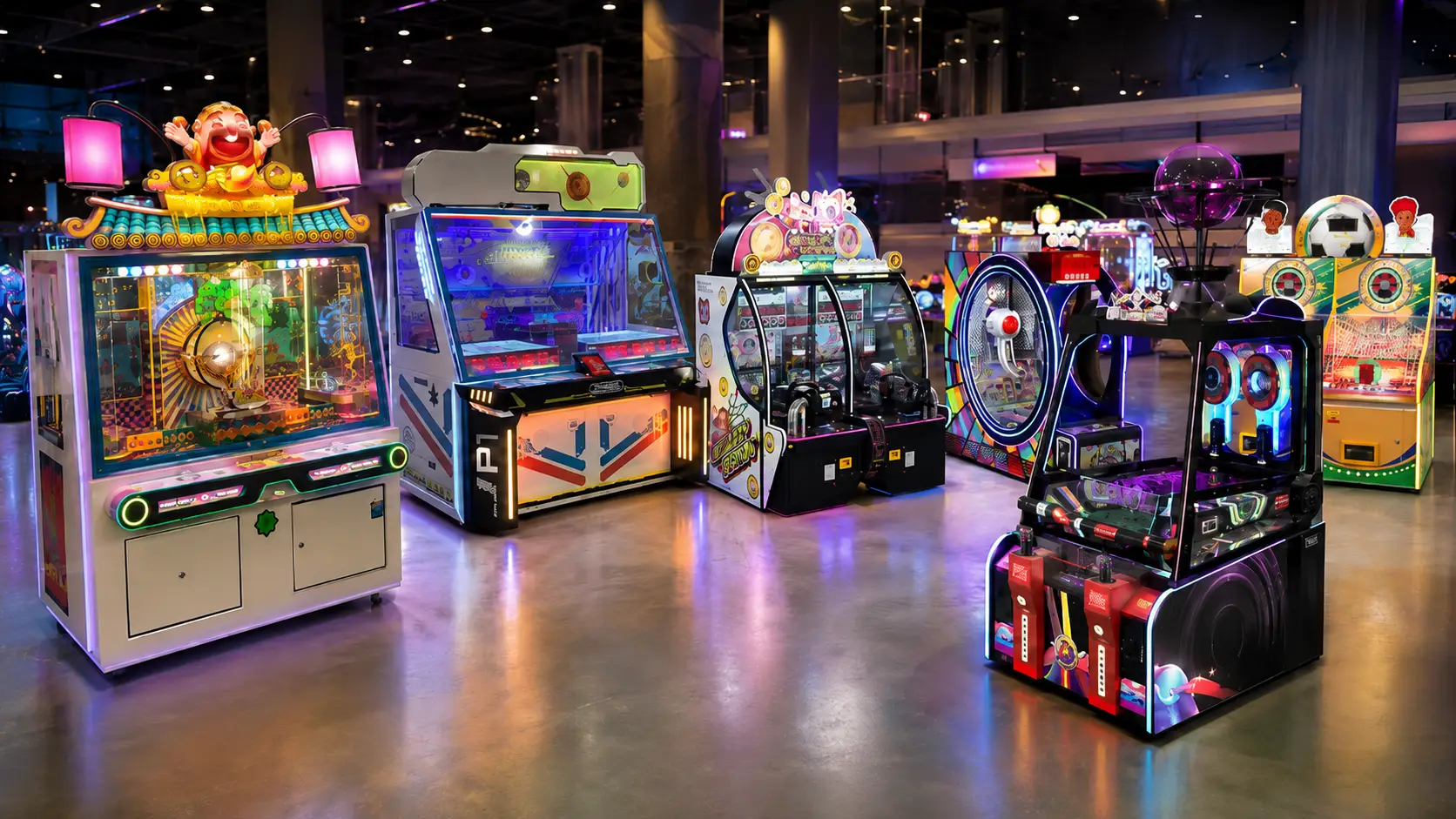
A redemption arcade machine is a coin- or credit-operated amusement device that rewards players with tickets, points, or physical tokens based on skill, chance, or a combination of both. Unlike pure video games that only track a score, redemption machines close the loop with a tangible reward — players exchange what they earn at a prize counter for toys, electronics, or other merchandise. This reward mechanic is precisely what makes the category commercially valuable: it can turn a single play into a longer cycle of earning, saving, comparing prizes, and returning for another attempt. Redemption equipment spans a wide spectrum of formats, from simple mechanical coin pushers to elaborate multiplayer ball-drop cabinets with synchronized lighting and sound. What unites them is the underlying business logic: an entertaining, replayable core loop paired with a reward system that operators can calibrate to protect margins while keeping play satisfying.
2. Main Types of Redemption Arcade Machines
Redemption equipment can be grouped most clearly by gameplay mechanism. Reward delivery — such as paper tickets, e-tickets, points, tokens, or direct prizes — is a separate layer that may be used across several machine types. Understanding this distinction helps operators compare machines more consistently and build a balanced floor that appeals to different age groups and play styles.
Buyers deciding between two common commercial directions can also review the ticket redemption arcade machine vs coin pusher machine comparison for a more focused look at gameplay, reward flow, operation, maintenance, cost, and venue fit.
2.1 Coin Pusher Redemption Machines
Coin pusher machines remain one of the most enduring formats in the industry. Players drop coins or tokens onto a moving platform, hoping to nudge existing coins toward the edge for a payout. The appeal lies in controlled randomness and the visible tension of coins moving closer to the edge, which can keep players engaged play after play. Coin pushers have low barriers to entry and broad demographic appeal, which is why they remain a floor staple even as digital alternatives have grown. The commercial details vary widely between models. Operators should compare player capacity, platform visibility, coin or token handling, bonus features, cabinet footprint, service access, and reward integration rather than judging a pusher only by cabinet size. For a deeper look at mechanics, commercial evaluation, ROI, sourcing, and maintenance, see the commercial coin pusher machine guide.
2.2 Ball Drop Arcade Games
Ball drop redemption games ask players to release a ball at the right moment so that gravity, timing, and the machine's internal path determine where it lands. Their rules are usually easy to understand from a distance: watch the target, choose the moment, and see the outcome immediately. This makes the format useful in family venues where a game needs to communicate its purpose quickly to first-time players. From an operator's perspective, it is worth looking beyond the visible drop mechanism. Ball return speed, sensor accuracy, access to moving parts, recovery after a jam, bonus logic, and average game duration all affect how the machine performs during busy periods.
2.3 Ball Rolling and Ball Redemption Games
Ball rolling games place more emphasis on aiming, release strength, lane control, or target selection. Players may roll a ball toward scoring pockets, guide it through a physical track, or attempt to reach different reward zones. These machines can create a stronger sense of skill progression than simple chance-based play because the player's action remains visible throughout the attempt. For venue planning, the key questions are how quickly a new player understands the objective, whether the ball return system keeps the next round moving, and whether the scoring feedback is clear enough to encourage another attempt. A good ball redemption game should feel simple at first while still leaving room for players to believe they can improve.
2.4 Pinball-Style Redemption Machines
Blending classic pinball-inspired mechanics with a ticket-payout structure, these machines appeal to players who enjoy a more tactile, skill-weighted experience. Multiple scoring zones and escalating bonus tiers can give skilled players a sense of mastery while still preserving accessible reward opportunities for casual players. Because these machines rely on moving parts, rebound paths, sensors, and scoring logic, the operator should pay attention to service access and repeatability. The value of the format lies not only in nostalgia or visual movement, but in whether each play creates enough variation to make another attempt feel worthwhile.
2.5 Skill-Based Mechanical Redemption Games
Skill-based mechanical redemption games use timing, aiming, hand-eye coordination, or controlled physical interaction as the central challenge. The best examples make the skill requirement obvious without making success feel impossible. Players should be able to understand why an attempt failed and believe that a small adjustment could improve the next result. For operators, this category can complement more chance-influenced machines by adding variety to the floor. However, difficulty settings need to be tested carefully. A game that is too easy may create payout pressure, while one that feels impossible may lose repeat play even if its theoretical margin looks attractive.
2.6 Hybrid Redemption Machines
Many modern cabinets combine mechanisms — for example, a shooting or skill-based front end paired with a coin-pusher or bonus-payout system. These hybrid designs can layer multiple play patterns into a single footprint, but complexity should have a clear purpose. A machine with more features is not automatically a better commercial asset if players struggle to understand the sequence or technicians find routine servicing unnecessarily difficult. When evaluating hybrid games, operators should follow the full player journey: how the game starts, what the player controls, how progress is shown, when the bonus moment occurs, and how rewards are delivered. The more steps a game contains, the more important clear feedback becomes.
2.7 Multiplayer and Family Redemption Games
A growing segment targets family entertainment centers directly, with cabinets designed for cooperative or side-by-side play between parents, children, and groups of friends. These units generally prioritize simple rules, visible action, and social participation over highly technical competitive play. Multiplayer does not automatically mean higher revenue. The commercial value depends on player capacity, average game duration, queue behavior, visibility, and footprint. A large four-player cabinet can work as an anchor attraction, while a smaller family machine may serve as a reliable workhorse in a different part of the venue. The right choice depends on the role the operator needs the machine to play.
| Machine Type | Primary Appeal | Typical Venue Fit | Operator Consideration |
|---|---|---|---|
| Coin Pusher | Visible progression and near-win tension | General arcade, FEC, mall entertainment zones | Player capacity, payout logic, service access |
| Ball Drop | Simple timing and immediate outcome | FEC, family arcade, mall zones | Ball return speed and sensor accuracy |
| Ball Rolling | Aiming, control, visible skill progression | FEC, arcade halls | Throughput, scoring clarity, return system |
| Pinball-Style Redemption | Tactile skill and variable scoring paths | Arcade halls, mixed-age venues | Moving-part access and scoring consistency |
| Hybrid Redemption | Multiple play stages and bonus layers | Larger arcades, flagship venues | Rule clarity and maintenance complexity |
| Multiplayer / Family Games | Social play and group participation | FEC, shopping mall zones | Footprint, capacity, queue behavior |
3. How to Select the Right Redemption Machine for Your Venue
Choosing equipment purely on visual appeal is one of the most common mistakes new operators make. A structured selection process should connect the machine to the venue model, the expected player base, the role it plays in the game mix, the space it consumes, and the operating work required to keep it available. For a dedicated step-by-step framework, see how to choose a redemption arcade machine for an arcade, FEC, or entertainment venue.
3.1 Start With the Venue Model and Player Demographics
A venue serving families with young children needs a different mix than one targeting teens and young adults. Family-oriented machines should emphasize simple rules and accessible play, while venues with an older or repeat local audience can support higher-skill or more layered formats. The buyer should define the primary audience before comparing cabinets. Age range is only one part of the decision. Visit frequency, group size, local price sensitivity, time spent in the venue, and whether guests are mostly tourists or repeat customers can all change what makes a machine commercially useful.
3.2 Decide What Role the Machine Should Play
Not every redemption game needs to do the same job. An anchor game may use size, movement, lighting, and group visibility to attract attention from across the floor. A workhorse game may be less dramatic but deliver steady play throughout the day. A supporting game can fill a missing age group or gameplay style, while a space-efficient game can improve floor productivity in compact areas. This role-based approach prevents a venue from filling the floor with machines that look different but behave similarly. Before buying, ask what gap the machine fills in the existing lineup and how its performance will be evaluated after installation.
3.3 Evaluate Gameplay Simplicity and Replay Value
A commercially useful redemption game should communicate its basic objective quickly. If a first-time player needs a long explanation before spending a credit, the machine may struggle outside highly staff-assisted environments. Clear goals, visible progress, understandable bonuses, and a believable path to improvement can all support replay. Replay value should be observed rather than assumed. During testing, watch whether players look back at the machine after finishing, whether they discuss what they would do differently, and whether the outcome creates a natural reason for another attempt. A visually impressive cabinet that produces little desire to replay may not perform as well as a simpler game with a stronger core loop.
3.4 Compare Footprint, Throughput, and Floor Efficiency
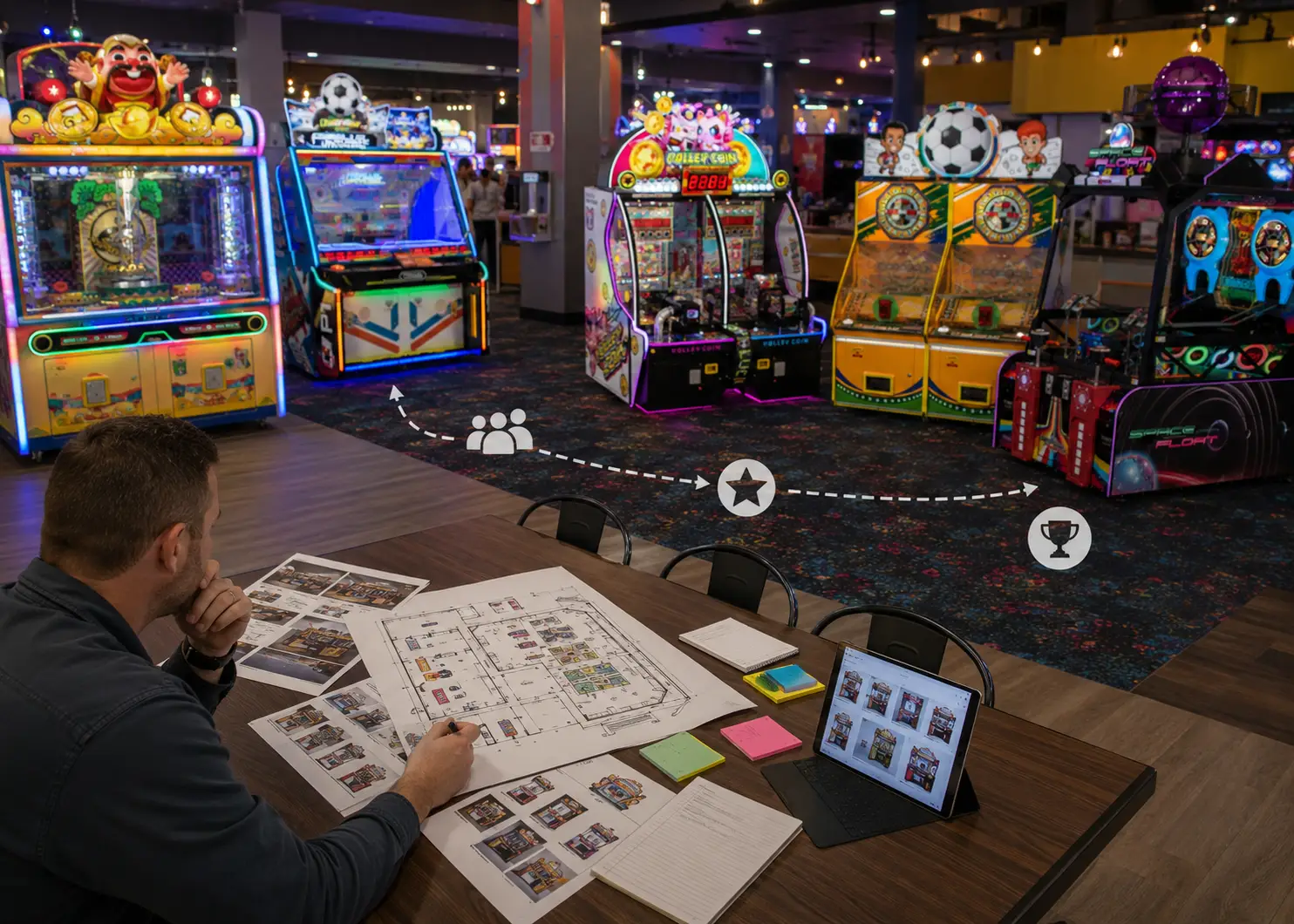
Redemption machines vary enormously in footprint. Before ordering, map your floor layout to confirm cabinet dimensions, required clearance for player movement, access for maintenance, and sightlines from the entrance. High-visibility placement can help strong machines attract play, but visibility should not create congestion or block circulation. Footprint should be evaluated together with throughput. Compare how many players can use the machine at once, how long a typical session lasts, how quickly the machine resets, and whether queues help or hurt surrounding traffic. A compact machine is not automatically efficient, and a large machine is not automatically wasteful; the question is how well the occupied area converts into sustained play without damaging the broader guest flow.
3.5 Review Payout Control and Reward Compatibility
The payout ratio — how tickets or rewards are distributed relative to credits spent — affects both player satisfaction and long-term economics. Machines with operator-configurable payout settings can give venues more flexibility to tune difficulty, test promotions, and respond to observed player behavior without replacing hardware. The buyer should also confirm how the machine works with the venue's reward system. Depending on the location, this may involve physical tickets, e-tickets, stored points, tokens, or other supported formats. Compatibility with the existing payment and redemption infrastructure should be checked before ordering, not after the machine arrives.
3.6 Check Durability and Serviceability, Not Just Materials
Because a redemption machine may operate for extended hours each day, mechanical durability directly affects total cost of ownership. Ask suppliers about high-wear components, replacement procedures, service access, wiring organization, ventilation, sensor access, and spare-parts availability. Durability is easier to evaluate when it is tied to maintenance reality. A strong cabinet is useful, but so is a layout that lets a technician reach a sensor, dispenser, motor, or connector without disassembling half the machine. For cross-border buyers, service manuals, parts identification, remote troubleshooting support, and clear warranty procedures can matter as much as the initial component specification.
3.7 Confirm Destination-Market Requirements
For cross-border purchases, confirm the product documentation and conformity requirements that apply in the destination market. Depending on the machine configuration and country of sale, this may include applicable CE conformity requirements in the EEA, FCC equipment authorization requirements in the United States where relevant, and local electrical, EMC, amusement, or prize-game rules. Requirements vary by market and machine configuration, so buyers should not treat one document as a universal global approval. Ask the supplier which reports, declarations, labels, manuals, and technical files are available for the exact model being purchased.
For a broader pre-purchase checklist covering sourcing channels, new-versus-used tradeoffs, warranty questions, installation, and operating KPIs, see the professional guide to buying redemption arcade games.
4. ROI and Profitability: How to Evaluate Real Performance
Redemption machines are capital equipment, so evaluating them the way any operator would evaluate an investment — with a clear-eyed ROI model — pays off. ROI is not a fixed property printed on a specification sheet. It is an operating outcome shaped by acquisition cost, local traffic, price per play, repeat rate, payout economics, machine uptime, maintenance cost, and the role the game plays in the wider venue. For a deeper B2B breakdown of upfront and long-term cost drivers, see redemption arcade machine cost and ROI factors.
4.1 Start With the Full Initial Investment
The machine purchase price is only the first part of the investment. For an imported commercial arcade machine, a realistic starting cost model may include the machine itself, approved customization, freight, insurance, customs and duties where applicable, local transport, installation, commissioning, and any payment-system integration required before opening. Comparing suppliers only on ex-factory price can hide meaningful differences. A slightly cheaper machine may cost more after packaging, freight, installation, early replacement parts, or long service delays are considered. The purpose of the calculation is not to make every cost perfectly predictable, but to stop the initial invoice from being mistaken for the total investment.
4.2 Separate Gross Play Revenue From Net Operating Contribution
Revenue is generated per credit or coin played, but gross play revenue is not profit. Operators should separate the amount collected from the operating costs tied to creating and maintaining that revenue.
Monthly Net Operating Contribution = Gross Play Revenue − Prize/Redemption Cost − Payment Fees − Routine Maintenance Cost − Other Allocated Operating Costs
This is a management framework rather than a universal accounting rule. Each operator may allocate labor, rent, utilities, marketing, and shared overhead differently. What matters is using the same method consistently when comparing machines or locations.
4.3 Track the Revenue Drivers That Operators Can Actually Influence
Daily performance is shaped by more than foot traffic. Useful variables include the number of guests passing the machine, the share who start a game, average plays per user, price per play, session length, player throughput, operating hours, and uptime. Placement, lighting, neighboring machines, prize visibility, and staff promotion can also change performance without changing the cabinet itself. This is why two identical machines can produce different results in different venues — or even in different positions within the same venue. A realistic ROI review should separate machine capability from operating context.
4.4 Understand Payout, Ticket Value, Prize Cost, and COGS
Ticket payout and actual prize cost are related, but they are not the same measurement. A machine may issue a certain ticket value relative to play revenue, while the operator's real merchandise cost depends on the value assigned to tickets, prize purchasing cost, redemption markup, breakage or unredeemed balances, and the mix of prizes guests actually choose. Before changing a payout setting, operators should understand how the complete redemption economy works. Raising ticket output may increase perceived reward value but can also increase prize liability if ticket valuation and prize costs are not controlled. Lowering payout too aggressively can protect short-term margin while damaging player satisfaction and repeat play. The target should be a sustainable balance tested with venue data rather than a single percentage copied from another arcade. For a more focused discussion of the relationship between player rewards and operating margins, see balancing ticket payouts and profitability in FECs.
4.5 Calculate Payback Period and Annual ROI
A simple payback model can help buyers compare alternatives before purchase and review actual performance after launch.
Total Initial Investment ÷ Average Monthly Net Operating Contribution
Annual ROI
Annual Net Operating Contribution ÷ Total Initial Investment × 100%
These formulas are intentionally simple. They should be adjusted if the operator wants to include financing cost, depreciation, tax, terminal value, or resale value. The important point is that the inputs should come from the venue's own assumptions and operating data whenever possible.
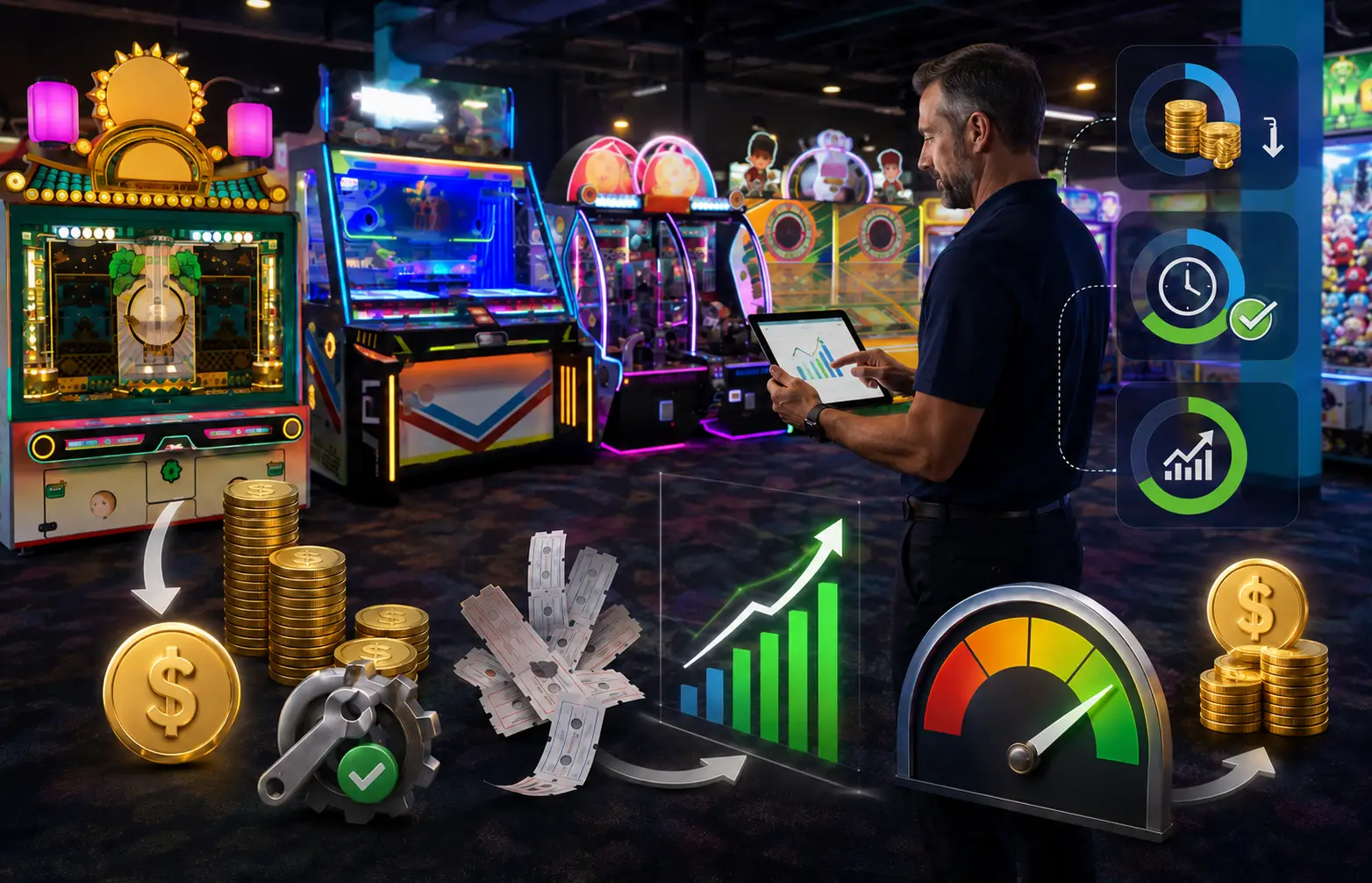
4.6 Compare Scenarios, Not One Optimistic Forecast
A strong business case should test more than one scenario. Consider a high-traffic case where the machine remains available and attracts repeat play, a moderate case based on realistic average traffic, and a downside case where traffic is good but downtime is frequent. The third case is particularly useful because it shows why reliability and service response belong in the ROI discussion rather than in a separate technical appendix. For example, a high-performing game that loses several peak periods to repeated faults may contribute less than a less dramatic machine with stable uptime. The lesson is not that operators should always choose simple machines; it is that revenue potential should be evaluated together with the probability and cost of keeping the machine available.
4.7 The Impact of Digital Payments
Cashless systems can reduce payment friction and make bundled credits, promotions, loyalty programs, and centralized transaction tracking easier to manage. They can also give operators cleaner play data for comparing machines and time periods. The commercial effect depends on pricing strategy, customer behavior, system fees, and execution, so operators should measure the change in their own venue rather than assume a guaranteed increase in spending.
4.8 Machine Density and Floor Efficiency
Compact, well-designed cabinets can allow more units per square meter without crowding the player experience, increasing total earning potential from the same physical footprint — an important consideration for venues with limited real estate. However, density should not be maximized at the expense of circulation, visibility, accessibility, or service clearance. The better metric is productive floor use: whether the machine earns, supports the surrounding game mix, avoids harmful congestion, and remains easy to operate. A large multiplayer machine can justify its space if it attracts groups and acts as a visible anchor, while a compact game can be valuable when it generates steady play in a constrained zone.
5. Standard, OEM, or ODM: Choosing the Right Sourcing Model
Distributors, regional operators, and entertainment brands increasingly look beyond off-the-shelf machines toward customized equipment. However, standard purchasing, OEM production, and ODM development solve different business problems. Buyers should choose the model based on how much product development responsibility they want to retain, how differentiated the final machine needs to be, and how much technical coordination the project can support. If the project is moving toward customization or quotation, use the OEM and custom redemption arcade machine RFQ checklist to prepare the buyer-side project brief before contacting a supplier.
5.1 Standard Machines: Best for Faster Deployment
Standard machines are existing models purchased with little or no product modification. They are often the most practical choice for a single FEC, a first-time buyer, or an operator that wants proven gameplay without funding a development project. The buyer can focus on machine fit, logistics, payment integration, installation, and operation rather than design and engineering. Standard does not mean that every commercial detail is fixed. Depending on the manufacturer and model, buyers may still be able to discuss language, payment interface, ticketing configuration, cabinet graphics, packaging, or other order-specific requirements. The key difference is that the underlying product platform remains established.
5.2 What OEM Means for Arcade Machine Buyers
In an OEM relationship, the manufacturer produces equipment to the buyer's approved specifications or agreed product requirements. For arcade buyers, this may involve private branding, graphics, colors, language localization, payment configuration, packaging, and other controlled adaptations to an existing or buyer-defined product specification. OEM is often suitable for distributors, chain operators, or brands that know how the product should be positioned and need consistent manufacturing under their own commercial identity. The exact division of design responsibility should be defined at the beginning of the project because the term OEM is used differently across industries and suppliers.
5.3 What ODM Means for Arcade Machine Buyers
ODM projects involve a deeper design and development role from the manufacturer. A buyer may begin with a gameplay concept, target audience, theme, commercial objective, or functional brief rather than complete engineering drawings. The manufacturer then contributes to product definition, mechanical structure, cabinet engineering, electronics, software or control logic where applicable, prototyping, testing, and preparation for production. This model can suit brands, distributors, and operators that want a differentiated product but do not maintain a complete in-house arcade-machine engineering team. It also requires more communication and iteration than ordering a standard machine. Project schedules should therefore be confirmed after the technical scope, prototype requirements, component sourcing, testing needs, and order quantity are understood.
5.4 Standard vs. OEM vs. ODM Comparison
| Model | Best Fit | Customization Level | Buyer Involvement |
|---|---|---|---|
| Standard | Single venues, first-time buyers, fast deployment | Low | Selection, configuration, logistics, operation |
| OEM | Distributors, chains, private-label programs | Medium | Brand, specification, configuration, approval |
| ODM | Brands or buyers with a new game concept | High | Concept brief, target market, review, testing, approval |
5.5 Typical Customization Options
Customization possibilities depend on the platform and project scope. Common areas for discussion include cabinet artwork, branding, color direction, language, theme, payment configuration, reward-system integration, gameplay parameters, cabinet dimensions, packaging, and selected mechanical or electronic adaptations. Buyers should separate cosmetic changes from engineering changes during quotation. Changing a logo or graphic package is very different from modifying the cabinet structure, adding a new game stage, changing the player interface, or developing new control logic. Clear scope definition reduces misunderstandings later in the project.
5.6 A Practical OEM/ODM Development Workflow
- Requirement brief — defining target market, gameplay idea, commercial objective, customization level, and budget range
- Feasibility review — checking technical complexity, cabinet footprint, component needs, safety considerations, and production implications
- Concept and engineering design — translating the brief into visual, structural, mechanical, and control-system requirements
- Prototype build — producing a functional unit or development prototype for review
- Play testing and technical iteration — refining gameplay clarity, scoring, reward logic, serviceability, and reliability
- Pilot production — validating the production process before larger-volume manufacturing
- Mass production and quality inspection — assembling units under the approved specification and inspection plan
- Packaging and shipping preparation — confirming export packaging, documents, spare parts, manuals, and shipment requirements
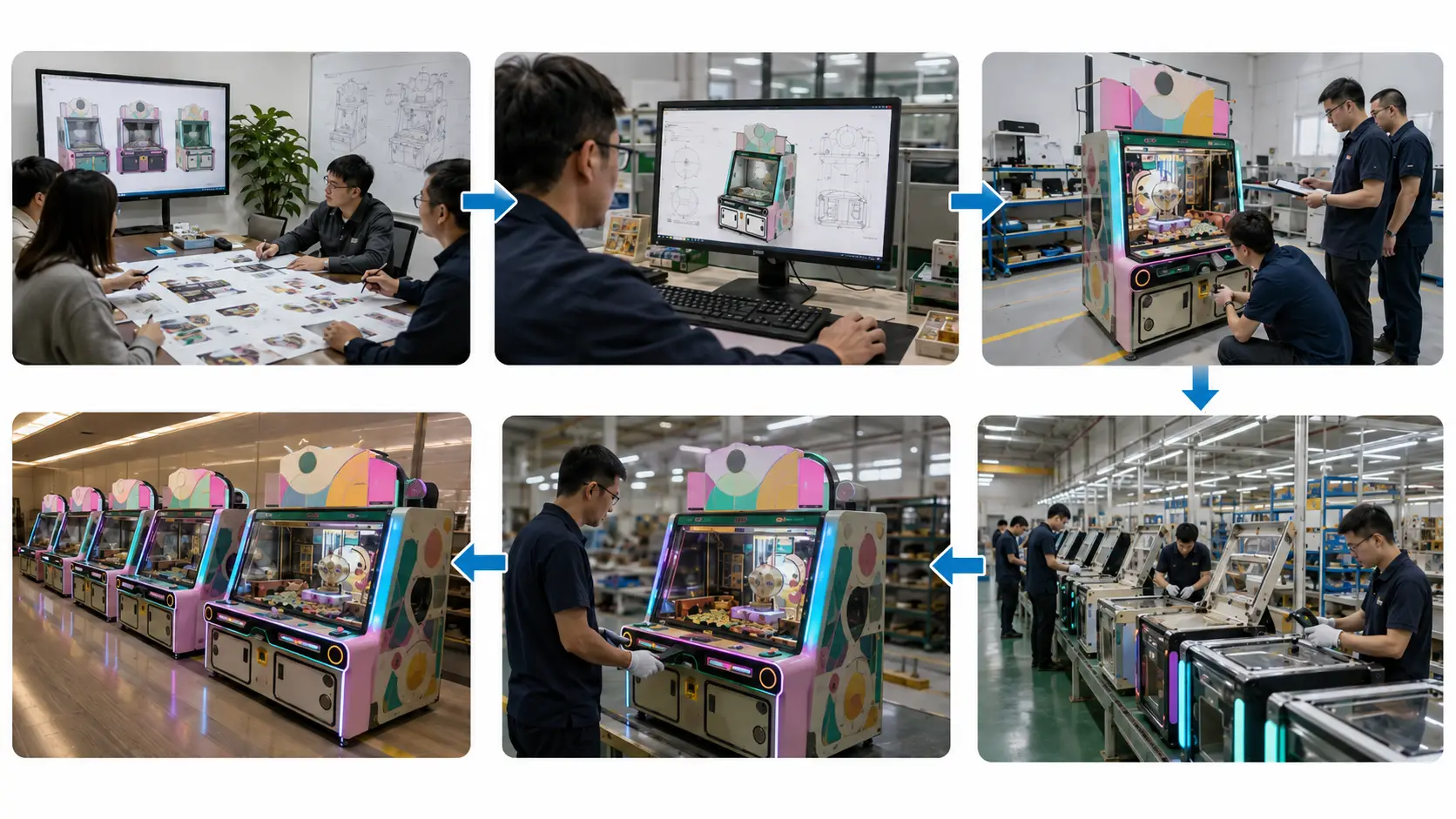
The exact workflow can be shorter or more detailed depending on project complexity. Buyers planning a new concept can review PALM FUN's more detailed arcade machine ODM workflow for a closer look at concept development, prototyping, integration, iteration, and production.
6. Maintenance and After-Sales: Keeping Machines Earning
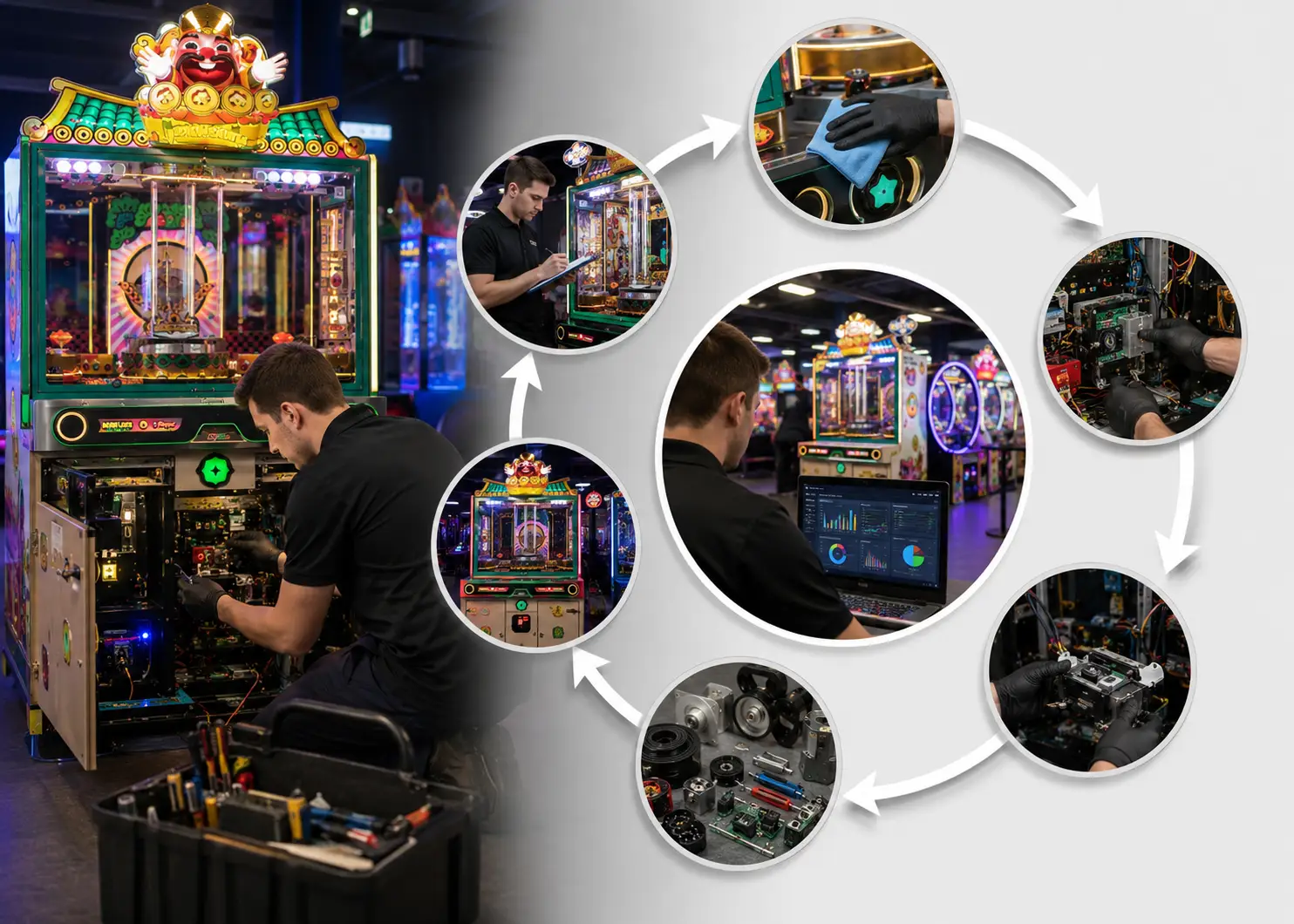
A redemption machine is a mechanical and electronic system running for extended hours daily, and neglected maintenance is one of the most common causes of underperformance. Preventive work protects more than the hardware itself: it protects machine availability, player trust, payout accuracy, and the operator's ability to collect reliable performance data. For a practical operator tool, use the redemption arcade machine maintenance checklist to organize inspections, warning signs, maintenance status, fault records, and escalation.
6.1 Daily Operator Checks
Daily checks should be simple enough for floor staff to complete consistently. Before or shortly after opening, confirm that controls respond correctly, visible moving mechanisms run smoothly, tickets or rewards are delivered as expected, displays and lights are functioning, access doors are secure, and no unusual sound, smell, vibration, or visible damage is present. The purpose is early detection, not deep repair. A small issue recorded before peak hours is easier to manage than a failure discovered after guests start forming a queue.
6.2 Weekly Preventive Maintenance
- Review error logs, payout records, and unusual operating patterns
- Clean accessible sensors, coin or token paths, ticket paths, and player-contact surfaces using approved methods
- Inspect rails, belts, guides, fasteners, and visible moving assemblies for wear or looseness
- Check vents and cooling airflow for dust buildup or obstruction
- Verify that doors, locks, switches, and safety-related access points operate correctly
Weekly tasks should be adjusted to the machine type and traffic level. A heavily used coin pusher, ball game, or ticket redemption machine may require more frequent attention than a low-use supporting game.
6.3 Monthly Mechanical and Electrical Inspection
Monthly work should go deeper into the machine's operating condition. Technicians can inspect connectors, terminal tightness, cable routing, fans, power supplies, motors, bearings or guides where applicable, ticket dispensers, coin mechanisms, sensors, and structural fasteners. Lubrication should follow the manufacturer's instructions rather than a generic schedule because different materials and assemblies require different methods. After maintenance, run a complete functional test. The machine should be checked through the entire sequence from payment input to gameplay, scoring, bonus behavior, reward output, and reset. A machine that powers on is not necessarily fully operational.
6.4 Common Problems Operators Should Watch For
Frequent warning signs include coin or token jams, ticket dispenser jams, repeated sensor misreads, inconsistent scoring, motor noise, irregular movement, loose wiring, overheating, ventilation problems, display or lighting faults, and unexplained payout changes. The exact failure pattern differs by machine type, but repeated small errors should be logged rather than reset and forgotten. A recurring fault may point to a worn part, alignment problem, dust contamination, unstable connection, operator procedure issue, or software configuration problem. Good troubleshooting starts with a record of when and how the problem occurs.
6.5 Build a Spare-Parts and Documentation System
Operators managing multiple commercial arcade machines should maintain a simple documentation system for each unit. Useful records include machine identification, model and serial information, manuals, wiring diagrams where provided, spare-parts lists, replacement history, error logs, warranty status, supplier contact information, and notes from previous repairs. Critical spare parts should be planned based on machine type, fleet size, supplier lead time, and failure consequence. The goal is not to stock every possible component. It is to avoid losing several busy days to a small, predictable part that could have been kept locally.
6.6 Understand Warranty and After-Sales Responsibilities
Manufacturer warranty structures vary. Some claims are handled by parts replacement, while installation labor may be carried out by the operator's technician or local service provider. Before finalizing a purchase, clarify warranty period, covered components, claim procedure, diagnostic requirements, freight responsibility, replacement-part lead time, and whether import duties or local labor are excluded. After-sales support should also be judged by how problems are handled in practice. Clear manuals, parts identification, troubleshooting communication, video guidance, technician access, and consistent response procedures can reduce downtime even when a physical replacement part is required.
6.7 Use Maintenance KPIs to Protect ROI
Maintenance becomes more useful when it is measured. Operators can track uptime, fault frequency, repeat-fault rate, average repair time, spare-parts consumption, and revenue before and after major repairs. These records help distinguish a one-time incident from a machine that is becoming structurally expensive to operate. Where supported by the machine platform, remote diagnostics and software monitoring may help operators identify unusual operating data or faults earlier. These functions should be evaluated on the actual machine configuration rather than assumed to be standard across all redemption equipment. For a broader maintenance framework covering the first operating period, sensor accuracy, power management, and preventive care, see the arcade machine maintenance guide.
7. Choosing the Right Manufacturing Partner
Since redemption arcade machines are long-term revenue assets, the manufacturer behind them matters as much as the machine itself. When evaluating a redemption arcade machine manufacturer, look for evidence of product specialization, engineering capability, a clear prototype and approval process, quality-control procedures, spare-parts planning, export packaging experience, documentation, and responsive after-sales support. Do not rely only on product photos or a low quotation. Ask how the supplier handles design changes, quality inspection, repeated faults, replacement parts, software or parameter updates where applicable, and technical communication after shipment. For OEM or ODM work, also confirm who owns the approved design files, what changes are included in the quotation, and how prototype approval is recorded before production. Buyers who want a structured due-diligence tool can use the Redemption Arcade Machine Supplier Evaluation Checklist. PALM FUN specializes in redemption arcade machines, coin pusher machines, ticket redemption games, ball-based redemption games, pinball-style cabinets, and other mechanical redemption formats. The company supports standard equipment sourcing as well as OEM/ODM cooperation, with product development, production, and after-sales support serving operators, distributors, and commercial entertainment projects in international markets. For a buyer, the practical question is not whether a supplier can say “customization is available,” but whether the manufacturer can connect gameplay requirements, cabinet engineering, production consistency, documentation, and long-term service into one workable project process.
8. Managing the Full Machine Lifecycle
Buying the machine is only the beginning of the commercial decision. Strong operators continue evaluating performance after installation and use real operating data to decide whether to optimize, relocate, refresh, or eventually replace equipment.
8.1 Use the First 30–90 Days to Build a Baseline
The early operating period should be used to learn how the machine behaves in the real venue. Track plays, gross revenue, payout behavior, fault incidents, downtime, player groups, peak periods, and queue patterns. Compare weekdays with weekends and normal periods with promotions before drawing conclusions from a few unusually strong or weak days. This baseline becomes useful later. Without it, operators often react to a short-term decline without knowing whether the machine has truly changed or the venue has simply entered a different traffic period.
8.2 Optimize Before You Replace
When performance drops, replacement should not be the first response. Test whether relocation, pricing, payout settings, prize presentation, lighting, signage, staff explanation, or the surrounding game mix is limiting the machine. Some games improve dramatically when moved into a clearer sightline or paired with complementary machines. Optimization should still be disciplined. Change one or two variables at a time and compare the result against the baseline. Constantly changing price, location, and payout together makes it difficult to understand what actually improved performance.
8.3 Know When Refreshing or Replacement Is More Rational
A machine may deserve replacement when declining revenue is combined with frequent repairs, difficult parts sourcing, poor player response, outdated appearance, low floor productivity, or a format that no longer fits the venue's audience. The decision should consider both current income and the opportunity cost of the occupied space. Resale, refurbishment, cabinet refresh, software update, or relocation to a different venue can sometimes extend economic life. Lifecycle management is not about replacing machines as quickly as possible. It is about making a deliberate choice based on performance, maintenance burden, player response, and the alternatives available for that floor space.
9. Conclusion: Choose for the Full Operating Lifecycle
The best redemption arcade machine is not simply the cabinet with the lowest purchase price, the largest display, or the brightest lighting package. A strong commercial choice combines player appeal, venue fit, replay value, productive use of floor space, manageable payout economics, reliable uptime, serviceability, and a sourcing model that matches the buyer's scale and technical needs. Operators should evaluate machines through the full lifecycle: why the player would start, why they would replay, how the machine contributes to the wider game mix, what it costs to acquire and operate, how quickly faults can be resolved, and whether the supplier can support the equipment after shipment. Distributors and custom-project buyers should add another question: whether standard sourcing, OEM production, or ODM development is the right level of complexity for the business opportunity. A disciplined selection and operating process will not remove uncertainty from the arcade business, but it gives operators better information for making decisions. The goal is not to find one universally “best” redemption game. It is to build a mix of commercial arcade machines that fits the venue, stays available, gives players a reason to return, and can be supported over time.
Looking to source, upgrade, or custom-develop redemption arcade machines for your venue or distribution network?
Explore PALM FUN's Redemption Machine LineupFAQ
What is a redemption arcade machine?
A redemption arcade machine is a coin-, token-, or credit-operated amusement machine that rewards players with tickets, points, tokens, or another redeemable reward based on skill, chance, or a combination of both. The player can usually exchange accumulated value for prizes through the venue's redemption system.
What are the main types of redemption arcade machines?
Common types include coin pusher redemption machines, ball drop games, ball rolling games, pinball-style redemption games, skill-based mechanical games, hybrid redemption machines, and multiplayer or family-oriented games. Reward delivery, such as physical tickets or e-tickets, can be used across several of these gameplay categories.
How long does it take to recover the cost of a redemption machine?
There is no universal payback period. Recovery time depends on total initial investment, foot traffic, price per play, repeat play, payout economics, operating hours, machine uptime, maintenance cost, and placement. Building a model from the venue's own expected and actual data is more reliable than using a generic industry promise.
How do you calculate ROI for a redemption arcade machine?
A simple annual ROI model divides annual net operating contribution by total initial investment and multiplies the result by 100%. Net operating contribution should reflect gross play revenue minus prize or redemption cost, payment fees, routine maintenance, and any other operating costs the venue chooses to allocate to the machine.
What is the difference between OEM and ODM arcade machines?
OEM production generally follows buyer-approved specifications or agreed product requirements, while ODM projects involve a deeper design and development role from the manufacturer. In practice, the exact division of design responsibility, customization scope, intellectual property, approval process, and production deliverables should be defined in the project agreement.
Can redemption machines be customized with our own branding?
Yes, depending on the manufacturer and machine platform. Common customization areas may include cabinet graphics, logo placement, color direction, language, theme, payment configuration, packaging, and selected gameplay or engineering changes. Cosmetic customization and full product development should be quoted and managed as different project scopes.
What documents or certifications should I check before importing redemption machines?
Check the requirements that apply to the exact product configuration and destination market. Depending on the market, this may include applicable CE conformity requirements in the EEA, FCC equipment authorization requirements in the United States where relevant, and local electrical, EMC, amusement, or prize-game rules. Ask the supplier for model-specific documentation rather than assuming one approval applies globally.
How often should redemption machines be serviced?
Service frequency depends on machine type, traffic, operating hours, environment, and manufacturer instructions. Daily visual and functional checks, weekly cleaning and inspection, and deeper scheduled mechanical and electrical reviews provide a practical starting framework, but high-traffic machines may need more frequent attention.
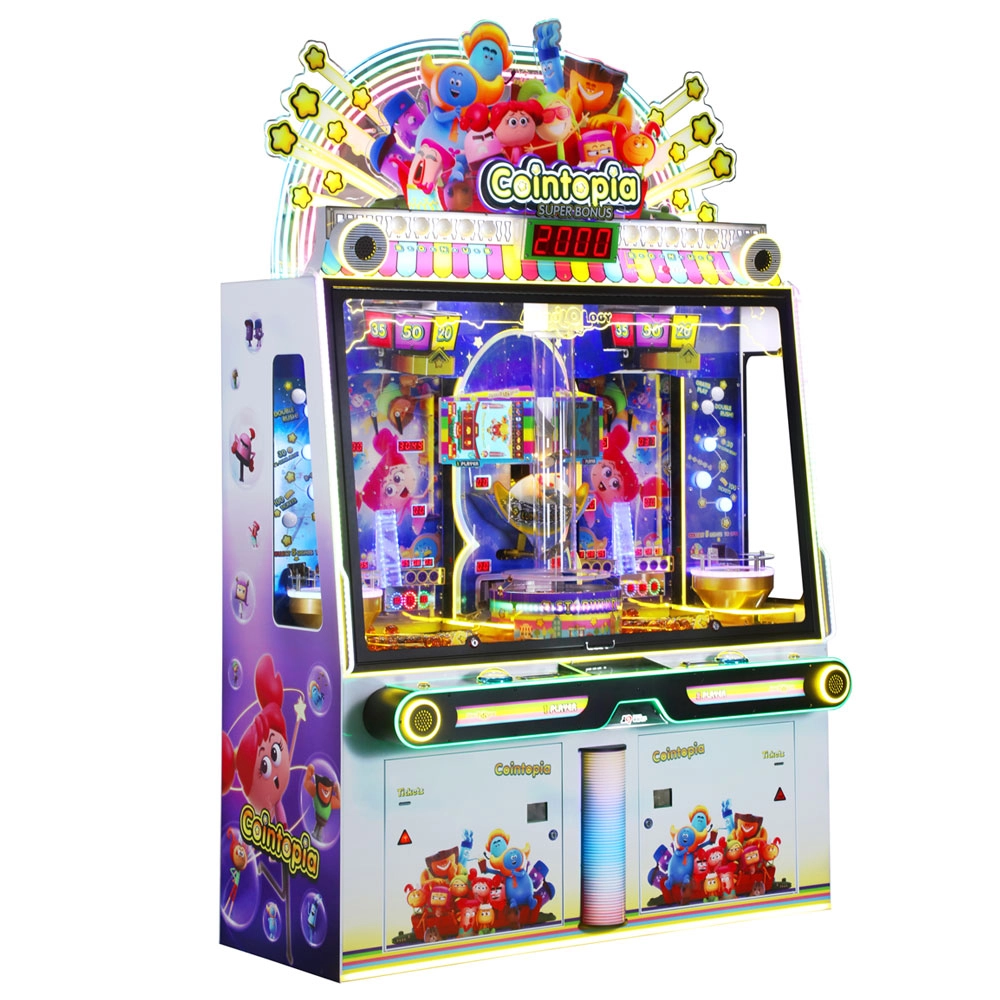
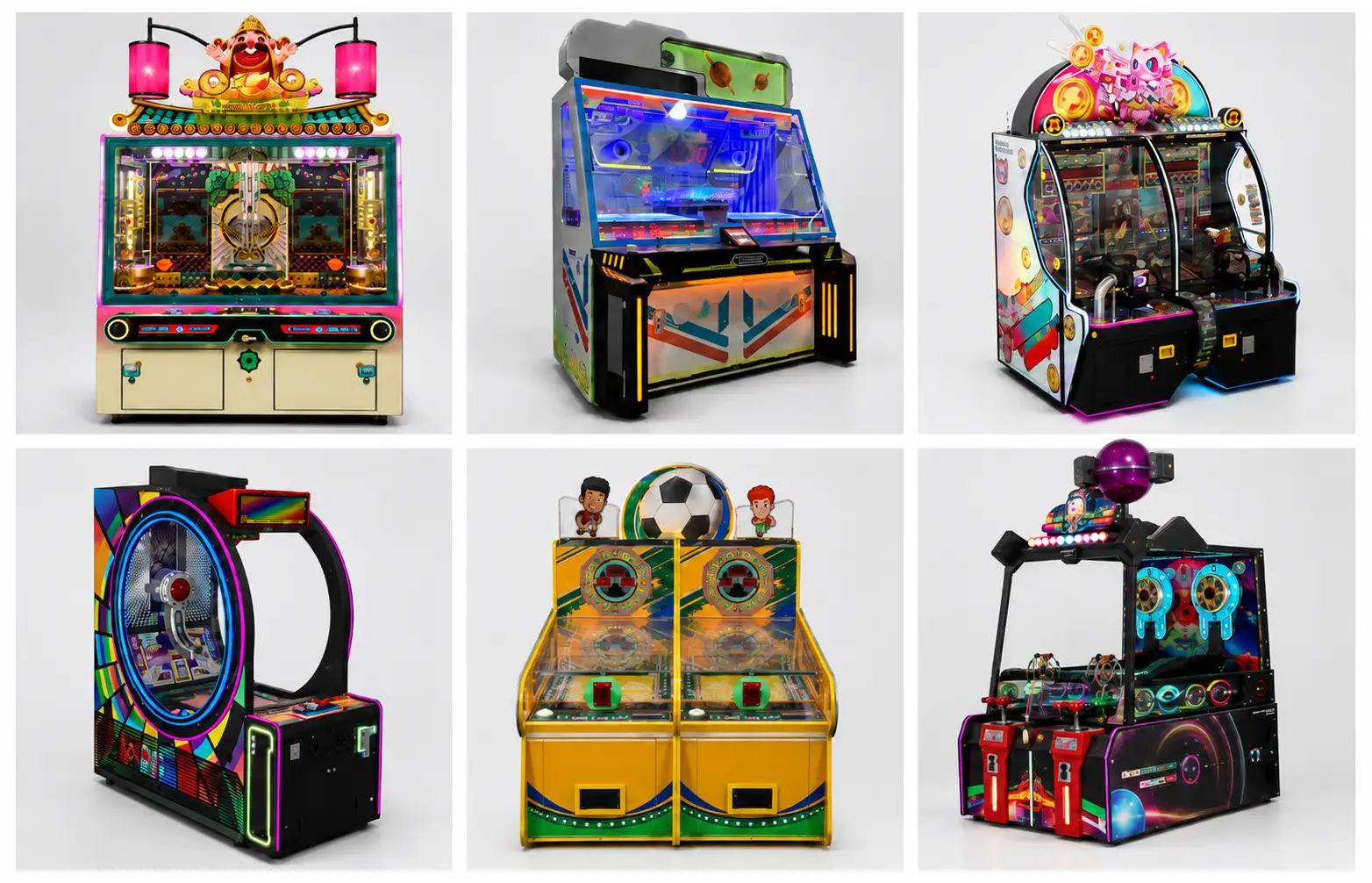
COINTOPIA by PALM FUN is an exciting redemption game machine where players enjoy fun with zodiac buddies in a utopia setting. This ticket redemption machine offers engaging gameplay and rewarding experiences, perfect for family entertainment centers and arcades seeking top-quality redemption games.
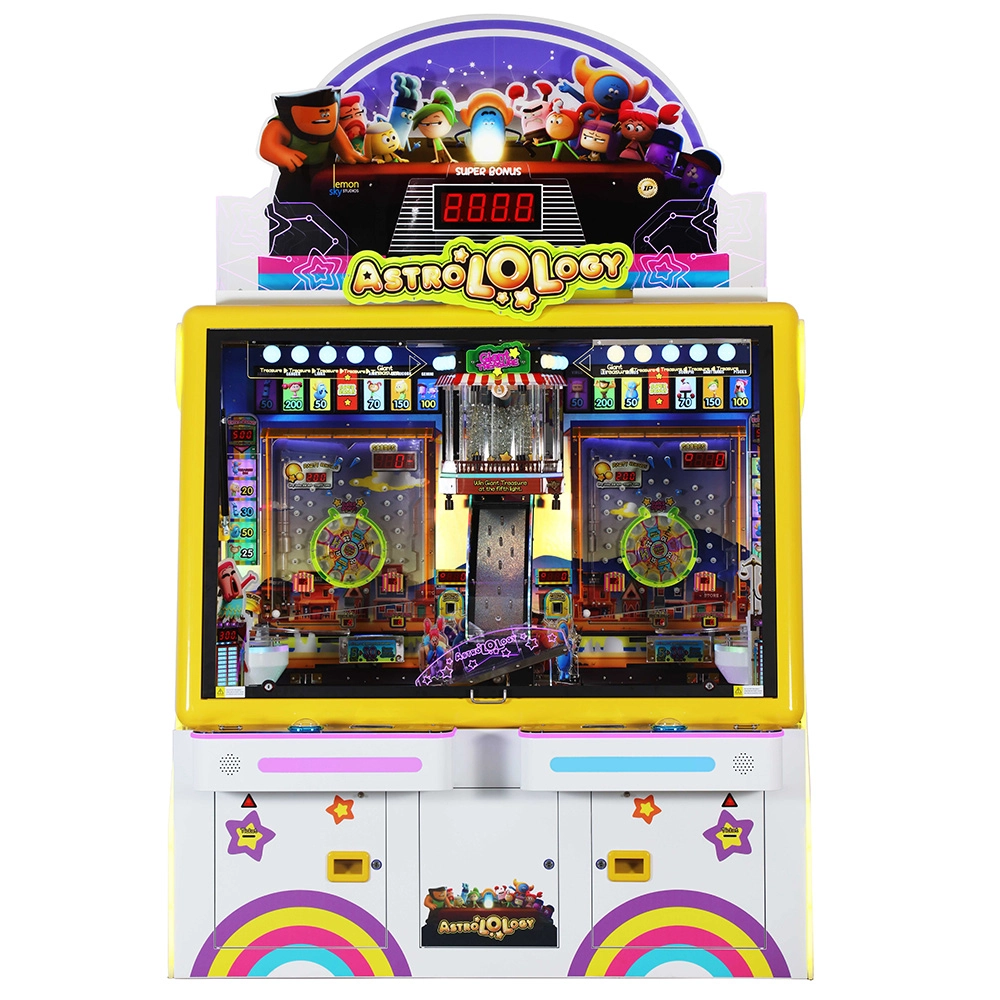
AstroLOLogy collaborates with the famous same-named animation IP copyright. It’s designed and developed by Palm Fun Electronics, an original product. AstroLOLogy has a small footprint (1750 mm * 1100 mm * 2650 mm), but it can generate very high earnings and popularity.
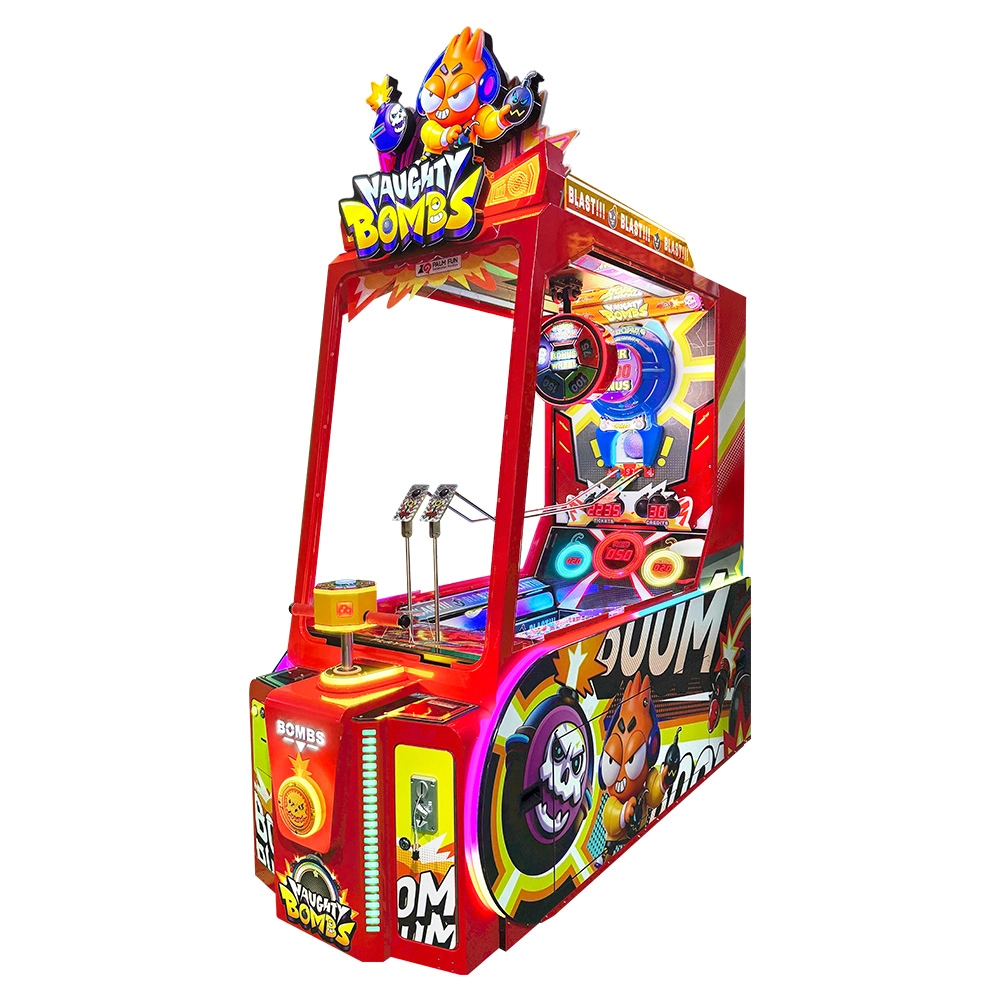
Naughty Bombs is a ball-drop redemption arcade game featuring rolling-ball gameplay, colored targets, ticket prizes, surprise bonus rewards, lighting and sound effects. Players use timing to launch and drop balls toward colored target areas. The product is presented for arcade, family entertainment center and other entertainment-venue projects, with customizable 110V / 220V AC voltage configuration.
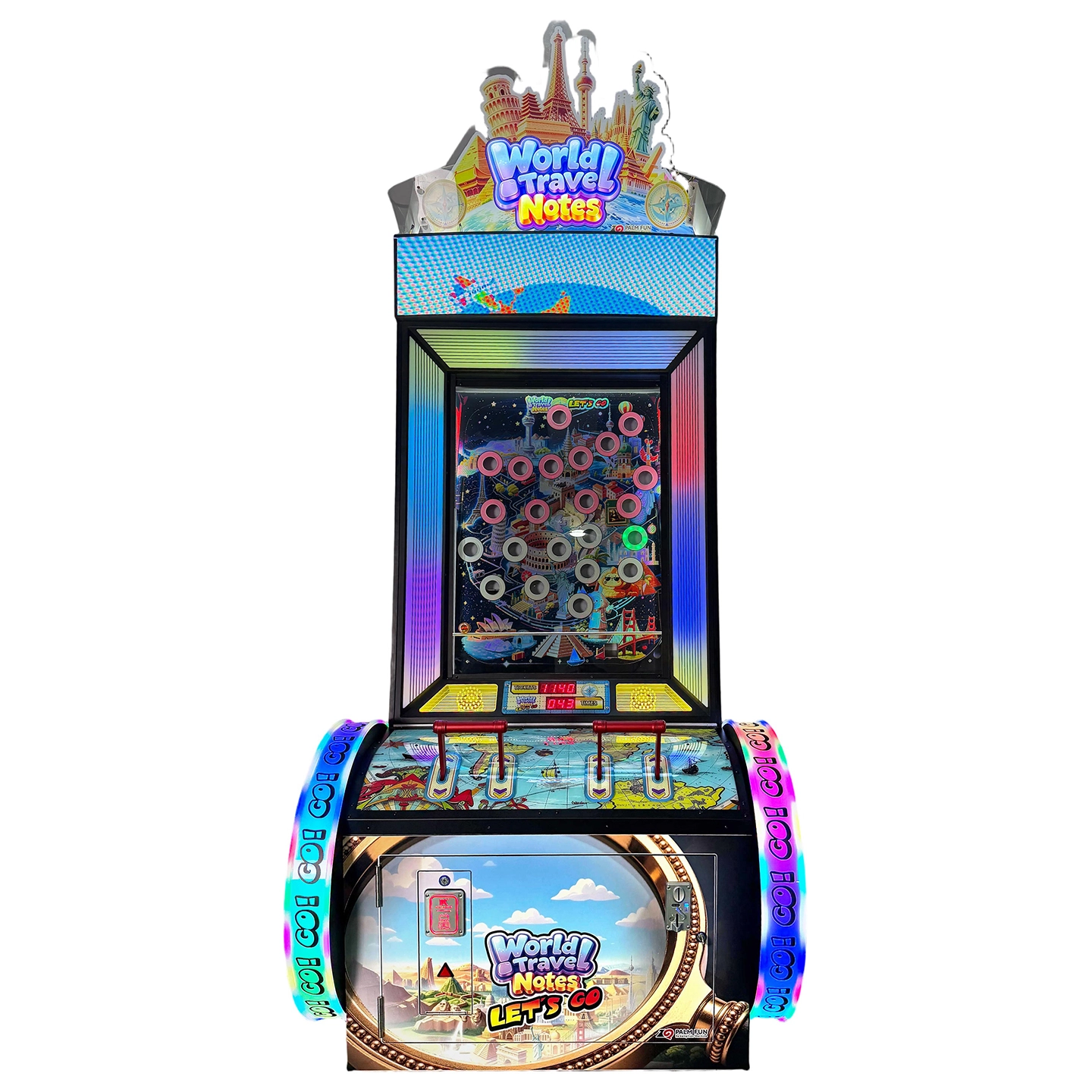
World Travel Notes is a skill-based balance ball redemption game with a fun world-travel theme. Players use two handles to control the balance bar and guide the ball into each target hole. As the game progresses, the targets become more challenging, leading players toward the final grand prize. With colorful world-travel graphics, dynamic RGB lighting, a live score display, and progressive difficulty, World Travel Notes is designed to attract attention and encourage repeat play in arcades, FECs, shopping malls, and other entertainment venues.
Copyright © 2026 PALM FUN All Rights Reserved. | Privacy Policy • Terms and Conditions | Sitemap
palmfunarcade
Palm Fun Arcade Game
Whatsapp: +8618126837443
PalmFun Arcade
PalmFun_Arcade
PALM FUN Redemption Machine