






Transforming Concepts into Reality: The Arcade Machine ODM Workflow (2026 Guide)
A comprehensive 2026 guide to the Arcade Machine ODM workflow, detailing how innovative concepts are transformed into profitable, mass-produced realities through strategic manufacturing partnerships.
- What is the Arcade Machine ODM Workflow?
- Quick Summary: Key Takeaways
- OEM vs ODM Arcade Machines: A Data Comparison
- Phase 1: Conceptualization & 3D Design Visualization
- Phase 2: R&D and Hardware Prototyping
- Phase 3: Software Integration & Iteration
- Phase 4: Mass Production & Assembly Line Dynamics
- Industry Leading Solution: How PALM FUN Engineers Success
- Expert Tips & Common Mistakes in Arcade ODM
- Future Trends: Arcade Manufacturing in 2026 and Beyond
- Conclusion
- FAQs About Transforming Concepts into Reality: The Arcade Machine ODM Workflow
- What is the difference between OEM and ODM in arcade machines?
- How long does it take to develop a custom arcade game from scratch?
- What are the costs involved in the arcade machine ODM process?
- Can I customize the software on a coin pusher machine?
- How do manufacturers ensure the durability of redemption games?
- What certifications are needed to import custom arcade machines globally?
- Why should I choose PALM FUN for my arcade manufacturing needs?
- What is the minimum order quantity (MOQ) for custom arcade cabinets?
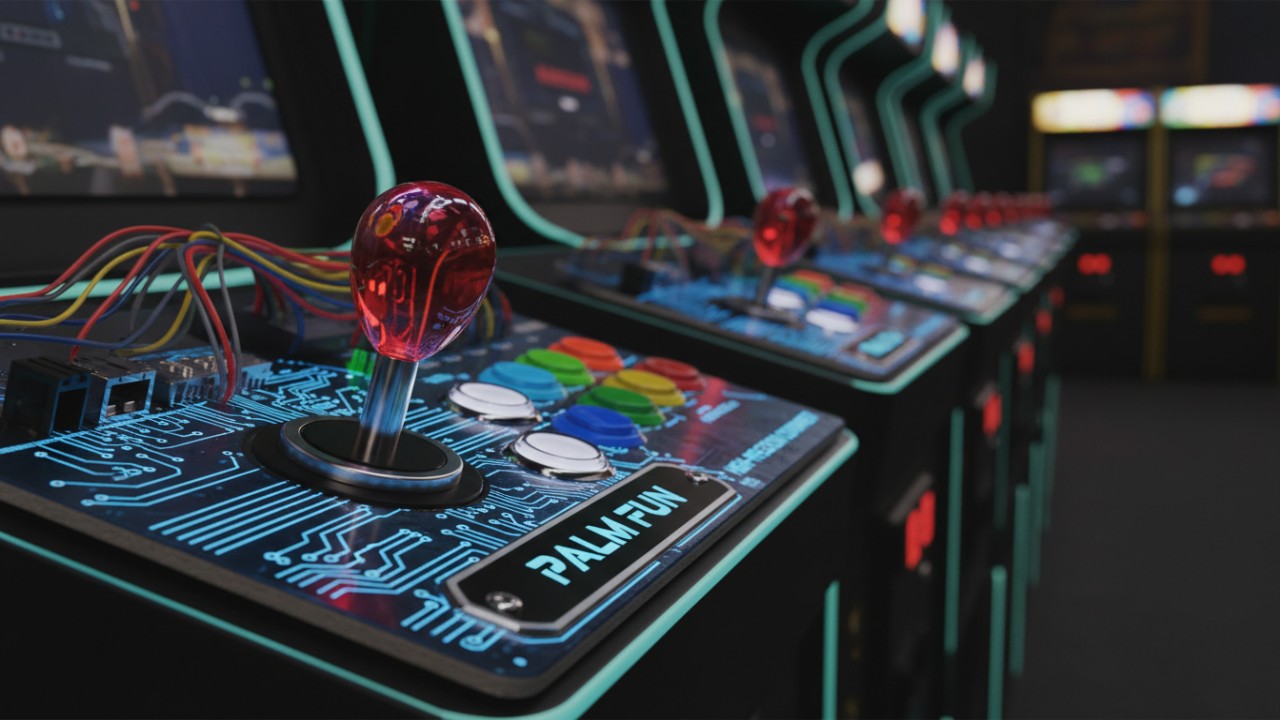
The global amusement industry in 2026 is evolving at a breakneck pace, driven by consumer demand for highly immersive, interactive, and rewarding physical entertainment. For arcade operators, family entertainment centers (FECs), and gaming brands, staying competitive means bringing fresh, innovative games to the floor faster than ever before. Transforming Concepts into Reality: The Arcade Machine ODM Workflow is the ultimate blueprint for achieving this. By partnering with an Original Design Manufacturer (ODM), businesses can bypass the steep costs of in-house engineering and leverage specialized factories to handle everything from initial 2D sketches to global mass production.
In this comprehensive 2026 guide, we will explore the intricate phases of the arcade manufacturing lifecycle. From the initial sparks of redemption game R&D to the final rigorous compliance testing on the assembly line, you will discover exactly how leading factories turn abstract ideas into highly profitable, floor-ready reality.
What is the Arcade Machine ODM Workflow?
The Arcade Machine Original Design Manufacturing (ODM) workflow is the comprehensive end-to-end process of bringing a custom game from a 2D concept to a fully functional 3D reality. It involves specialized factories designing, engineering, and assembling arcade cabinets and software on behalf of a brand or operator.
This streamlined, highly efficient process covers every critical milestone required to launch a successful amusement product:
- End-to-End Execution: The workflow encompasses initial R&D, structural prototyping, electronic integration, mass production, and global compliance testing, significantly reducing time-to-market for new amusement concepts.
- Reduced Time-to-Market: By utilizing an existing manufacturer's engineering infrastructure, brands can significantly reduce the time it takes to bring new amusement concepts to the public.
- Turnkey Solutions: Unlike traditional manufacturing where the buyer must supply every blueprint, the ODM workflow provides a turnkey solution where the factory acts as your dedicated design and engineering team.
Quick Summary: Key Takeaways
A successful arcade machine manufacturing process relies on strategic partnerships to lower financial risk and eliminate the need for in-house engineering teams. By leveraging an ODM, operators can focus on market deployment while experts handle the technical execution.
- Risk Mitigation: Partnering with an ODM factory lowers financial risk and eliminates the need for expensive, in-house engineering and R&D teams.
- Hardware & Software Synergy: Successful concept realization requires tight, seamless integration between the physical cabinet hardware and the digital gameplay software.
- Global Readiness: Thorough quality control, multi-stage stress testing, and expert logistics are the most critical factors for international arcade deployment and long-term profitability.
OEM vs ODM Arcade Machines: A Data Comparison
Understanding the difference between OEM vs ODM arcade machines is critical for operators looking to optimize their supply chain. While OEM builds to your exact specs, ODM handles the entire design and manufacturing lifecycle from scratch.
To clarify the strategic differences between these two manufacturing models, review the comparison table below:
| Feature | OEM (Original Equipment Manufacturer) | ODM (Original Design Manufacturer) |
|---|---|---|
| Design Responsibility | Buyer provides complete, finalized 3D designs and schematics. | Manufacturer handles full R&D, conceptualization, and design. |
| Upfront Financial Investment | High (Buyer funds all independent R&D and prototyping). | Low (Leverages the manufacturer's existing R&D and platforms). |
| Average Time-to-Market | Slower (Typically 12-18 months from scratch). | Faster (Typically 3-6 months depending on complexity). |
| Ideal Client Profile | Established brands with massive in-house engineering teams. | Startups, operators, and brands needing full turnkey solutions. |
| Customization Level | Exacting to the buyer's strict, pre-determined specifications. | Highly flexible, built upon the manufacturer's proven platforms. |
Phase 1: Conceptualization & 3D Design Visualization
The first phase of custom arcade cabinet prototyping focuses on aligning client visions through initial needs assessments, target demographic analysis, and expected ROI discussions. This ensures the foundational concept is both engaging and financially viable.
During this crucial first step, the ODM team works closely with the client to translate abstract ideas into tangible visual assets.
- Strategic Alignment: The process begins by aligning client visions through initial needs assessments, target demographic analysis, and expected Return on Investment (ROI) discussions. Understanding the player base is essential.
- Advanced 3D Rendering: Engineers transition rough 2D sketches into detailed 3D renders using advanced CAD (Computer-Aided Design) software. This allows operators to visualize the final arcade footprint and aesthetic appeal before any materials are cut.
- Ergonomics and Aesthetics: The design team focuses heavily on player ergonomics, optimizing the control panel layout, and integrating immersive aesthetic elements like dynamic LED lighting and high-fidelity sound systems.
Phase 2: R&D and Hardware Prototyping
Hardware prototyping is where physical manufacturing begins, sourcing high-quality components including coin acceptors, high-definition displays, and durable mechanical parts. This stage brings the digital design into the physical world for rigorous structural testing.
Once the 3D designs are approved, the factory moves into the physical realm of the arcade machine manufacturing process.
- Component Sourcing: The ODM leverages its supply chain network to source high-quality components, including premium coin acceptors, high-definition displays, and ultra-durable mechanical parts designed for continuous use.
- Precision Fabrication: Utilizing state-of-the-art CNC milling technology and industrial 3D printing, the factory fabricates precise custom cabinet details for the pre-production prototype. This ensures every joint and panel fits flawlessly.
- Structural Integrity: Engineers conduct intense structural integrity checks to ensure the machine can withstand the rigorous, often abusive environment of a high-traffic family entertainment center.
For a deeper dive into how this phase operates, check out our comprehensive Custom Arcade Machine ODM guide.
Phase 3: Software Integration & Iteration
Software integration requires programming core game mechanics, sensory feedback loops, and precise payout logic for redemption games. This ensures the digital experience perfectly matches the physical hardware capabilities, creating a seamless player experience.
A beautiful cabinet is useless without engaging gameplay. This phase is heavily focused on redemption game R&D and software refinement.
- Core Programming: Software engineers program the core game mechanics, fine-tuning sensory feedback loops (like lighting flashes and sound effects) and establishing precise payout logic for ticket redemption games.
- Playtesting: The team uses interactive, demo-driven playtesting to gather real-time feedback on user engagement, pacing, and difficulty curves. This ensures the game is fun, fair, and profitable.
- Hardware-Software Sync: Engineers meticulously refine the motherboard connections and hardware-software communication to eliminate latency, prevent bugs, and ensure buttons and joysticks respond instantly to player inputs.
Phase 4: Mass Production & Assembly Line Dynamics
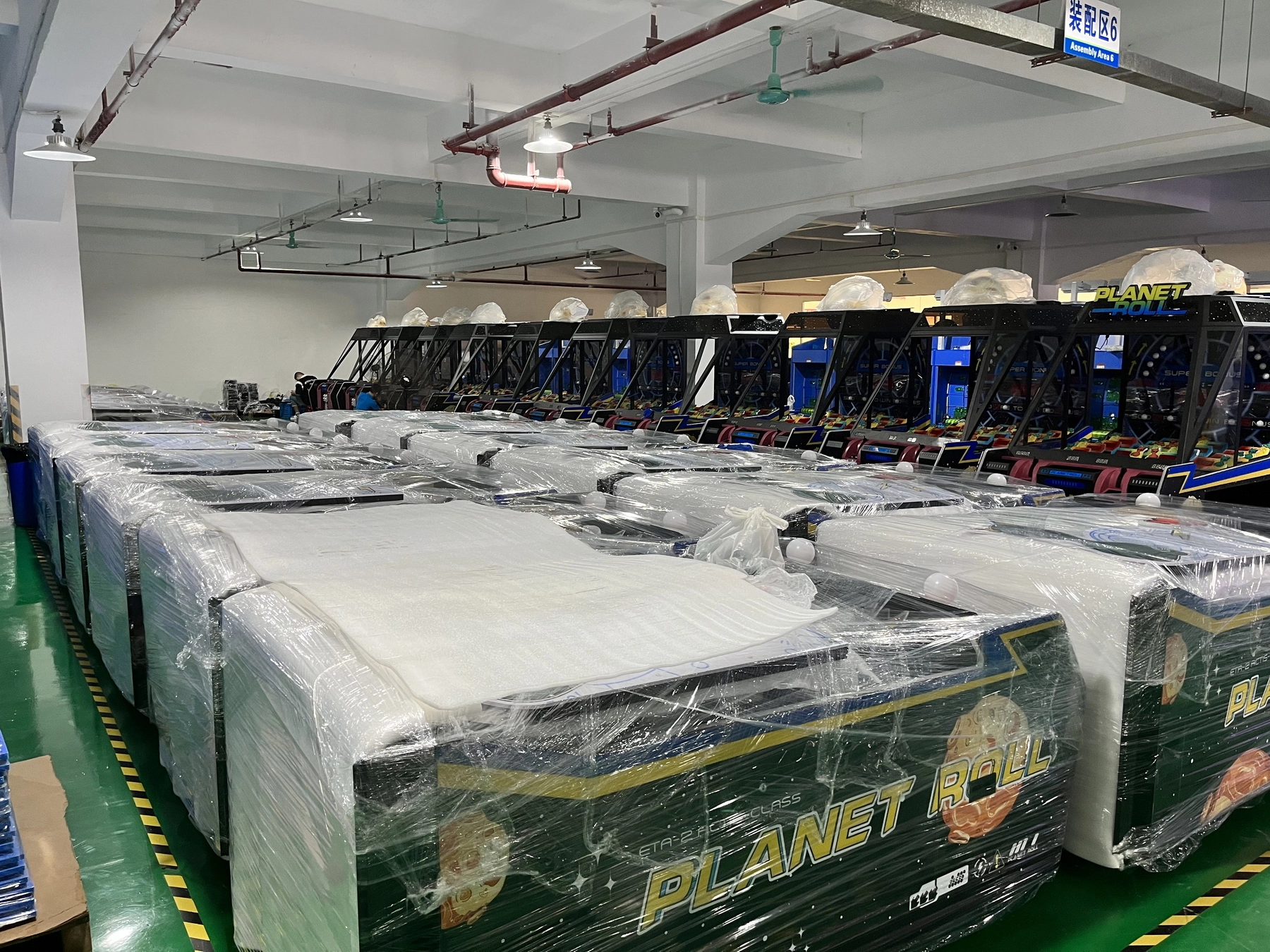
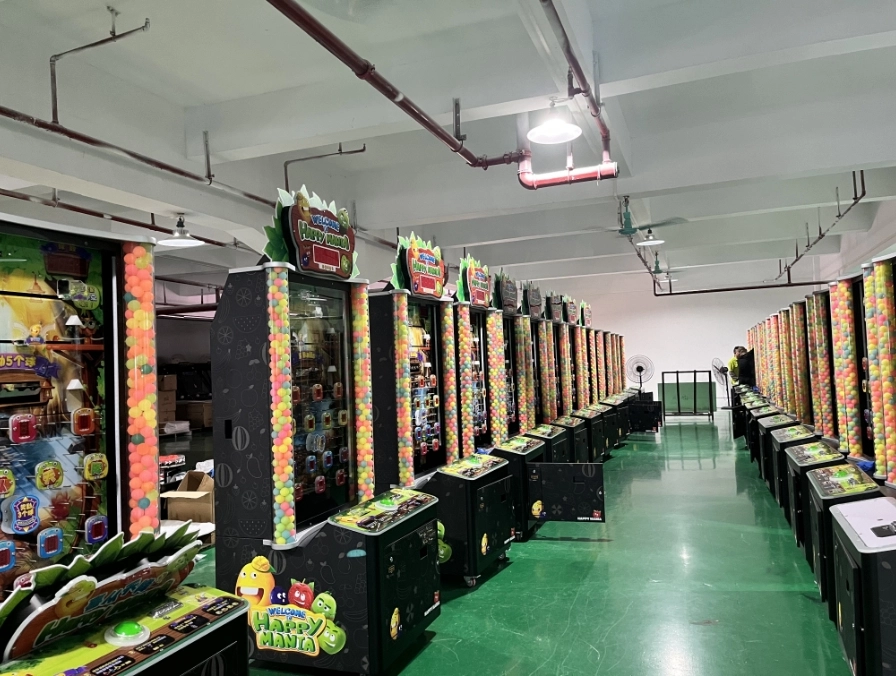
Mass production involves transitioning the finalized prototype into an efficient, in-house mass assembly flow. This phase scales the arcade machine manufacturing process while maintaining strict quality control across all units.
When the prototype is fully approved, the ODM workflow shifts into high gear to fulfill the order volume.
- Assembly Flow: The factory transitions the finalized prototype into an efficient, in-house mass assembly flow, optimizing labor and machinery to meet strict delivery deadlines.
- Quality Control (QC): The production line implements rigorous multi-stage quality control checks, tracking both the exterior aesthetic finishes and the complex internal electronics to ensure zero defects.
- Global Compliance: Finally, the factory executes extreme stress tests and compliance verification to meet global electrical and safety standards before export.
According to a recent 2026 market forecast by Research and Markets, the global amusement machine market is expected to surge to nearly $30 billion by 2030. This massive growth is heavily supported by the efficiency and scalability provided by advanced ODM assembly lines.
Industry Leading Solution: How PALM FUN Engineers Success
Founded in 2015, Guangzhou Palm Fun Electronics Co., Ltd. is a premier ODM partner specializing in mechanical lottery, coin pushers, and redemption machines. We bring unparalleled expertise to every stage of the manufacturing process, ensuring your success.
At PALM FUN, we don't just build machines; we engineer profitable entertainment solutions.
- Proven Legacy: Founded in 2015, we are a premier ODM partner specializing in high-quality mechanical lottery machines, coin pushers, and raffle machines.
- State-of-the-Art Facilities: Operating out of a cutting-edge 3,000-square-meter facility, our skilled R&D engineers seamlessly transform your innovative gaming concepts into highly profitable realities.
- Global Reach: With products successfully recognized and deployed in over 50 countries worldwide, PALM FUN provides comprehensive end-to-end support. Our ultimate vision is to become the world's leading manufacturer of redemption game machines.
Expert Tips & Common Mistakes in Arcade ODM
The most common mistake in coin pusher machine design and general arcade ODM is neglecting to verify local compliance regulations and voltage requirements for your target market prior to production.
Navigating the ODM landscape requires foresight. Here are expert insights to keep your project on track:
- Common Mistake: Neglecting to verify local compliance regulations and voltage requirements for your target market prior to production. This can lead to massive delays at customs or dangerous electrical failures on the arcade floor.
- Expert Tip: Lock in the mathematical payout models and ROI expectations during the 3D design phase, before any physical hardware is cut. Changing payout logic late in development can force costly hardware redesigns.
- Expert Tip: Choose a manufacturer that offers transparent, real-time tracking of your prototype's progress to avoid costly miscommunications. As highlighted by SkyQuest Technology Consulting, the booming demand for customized ODM solutions requires tight communication between OEMs and ODMs to reduce product development cycles effectively. Furthermore, the Federal Communications Commission (FCC) strictly requires RF devices to be properly authorized prior to being marketed or imported into the United States, making compliance a top priority in the ODM workflow.
Future Trends: Arcade Manufacturing in 2026 and Beyond
The future of arcade manufacturing in 2026 involves integrating Augmented Reality (AR) directly into the ODM design pipeline to allow operators to visualize machines in their venue before manufacturing begins.
As we look toward the remainder of 2026 and into the next decade, the ODM workflow is becoming even more technologically advanced:
- AR Visualization: Integrating Augmented Reality (AR) directly into the ODM design pipeline allows operators to digitally place and visualize 3D machine models in their actual venue before mass manufacturing is approved.
- IoT Integration: There is a rapid rise in IoT-enabled (Internet of Things) arcade cabinets that offer predictive maintenance alerts, sending real-time data to operators and factory technicians to prevent downtime.
- Eco-Friendly Materials: The industry is seeing a significant shift toward sustainable, eco-friendly cabinet materials and energy-efficient LED systems without sacrificing durability or visual appeal.
Conclusion
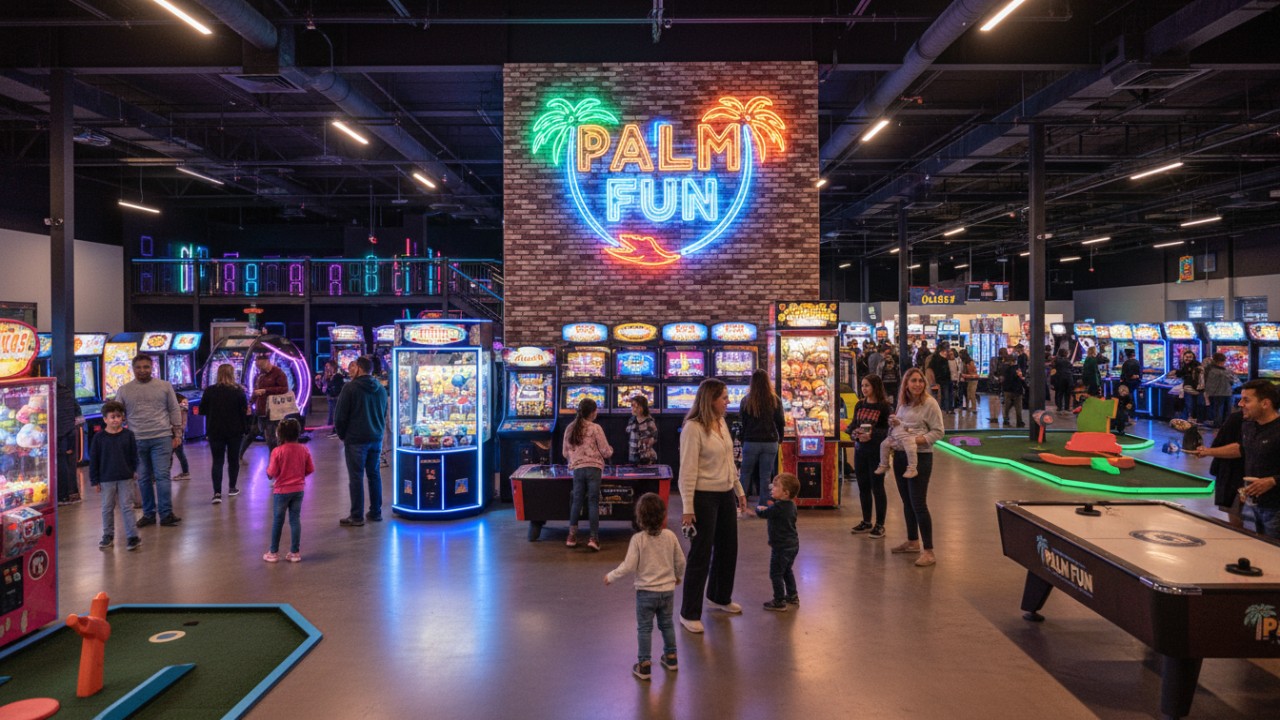
Transforming an arcade concept into a tangible, profitable reality requires a structured ODM workflow, blending creative 3D design with precision engineering and scalable mass production. Choosing the right manufacturing partner mitigates risk and ensures your game captivates players while operating flawlessly on the floor.
Contact us today at https://www.palm-fun.com/ to collaborate with our world-class R&D team and bring your next big arcade idea to life.
FAQs About Transforming Concepts into Reality: The Arcade Machine ODM Workflow
What is the difference between OEM and ODM in arcade machines?
OEM (Original Equipment Manufacturer) builds machines strictly based on the buyer's exact specifications and designs. ODM (Original Design Manufacturer) handles both the design and manufacturing, taking a basic concept and turning it into a fully developed product.
How long does it take to develop a custom arcade game from scratch?
The timeline varies by complexity, but the ODM process generally takes 3 to 6 months. This includes 3D design, hardware prototyping, software development, and final compliance testing.
What are the costs involved in the arcade machine ODM process?
Costs depend on hardware specifications, software complexity, and cabinet materials. Initial expenses include R&D and prototyping fees, followed by a per-unit cost during mass production.
Can I customize the software on a coin pusher machine?
Yes, reputable ODM partners allow deep customization of coin pusher software. You can adjust payout rates, audio-visual feedback, and bonus mechanics to suit your target audience.
How do manufacturers ensure the durability of redemption games?
Manufacturers use industrial-grade materials like reinforced steel, tempered glass, and high-quality acrylics. Prototypes undergo rigorous stress testing, including button mashing simulations and continuous runtime evaluations.
What certifications are needed to import custom arcade machines globally?
Common requirements include CE for Europe, FCC and UL for the United States, and RoHS compliance. A qualified ODM partner will ensure the final product meets the electrical and safety standards of the destination country.
Why should I choose PALM FUN for my arcade manufacturing needs?
PALM FUN operates a 3,000-square-meter facility with a dedicated engineering team specializing in mechanical and redemption games. With experience exporting to over 50 countries since 2015, they offer comprehensive, quality-driven ODM solutions.
What is the minimum order quantity (MOQ) for custom arcade cabinets?
MOQs vary by factory and project scope, but custom ODM projects often require a minimum order of 10 to 50 units. Some manufacturers offer smaller trial batches after the prototype is finalized to test market response.
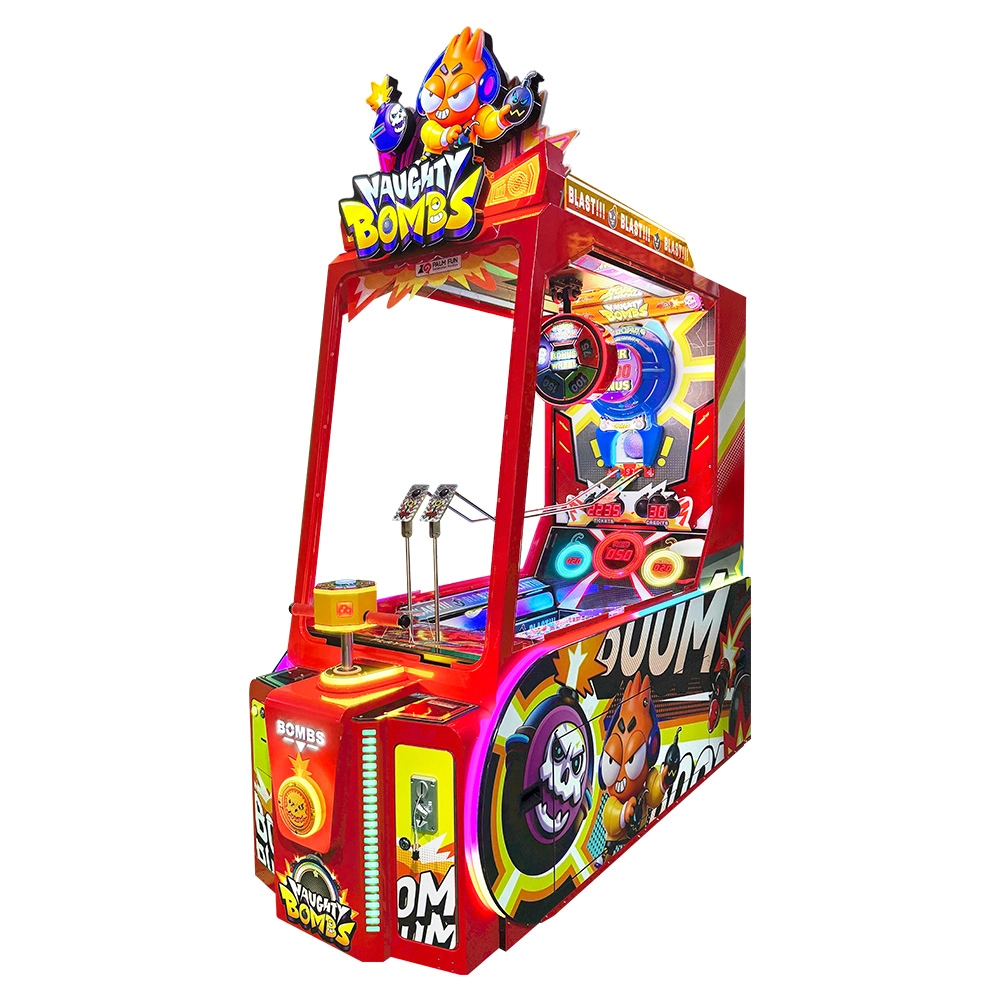
Naughty Bombs is a ball-drop redemption arcade game featuring rolling-ball gameplay, colored targets, ticket prizes, surprise bonus rewards, lighting and sound effects. Players use timing to launch and drop balls toward colored target areas. The product is presented for arcade, family entertainment center and other entertainment-venue projects, with customizable 110V / 220V AC voltage configuration.
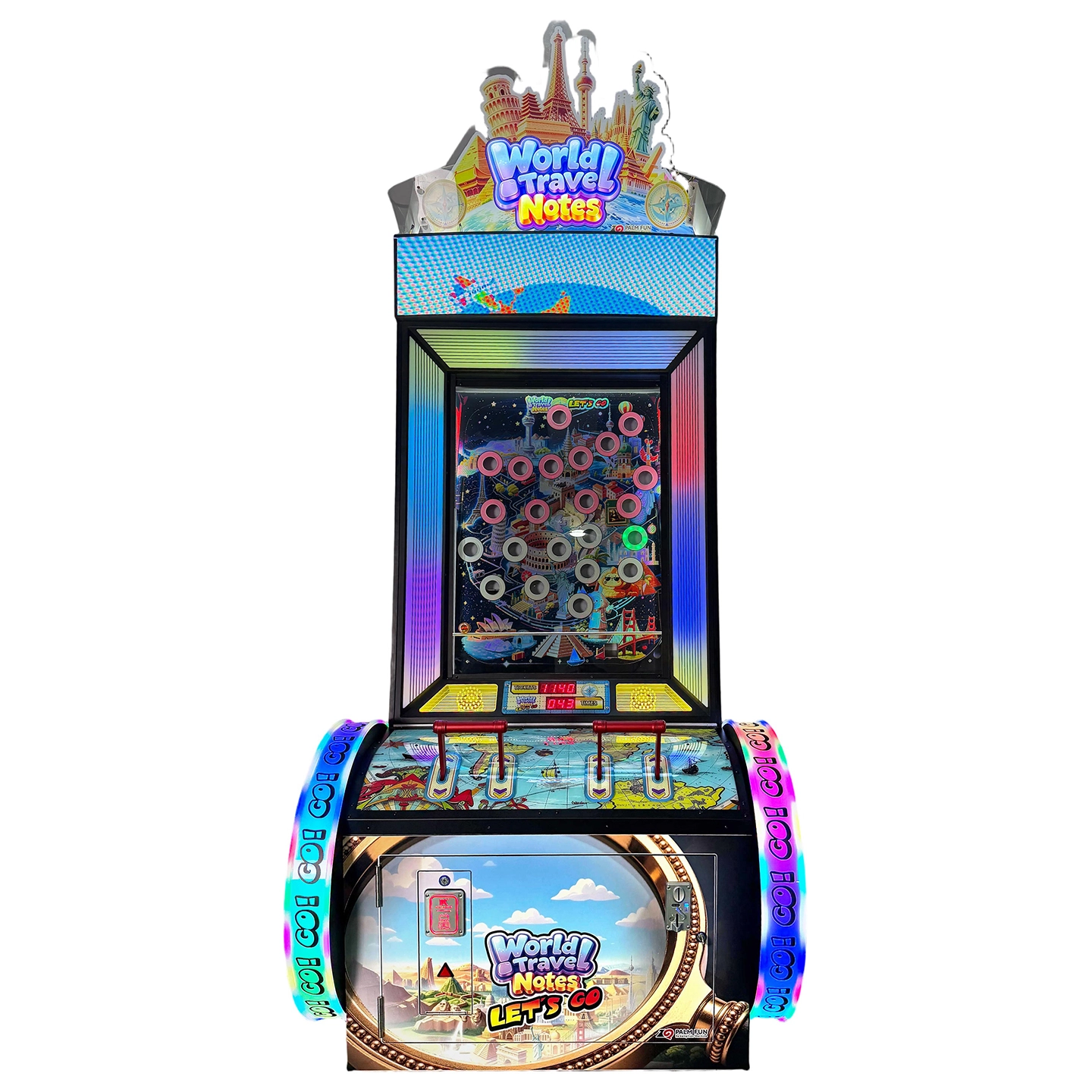
World Travel Notes is a skill-based balance ball redemption game with a fun world-travel theme. Players use two handles to control the balance bar and guide the ball into each target hole. As the game progresses, the targets become more challenging, leading players toward the final grand prize. With colorful world-travel graphics, dynamic RGB lighting, a live score display, and progressive difficulty, World Travel Notes is designed to attract attention and encourage repeat play in arcades, FECs, shopping malls, and other entertainment venues.
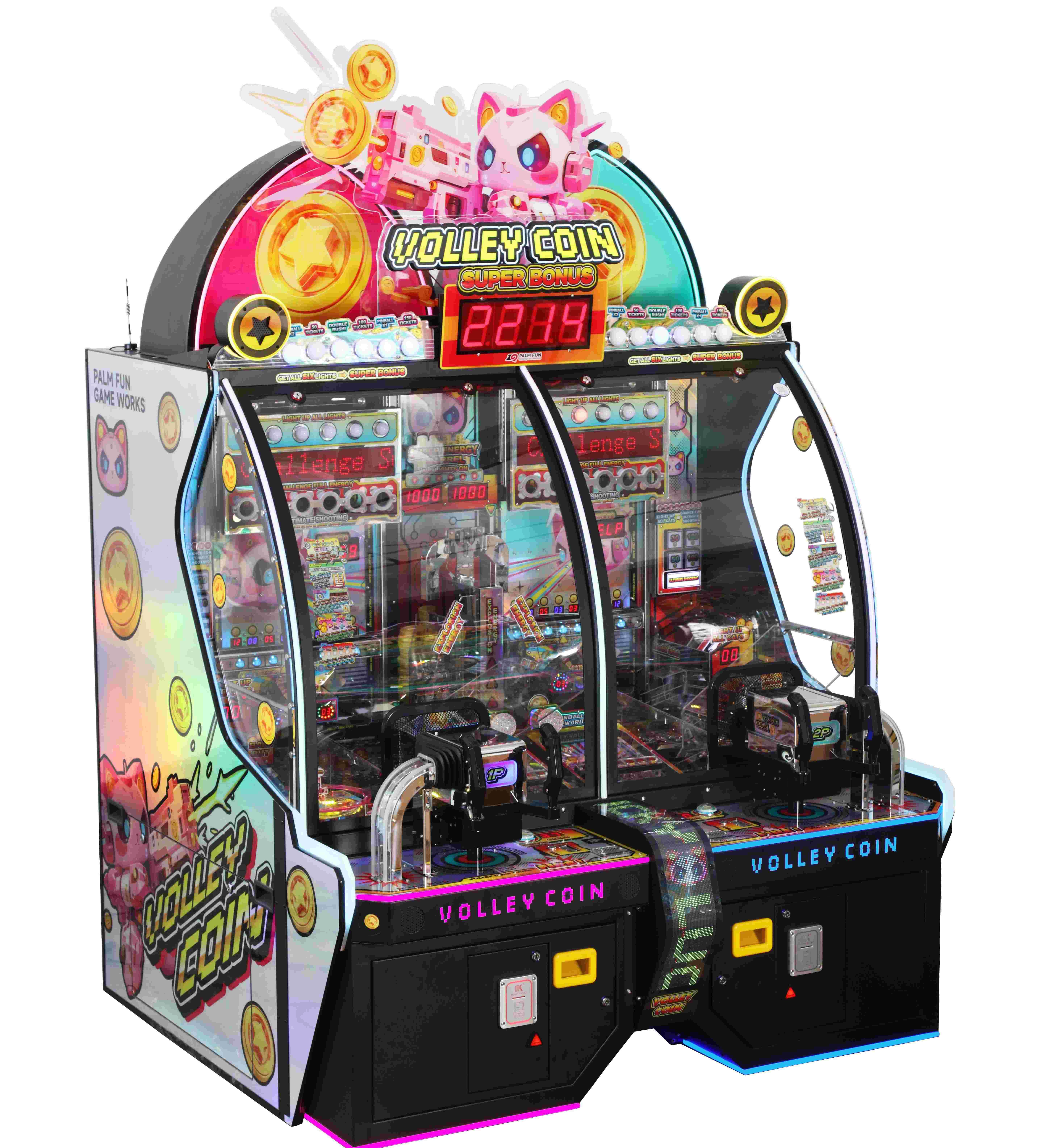
Volley Coin is an innovative arcade ticket redemption machine developed by Palm Fun Electronics. Combining the excitement of a fast-paced token shooter game with the proven earning power of a traditional coin pusher machine, Volley Coin offers a fresh and engaging gameplay experience that appeals to players of all ages.
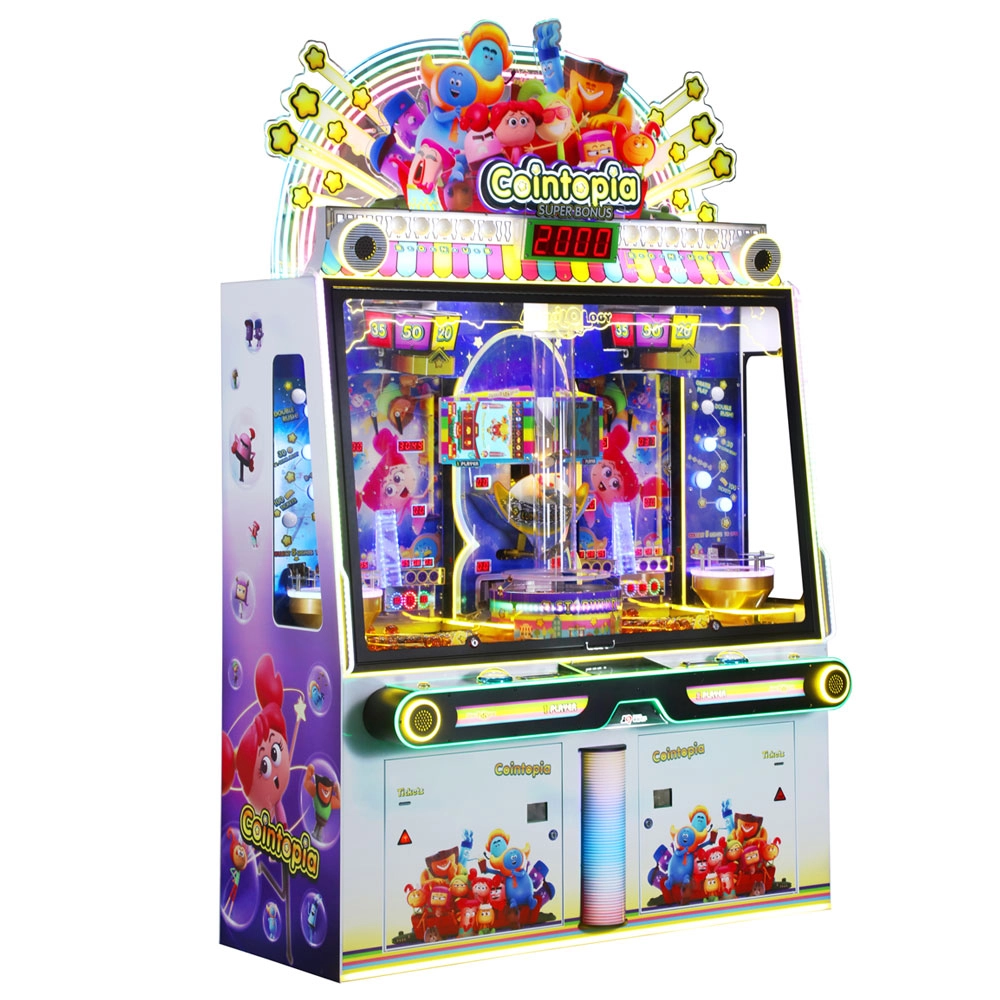
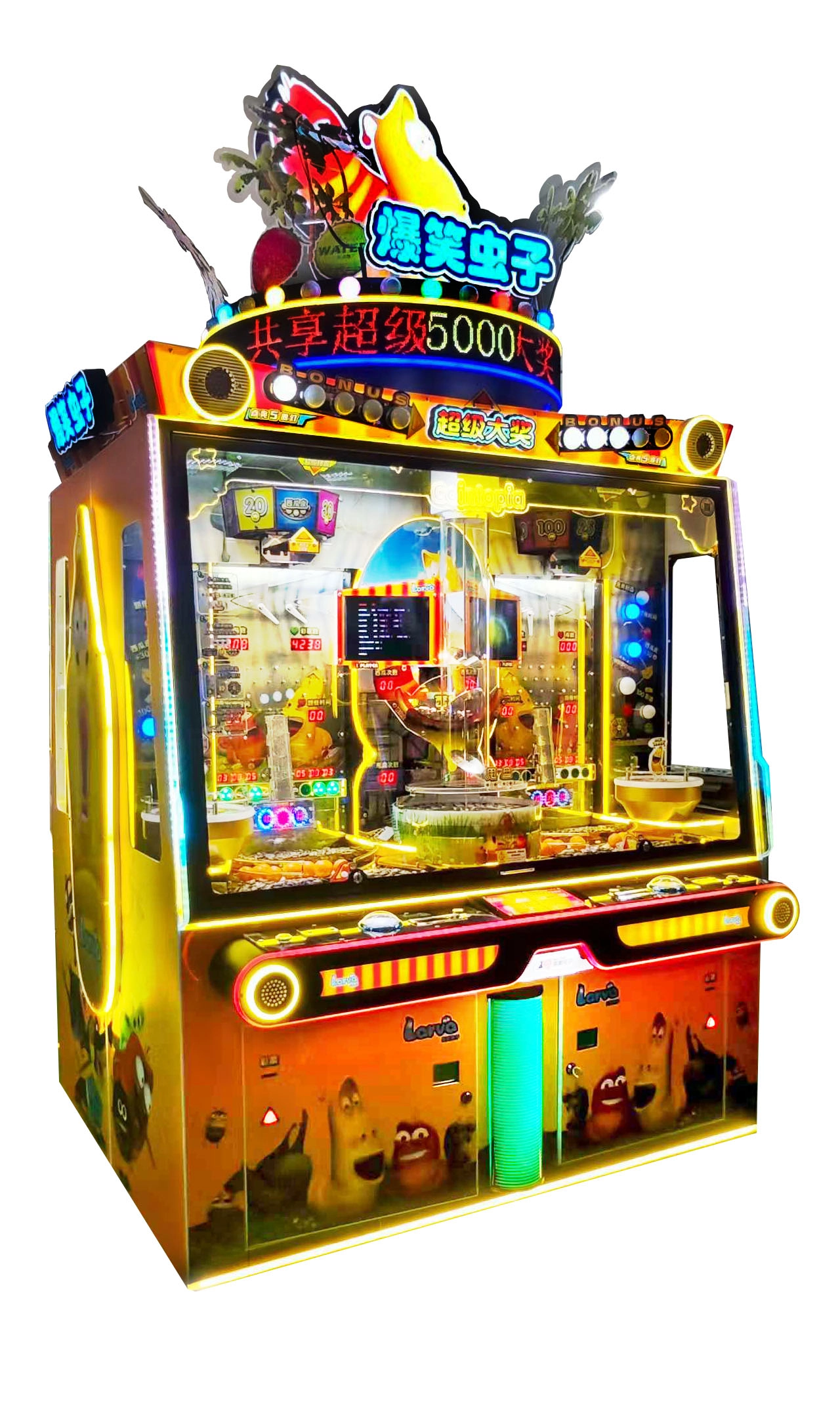
COINTOPIA by PALM FUN is an exciting redemption game machine where players enjoy fun with zodiac buddies in a utopia setting. This ticket redemption machine offers engaging gameplay and rewarding experiences, perfect for family entertainment centers and arcades seeking top-quality redemption games.
Copyright © 2026 PALM FUN All Rights Reserved. | Privacy Policy • Terms and Conditions | Sitemap
palmfunarcade
Palm Fun Arcade Game
Whatsapp: +8618126837443
PalmFun Arcade
PalmFun_Arcade
PALM FUN Redemption Machine