








What is the average price from a coin pusher arcade manufacturer?
Discover the critical factors influencing coin pusher arcade machine manufacturing costs and quality. This guide addresses specific industry pain points, from logic board stability to revenue-sharing configurations, helping buyers navigate the complex global redemption game machine market.
- How do specific logic board architectures impact the long-term reliability of a coin pusher arcade machine manufacturer’s product?
- What is the average price from a coin pusher arcade manufacturer for machines with integrated cashless payment systems?
- How does the 'Payout Ratio' calibration mechanism differ between high-end and budget redemption game machines?
- What specific cabinet material standards should I demand to prevent 'playfield warping' in humid environments?
- What are the hidden logistics and compliance costs when importing from an overseas coin pusher arcade machine manufacturer?
- How does the integration of 'Multi-Layered Bonus Features' affect the mechanical complexity and maintenance cycles?
How do specific logic board architectures impact the long-term reliability of a coin pusher arcade machine manufacturer’s product?
When evaluating a coin pusher arcade machine manufacturer, the internal logic board (PCB) is the most critical component. Many entry-level machines use generic, open-source boards that suffer from high failure rates under continuous 12-hour daily operation. Professional-grade manufacturers, such as Palmfun, utilize proprietary industrial-grade PCBs with integrated surge protection and heat dissipation layers. These advanced boards prevent 'ghosting'—where the machine incorrectly registers coin drops—and ensure the mechanical motor timing remains synchronized. For a commercial venue, a board failure results in immediate revenue loss; therefore, high-tier manufacturers prioritize ARM-based processors that can handle complex RNG (Random Number Generation) for bonus triggers without lagging.
What is the average price from a coin pusher arcade manufacturer for machines with integrated cashless payment systems?
The average price from a coin pusher arcade manufacturer for a standard mechanical unit typically ranges from $1,500 to $3,500. However, when integrating modern cashless systems (RFID card readers or QR code mobile payments), the price increases by approximately $400 to $800 per unit. This investment is crucial because data shows that cashless integration can increase user dwell time by 25% and average spend by 18%. Buyers must ensure the manufacturer provides an API or middleware that allows the machine to communicate seamlessly with global payment gateways like Nayax or Embed, rather than being locked into a proprietary, non-scalable local system.
How does the 'Payout Ratio' calibration mechanism differ between high-end and budget redemption game machines?
A common pain point for operators is the inability to precisely control the payout. Budget machines often rely on manual mechanical slides to adjust how many coins fall back into the 'house' versus the 'win' chute. In contrast, High Quality redemption game machine manufacturers implement software-driven calibration. This allows operators to set a specific 'Return to Player' (RTP) percentage (e.g., 75% or 85%). The machine uses optical sensors to track every coin entering and exiting the playfield, automatically adjusting the motor speed or the frequency of 'bonus' drops to maintain the desired profit margin, ensuring long-term ROI stability.
What specific cabinet material standards should I demand to prevent 'playfield warping' in humid environments?
Many beginners overlook the physical construction of the coin pusher arcade machine. Standard MDF (Medium-Density Fibreboard) is prone to swelling and warping in humid climates, which ruins the levelness of the playfield and causes coins to stack unnaturally. Expert manufacturers use cold-rolled steel frames combined with moisture-resistant, high-pressure laminates or tempered glass playfields. When sourcing from a coin pusher arcade machine manufacturer, verify that the playfield surface is treated with an anti-static coating; this prevents coin friction buildup, ensuring a smooth 'flow' that is essential for the psychological satisfaction of the player.
What are the hidden logistics and compliance costs when importing from an overseas coin pusher arcade machine manufacturer?
The average price from a coin pusher arcade manufacturer often excludes 'landed costs.' For US and EU buyers, machines must carry CE, RoHS, or UL certifications. Importing a non-compliant machine can lead to customs seizure or insurance denials in the event of an electrical fire. Furthermore, professional manufacturers provide 'knock-down' (KD) packaging options to reduce shipping volume, potentially saving up to 30% on ocean freight. Always ask if the manufacturer includes a 'spare parts kit' (motors, sensors, and LED strips) in the initial quote, as sourcing these components individually after a breakdown is significantly more expensive due to international shipping fees.
How does the integration of 'Multi-Layered Bonus Features' affect the mechanical complexity and maintenance cycles?
Modern players demand more than just pushing coins; they want 'Skill-Hole' challenges and 'Ticket Redemption' multipliers. A sophisticated coin pusher arcade machine manufacturer integrates secondary mechanical layers, such as rotating prize wheels or overhead coin hoppers. While these features increase the initial average price from a coin pusher arcade manufacturer by 20-40%, they significantly extend the machine's lifecycle by keeping gameplay engaging. However, this requires a manufacturer that uses brushless DC motors, which offer a lifespan of over 20,000 hours compared to the 5,000-hour limit of cheaper brushed motors, reducing the frequency of on-site technician visits.
Choosing the right partner in the redemption game industry requires looking beyond the sticker price. By focusing on PCB reliability, precise payout software, and robust cabinet construction, operators can ensure their investment yields consistent returns. Palmfun stands at the forefront of this technology, offering certified, high-performance machines designed for the global market.
For a detailed consultation and a customized quote on our latest coin pusher models, please contact us today.



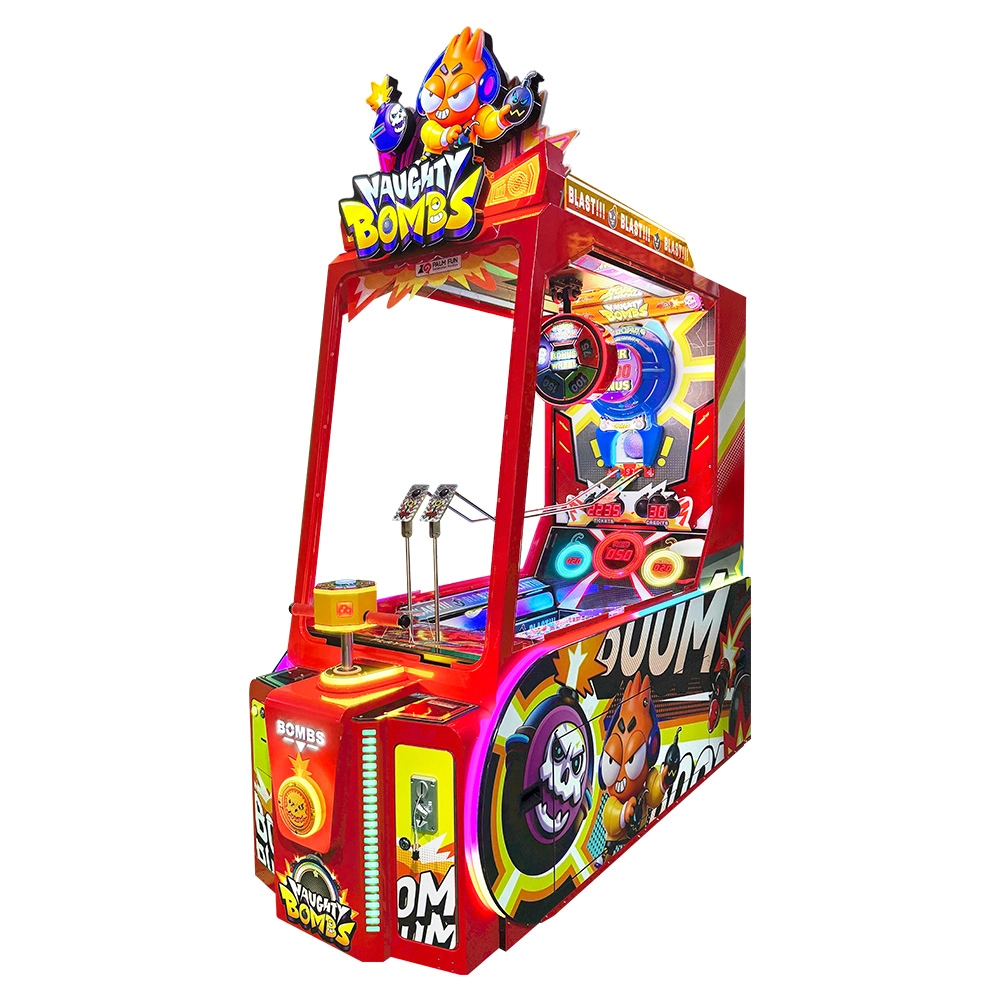
Naughty Bombs is a ball-drop redemption arcade game featuring rolling-ball gameplay, colored targets, ticket prizes, surprise bonus rewards, lighting and sound effects. Players use timing to launch and drop balls toward colored target areas. The product is presented for arcade, family entertainment center and other entertainment-venue projects, with customizable 110V / 220V AC voltage configuration.
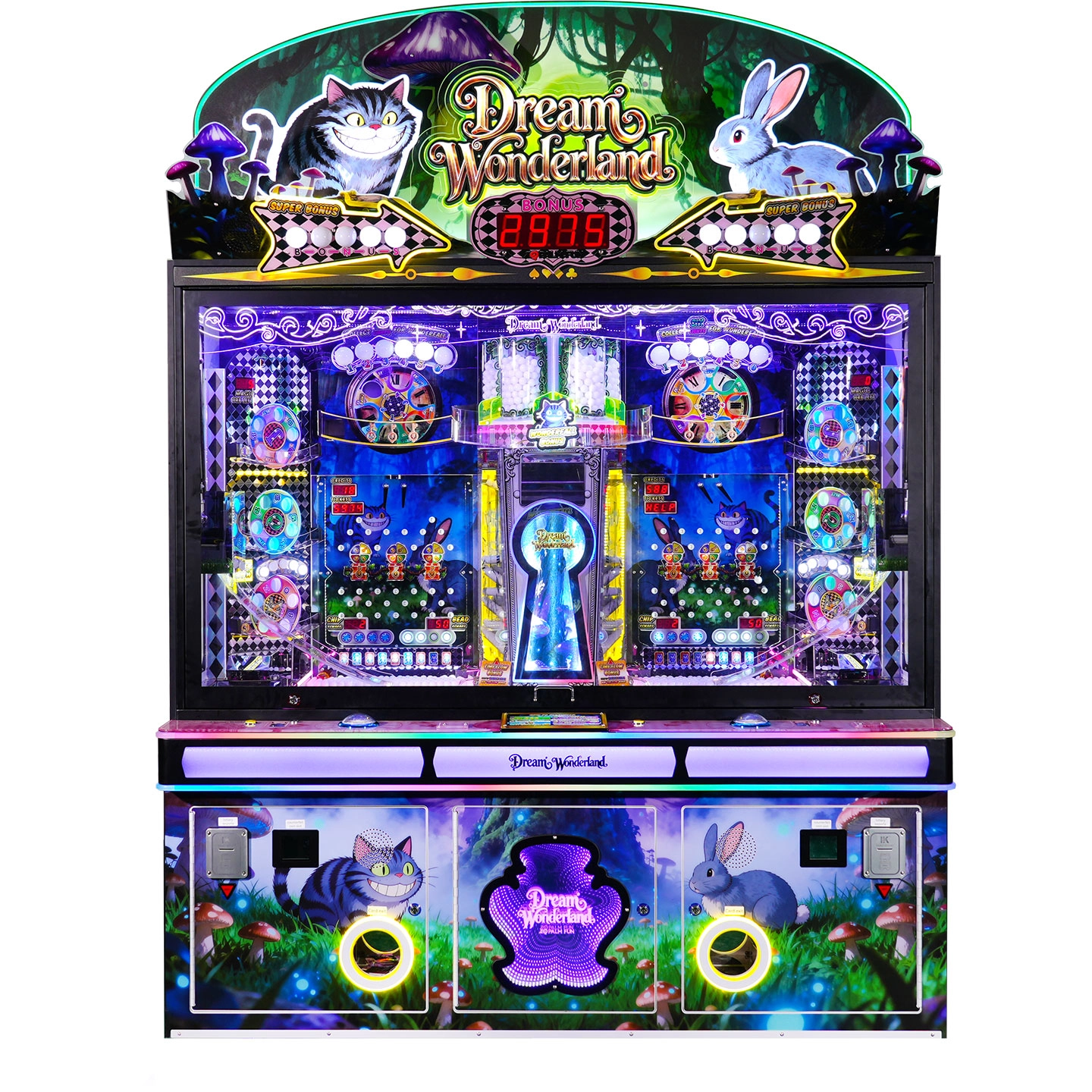
Enter Dream Wonderland — a magical marble pusher adventure filled with glowing lights, magic orbs, bonus wheels, collectible character cards, and exciting jackpot challenges.
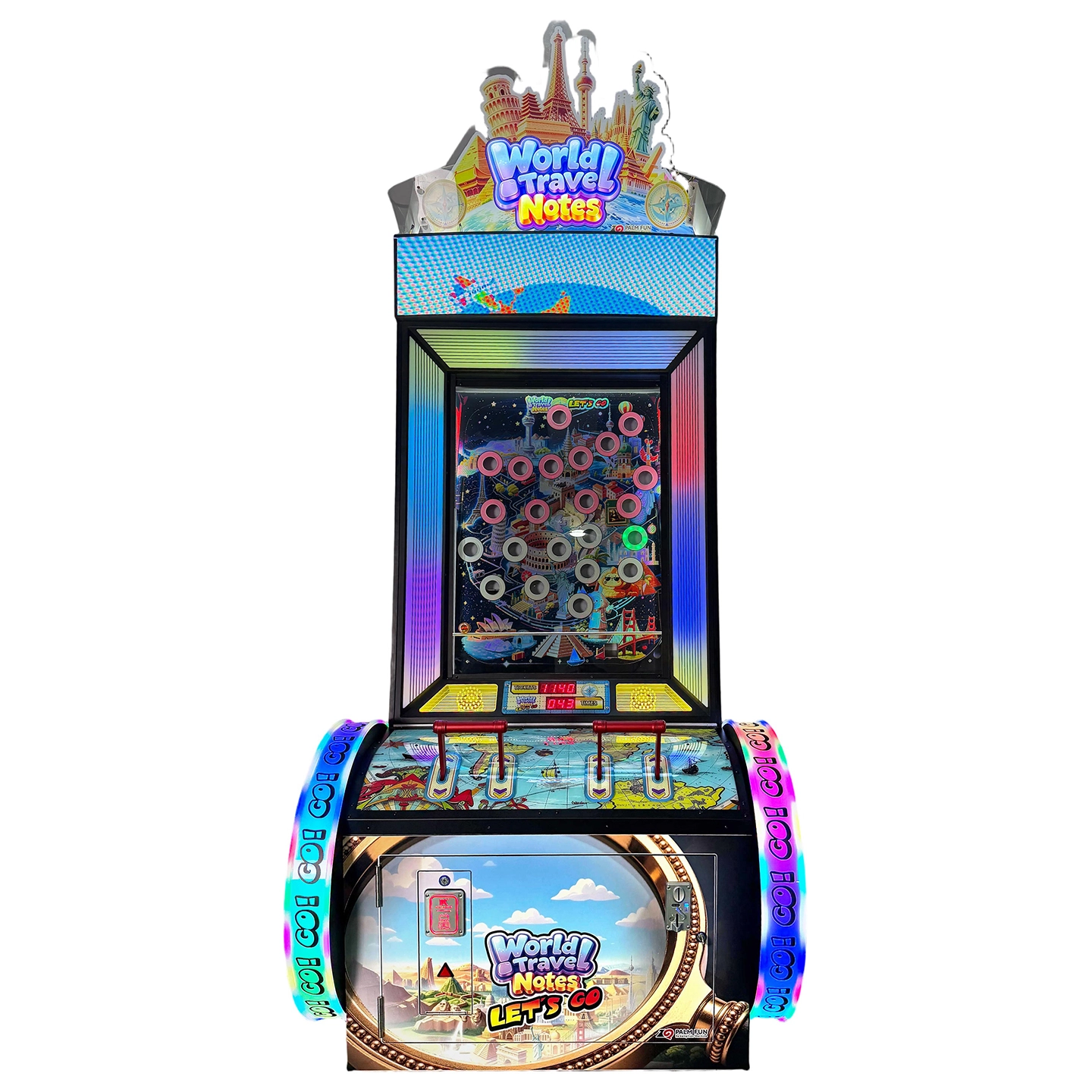
World Travel Notes is a skill-based balance ball redemption game with a fun world-travel theme. Players use two handles to control the balance bar and guide the ball into each target hole. As the game progresses, the targets become more challenging, leading players toward the final grand prize. With colorful world-travel graphics, dynamic RGB lighting, a live score display, and progressive difficulty, World Travel Notes is designed to attract attention and encourage repeat play in arcades, FECs, shopping malls, and other entertainment venues.
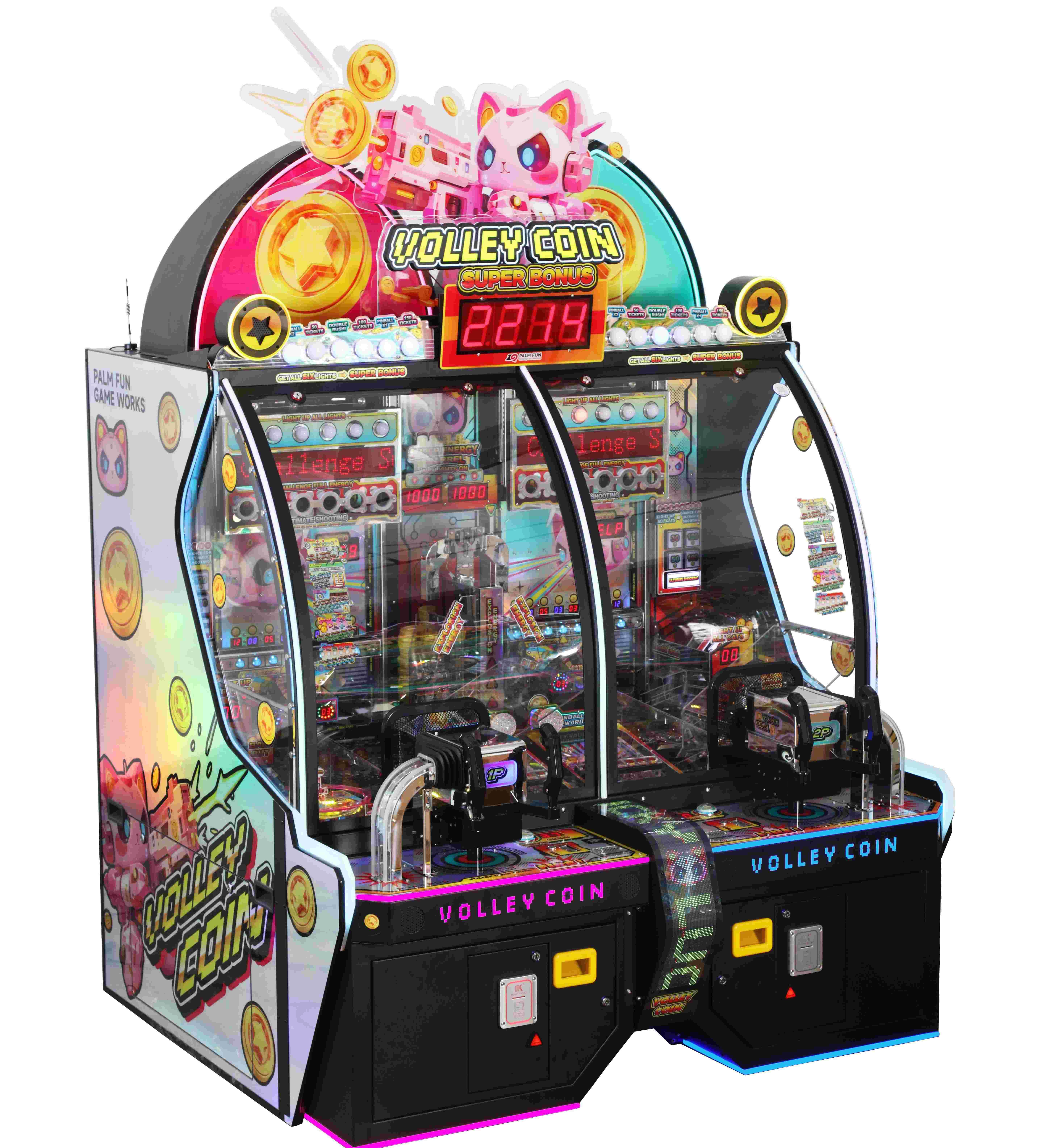
Volley Coin is an innovative arcade ticket redemption machine developed by Palm Fun Electronics. Combining the excitement of a fast-paced token shooter game with the proven earning power of a traditional coin pusher machine, Volley Coin offers a fresh and engaging gameplay experience that appeals to players of all ages.

Copyright © 2026 PALM FUN All Rights Reserved. | Privacy Policy • Terms and Conditions | Sitemap
palmfunarcade
Palm Fun Arcade Game
Whatsapp: +8618126837443
PalmFun Arcade
PalmFun_Arcade
PALM FUN Redemption Machine