







Redemption Arcade Machine Maintenance Checklist for Arcade & FEC Operators
A practical redemption arcade machine maintenance checklist for arcade and FEC operators, covering routine inspections, recurring fault tracking, service escalation, maintenance logs, and model-specific service decisions.
- Quick Answer
- Redemption Arcade Machine Maintenance Checklist
- How to Use This Checklist
- General Inspection vs. Model-Specific Service
- Routine Operational Checks
- Test the Complete Game Cycle
- Inspect Player-Facing Controls
- Watch for Recurring Payment or Reward Faults
- Record Abnormal Conditions
- Preventive Checks: Look for Developing Problems
- Sensors and Accessible Operating Paths
- Mechanical Movement
- Ventilation, Heat and Physical Warning Signs
- When Should a Redemption Arcade Machine Be Taken Out of Service?
- When Should Operators Escalate a Fault?
- Maintenance Priorities Differ by Machine Type
- What Should a Maintenance Log Include?
- Four Maintenance Questions Buyers Should Verify Before Ordering
- From General Checklist to Model-Specific Service
- Evaluating Arcade Machines for a Project?
- FAQ
- Can the same maintenance checklist be used for every redemption arcade machine?
- When should a redemption arcade machine be taken out of service?
- What information should staff record before escalating a machine fault?
Quick Answer
A redemption arcade machine maintenance checklist should help operators answer five practical questions: what should be checked, what looks abnormal, what should be recorded, what action is appropriate, and when the issue should be escalated. The goal is to create a consistent process for identifying faults, tracking recurring problems, handing issues between shifts, and moving to model-specific technical service when necessary.
Scope note: Operator actions in this checklist refer only to tasks allowed by the specific machine documentation, venue procedures, and assigned staff responsibilities. Internal repair, calibration, disassembly, lubrication, component replacement, and exact maintenance intervals should follow the applicable model-specific instructions.
Redemption Arcade Machine Maintenance Checklist
Do not assume every redemption machine should follow the same daily, weekly, or monthly maintenance schedule. A safer approach is to organize checks around operating triggers, the venue's preventive-maintenance process, reported faults, maintenance events, and model-specific service requirements.
Use one of four statuses for every check:
- Pass — operating normally.
- Monitor — abnormal condition observed; follow-up may be needed.
- Service Required — technical inspection is required.
- Out of Service — do not return the machine to normal operation until the issue is evaluated.
| Status | Trigger | System / Area | Check Item | Warning Sign | Notes / Action |
|---|---|---|---|---|---|
| ☐ Pass ☐ Monitor ☐ Service ☐ Out | Before opening or another site-defined operational check | Complete game cycle | Test input, gameplay, scoring, reward output and reset | Incomplete cycle, unexpected scoring, failed output or reset | Record abnormal condition; escalate if repeated |
| ☐ Pass ☐ Monitor ☐ Service ☐ Out | During operation or after a staff/player report | Player controls | Confirm normal response of applicable controls | Delayed, missed or inconsistent response | Record symptoms and inspect permitted accessible area |
| ☐ Pass ☐ Monitor ☐ Service ☐ Out | After payment or reward-related fault | Coin / token / ticket / reward path where applicable | Check normal acceptance or dispensing | Repeated rejection, jam or irregular feed | Record location and frequency of fault; escalate recurring issues |
| ☐ Pass ☐ Monitor ☐ Service ☐ Out | Routine visual inspection | Cabinet / player-facing area | Check visible condition and external parts | Damage, loose component, exposed area or safety concern | Remove from normal use if safety is uncertain |
| ☐ Pass ☐ Monitor ☐ Service ☐ Out | Venue preventive-maintenance process | Sensors / accessible operating paths | Check for obstruction, contamination or abnormal detection | Repeated misread or intermittent operation | Record fault; move to technical diagnosis if unresolved |
| ☐ Pass ☐ Monitor ☐ Service ☐ Out | Venue preventive-maintenance process | Mechanical movement | Observe normal motion and accessible moving areas | Repeated jam, abnormal motion or unusual noise | Record the pattern; avoid undocumented adjustment |
| ☐ Pass ☐ Monitor ☐ Service ☐ Out | Model-specific technical service | Internal systems | Complete required technical inspection | Internal wear, repeated technical fault or connection problem | Qualified personnel follow the applicable procedure |
| ☐ Pass ☐ Monitor ☐ Service ☐ Out | After repair or component replacement | Complete machine | Repeat the full functional sequence | Original fault remains or another fault appears | Do not return to normal operation until the functional check passes |
Trigger → Check → Warning Sign → Status → Record → Action → Escalation
How to Use This Checklist
General Inspection vs. Model-Specific Service
The checklist standardizes what operators observe and record. Model-specific documentation determines how a particular machine should be serviced.
For example, an operator may be able to identify and document a recurring sensor-related fault. If resolving that problem requires internal access, calibration, adjustment, or component replacement, the issue has moved from routine inspection to technical service.
PALM FUN's current Service Manuals page provides PDF manuals for selected machines, including Burger Mania, Pinball Raiders 2, Soccer Fever, and Parallel Universe. For a machine not currently listed, the page asks users to identify the relevant machine or product when requesting the appropriate information.
For broader amusement-industry context, ASTM F770-24 addresses ownership, operation, maintenance, inspection and training practices for amusement rides and devices. Applicability should be evaluated for the specific equipment and jurisdiction.
Always identify the exact machine before moving from general inspection to model-specific technical work.
Routine Operational Checks
Test the Complete Game Cycle
A machine that powers on is not necessarily operating correctly. Where appropriate, test the full player sequence:
Input → Gameplay → Scoring → Reward Output → Reset / Ready State
Look for:
- Missed player input.
- Unexpected game behavior.
- Abnormal scoring.
- Failed ticket or reward output where applicable.
- Failure to return to the ready state.
Checking the complete sequence is more useful than confirming only that the screen, lights, or power are working.
Inspect Player-Facing Controls
Player controls vary by game and may include buttons, joysticks, handles, switches, launch mechanisms, or sensor-based inputs.
Look for delayed response, inconsistent input, visible obstruction, loose external parts, or damaged controls.
Different arcade games can use different control structures, so inspection points should reflect the actual machine.
Watch for Recurring Payment or Reward Faults
Where applicable, observe coin, token, ticket, or reward systems for repeated problems. The most important distinction is often an isolated fault vs. a recurring pattern.
One isolated jam → Record and monitor.
Repeated jam in the same system → Investigate and escalate when necessary.
Repeatedly clearing the same problem without documenting it can hide a developing technical issue.
Record Abnormal Conditions
A useful fault record should identify the machine or asset ID, model, location, date or time, fault category, observed condition, action taken, status after the check, and follow-up requirement.
Preventive Checks: Look for Developing Problems
Preventive inspection should not simply repeat the operational checklist. Its purpose is to identify conditions that are changing over time.
Sensors and Accessible Operating Paths
Look for visible dirt, debris, obstruction, or repeated abnormal detection. If the same problem continues after a basic permitted inspection, use the next step:
Record the recurring fault → identify the exact machine → move to technical diagnosis.
Mechanical Movement
For games with moving mechanisms, warning signs can include repeated sticking, irregular movement, recurring obstruction, abnormal vibration, or unusual noise.
Do not assume every unusual movement requires an immediate adjustment. A better question is whether the behavior is repeatable and whether the next corrective step requires model-specific technical work.
Ventilation, Heat and Physical Warning Signs
Accessible ventilation areas can be checked for obvious dust accumulation or restricted airflow. Persistent warning signs can include abnormal heat, unusual smell, grinding noise, abnormal vibration, or irregular internal movement.
For broader amusement-industry safety context, operators can review IAAPA ride safety and inspection guidance. This is general industry context and does not replace the requirements for a specific machine or jurisdiction.
A machine continuing to operate does not prove that the condition is acceptable.
When Should a Redemption Arcade Machine Be Taken Out of Service?
The Out of Service status should be considered when normal operation may create a safety concern, increase equipment damage, or result in unreliable operation that cannot be resolved through routine checks.
- Exposed or visibly damaged player-facing components.
- Repeated electrical or power-related faults.
- Burning or unusual smell.
- Persistent abnormal heat.
- Severe or repeated mechanical jamming.
- Abnormal internal noise or movement.
- Failure to complete the normal functional cycle after service.
The exact decision should follow the venue's operating procedures and the applicable machine documentation.
Do not confuse “still running” with “ready for operation.”
When Should Operators Escalate a Fault?
Escalate when the same fault continues to recur or when the next troubleshooting step requires internal access, electrical diagnosis, calibration, disassembly, internal mechanical adjustment, or component replacement.
Routine inspection ends where qualified technical intervention begins.
For U.S. workplaces, servicing or maintenance that can expose employees to unexpected energization, startup, or stored energy should also be evaluated against OSHA 29 CFR 1910.147 on control of hazardous energy (lockout/tagout) and the employer's established safety procedures.
Before escalating, record at minimum:
Machine ID + Model + Location + Fault Category + Symptom + Status + Action Already Taken
Maintenance Priorities Differ by Machine Type
A general checklist creates consistency across an arcade floor, but machine-specific maintenance priorities depend on how the equipment is designed and operated.
| Machine Type | Additional Maintenance Focus | Detailed Resource |
|---|---|---|
| Coin pusher arcade machine | Coin path, pusher movement, sensors and mechanical assemblies | Coin Pusher Arcade Machine Maintenance Guide |
| Ticket redemption machine | Ticket path, dispensing mechanism, applicable sensors and reward output | Ticket Redemption Machine Maintenance Guide |
| Ball-based redemption machine | Depends on the actual ball path, sensors, return system and machine mechanism | Use documentation for the exact model |
| Other mechanical redemption games | Depends on installed control, mechanical and reward systems | Use applicable service documentation |
The correct relationship is: General Checklist → Machine Type → Exact Model → Model-Specific Documentation.
For broader equipment context, see the Redemption Arcade Machine Guide.
What Should a Maintenance Log Include?
For an arcade or FEC operating multiple machines, maintenance records should help management identify patterns rather than simply document completed repairs.
| Field | Why It Matters |
|---|---|
| Machine / Asset ID | Identifies the exact equipment |
| Model | Connects the fault to the correct documentation |
| Location | Helps identify venue or zone-level patterns |
| Inspection Date | Builds maintenance history |
| Operator / Technician | Records who handled the check |
| Fault Category | Allows similar problems to be compared across machines |
| Fault / Observation | Describes the actual condition |
| Action Taken | Records the response |
| Parts Replaced | Tracks component service history where applicable |
| Status After Check | Pass / Monitor / Service Required / Out of Service |
| Follow-Up Required | Prevents unresolved issues from disappearing between shifts |
Useful fault categories may include Controls, Sensors, Payment, Reward / Ticket, Mechanical, Power / Electrical, Cabinet / Player-Facing, and Other.
A structured log can help management answer:
- Does the same machine keep generating the same fault?
- Are similar fault categories appearing across multiple machines?
- Did the previous action actually solve the problem?
- Are problems concentrated in one location?
- Which machines still require technician follow-up?
Four Maintenance Questions Buyers Should Verify Before Ordering
Maintenance should form part of equipment evaluation without turning this checklist into a full buying guide.
| Buyer Question | Why It Matters | What to Verify |
|---|---|---|
| Is model-specific documentation available? | Staff need the correct information for the exact machine | Whether useful technical documentation exists beyond the sales brochure |
| Is the operator / technician boundary clear? | Defines staffing and maintenance responsibilities | Which tasks belong to venue staff and which require technical service |
| Can service components be identified? | Reduces uncertainty when maintenance is required | Whether model-specific component information is available |
| What happens when a fault cannot be resolved locally? | Defines the next support step | What machine and fault information must be provided for escalation |
PALM FUN's Service Manuals page illustrates the importance of exact machine identification: selected machines have named PDF manuals, while users requesting information for another machine are asked to identify the relevant machine or product.
Actual warranty, spare-parts availability, response times, and technical-support scope should be confirmed for the specific order rather than assumed.
For broader supplier due diligence, see the Redemption Arcade Machine Supplier Evaluation Checklist.
From General Checklist to Model-Specific Service
A redemption arcade machine maintenance checklist should not try to become a repair manual. Its role is to create a clear operating path:
Trigger → Check → Warning Sign → Status → Record → Action → Escalation → Exact Model → Service Documentation
When technical work is required, move from the general checklist to the documentation for the specific machine.
Need model-specific information?
View Arcade Machine Service ManualsEvaluating Arcade Machines for a Project?
If you are evaluating machines for a new arcade, FEC expansion, replacement project, or distribution requirement, prepare the project type, target game or machine type, market or operating location, expected quantity, payment or reward requirements, and maintenance considerations.
Review the PALM FUN product range before discussing the project.
FAQ
Can the same maintenance checklist be used for every redemption arcade machine?
A general checklist can standardize inspection, fault recording, maintenance status, and escalation. It cannot replace model-specific instructions because different machines may use different controls, sensors, mechanical systems, payment inputs, and reward mechanisms.
When should a redemption arcade machine be taken out of service?
Consider removing a machine from normal operation when there is a safety concern, repeated electrical or mechanical fault, abnormal heat or smell, severe jamming, exposed damage, or failure to complete its normal functional cycle after service. The final decision should follow the venue's procedures and applicable machine documentation.
What information should staff record before escalating a machine fault?
Record the machine or asset ID, model, location, fault category, observed symptom, current status, action already taken, and whether the problem is recurring. This gives technicians or support personnel a clearer starting point for further diagnosis.

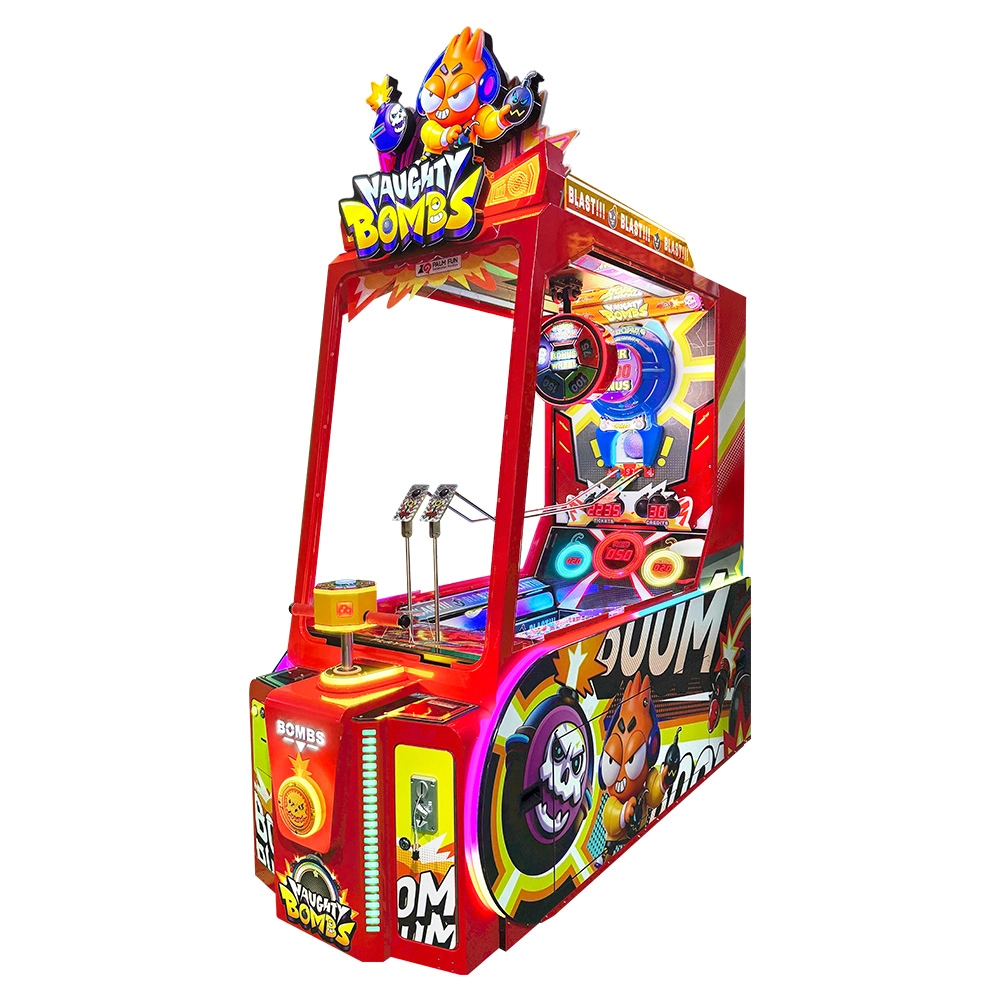
Naughty Bombs is a ball-drop redemption arcade game featuring rolling-ball gameplay, colored targets, ticket prizes, surprise bonus rewards, lighting and sound effects. Players use timing to launch and drop balls toward colored target areas. The product is presented for arcade, family entertainment center and other entertainment-venue projects, with customizable 110V / 220V AC voltage configuration.
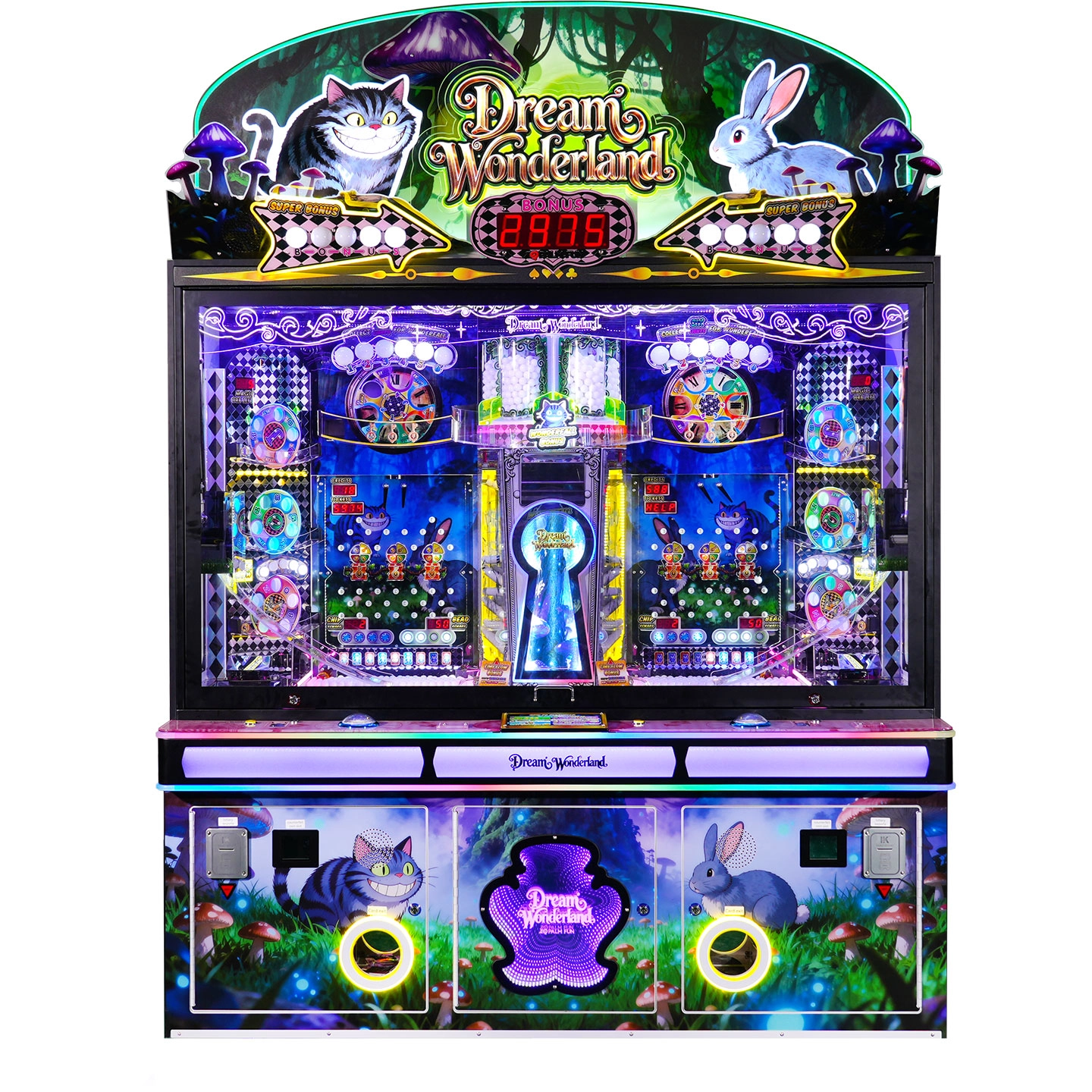
Enter Dream Wonderland — a magical marble pusher adventure filled with glowing lights, magic orbs, bonus wheels, collectible character cards, and exciting jackpot challenges.
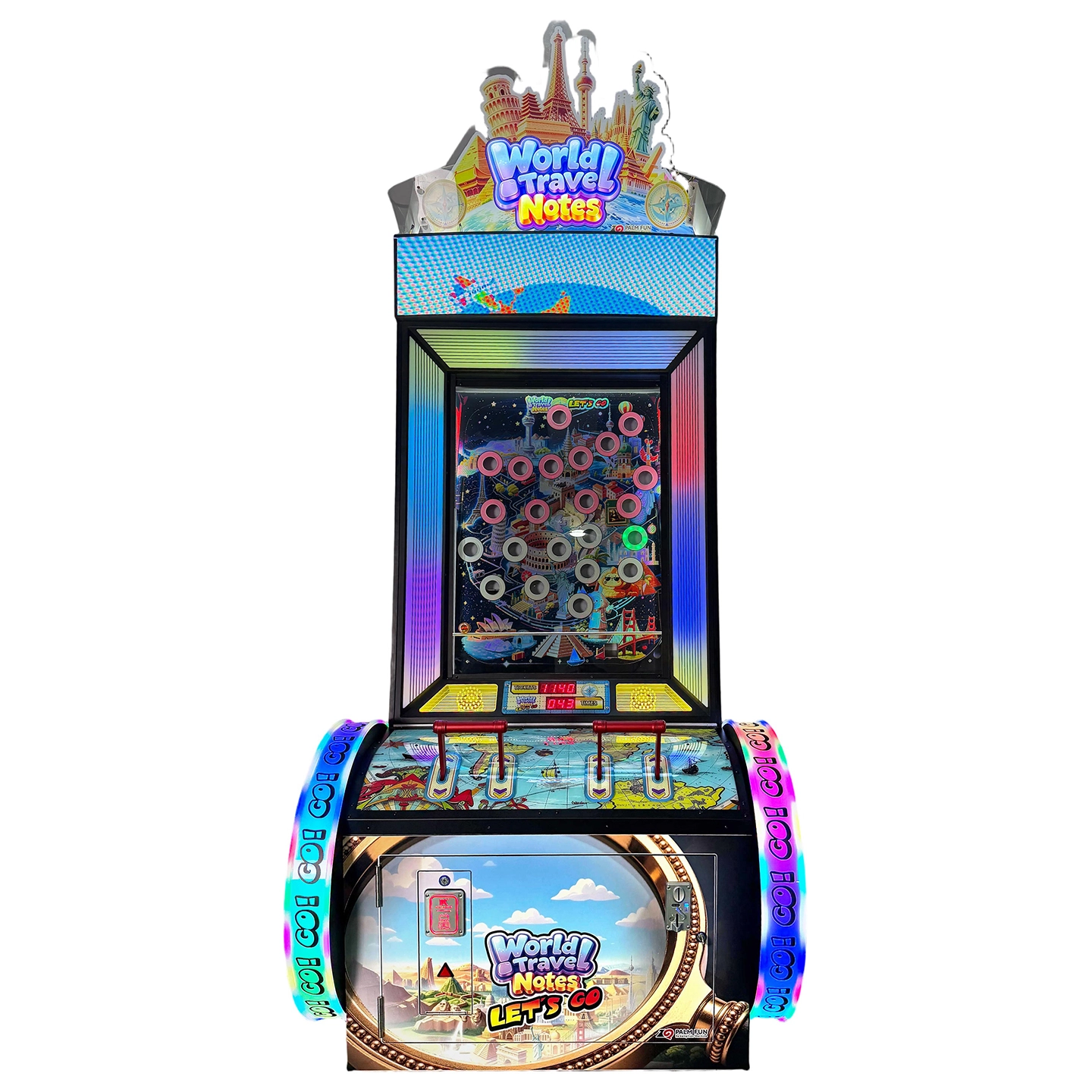
World Travel Notes is a skill-based balance ball redemption game with a fun world-travel theme. Players use two handles to control the balance bar and guide the ball into each target hole. As the game progresses, the targets become more challenging, leading players toward the final grand prize. With colorful world-travel graphics, dynamic RGB lighting, a live score display, and progressive difficulty, World Travel Notes is designed to attract attention and encourage repeat play in arcades, FECs, shopping malls, and other entertainment venues.
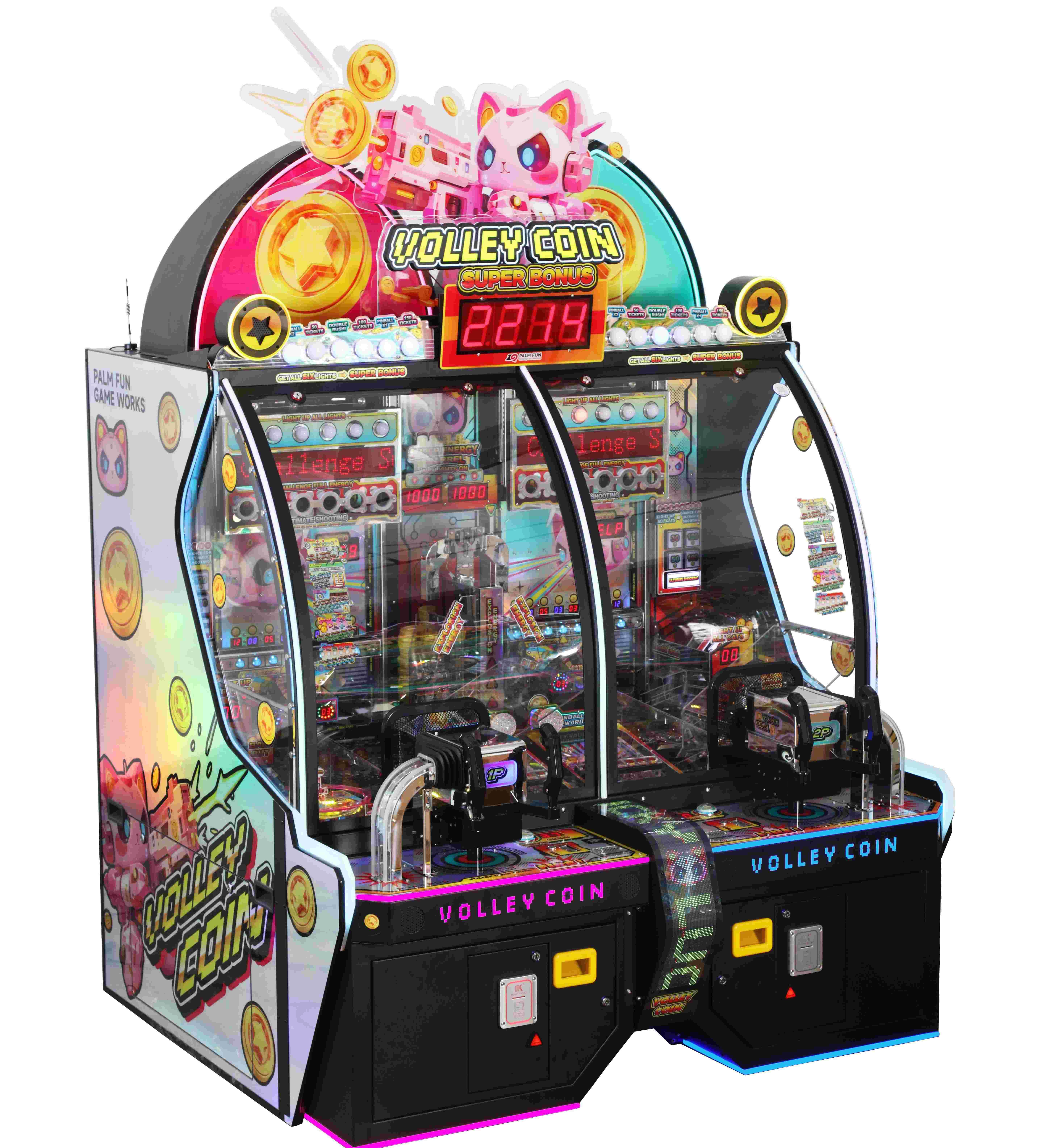
Volley Coin is an innovative arcade ticket redemption machine developed by Palm Fun Electronics. Combining the excitement of a fast-paced token shooter game with the proven earning power of a traditional coin pusher machine, Volley Coin offers a fresh and engaging gameplay experience that appeals to players of all ages.
Copyright © 2026 PALM FUN All Rights Reserved. | Privacy Policy • Terms and Conditions | Sitemap
palmfunarcade
Palm Fun Arcade Game
Whatsapp: +8618126837443
PalmFun Arcade
PalmFun_Arcade
PALM FUN Redemption Machine