


Dream Wonderland Arcade Placement: Floor Layout, Player Access and Service Clearance
Venue-focused placement checklist for Dream Wonderland marble pusher buyers covering true space requirements, delivery paths, visitor movement, staff access, ticketing integration and installation acceptance.
- 1. Start With a Venue Plan, Not a Cabinet Photograph
- 2. Validate Cabinet Size Against the Ordered Model
- 3. Map the Actual Player Approach and Sight Line
- 4. Reserve Space for People, Not Just Equipment
- 5. Keep All Approved Service Access Reachable
- 6. Plan the Delivery Route Before Confirming Floor Position
- 7. Coordinate Electrical and Redemption Infrastructure
- 8. Consider Noise, Lighting and Neighboring Game Interaction
- 9. Test Guest Instructions and Reward Visibility at the Location
- 10. Run a Realistic Before-Opening Layout Test
- 11. Review Performance Without Confusing Location with Revenue
- 12. Build a Purchase and Installation Brief for PALM FUN
- Dream Wonderland Arcade Placement FAQ
QUICK ANSWER
Plan Dream Wonderland placement in layers: confirm the actual cabinet and transport dimensions, observe the visitor's approach and viewing position, reserve the manufacturer's required service access, and validate power and ticket-system connections on the delivered unit. Never treat the bare cabinet footprint as sufficient operating space.
1. Start With a Venue Plan, Not a Cabinet Photograph
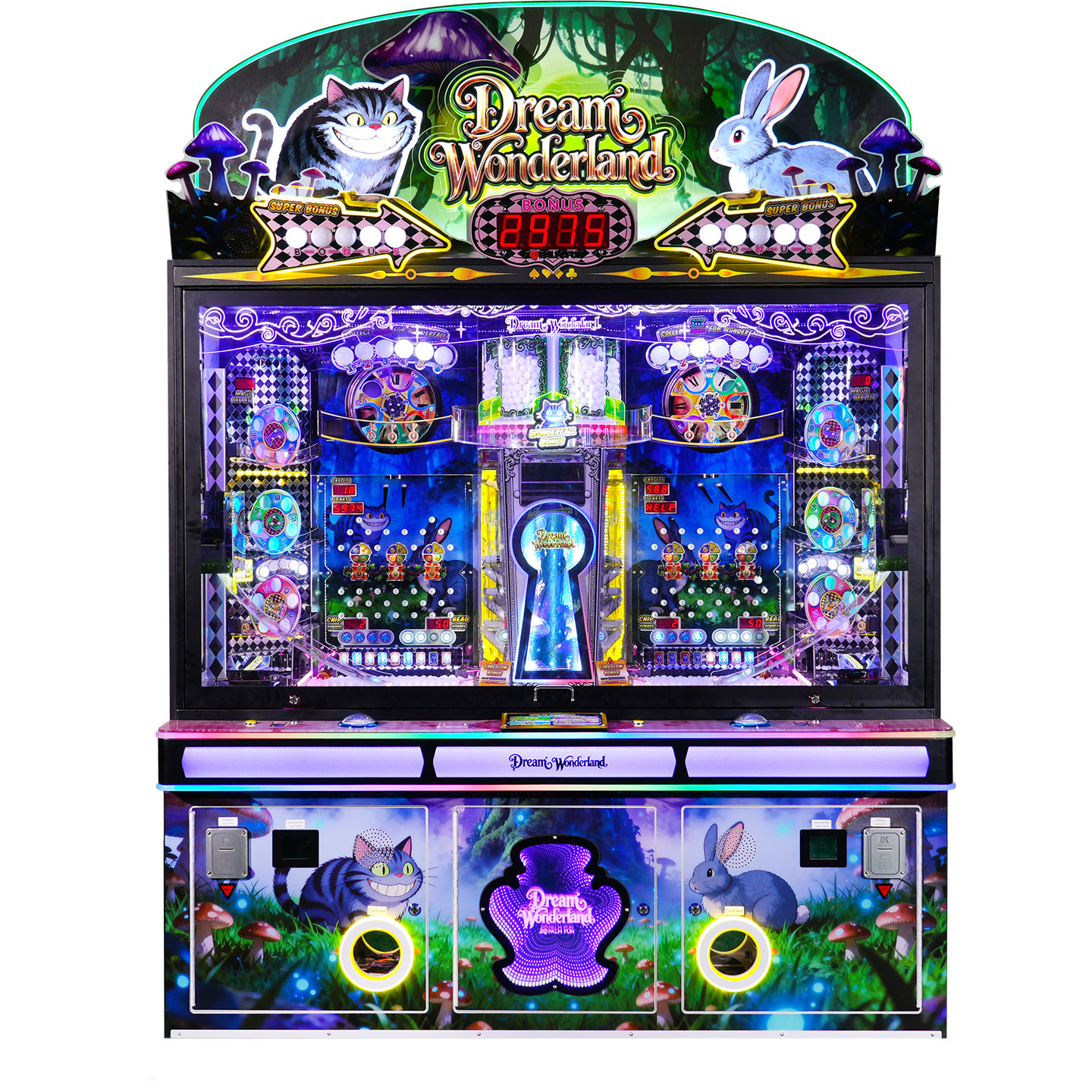
A cabinet can fit on a floor plan yet still perform poorly in the venue. Visitors need somewhere to approach, stop, understand the playfield and leave without disrupting neighboring games. Operators also need a safe method of reaching approved service points when a machine requires attention. For a Dream Wonderland marble pusher, the placement decision should consider all of these activities together. A colorful front view explains the visual identity of the game, but it does not tell the buyer whether the delivery route, player space or service position is workable.
Begin with a measured drawing of the proposed area and a short description of nearby attractions. Mark existing circulation routes, entrances, redemption counters, seating and walls before drawing a cabinet outline. Identify who will approve the final layout: the venue manager, installation contractor and equipment provider may be responsible for different parts of the decision. This avoids treating a supplier illustration as an approved building plan. When measurements or service-clearance instructions are missing, leave them unapproved rather than making up a distance that appears convenient.
2. Validate Cabinet Size Against the Ordered Model
The Dream Wonderland buying material already published on PALM FUN's site describes a cabinet approximately 1,855 mm wide, 1,030 mm deep and 2,500 mm high, with a listed weight around 480 kg. Those published figures can assist initial planning, but buyers should reconfirm the current ordered version and ask for packaging dimensions and shipping weight separately. Do not assume that the nominal body size includes every projection, accessory, opening door or handling component. Even a small difference between an assembled cabinet and a packed unit can change the delivery route.
Write each measurement with its source and confirmation date. Separately verify the building's lift capacity where applicable, the corridor's narrowest usable width, floor load suitability and the turning space at doorways. The relevant contractor should assess structural capacity and handling requirements under local rules; an arcade supplier's product weight is not a structural approval. Determine whether the quoted machine must be positioned before adjacent fixtures are installed. That sequencing question can be decisive in a compact shopping-center FEC even when the final floor footprint appears adequate.
3. Map the Actual Player Approach and Sight Line
A guest rarely walks straight toward a machine in an empty showroom. At a working venue, sight lines change with other visitors, queueing groups and neighboring cabinets. Positioning Dream Wonderland so its themed artwork can be recognized from a natural approach may help guests notice it, but the playfield and first control must also remain legible once the guest reaches it. Walk the planned route at several times of day and observe where visitors would stop. Use a temporary floor outline rather than moving a heavy machine repeatedly during the first design review.
Check visibility for a shorter visitor and an adult companion without relying on stereotypes about who will play. Reflections, light sources and adjacent illuminated machines can obscure screen labels or small bonus indicators. A location that attracts people from the aisle may also create a cluster of spectators near a circulation pinch point. Evaluate whether companions can step aside without pressing against the player, blocking another cabinet or preventing staff from approaching the equipment. These observations should inform the placement, not an unsupported claim about guaranteed revenue.
4. Reserve Space for People, Not Just Equipment
The cabinet dimensions describe the machine, while an operating zone describes what happens around it. A practical sketch identifies the player position, companion area, staff approach, circulation path and maintenance access as separate layers. A large queue is not an automatic sign of a successful layout if that queue obstructs an adjacent game or leaves no route for staff. Avoid setting arbitrary universal clearance figures; the appropriate distances depend on the delivered cabinet, room geometry, local accessibility requirements and manufacturer instructions.
A venue with multiple redemption games should compare the combined operating zones, rather than adding bare cabinet widths. In a line of games, spectators tend to shift sideways as they discuss results, creating interference between adjacent player positions. An island arrangement creates different circulation challenges, particularly when visitors gather on opposing sides. Use removable tape for a simple on-site simulation and ask staff to act out arrival, play, ticket resolution and departure. Record points of congestion before finalizing electrical outlets or anchoring adjacent fixtures.
5. Keep All Approved Service Access Reachable
A machine that cannot be reached for approved checks may spend longer out of service than the same machine placed with an accessible maintenance route. Confirm the position and direction of each service door and access panel on the exact delivered unit. Do not assume that all marble pushers have the same access points. Request the relevant service diagram from PALM FUN and identify which checks ordinary venue staff may perform and which actions require trained technicians. Access for cleaning an external window is not necessarily sufficient for component inspection.
Ask the installer to demonstrate the safe maintenance position before the machine is accepted. Observe whether a panel can open without contacting a wall, another cabinet or furniture. Verify that the location does not create a pinch point when an authorized technician is working. Access must be evaluated with the machine isolated as instructed, not by asking staff to reach into active mechanisms. Keep an updated service-contact procedure and avoid promising a fixed repair time without a written service agreement specific to the purchased model.
6. Plan the Delivery Route Before Confirming Floor Position
The path from loading bay to game floor is part of the installation. A cabinet may clear the main entrance but fail at an interior turn, lift door or low overhead feature. Measure the entire route, including changes in floor level and any temporary construction barriers. Obtain packed dimensions, unloading instructions, lift requirements and any approved disassembly options from the supplier before booking delivery. Never infer that decorative panels can safely be removed simply because they appear detachable in a photograph.
Arrange the move for a period when customers and unrelated contractors can be kept clear of the handling area. The local installer must be competent to assess moving equipment and safe handling under applicable rules. Document the condition of packaging and the cabinet before moving it into position, then inspect for visible damage after placement. If access requires a temporary change to doors, fixtures or the planned route, that work should be approved in advance. An improvised route on arrival can increase damage and injury risks.
| Stage | Evidence to obtain | Decision if unresolved |
|---|---|---|
| Model identification | Ordered model, current drawings and configuration list | Do not finalize the cabinet outline |
| Shipment planning | Packed width, depth, height, weight and handling guidance | Do not approve loading or lift route |
| Player zone | Observed approach, interaction and companion position | Revise layout before fitting neighboring games |
| Service access | Supplier-approved doors, access points and safe work position | Leave sufficient access or relocate the machine |
| Commissioning | Actual electrical, payment and ticket-system sign-off | Do not open for paid play until accepted |
7. Coordinate Electrical and Redemption Infrastructure
A game cabinet also occupies invisible infrastructure space. Confirm the current machine's electrical supply requirement, connector type, grounding and any installation-specific protection with the manufacturer and an authorized local professional. Do not borrow voltage or maximum-power values from an unrelated PALM FUN product. The electrical contractor should determine the permitted routing and protection arrangements for the venue. Avoid positioning the machine where cables would need to cross public circulation routes or where approved emergency isolation would be difficult to reach.
Ticket redemption and cashless payment connections also need a clear route and an acceptance plan. A venue may operate a proprietary reader, token system or ticket-management platform, and the machine category alone does not prove compatibility. Agree in writing which interfaces are present on the ordered Dream Wonderland version, which party supplies integration hardware and how a recorded event is reconciled with the venue's system. A working display animation does not establish that the installed reader and ticket accounting have passed end-to-end testing.
8. Consider Noise, Lighting and Neighboring Game Interaction
Electronic effects and neighboring attractions affect the usability of a game area. Place a themed marble pusher where its lights can be appreciated without competing with glare on its own display. Observe the game area with its intended venue lighting, rather than relying on photographs taken in a showroom. Confirm that service indicators and guest instructions remain visible. If a cabinet is situated near an arcade entrance, allow for changing ambient light throughout the day and avoid assuming that a single brightness setting will work for every site.
Sound planning should consider how staff and guests communicate. A person asking about a bonus event may need to hear an explanation while another machine is playing nearby. The local venue should evaluate overall noise exposure and operating volume against applicable requirements; no universal maximum setting can be inferred from the visual design. Adjacent game placement can also affect how groups gather. A demonstration at typical attendance levels is more informative than an attractive but empty render of the proposed floor.
9. Test Guest Instructions and Reward Visibility at the Location
Dream Wonderland offers bonus-wheel, key and character-card progression features, so the player should be able to distinguish immediate action from conditional reward events. Placement can help or hinder this comprehension. If the relevant display is hidden by glare or by spectators, adding more words to a sign may not solve the issue. Review the angle from which guests can view the machine while operating it and test the actual ordered interface. For guest explanations, three collected keys enable a bonus-wheel spin; they do not guarantee a character card.
Place quick-start guidance where a first-time player will naturally look without covering an existing machine label or obstructing the playfield. The separate Dream Wonderland signage planning article addresses the copy-approval process in detail. Here, the placement test is whether guests can read essential information from their ordinary standing position and whether staff can point to the correct display without reaching across a player. Localized signage should be checked against the actual software language.
10. Run a Realistic Before-Opening Layout Test
Once the machine is positioned, perform a supervised walkthrough using the same route a guest will use after opening. Begin with the approach, identify the first interaction and confirm where a companion can wait. Then test how staff reach the machine when a player requests assistance. Conduct approved operating and reward demonstrations using the ordered configuration and connected venue equipment. A successful session proves only the observed conditions; do not represent it as a full reliability study or guarantee of future operating results.
Repeat the walkthrough during representative lighting and floor activity where practical. Document any obstruction, unexpected crowding or difficult staff access with dated photographs and a corrective action. Some adjustments may be as simple as moving an information sign or adjacent furniture, while others may require changing the cabinet's planned position. Assign responsibility for each open issue and recheck the affected test after correction. Keep the final approved layout with the venue's equipment records for later moves or replacement purchases.
| Acceptance check | What the venue should observe | Record to retain |
|---|---|---|
| Approach visibility | Cabinet identification and intended player position | Photo from the normal approach |
| Crowd and companion space | No blockage of adjacent stations or required circulation | Annotated floor observation |
| Service position | Approved access points reachable without unsafe movement | Supplier drawing and service-access photo |
| Connection test | Installed payment and redemption systems behave as agreed | Signed system test result |
| Guest comprehension | A first-time user can follow the observed start instruction | Short staff observation and revised sign copy |
| Handover | Installer and venue manager accept documented configuration | Exceptions list and approval date |
11. Review Performance Without Confusing Location with Revenue
After opening, operators may observe better or worse participation than they expected. That difference is not enough to conclude that the location alone caused the result. Audience mix, promotions, staffing, reward settings and neighboring attractions also influence behavior. For a useful comparison, record opening hours, paid play activity where the system reports it, staff interventions, actual ticket costs and periods of downtime. Note any machine move, software change or promotional campaign so the operational record remains interpretable.
Look especially for avoidable friction: guests blocking the aisle to read a sign, staff taking a long route to assist, or maintenance repeatedly requiring furniture to be moved. These are layout problems that can sometimes be addressed independently of a machine's gameplay design. Where the venue considers relocating the cabinet, photograph both positions and compare similar trading periods rather than choosing a move solely because one day was busy. Improvement should be described as observed, not guaranteed.
12. Build a Purchase and Installation Brief for PALM FUN
Before requesting a final quotation, prepare a concise venue brief with the measured location, intended player audience, destination market, available electrical infrastructure, redemption-system requirements and delivery constraints. Ask for the current Dream Wonderland specifications, packaging dimensions, service access drawings, supported configuration options and installer responsibilities. Product options should be confirmed per order rather than assumed from other games. A well-defined brief lets the manufacturer identify uncertainties while there is still time to change the layout.
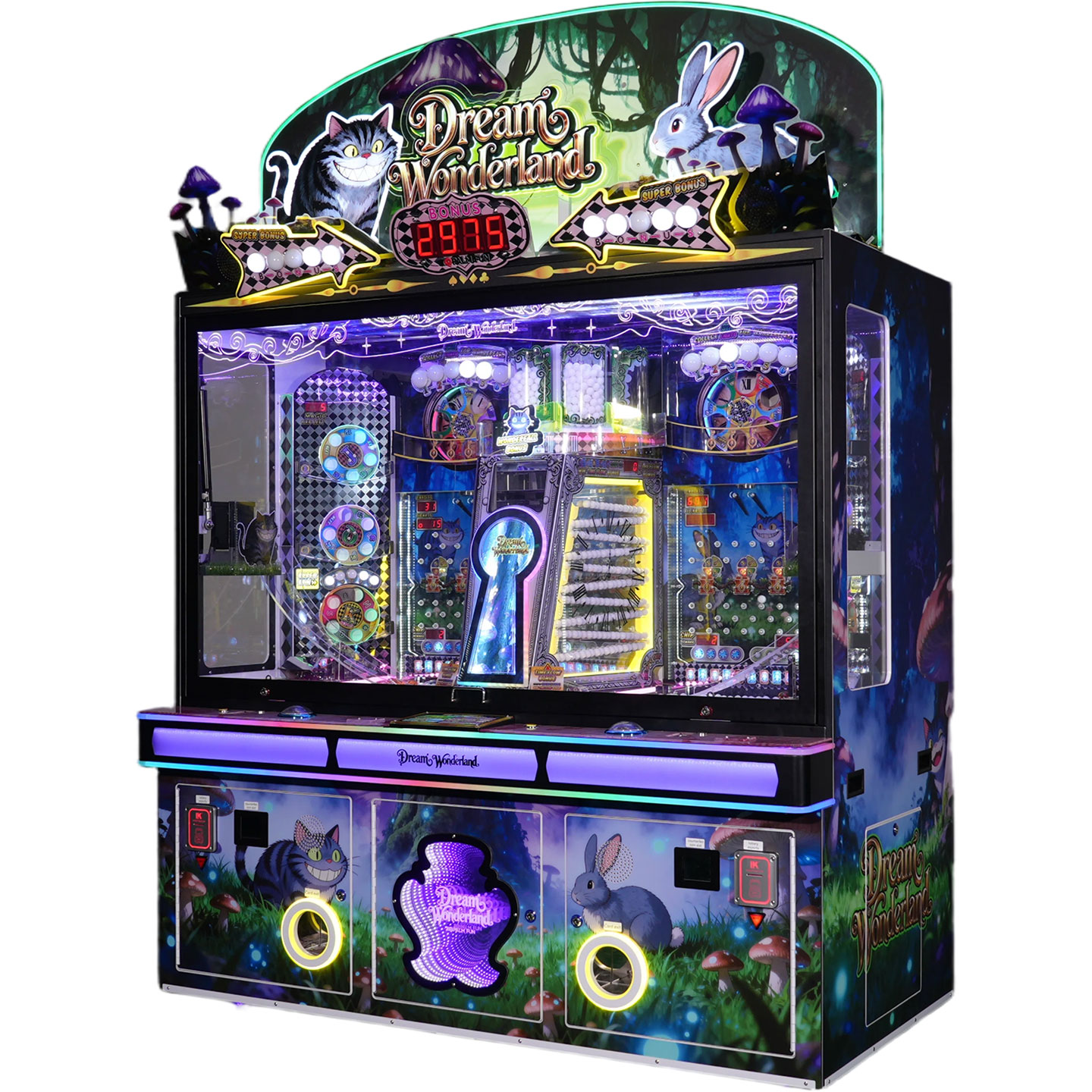
Our Dream Wonderland Marble Pusher Redemption Game product listing identifies the model and its published feature family. The broader FEC operations and buying criteria cover the overall purchasing process. The final installation decision should integrate those product facts with measured venue conditions, a validated delivery route and an actual commissioning test. A machine placed with room for guests and authorized service work is easier to operate responsibly than one positioned solely to fill available floor space.
Featured PALM FUN Product
Dream Wonderland Arcade Placement FAQ
How much space does Dream Wonderland need in an FEC?
Start with the manufacturer's current cabinet dimensions, then add the player operating zone, required circulation and approved maintenance clearances determined for the venue. Do not treat the cabinet footprint as the complete space requirement.
What dimensions should be confirmed before Dream Wonderland delivery?
Confirm the exact ordered cabinet dimensions and weight, packed measurements, lifting and doorway requirements, and the delivery route's narrowest points. Check values against the current order rather than relying only on showroom photography.
Can Dream Wonderland be installed directly beside another pusher game?
Only after verifying that both machines' player areas, door swings, service access and venue circulation requirements remain workable. Adjacent cabinets may require more operating space than their nominal widths suggest.
Does a prominent arcade location guarantee higher revenue?
No. Placement may affect visibility and guest access, but revenue depends on many other factors, including attendance, play behavior, operating hours, ticket costs and the actual configuration.
What should staff test before opening the installed machine?
Test guest approach, signage visibility, safe service access, the approved credit process and ticket-system integration, and record any exceptions before accepting the installation.
What should an international buyer request from PALM FUN?
Request current machine and packaging dimensions, confirmed destination-market power requirements, payment and ticket-interface compatibility, service access instructions, delivery requirements and a written acceptance procedure.

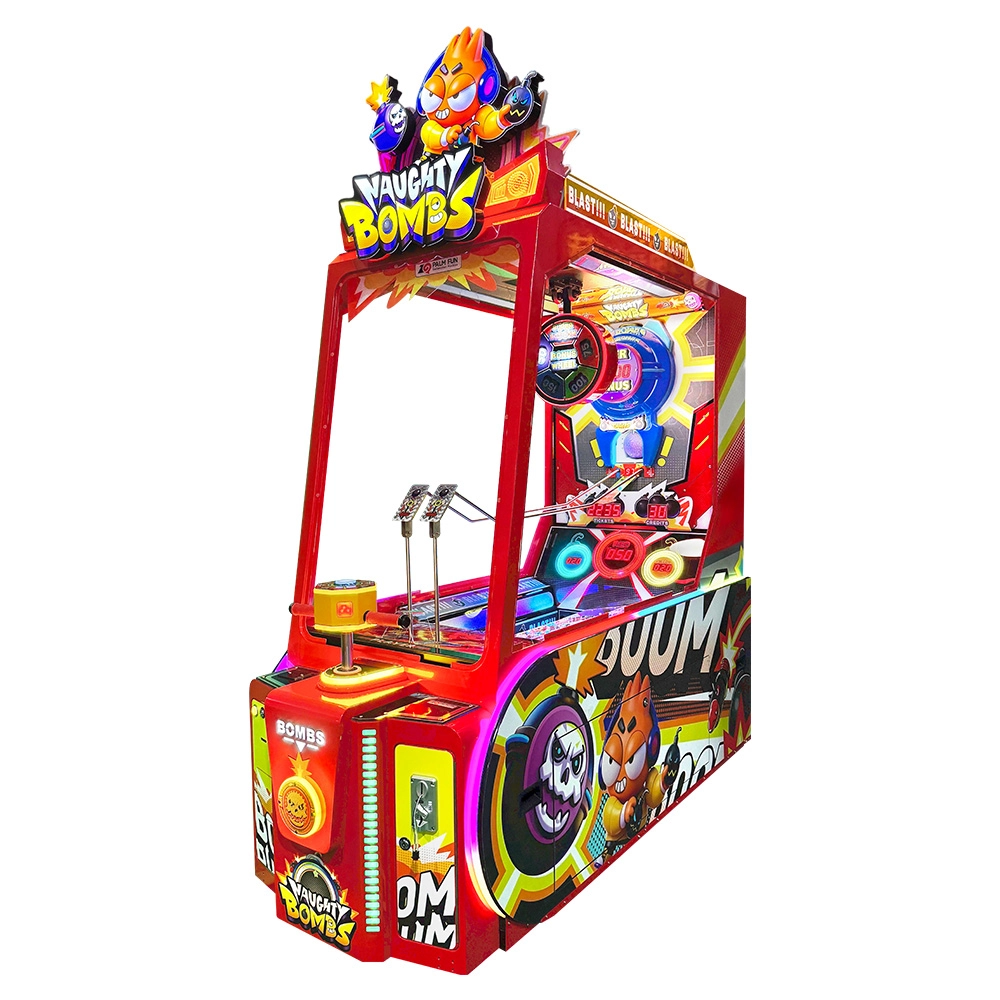
Naughty Bombs is a ball-drop redemption arcade game featuring rolling-ball gameplay, colored targets, ticket prizes, surprise bonus rewards, lighting and sound effects. Players use timing to launch and drop balls toward colored target areas. The product is presented for arcade, family entertainment center and other entertainment-venue projects, with customizable 110V / 220V AC voltage configuration.
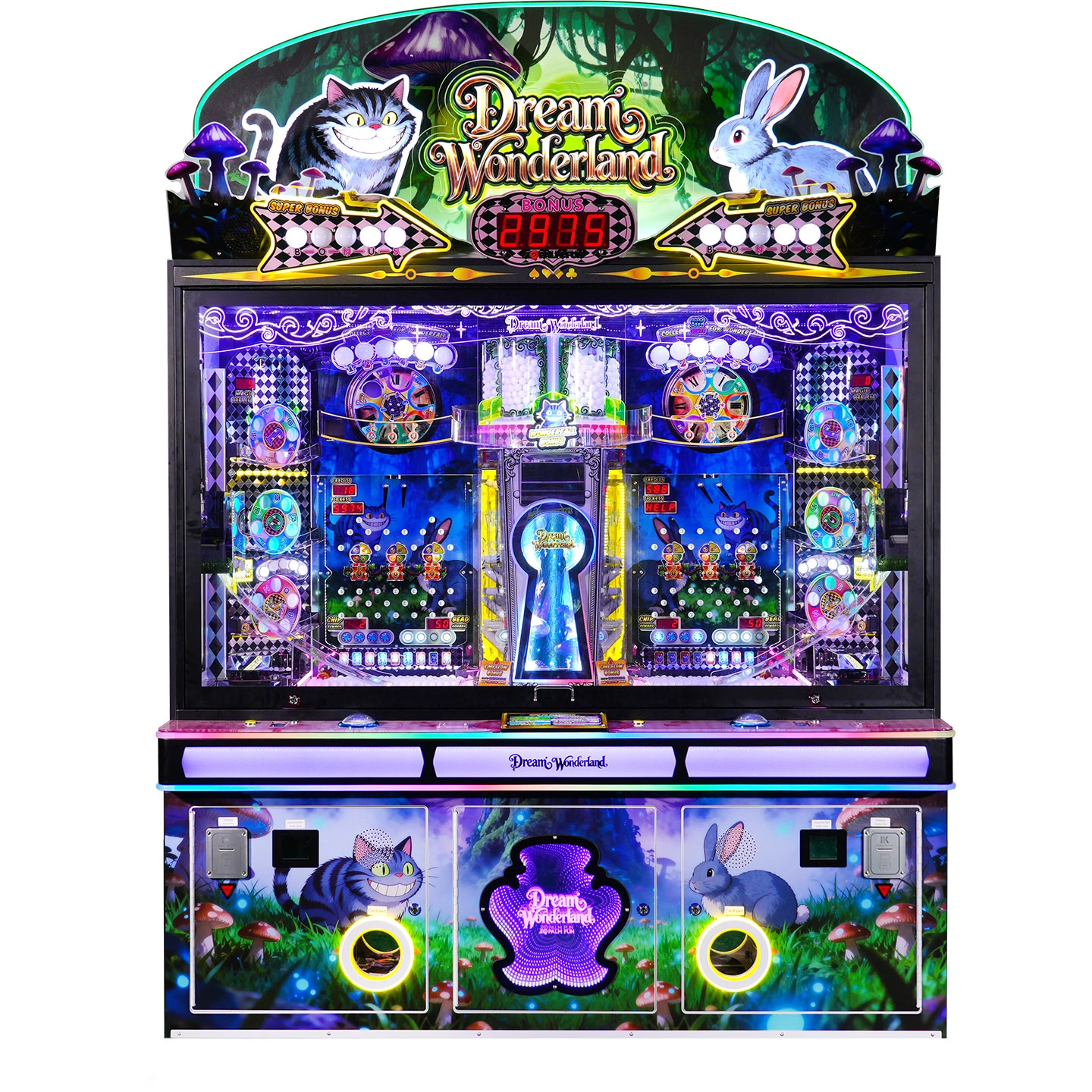
Enter Dream Wonderland — a magical marble pusher adventure filled with glowing lights, magic orbs, bonus wheels, collectible character cards, and exciting jackpot challenges.
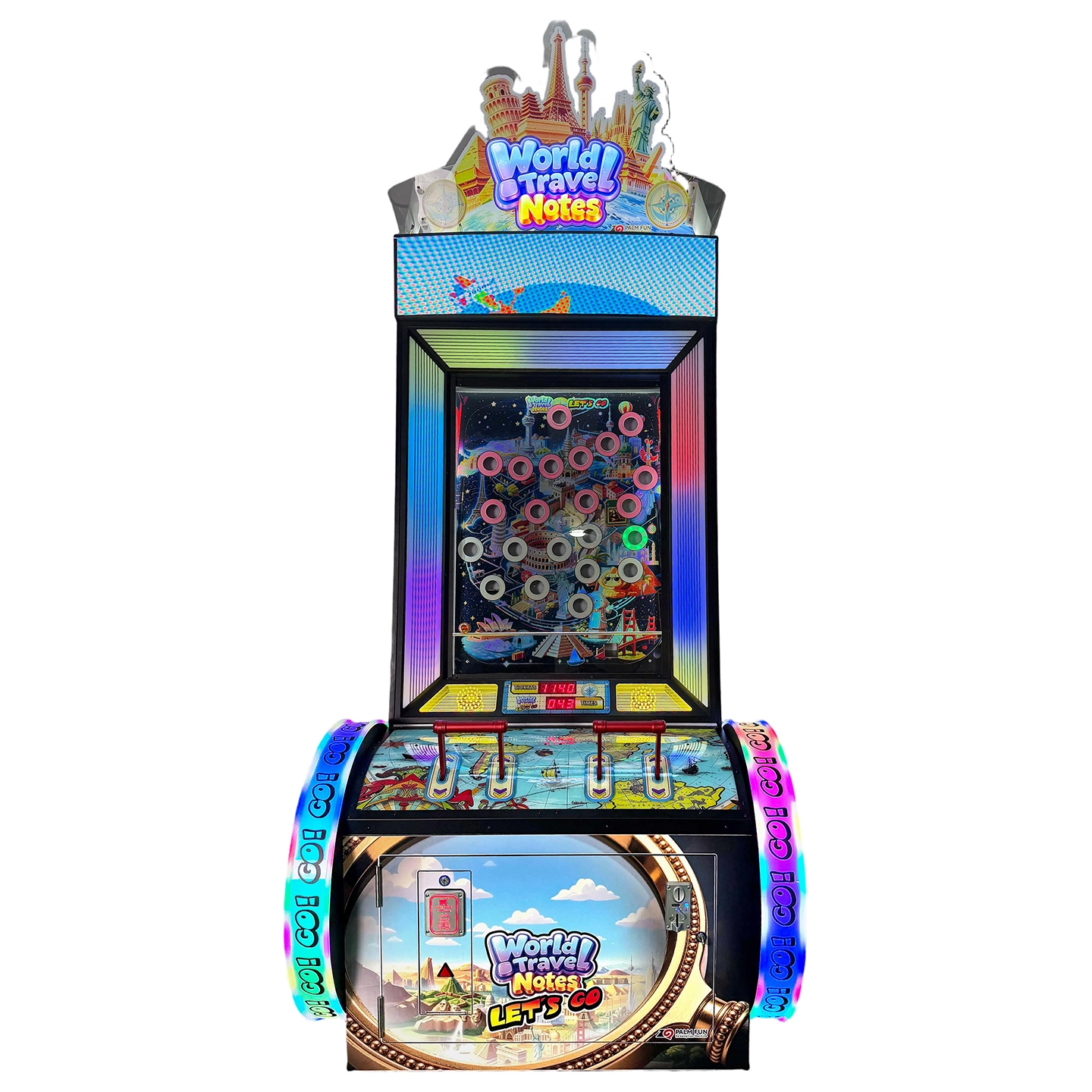
World Travel Notes is a skill-based balance ball redemption game with a fun world-travel theme. Players use two handles to control the balance bar and guide the ball into each target hole. As the game progresses, the targets become more challenging, leading players toward the final grand prize. With colorful world-travel graphics, dynamic RGB lighting, a live score display, and progressive difficulty, World Travel Notes is designed to attract attention and encourage repeat play in arcades, FECs, shopping malls, and other entertainment venues.
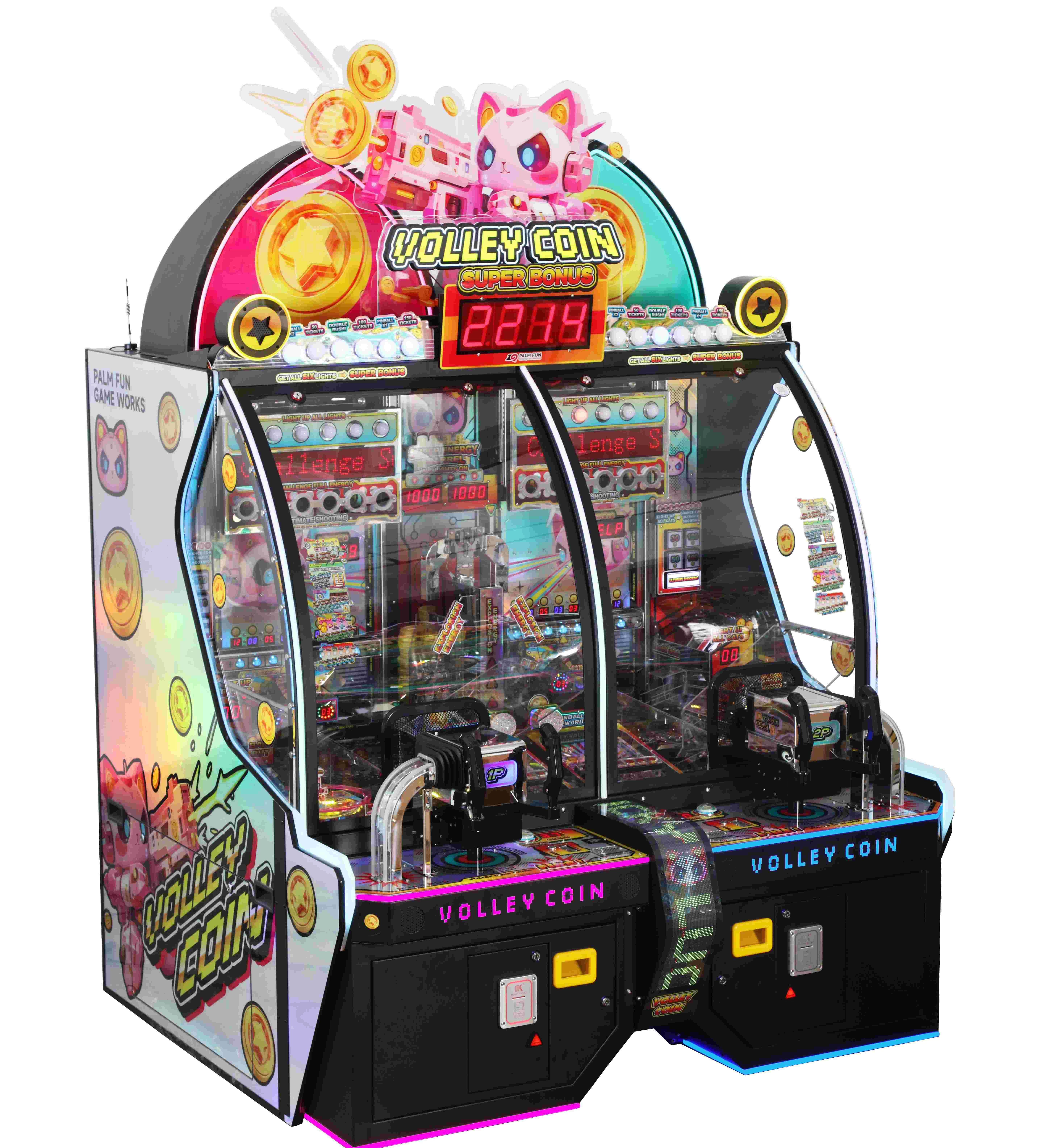
Volley Coin is an innovative arcade ticket redemption machine developed by Palm Fun Electronics. Combining the excitement of a fast-paced token shooter game with the proven earning power of a traditional coin pusher machine, Volley Coin offers a fresh and engaging gameplay experience that appeals to players of all ages.

Copyright © 2026 PALM FUN All Rights Reserved. | Privacy Policy • Terms and Conditions | Sitemap
palmfunarcade
Palm Fun Arcade Game
Whatsapp: +8618126837443
PalmFun Arcade
PalmFun_Arcade
PALM FUN Redemption Machine