


Dream Wonderland Gameplay Signage: Clear Instructions for Arcade Operators
How arcade operators can plan Dream Wonderland gameplay instructions, reward-rule labels, sign placement, translations and staff approval.
- 1. Treat Signage as a Guest Decision Tool
- 2. Use Three Layers Instead of One Crowded Poster
- Build a reading order before choosing a design
- 3. Write the First-Play Instruction from an Observed Session
- Test whether the first line survives a quick glance
- 4. State the Three-Key Bonus Wheel Condition Precisely
- 5. Separate Collection Milestones from Other Bonus Features
- 6. Choose Placement Without Hiding Controls or Service Access
- Check sight lines from more than one player height
- 7. Localize Language Without Changing the Game Rules
- 8. Use a Claims-and-Evidence Matrix Before Printing
- 9. Make Staff Briefings Match What Guests Read
- 10. Approve the Sign on the Delivered Cabinet, Not a Mockup
- Keep a minimal version-control package
- 11. Review Player Confusion as an Operations Metric
- 12. Add Signage Requirements to the FEC Procurement Checklist
- Dream Wonderland Signage FAQ
QUICK ANSWER
A Dream Wonderland instruction system should lead with the verified first action, place conditional bonus rules beside the player decision point, and keep the venue's reward-dispute policy separate. Never imply that three collected keys guarantee a character card: the keys enable a bonus-wheel spin with multiple possible outcomes.
1. Treat Signage as a Guest Decision Tool
In a busy family entertainment center, an instruction sign competes with music, cabinet artwork, moving lights and other machines for attention. A visitor may have only a short moment to decide whether to play. The first panel therefore needs to answer three practical questions: where the session begins, what action the visitor is expected to take, and what observable response confirms that the action registered. An operator who begins with a lengthy account of advanced prize features creates a reading burden before the guest has even understood the immediate interaction.
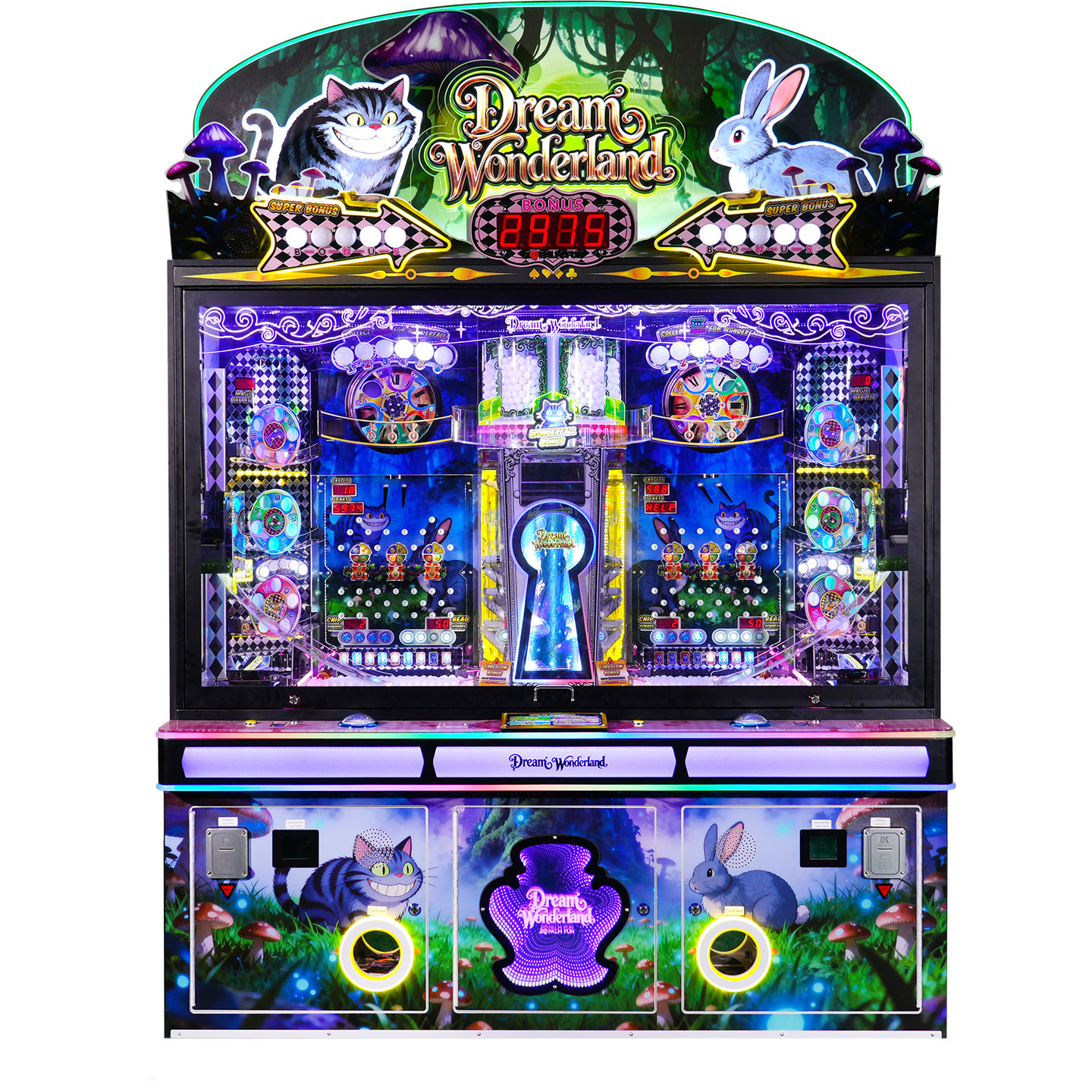
Dream Wonderland is a marble pusher redemption game with additional progression and collection objectives. The machine's visual presentation is an attraction, but artwork is not a substitute for operational instructions. Separate what can be learned from the cabinet itself from what a guest must know before spending credit. The Dream Wonderland product information establishes the type of game and its feature family; the exact payment method, local menu and configured outcomes must still be confirmed against the delivered unit.
2. Use Three Layers Instead of One Crowded Poster
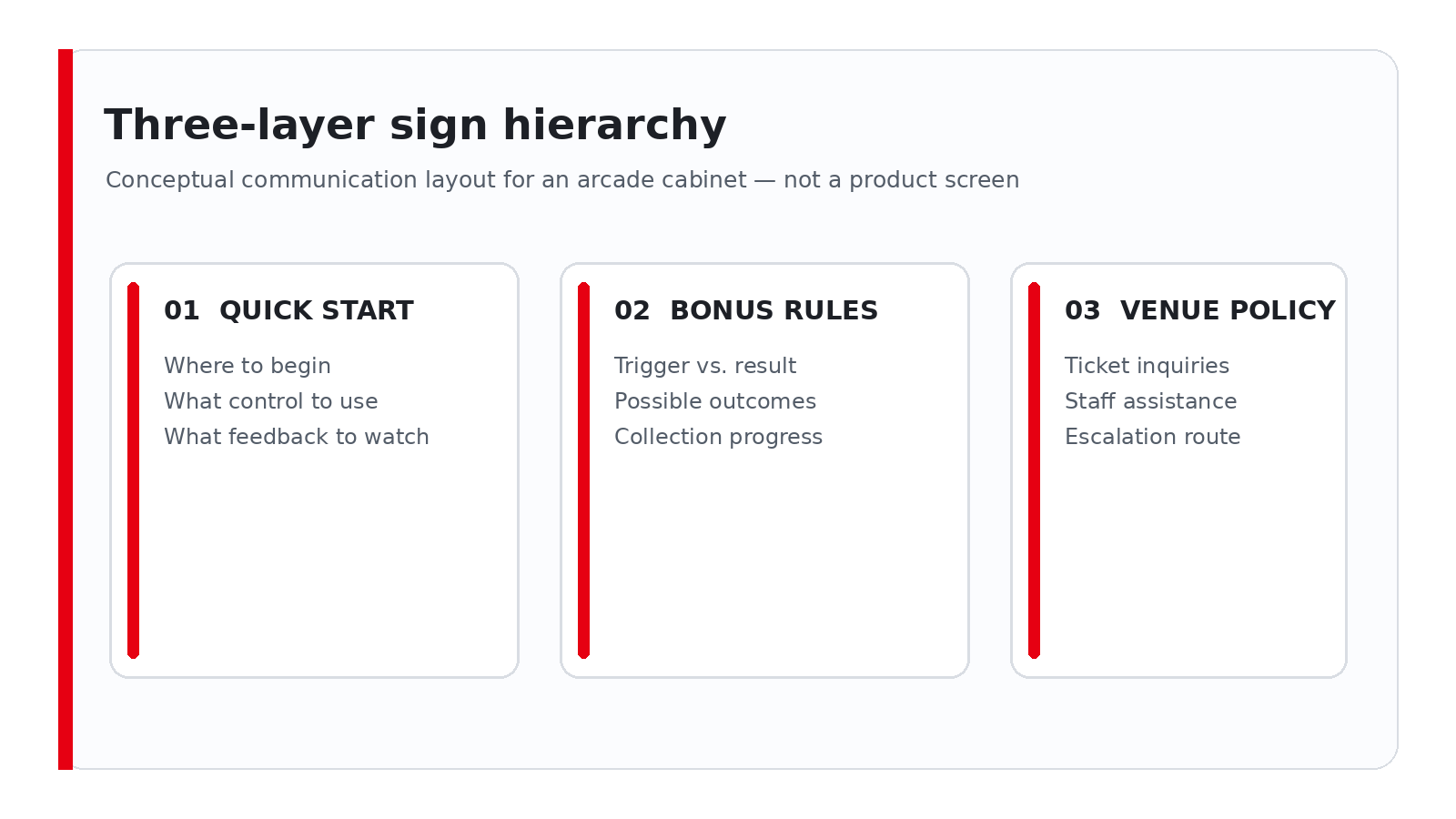
A useful game-sign system has distinct reading distances and decisions. A quick-start message belongs nearest the point where a visitor chooses to begin. A second, deliberately separate panel explains conditional bonus triggers and the difference between a trigger and its possible results. A third venue-policy notice tells players how to ask for help, how tickets are handled by that location and which issues must be referred to staff. Combining all of those purposes into a single paragraph usually makes the primary instruction difficult to find.
Prioritize by the action taking place, not by which feature sounds most exciting in marketing copy. Large type can identify the immediate action; a compact supporting sentence can explain an expected screen response. Longer wording belongs on a secondary panel visible to guests who have already stopped and are considering the details. Each layer should be independently understandable. A guest should not have to read the complete bonus chart in order to understand how to begin.
Build a reading order before choosing a design
Ask a colleague who has not read the draft to point to the start instruction, the conditional reward explanation and the support contact without prompting. If the colleague reads the reward claims first and misses the basic action, the hierarchy is backward. Use short headings that describe a decision rather than promotional slogans. Where the operator also runs nearby coin pushers or ball-drop machines, avoid carrying a generic panel from one cabinet to another: familiar-looking games can have materially different controls, triggering conditions and redemption outputs.
3. Write the First-Play Instruction from an Observed Session
The correct quick-start text is determined by the installed control configuration, not by a guess based on the machine category. During acceptance testing, have the operator demonstrate a complete session starting from the actual accepted payment or credit input. Record the exact control label, the action taken and the feedback shown to the player. Only after those observations should the printed wording be finalized. If a market-specific build accepts a different payment method, its quick-start text must be revised accordingly.
Prefer action-oriented sentences with one instruction per line. A practical structure is: confirm credit on the display; operate the marked control as shown on the cabinet; watch the visible playfield or screen response; seek staff help if an accepted payment does not generate the expected credit. These are review prompts rather than claims that Dream Wonderland uses any particular buttons or payment hardware. The real final sign must replace every generic phrase with the wording verified on that venue's delivered machine.
Test whether the first line survives a quick glance
Photograph the draft sign at the approximate viewing distance and height of a standing guest. Check whether a reader can identify the first action without zooming or squinting. Reduce competing decorative elements before enlarging the entire panel. Another useful test is to ask a staff member to read the message aloud; if the sentence is hard to say clearly in the ambient noise of the arcade, it is usually too complex for a brief sign. Keep the wording exact enough to be useful while avoiding unsupported guarantees about session duration or prizes.
4. State the Three-Key Bonus Wheel Condition Precisely
The reward system requires especially careful distinction between qualifying for an event and obtaining a specific outcome. PALM FUN's published Dream Wonderland explanation describes three collected keys as the condition for activating a bonus-wheel spin. That activation must not be described as a guaranteed character card. A character-card outcome is only one possibility among the wheel results. This difference matters because a casual visitor may otherwise interpret the progress indicator as a promise of a fixed prize.
The sign should distinguish the progress cue, the trigger and the result: collect the required keys; the qualifying condition activates the wheel; observe which outcome is actually displayed and awarded. An operator should compare those statements with the purchased software version during a controlled test. If names or reward options differ between a brochure and the installed machine, the approved machine-specific rule sheet controls what can be printed. Avoid introducing probabilities, fixed waiting times or average prize expectations unless they have been separately measured and are authorized for guest communication.
| Guest-facing statement | Safe operating meaning | Validation at the cabinet |
|---|---|---|
| Three collected keys | Condition to activate a bonus-wheel event | Observe the key count and wheel activation on the ordered configuration |
| Character-card result | A possible wheel outcome, not a guaranteed result of three keys | Check the actual result labels and any card-delivery behavior |
| Eight-card collection | A separate published collection objective | Validate how completed sets and the actual award are recorded |
| Special-ball and lamp features | Separate progression systems, not the card-collection shortcut | Compare each icon and trigger with the installed feature map |
| Unclear or disputed result | An issue for venue staff to investigate, not an automatic compensation promise | Identify approved escalation steps and evidence available to staff |
5. Separate Collection Milestones from Other Bonus Features
The published complete set of eight Dream Wonderland character cards is associated with a 5,000-ticket reward. That is a distinct collection milestone and should not be merged into a quick-start line about the three-key wheel. The game also uses other progression indicators and themed reward routes. A concise instruction panel can identify them by the exact names visible on the local machine; detailed distinctions are better presented on a secondary rule card or in staff reference material.
Operators should avoid presenting progress meters as interchangeable. A visitor who sees several colored lamps, card images and a special-ball animation may assume they all contribute toward one universal prize. Ask staff to demonstrate each relevant display independently and explain which event, if any, changes the card-collection count. Where the game contains a separate timed or bonus-lamp challenge, give that feature its own small label. Do not invent persistence across visits, card exchange arrangements or the treatment of interrupted play; those policies need purchase-specific verification.
The operator analysis of Dream Wonderland character cards and Zodiac Ball reward planning examines the collection pathways and acceptance records in more detail. A customer-facing sign should extract only the short conditions the customer must understand. Long accounting explanations belong in the operations manual, not beside the play controls.
6. Choose Placement Without Hiding Controls or Service Access
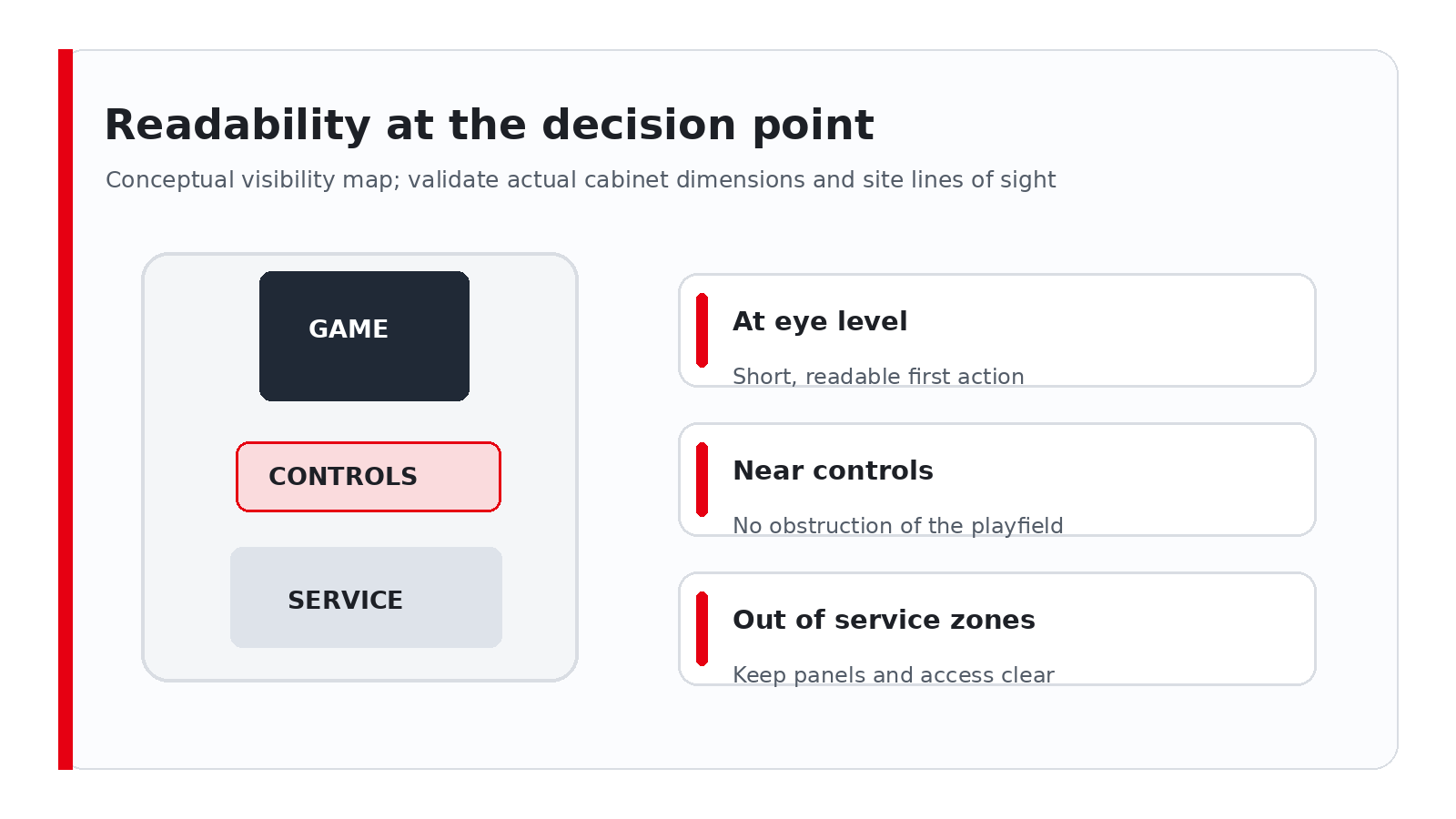
Good instruction placement begins with the visitor's position, not the graphic designer's preferred symmetry. Observe where the player stands, reaches and looks during a normal demonstration. The basic action belongs where it can be read before or at the moment of interaction. More detailed reward information can appear in a secondary sight line, but it should not obscure the playfield, block a display, mask a sensor or crowd the physical control area. A panel that looks attractive in a flat mockup may interfere with machine operation when actually installed.
Check the sign against the cabinet door swing, accessible maintenance points, nearby furniture and expected traffic. A large floor-standing placard may be unsuitable if it narrows a circulation route or blocks a service panel. Conversely, tiny text mounted too high is unlikely to help young players or accompanying adults. Treat viewing height and distance as venue observations to be measured rather than manufacturer-provided specifications. Record the final sign position in installation photographs so that replacements can be placed consistently.
Check sight lines from more than one player height
Stand where a shorter visitor and a typical adult would naturally wait. Observe glare from overhead LEDs, reflections in cabinet glass and the effect of another person standing at the controls. If the sign is only readable after the guest moves into another player's personal space, consider a revised location. Review accessibility and local venue rules for font legibility, circulation and reach, but do not assume that any generic sign dimension automatically satisfies the requirements of every country or venue.
7. Localize Language Without Changing the Game Rules
Translation is not simply replacing words on an English design. The operator must check the translated instruction against the exact text that appears on the purchased machine. Menu labels, wheel outcomes, key names and collection terms should refer to the same observable event in every language used at the location. A literal translation of a marketing slogan can introduce a promise that is not supported by the actual reward logic. The risk is highest where one language uses a verb such as win or receive and another uses activate or may receive.
Keep each instruction short enough to remain legible at its installed print size. If two languages cannot fit beside each other cleanly, consider a layered primary and secondary sign rather than reducing both to unreadable type. The order of languages should reflect local customer needs, and staff should be able to point to the same instruction in both versions. Numbers, units, ticket references and conditions require their own verification pass. One person should approve the semantic meaning, while another tests how the translated line corresponds to the observed game event.
8. Use a Claims-and-Evidence Matrix Before Printing
A reward sign is also a public claim. For every statement, record which delivered machine screen, approved supplier rule or signed configuration proves it. Claims about guaranteed results are especially sensitive: a conditional wheel event must not become a promised character-card award through shortened design copy. The same standard applies to card completion, ticket amounts, session progress and whether a change of software version alters the rules. Store the evidence alongside the artwork version so a venue manager can reconstruct why a particular sign was approved.
A small internal approval matrix is more valuable than a long document nobody consults. Assign each statement an owner, identify the evidence and specify what would trigger a recheck. Separate independently confirmed facts from venue policies, which may differ between operators. The sign that customers see should not expose internal testing language; the approval worksheet should. When questions cannot be answered from the delivered machine or written supplier confirmation, omit the claim until it can be substantiated.
| Draft claim or instruction | Required evidence | Approval action |
|---|---|---|
| How to begin paid play | Observed control, payment interface and on-screen credit response | Replace all placeholder terms with the installed labels |
| Three keys activate a wheel | Demonstrated event on the installed software | Use activate, not guarantee a character card |
| Full card collection reward | Approved rules for the actual model and ticket setting | Verify eight-card completion and the published reward condition |
| Language-specific labels | Machine screens plus bilingual review record | Sign off every special feature name and numeral |
| What happens after a fault | Documented venue support and incident process | Use the operator's actual help procedure, not a fabricated promise |
| When to replace a sign | Change log, guest feedback and re-test of updated rules | Issue a new controlled artwork version |
9. Make Staff Briefings Match What Guests Read
Even a carefully designed sign cannot answer every question when a bonus event appears unexpectedly. Before opening, brief the front-desk and floor teams using the same terminology as the printed panels. Each employee should be able to describe the first action, explain why three keys do not guarantee a card, and show a player where to find the separate collection milestone. Staff should avoid inventing replacement awards or adjusting machine settings merely to settle a misunderstanding.
Use short role-play cases during training: a new guest cannot identify the control; a player expects a card immediately after the wheel activates; a player claims that a collection count was not retained; a visitor reports tickets that differ from the display. For each case, identify the first observable fact to record and the point at which a supervisor or service representative becomes responsible. If a feature is not documented, train staff to say that it will be checked rather than offering an unsupported guarantee. Keep the printed sign and staff response script aligned whenever wording changes.
10. Approve the Sign on the Delivered Cabinet, Not a Mockup
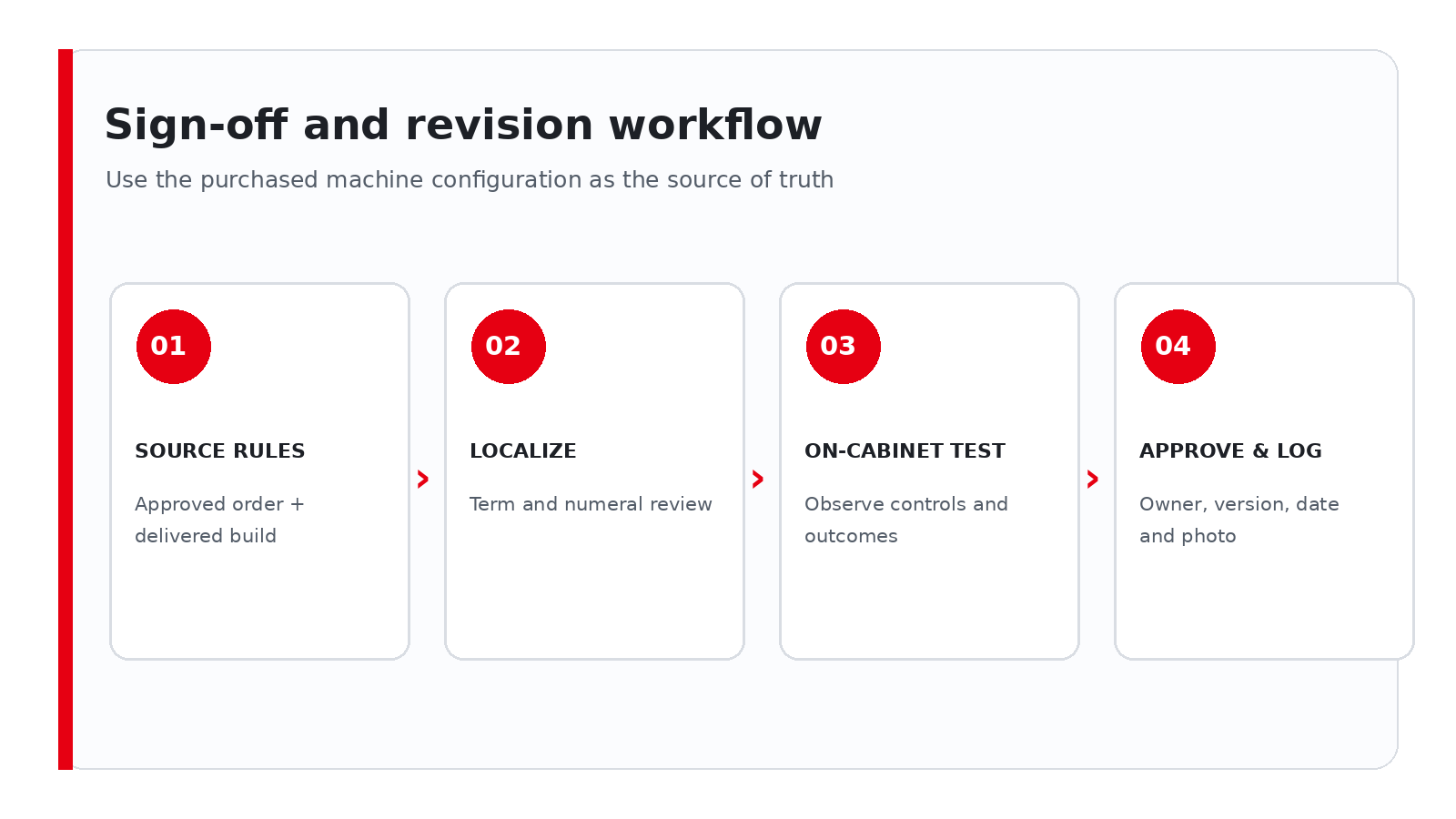
Printing the sign is not the final quality gate. The operator should install a temporary proof near its planned location, then run the actual paid-play or supervised test sequence. Ask one person unfamiliar with the machine to attempt the start action, and observe where they hesitate. Check whether the text conflicts with anything displayed on the cabinet. Compare every bonus statement with the ordered configuration and confirm that any ticket-related wording is consistent with the venue's redemption system. Save dated photographs showing both the sign and the relevant screen.
Record an approver for gameplay accuracy, another for venue installation and a responsible owner for later edits. A sign approved at the factory may become incorrect after a localized software update, a payment-interface change or a reward-setting adjustment. The manager should have a direct route to request a revised print without rebuilding the entire design. A controlled issue number and date are often more useful than an attractive but undated poster.
Keep a minimal version-control package
Store the source artwork, a final print-ready file, the language approval, relevant configuration evidence and two installation photos together. Give the file a version identifier that staff can report when requesting help. Record why an older version was withdrawn. Where multiple venues have different payment hardware or language settings, do not distribute one universal print by default; confirm each venue's installed model first. The resulting paper trail limits the risk of a well-intentioned graphic edit silently changing the meaning of a prize statement.
11. Review Player Confusion as an Operations Metric
A successful sign reduces repeated questions and incorrect assumptions, but it does not automatically prove an increase in play revenue. Observe the frequency and type of guest questions during comparable operating periods. Separate first-play hesitation from payout disputes and signage legibility complaints. The operator can use a simple tally collected by staff without claiming the data represent a controlled scientific experiment. Changes in staffing, crowding or a temporary promotional campaign should be noted before comparing one day's results with another.
When a question repeats, identify which sign layer failed. If guests do not know where to start, change the first-action language or position. If they believe a wheel activation guarantees a card, rewrite the trigger/outcome statement. If visitors disagree over ticket terms, reconcile the posted wording with the current reward rules and staff procedure. Small targeted edits are preferable to making the whole board denser. Maintain an archive so that the team can judge whether each revision resolved its intended problem.
12. Add Signage Requirements to the FEC Procurement Checklist
Signage belongs in procurement discussions because a distributor may order a machine for a venue with different languages, payment interfaces and guest expectations than the showroom where it was demonstrated. Ask which operator reference material accompanies the quoted configuration, what user-facing labels will appear on the delivered software, and how bonus rules can be reviewed before installation. Request accurate cabinet photographs and a current feature list. Confirm who is responsible for approving translations, printing, installation and future updates; those services should not be assumed to be included automatically.
For Dream Wonderland, our FEC operations and buying criteria also cover cabinet fit, payment compatibility, ticketing and pre-shipment acceptance. A signage checklist complements those purchasing decisions rather than replacing them. By tying every guest-facing instruction to an observable action and a verified configuration, an operator can deliver a clearer first-play experience without misrepresenting a conditional reward system.
Featured PALM FUN Redemption Game
Dream Wonderland Signage FAQ
Do three keys guarantee a Dream Wonderland character card?
No. Three keys activate a bonus-wheel spin; a character card is one possible outcome.
What belongs on a Dream Wonderland quick-start sign?
Show the verified start action, control and visible game response for the delivered cabinet.
Should the eight-card reward be on the wheel sign?
Explain the eight-card collection milestone separately and verify the installed reward configuration.
Where should instruction signs be placed?
Near the player decision point without obstructing controls, playfield visibility or service access.
How should bilingual game signs be checked?
Compare each translated term and conditional reward statement with the approved installed rule sheet.
When should signage be revised?
After software, payment, reward-rule or language changes and when repeated guest confusion is observed.


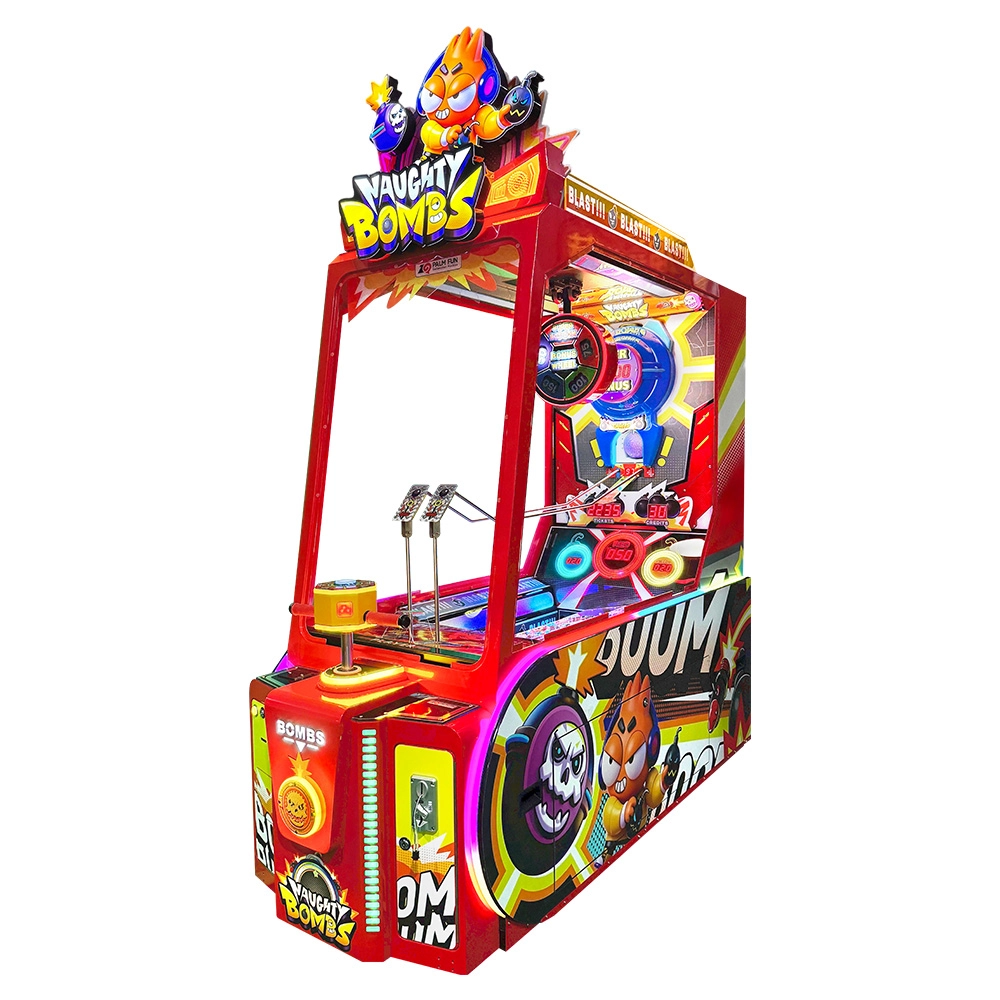
Naughty Bombs is a ball-drop redemption arcade game featuring rolling-ball gameplay, colored targets, ticket prizes, surprise bonus rewards, lighting and sound effects. Players use timing to launch and drop balls toward colored target areas. The product is presented for arcade, family entertainment center and other entertainment-venue projects, with customizable 110V / 220V AC voltage configuration.
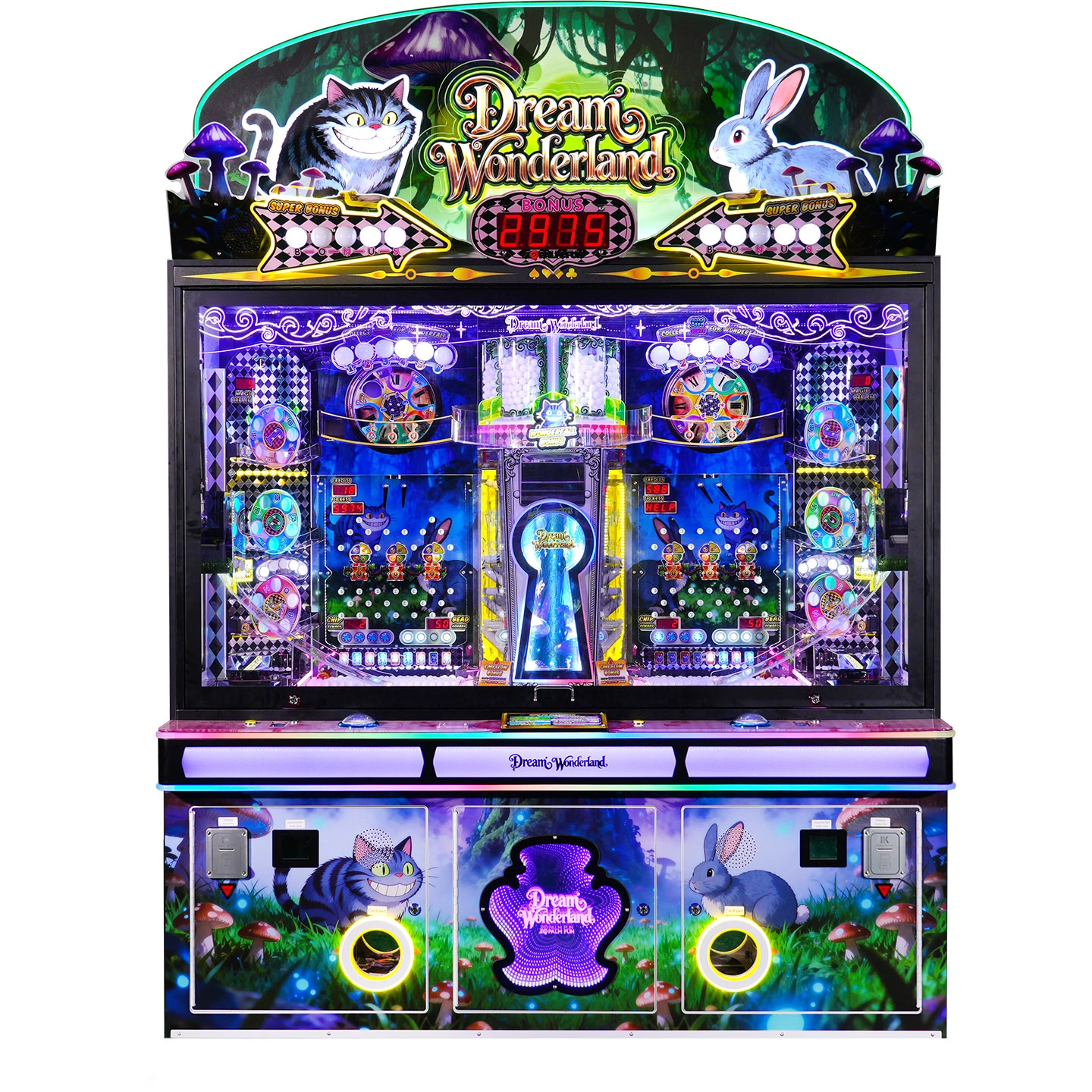
Enter Dream Wonderland — a magical marble pusher adventure filled with glowing lights, magic orbs, bonus wheels, collectible character cards, and exciting jackpot challenges.
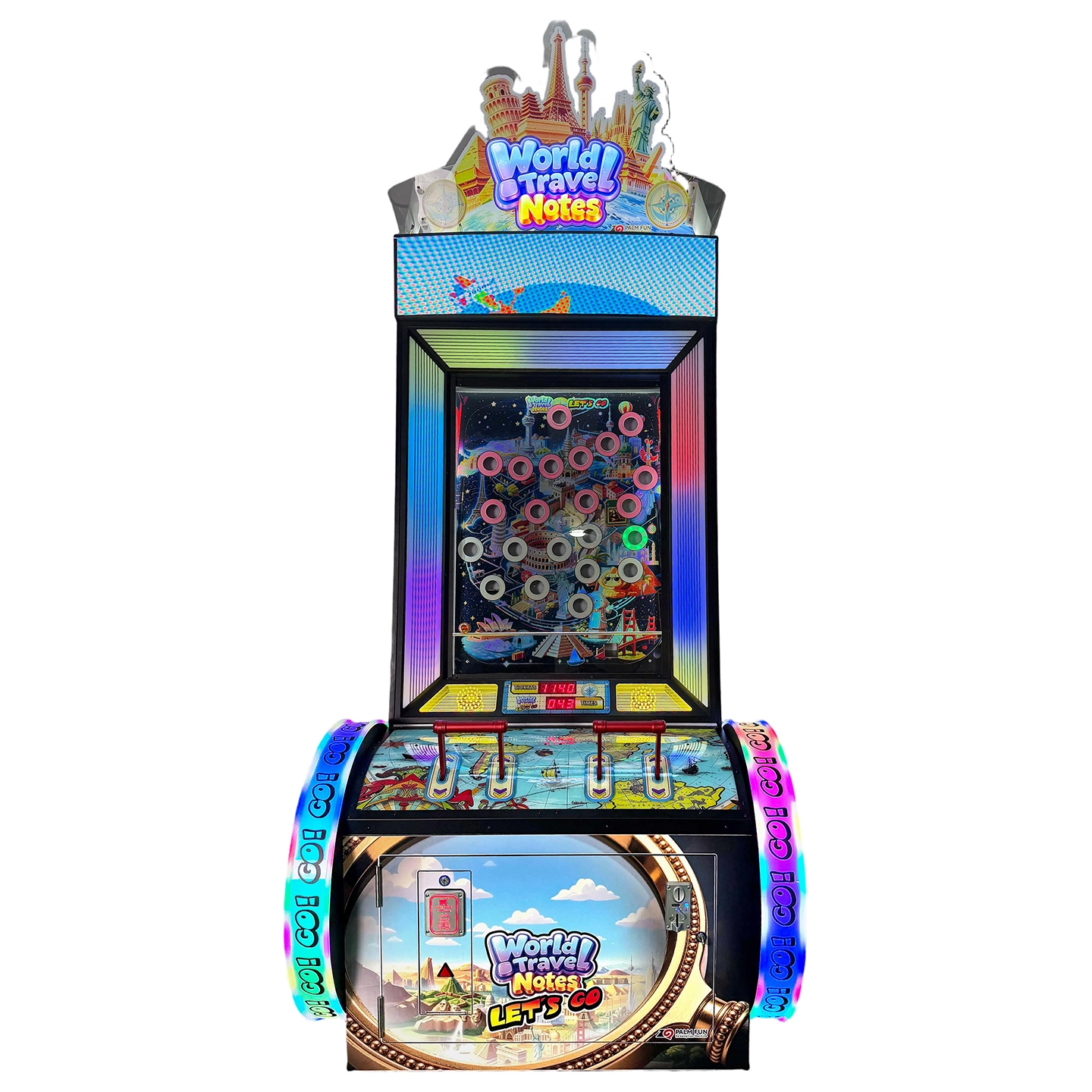
World Travel Notes is a skill-based balance ball redemption game with a fun world-travel theme. Players use two handles to control the balance bar and guide the ball into each target hole. As the game progresses, the targets become more challenging, leading players toward the final grand prize. With colorful world-travel graphics, dynamic RGB lighting, a live score display, and progressive difficulty, World Travel Notes is designed to attract attention and encourage repeat play in arcades, FECs, shopping malls, and other entertainment venues.
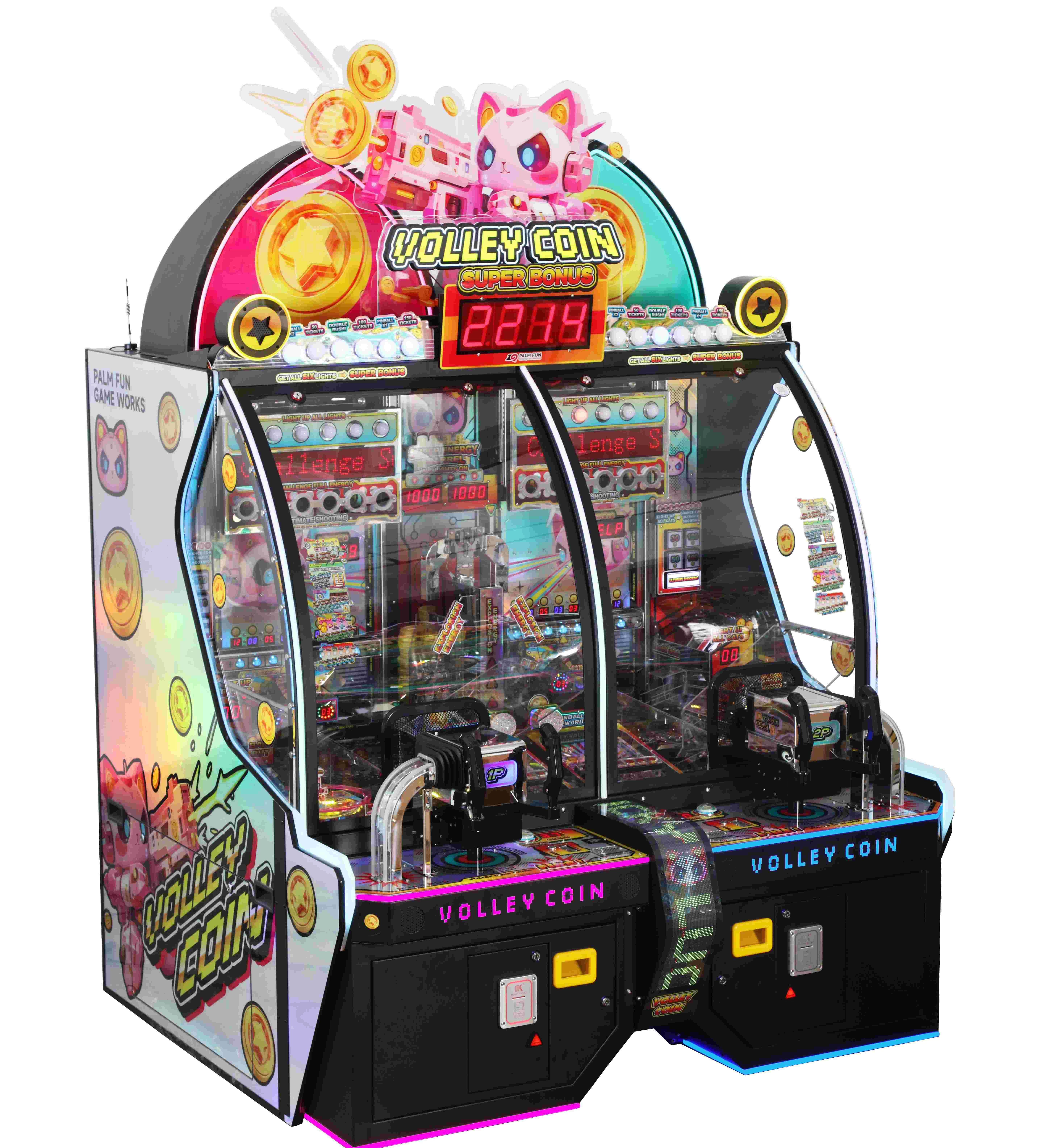
Volley Coin is an innovative arcade ticket redemption machine developed by Palm Fun Electronics. Combining the excitement of a fast-paced token shooter game with the proven earning power of a traditional coin pusher machine, Volley Coin offers a fresh and engaging gameplay experience that appeals to players of all ages.

Copyright © 2026 PALM FUN All Rights Reserved. | Privacy Policy • Terms and Conditions | Sitemap
palmfunarcade
Palm Fun Arcade Game
Whatsapp: +8618126837443
PalmFun Arcade
PalmFun_Arcade
PALM FUN Redemption Machine