








Maximizing Redemption Game ROI: The Ultimate 2026 FEC Strategy Guide
Master the art of FEC revenue optimization in 2026 with our comprehensive guide to maximizing Redemption Game ROI, calculating payout percentages, and sourcing high-durability arcade equipment.
- What is Redemption Game ROI and Why Does It Matter?
- Quick Summary & Key Takeaways for 2026
- The Math Behind the Magic: Calculating Payout Percentages and COGS
- Strategic Game Placement: Video vs. Redemption Ratios
- Expert Tips: Common Mistakes Operators Make with Redemption Areas
- Future-Proofing with 2026 Market Trends: IoT, Skill-Based, and High-Durability
- Case Study: Boosting Profit Margins with PALM FUN Innovative Equipment
- Conclusion
- FAQs About Redemption Game ROI
- What is a good payout percentage for redemption games?
- How do you calculate Cost of Goods Sold (COGS) in an arcade?
- What is the difference between video games and redemption games in terms of revenue?
- Why are coin pusher machines so profitable for FECs?
- How much space should redemption games take up in a modern arcade?
- What are the best ticket redemption games for increasing repeat play?
- How can arcade operators reduce machine maintenance costs?
- How does a cashless card system improve redemption ROI?
What is Redemption Game ROI and Why Does It Matter?

Redemption Game ROI (Return on Investment) measures the net profit generated by an arcade machine compared to its upfront cost, maintenance expenses, and prize payouts. It is the financial backbone of modern Family Entertainment Centers, allowing operators to balance high player satisfaction with a highly profitable business model.
In the highly competitive world of modern entertainment, maximizing your Redemption Game ROI is the most reliable path to sustained facility profitability. As we navigate the evolving landscape of 2026, arcade operators can no longer rely on outdated metrics or "gut feelings" to run a successful Family Entertainment Center (FEC). You need precise data, durable hardware, and a mastery of payout economics to thrive.
Unlike standard video games that offer only a digital "Game Over" screen, redemption games incentivize repeat play by rewarding tickets that guests can trade for physical prizes. This psychological loop of physical action and tangible reward is what makes ticket redemption game profitability so incredibly powerful. According to industry data from Player One Amusement Group, arcade and redemption games consistently rank among the top revenue drivers, often contributing 30% to 50% of a facility's total revenue. Understanding this metric is crucial because even a 2% miscalculation in your payouts can bleed thousands of dollars annually. By mastering these variables, you transform your arcade from a simple amusement area into a finely tuned revenue engine.
Quick Summary & Key Takeaways for 2026
To succeed in 2026, operators must target a net profit margin of 15% to 25% while dedicating only 20% to 30% of their floor space to redemption games, which can astonishingly generate up to 85% of total arcade revenue. The focus has shifted heavily toward high-durability, skill-based mechanical machines and strict adherence to prize economics.
Here are the critical takeaways for modern arcade management that every operator must implement this year:
- Floor Space Strategy: While taking up only 20-30% of floor space, redemption games can generate up to 85% of an arcade's revenue. Maximize your revenue per square foot by clustering high-density multiplayer machines.
- Target Margins: High-performing modern FECs aim for a net profit margin of 15%-25% and game payout percentages strictly maintained between 18-24%.
- Hardware Shift: 2026 trends heavily favor high-durability, skill-based mechanical machines and coin pushers that minimize downtime and keep the action moving.
- Prize Economics: Operators must strictly apply the 80/20 prize rule and maintain at least a 2x markup on redemption center inventory to offset the Cost of Goods Sold (COGS) in arcades.
The Math Behind the Magic: Calculating Payout Percentages and COGS
To calculate the arcade payout percentage formula, you must divide the Cost of Goods Sold (COGS) in arcades by the gross game revenue. Maintaining a payout rate of 18% to 24% ensures that guests feel adequately rewarded while fiercely protecting the facility's bottom line.
The perceived value of a prize must heavily outweigh its wholesale cost. If you purchase a high-quality plush toy for $2.00 wholesale, its ticket value must reflect a 300%+ return on merchandise to keep your ticket redemption game profitability intact. To do this accurately, operators must track cashless card system data weekly, adjusting coin-drop ratios and ticket values to prevent margin erosion.
As noted by Betson Enterprises, failing to monitor the direct impact of your game room payout percentage and redemption markup is one of the quickest ways to lose money. Let's break down the exact mathematics you should be using in 2026:
- Determine Ticket Value: Most modern arcades value a single digital ticket at $0.01 (one cent).
- Calculate COGS: Identify the exact wholesale cost of the prize, including shipping and handling.
- Apply the Markup: Multiply the COGS by your desired markup (typically 2.5x to 3x) to set the ticket price.
- Monitor the Output: Use the arcade payout percentage formula:
(Total Cost of Prizes Dispensed / Gross Game Revenue) x 100 = Payout Percentage.
For example, if a machine generates $1,000 in a weekend and dispenses prizes that cost you $220 wholesale, your payout percentage is exactly 22%. This sits perfectly within the optimal profitability window.
Strategic Game Placement: Video vs. Redemption Ratios
Strategic layout requires using visually impressive video games as the draw to attract guests, while deploying ticket redemption machines and coin pushers as the primary revenue engines localized near high-traffic walkways. Maximizing revenue per square foot relies on clustering high-density machines and ensuring the prize counter is highly visible.
To achieve maximum FEC revenue optimization, you must understand the psychological flow of your facility. Guests are drawn to flashing lights, massive screens, and recognizable IPs. However, once they are inside the arcade zone, the sustained spending happens at the redemption banks.
Here is a breakdown of how the two categories compare in a modern FEC environment:
| Feature | Video Arcade Games | Ticket Redemption Games |
|---|---|---|
| Primary Function | Attraction and visual draw | Primary revenue engine |
| Floor Space Required | Large (70% - 80% of room) | Compact (20% - 30% of room) |
| Revenue Contribution | 15% - 30% | 70% - 85% |
| Repeat Play Incentive | Low to Medium | Extremely High |
| Maintenance Needs | Software updates, screen repair | Mechanical upkeep, ticket/card refills |
Design your layout so that the redemption prize counter serves as a glowing beacon visible from all redemption game aisles. This constant visual reminder drives player motivation and directly boosts your overall FEC revenue optimization.
Expert Tips: Common Mistakes Operators Make with Redemption Areas
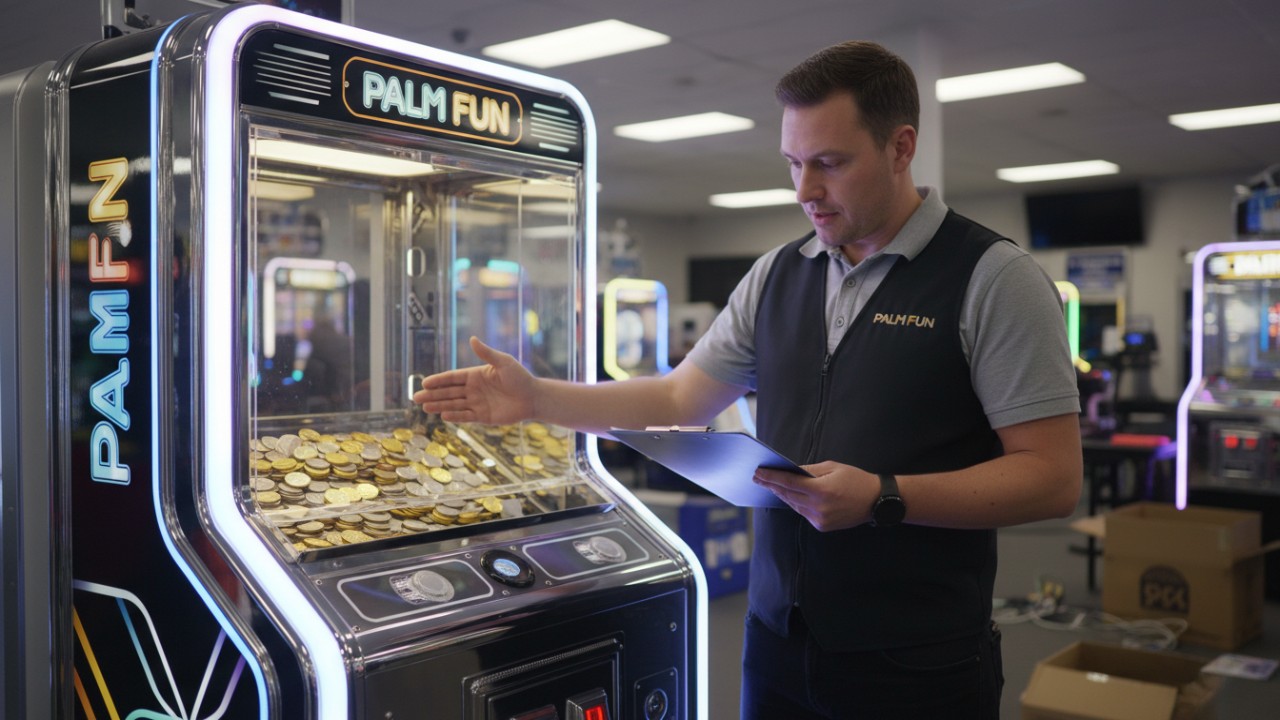
The most fatal mistake operators make is falling into the sunk cost trap by holding onto outdated equipment that suffers frequent downtime, which completely destroys daily ROI. Success requires balancing margin control, prize quality, and operational throughput while utilizing modern cashless systems.
Even seasoned operators can fall into operational traps that quietly drain their profits. Avoid these common mistakes to protect your margins:
- The Sunk Cost Trap: Holding onto outdated equipment that suffers frequent downtime. A machine that is turned off on a busy Saturday is costing you exponentially more than the price of a replacement.
- Margin Missteps: Setting payout rates too low, which kills player retention and repeat visits. If players feel the games are "rigged" or unrewarding, they will take their entertainment budget elsewhere.
- Prize Counter Neglect: Failing to stock high-perceived-value items or ignoring the aesthetics of the prize display. Your prize counter is your storefront; it must be impeccably merchandised.
- Ignoring Throughput: Using outdated ticket-counting methods instead of automated or cashless systems, leading to frustrating bottlenecks.
- Poor Equipment Sourcing: Buying cheap, unreliable cabinets leads to constant repairs. This is why investing in a Custom Arcade Machine ODM can save thousands in long-term maintenance and technical headaches.
Future-Proofing with 2026 Market Trends: IoT, Skill-Based, and High-Durability
The 2026 arcade market demands the seamless integration of cashless systems and Redemption Center Manager (RCM) software for real-time ROI tracking. Operator performance data shows a decisive shift away from fragile IP games toward ultra-reliable, skill-based mechanical units that drive higher repeat play.
Demographics are rapidly changing. Gen Z and Alpha players expect hybrid physical and digital experiences. Skill-based ticket games provide a sense of agency and physical interaction that pure games of chance lack. Furthermore, global sourcing strategies now prioritize manufacturers that offer comprehensive R&D and rapid technical support.
High-durability equipment ensures that your machines stay online during peak weekend rushes, which is the ultimate key to maximizing coin pusher machine ROI. Modern coin pushers have evolved to include RFID tracking, dynamic token dispensing, and automated fault reporting, making them more profitable and easier to manage than ever before.
Case Study: Boosting Profit Margins with PALM FUN Innovative Equipment
Sourcing directly from an established manufacturer like Guangzhou Palm Fun Electronics Co., Ltd. cuts middleman markups and maximizes your initial ROI. By utilizing skilled development engineers, PALM FUN delivers high-durability arcade machines that drastically minimize ongoing maintenance costs and maximize long-term profitability.
Founded in 2015, PALM FUN operates a state-of-the-art 3,000 square meter factory dedicated to the R&D, design, production, and sales of innovative gaming equipment. As a leader in the industry, our main products—including premium mechanical lottery machines, coin pusher machines, and raffle machines—are recognized and popular in over 50 countries worldwide.
When operators review their Cost of Goods Sold (COGS) in arcades, hardware depreciation and repair parts are hidden costs that severely eat into net profits. By partnering with a factory that focuses on uncompromising quality and continuous innovation, operators can achieve industry-leading profitability. For a deeper dive into how top-tier equipment is manufactured to withstand rigorous commercial use, read our Guide to Premium Redemption Arcade Machines Manufacturing.
PALM FUN's vision is to become the world's leading manufacturer of redemption game machines, building long-term partnerships with our clients and providing comprehensive support to ensure their success in the competitive 2026 gaming market.
Conclusion
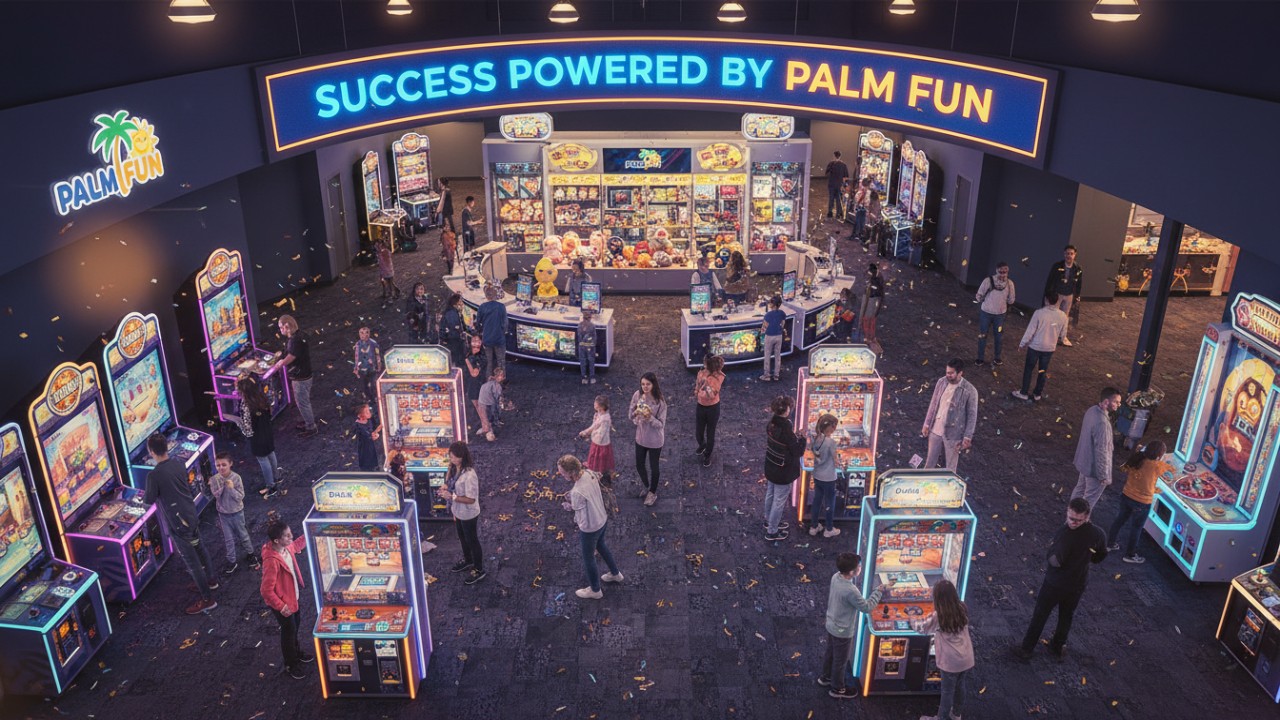
Maximizing Redemption Game ROI requires a careful balance of precise mathematics, strategic floor placement, and investing in highly reliable hardware. Operators who master their payout percentages and leverage 2026 hardware trends will secure industry-leading profit margins and long-term facility growth. Success in the competitive gaming market relies on building long-term partnerships with proven equipment providers who understand your business goals.
Contact us today to optimize your Redemption Game ROI strategy.
FAQs About Redemption Game ROI
Understanding the nuances of arcade profitability requires a clear grasp of industry standards, payout metrics, and equipment strategies. Below are the most frequently asked questions regarding redemption game revenue, cost calculations, and operational best practices for modern family entertainment centers.
What is a good payout percentage for redemption games?
Industry standards suggest a payout percentage between 18% and 24%. This range ensures players feel they are winning fairly while allowing operators to maintain healthy profit margins.
How do you calculate Cost of Goods Sold (COGS) in an arcade?
COGS in an arcade is calculated by determining the wholesale cost of the prizes awarded to players. You divide the total cost of the prizes given out by the gross revenue generated by the games over a specific period.
What is the difference between video games and redemption games in terms of revenue?
Video games generally serve as attractions and take up more space, often contributing less direct revenue. Redemption games encourage continuous repeat play to win prizes, often accounting for up to 85% of total arcade revenue.
Why are coin pusher machines so profitable for FECs?
Coin pusher machines offer highly visual, immediate gratification that drives continuous, rapid coin drops. They typically support multiple players simultaneously in a small footprint, maximizing revenue per square foot.
How much space should redemption games take up in a modern arcade?
In a highly profitable modern FEC, redemption games often take up about 20% to 30% of the game room floor. Despite this smaller footprint, they are responsible for the vast majority of the facility's earnings.
What are the best ticket redemption games for increasing repeat play?
Skill-based mechanical games, high-quality coin pushers, and interactive ball-shooting games. Games that combine physical action with attainable ticket rewards are proven to drive the highest repeat play.
How can arcade operators reduce machine maintenance costs?
By sourcing equipment directly from reputable manufacturers with proven quality control, such as PALM FUN. Implementing a strict preventative maintenance schedule and replacing consistently failing machines rather than constantly repairing them.
How does a cashless card system improve redemption ROI?
It eliminates the mechanical failure points of physical coin acceptors and ticket dispensers. It provides operators with precise, real-time data to adjust payout percentages and identify the highest-performing machines instantly.



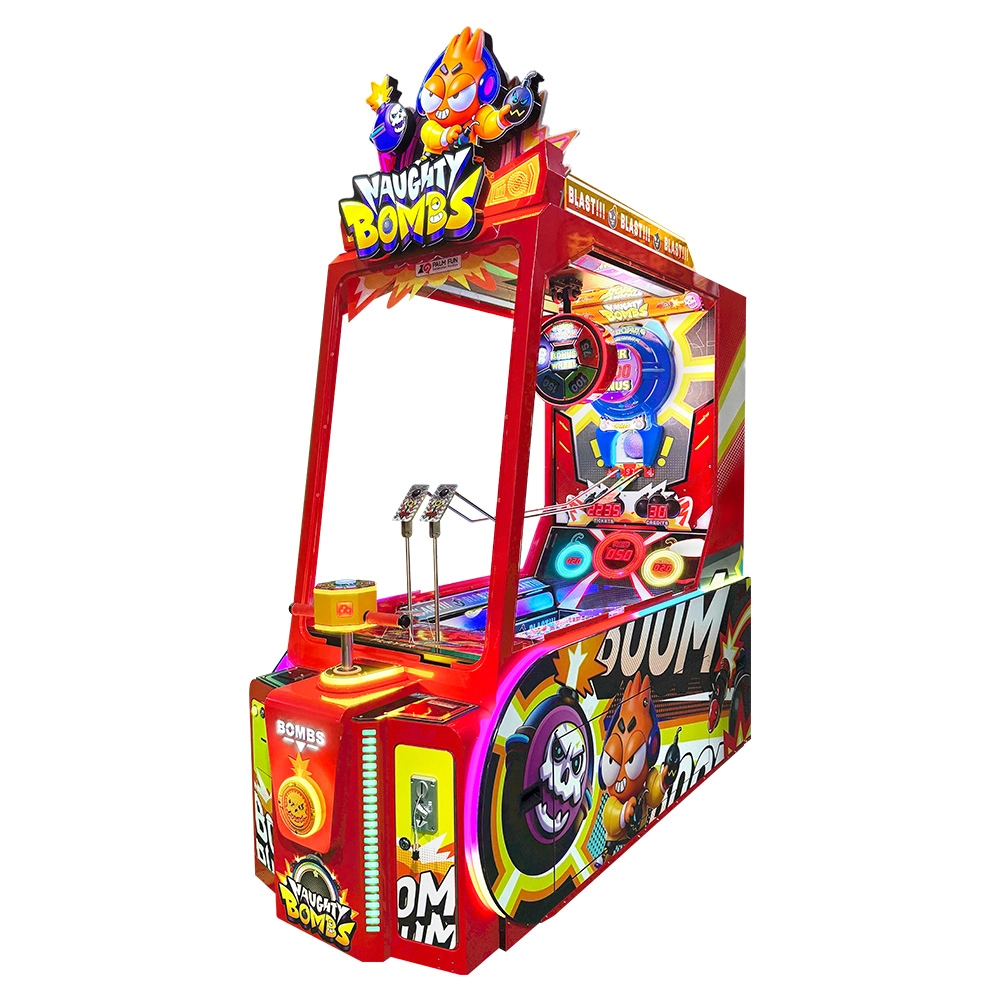
Naughty Bombs is a ball-drop redemption arcade game featuring rolling-ball gameplay, colored targets, ticket prizes, surprise bonus rewards, lighting and sound effects. Players use timing to launch and drop balls toward colored target areas. The product is presented for arcade, family entertainment center and other entertainment-venue projects, with customizable 110V / 220V AC voltage configuration.
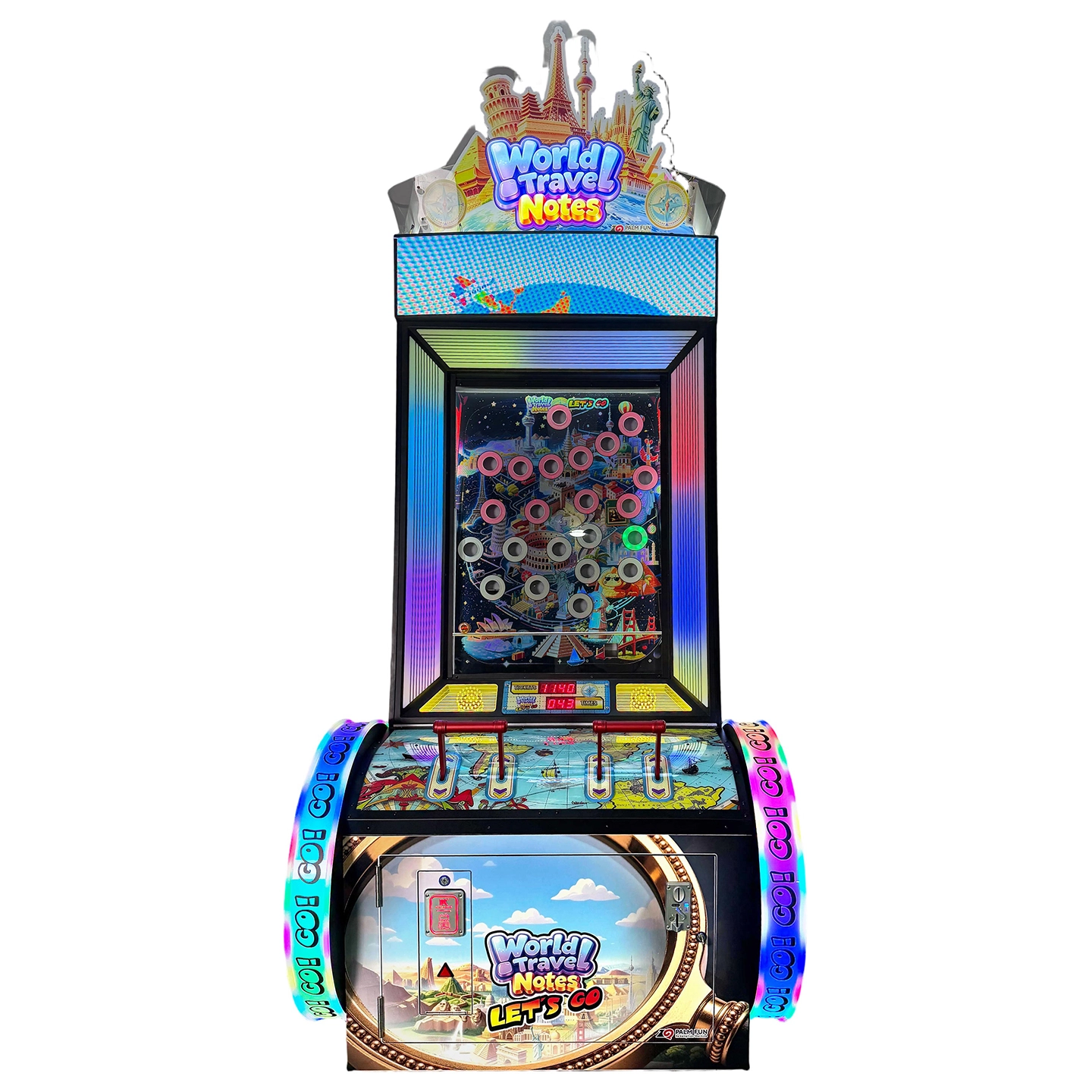
World Travel Notes is a skill-based balance ball redemption game with a fun world-travel theme. Players use two handles to control the balance bar and guide the ball into each target hole. As the game progresses, the targets become more challenging, leading players toward the final grand prize. With colorful world-travel graphics, dynamic RGB lighting, a live score display, and progressive difficulty, World Travel Notes is designed to attract attention and encourage repeat play in arcades, FECs, shopping malls, and other entertainment venues.
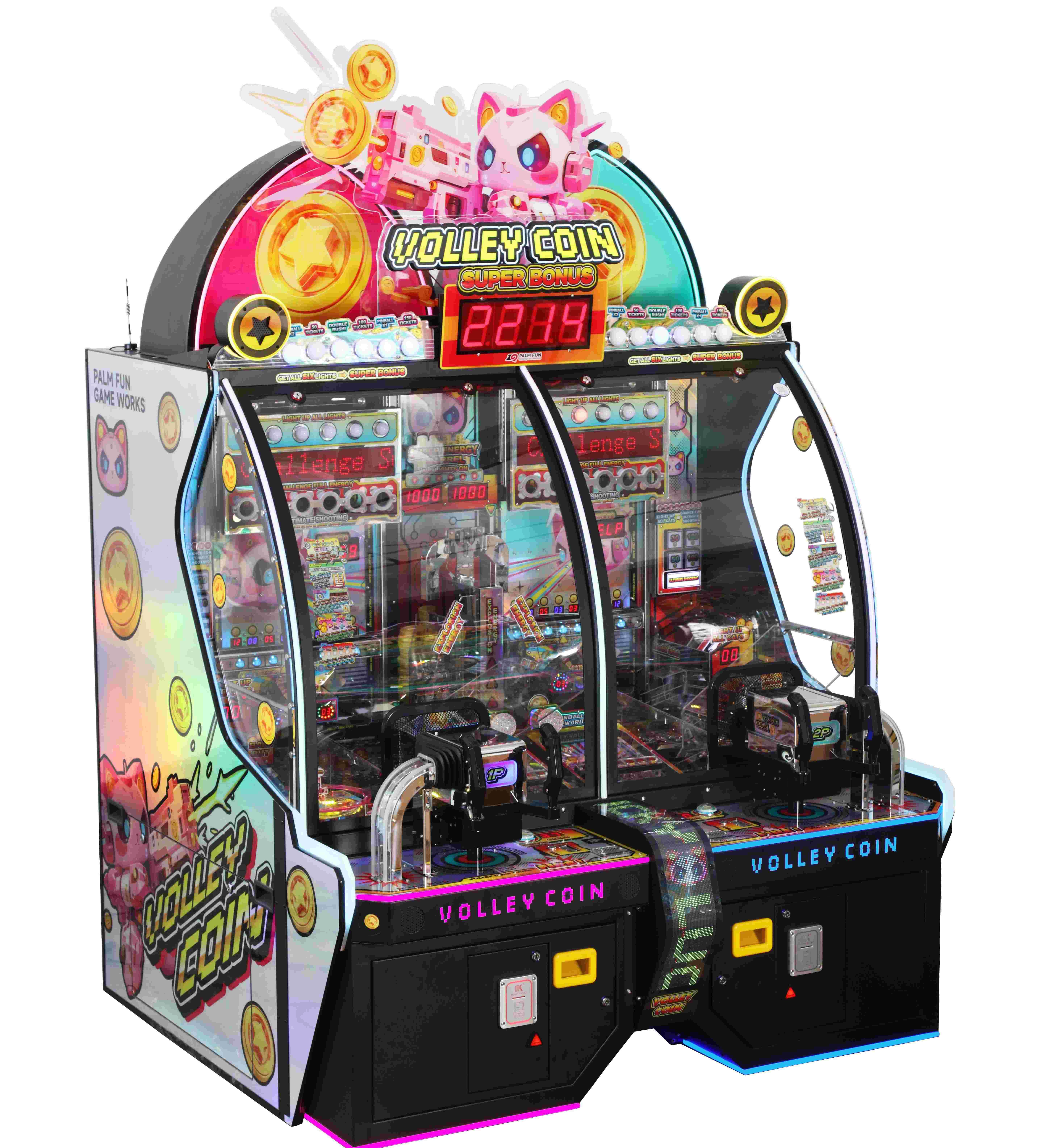
Volley Coin is an innovative arcade ticket redemption machine developed by Palm Fun Electronics. Combining the excitement of a fast-paced token shooter game with the proven earning power of a traditional coin pusher machine, Volley Coin offers a fresh and engaging gameplay experience that appeals to players of all ages.
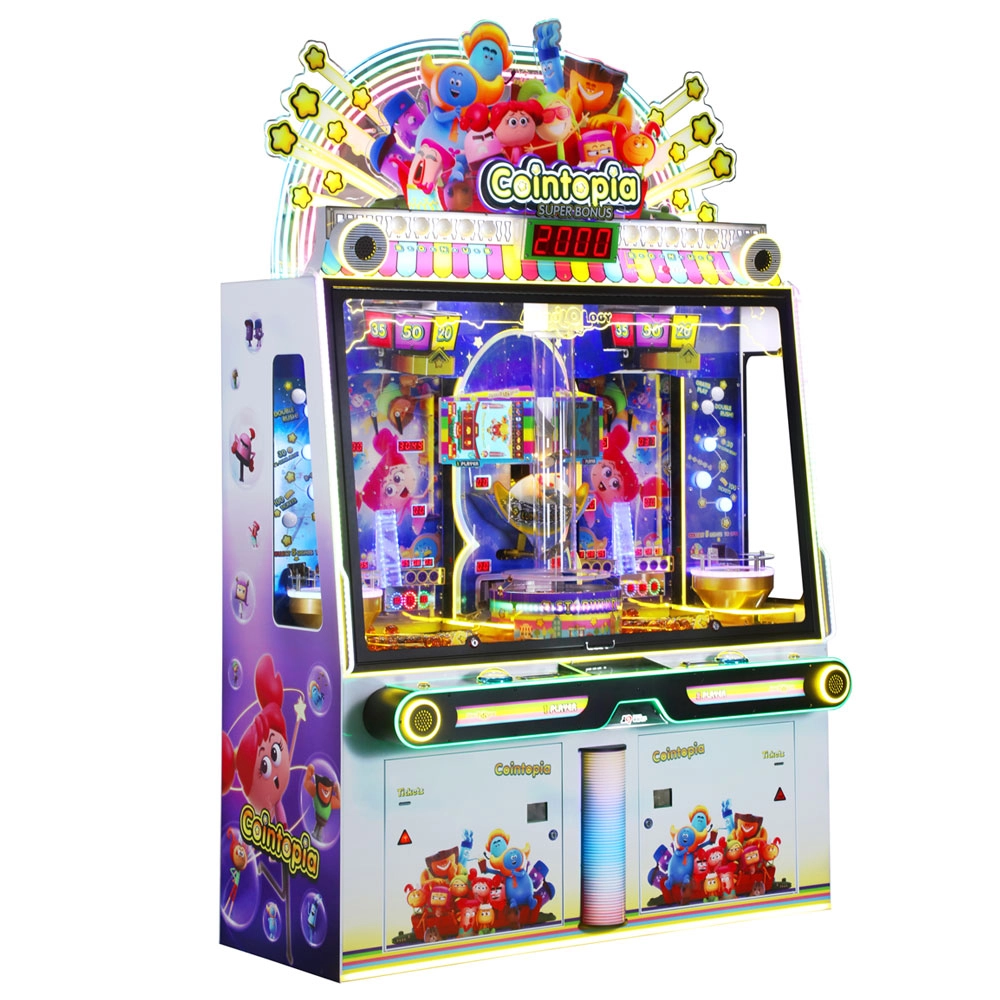
COINTOPIA by PALM FUN is an exciting redemption game machine where players enjoy fun with zodiac buddies in a utopia setting. This ticket redemption machine offers engaging gameplay and rewarding experiences, perfect for family entertainment centers and arcades seeking top-quality redemption games.

Copyright © 2026 PALM FUN All Rights Reserved. | Privacy Policy • Terms and Conditions | Sitemap
palmfunarcade
Palm Fun Arcade Game
Whatsapp: +8618126837443
PalmFun Arcade
PalmFun_Arcade
PALM FUN Redemption Machine