








Can pinball arcade machines increase redemption revenue?
Discover how modern pinball arcade machines integrate ticket redemption systems to boost operator ROI. This guide explores technical integration, player psychology, and maintenance strategies for family entertainment centers looking to modernize their floor with high-earning pinball units.
- 1. How do modern pinball ticket dispensers handle high-speed ball triggers without causing mechanical latency or ticket jams?
- 2. What is the optimal 'Ticket-to-Point' ratio for pinball to ensure a 25-30% payout margin?
- 3. How does the 'Skill-Based' nature of pinball affect legal compliance in redemption-regulated jurisdictions?
- 4. Can the inclusion of 'Wizard Modes' in redemption pinball actually drive higher LTV compared to standard quick-play games?
- 5. What are the specific maintenance overheads of mechanical pinball vs. digital redemption games in a high-volume FEC?
- 6. How do hybrid pinball-video redemption units compare in earnings to traditional mechanical tables?
In the evolving landscape of Family Entertainment Centers (FECs), operators are constantly seeking the optimal mix of amusement and profitability. While traditional ticket redemption games dominate the floor, a common question arises: Can pinball arcade machines increase redemption revenue? The short answer is yes, but the execution requires a deep understanding of modern mechanical engineering and player engagement metrics. Unlike standard video games, pinball offers a tactile, physics-based experience that encourages repeat play, especially when linked to a rewarding ticket payout system.
1. How do modern pinball ticket dispensers handle high-speed ball triggers without causing mechanical latency or ticket jams?
One of the primary pain points for operators is the mechanical failure of ticket dispensers during high-intensity play. Modern pinball arcade machines designed for redemption use optical sensors instead of mechanical microswitches to detect ball strikes. These sensors communicate with a dedicated logic board that buffers the signal, ensuring that even if a player hits a 'jackpot' sequence in rapid succession, the ticket dispenser processes the output sequentially. This prevents the 'overload' state common in older converted units. For high-traffic venues, using continuous-feed thermal ticket printers or e-ticket systems via card readers is recommended to eliminate physical jams entirely.
2. What is the optimal 'Ticket-to-Point' ratio for pinball to ensure a 25-30% payout margin?
Setting the payout ratio is a delicate balance. If the points required for a ticket are too high, players lose interest; if too low, the operator loses margin. Data from top-performing redemption pinball units suggests a 'tiered payout' model. Instead of a linear 1 ticket per 10,000 points, operators should implement 'milestone rewards' (e.g., 5 tickets for hitting a specific ramp, 50 tickets for a multiball event). This gamification keeps the cost of goods sold (COGS) at the industry standard of 25-30% while making the player feel they are achieving significant wins, which is crucial for driving repeat traffic to the pinball arcade section.
3. How does the 'Skill-Based' nature of pinball affect legal compliance in redemption-regulated jurisdictions?
Many operators worry about the legal distinction between games of chance and games of skill. Pinball is the quintessential game of skill. To comply with strict redemption laws, modern machines allow operators to disable 'random' features and focus rewards on objective-based play. By ensuring that ticket rewards are tied to physical ball control and target accuracy, pinball arcade machines often bypass the 'gambling' stigmas associated with pure-luck pushers. This makes them a safer long-term investment for FECs in regions with tightening amusement regulations.
4. Can the inclusion of 'Wizard Modes' in redemption pinball actually drive higher LTV compared to standard quick-play games?
Standard redemption games usually last 30-60 seconds. Pinball offers a longer session time, which might seem counter-intuitive to high turnover. However, the 'Wizard Mode' (an elite end-game state) creates a high Lifetime Value (LTV). Players will spend significantly more credits over multiple visits to reach these modes if the ticket reward is substantial. This transforms the machine from a 'one-off play' into a 'destination game,' increasing the overall foot traffic and dwell time within the arcade environment.
5. What are the specific maintenance overheads of mechanical pinball vs. digital redemption games in a high-volume FEC?
A major concern is the maintenance of moving parts. While a digital game has zero mechanical wear, a pinball arcade machine has solenoids, flippers, and bumpers. To minimize downtime, professional-grade redemption pinball units now feature modular playfields and self-diagnostic software. Operators should expect to perform a 'deep clean' and rubber replacement every 2,000-3,000 plays. While the maintenance cost is higher than a video game, the higher average spend per user (ARPU) and the unique physical attraction often result in a faster ROI (Return on Investment).
6. How do hybrid pinball-video redemption units compare in earnings to traditional mechanical tables?
Hybrid units, which feature a physical ball but a digital backbox or LCD playfield elements, are currently outperforming traditional tables in redemption settings. These machines allow for dynamic 'ticket multipliers' and flashy animations that signal a win to the entire floor. The visual feedback of a large screen combined with the physical satisfaction of pinball creates a 'spectator effect,' drawing in more players and increasing the machine's hourly earning potential compared to a standard mechanical-only table.
In conclusion, integrating pinball arcade machines into your redemption strategy offers a unique competitive advantage. By leveraging skill-based play, tactile engagement, and modern ticket-dispensing technology, these machines not only diversify your floor but also attract a demographic of players willing to spend more for a High Quality experience. The result is a robust increase in redemption revenue and a more dynamic FEC environment.
For professional advice on selecting the right redemption game machines for your venue, contact us for a customized quote.
Website: www.palm-fun.com, Email: luobin@palm-fun.com


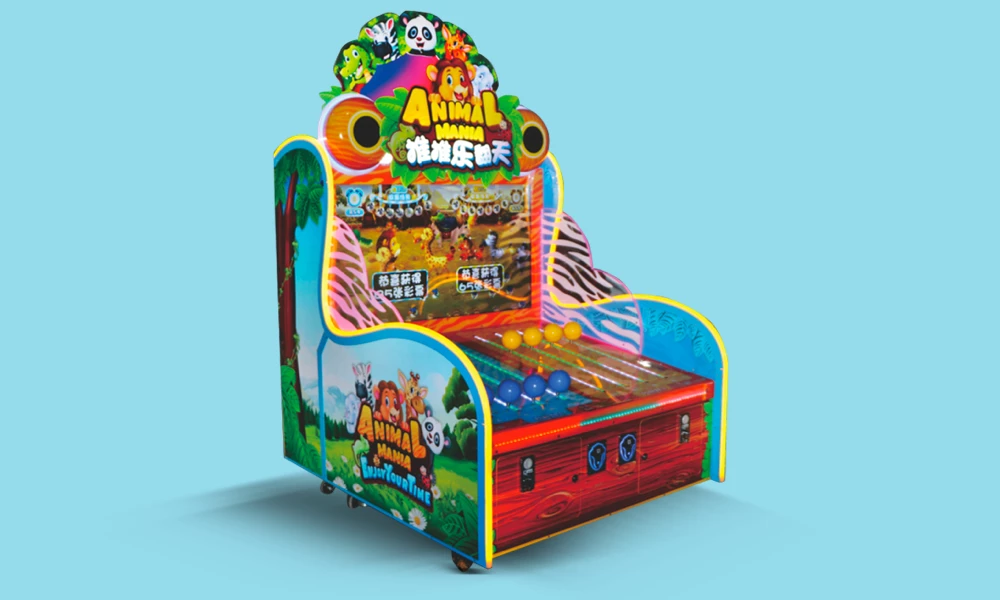
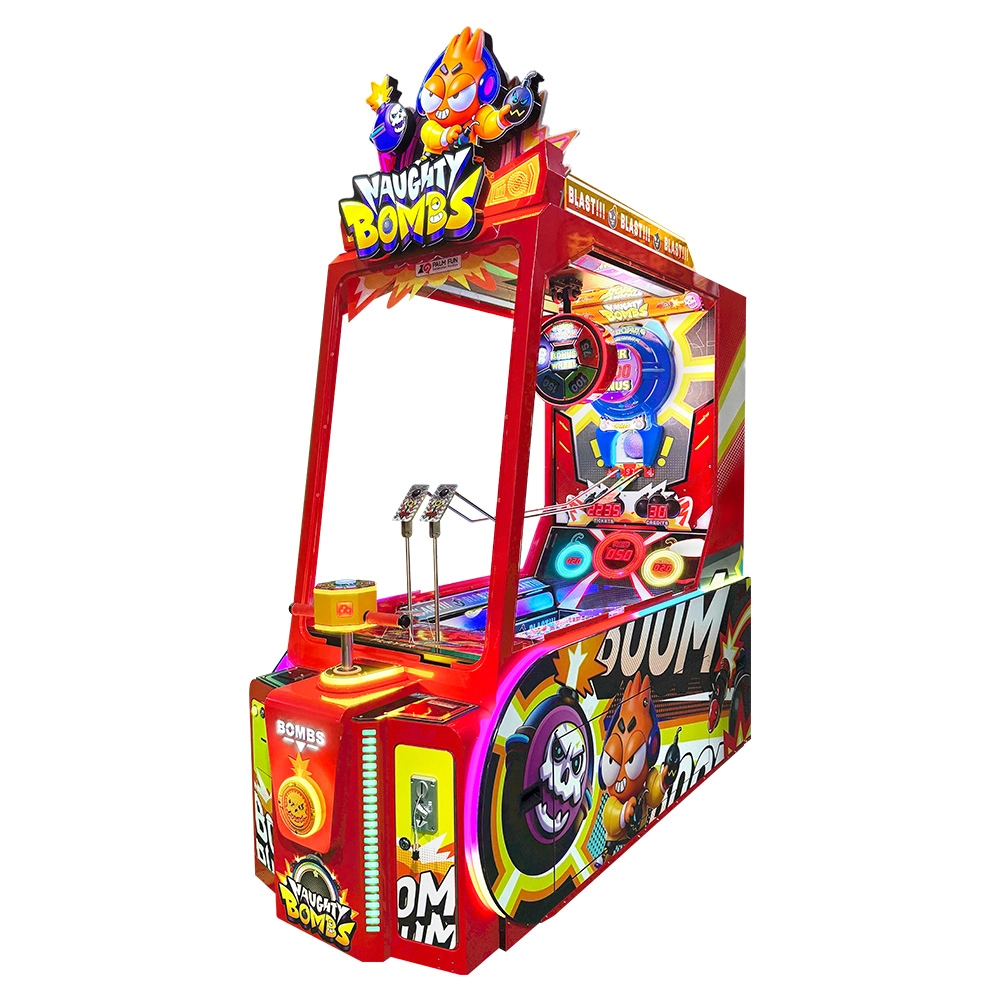
Naughty Bombs is an exciting redemption arcade game designed to capture attention and keep players coming back for more. Featuring a bright red cabinet, dynamic lighting, fun sound effects, and interactive rolling-ball gameplay, it delivers nonstop excitement in a compact footprint. Players test their timing skills by launching and dropping balls into colored targets to unlock surprise bonus rewards and ticket prizes. With easy-to-learn mechanics, engaging skill-based action, and strong visual appeal, Naughty Bombs is an ideal attraction for arcades, FECs, and entertainment venues looking to boost player engagement and revenue.
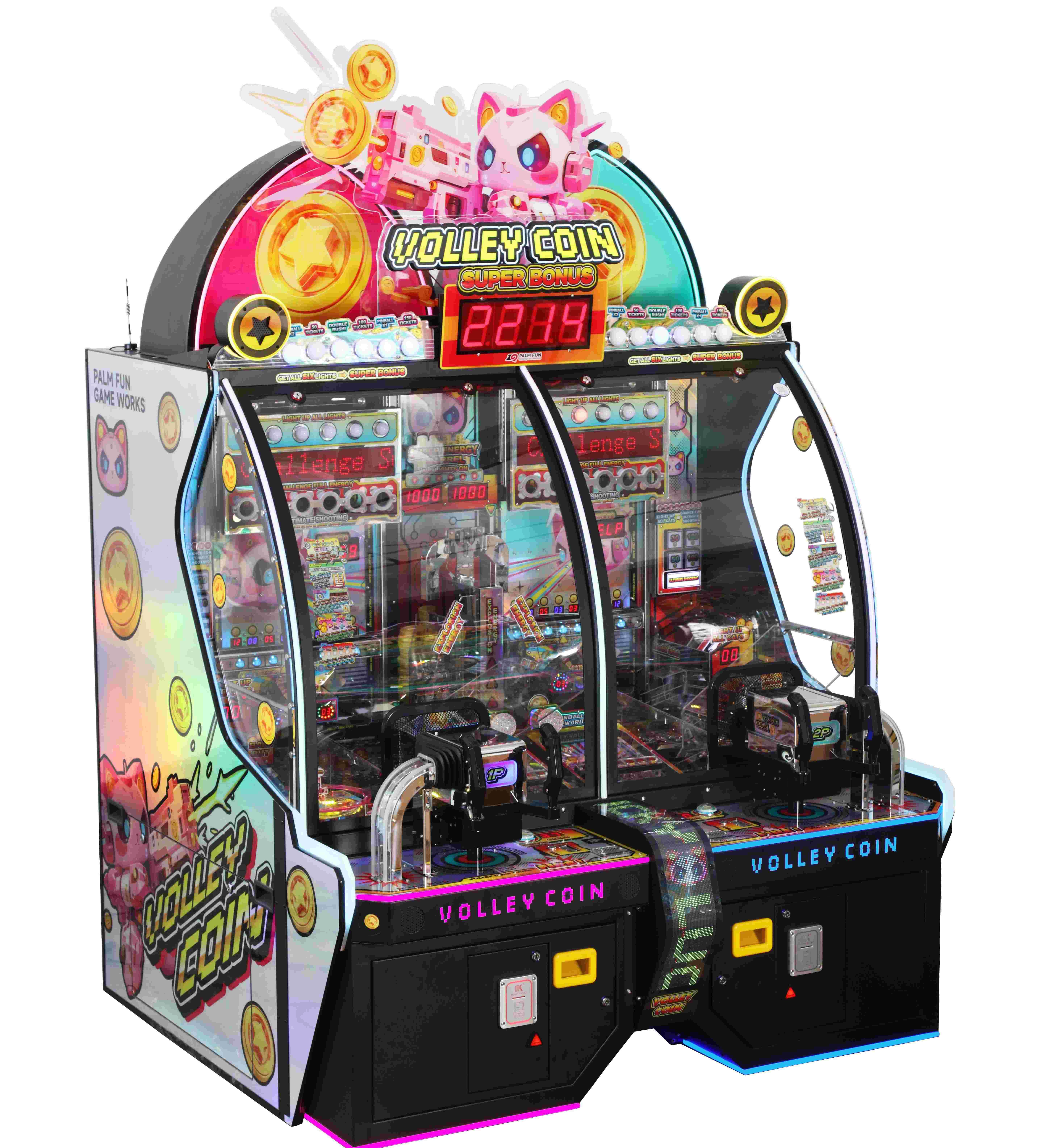
Volley Coin is an innovative arcade ticket redemption machine developed by Palm Fun Electronics. Combining the excitement of a fast-paced token shooter game with the proven earning power of a traditional coin pusher machine, Volley Coin offers a fresh and engaging gameplay experience that appeals to players of all ages.
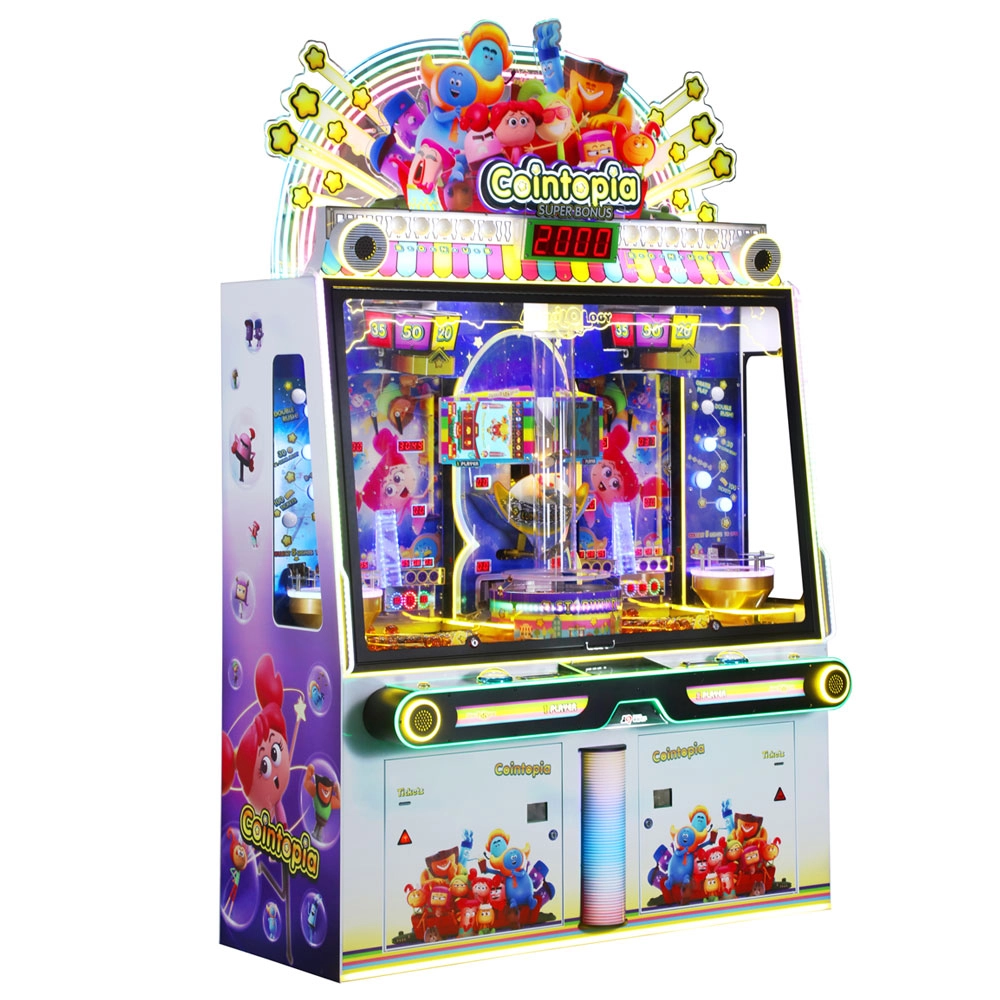
COINTOPIA by PALM FUN is an exciting redemption game machine where players enjoy fun with zodiac buddies in a utopia setting. This ticket redemption machine offers engaging gameplay and rewarding experiences, perfect for family entertainment centers and arcades seeking top-quality redemption games.
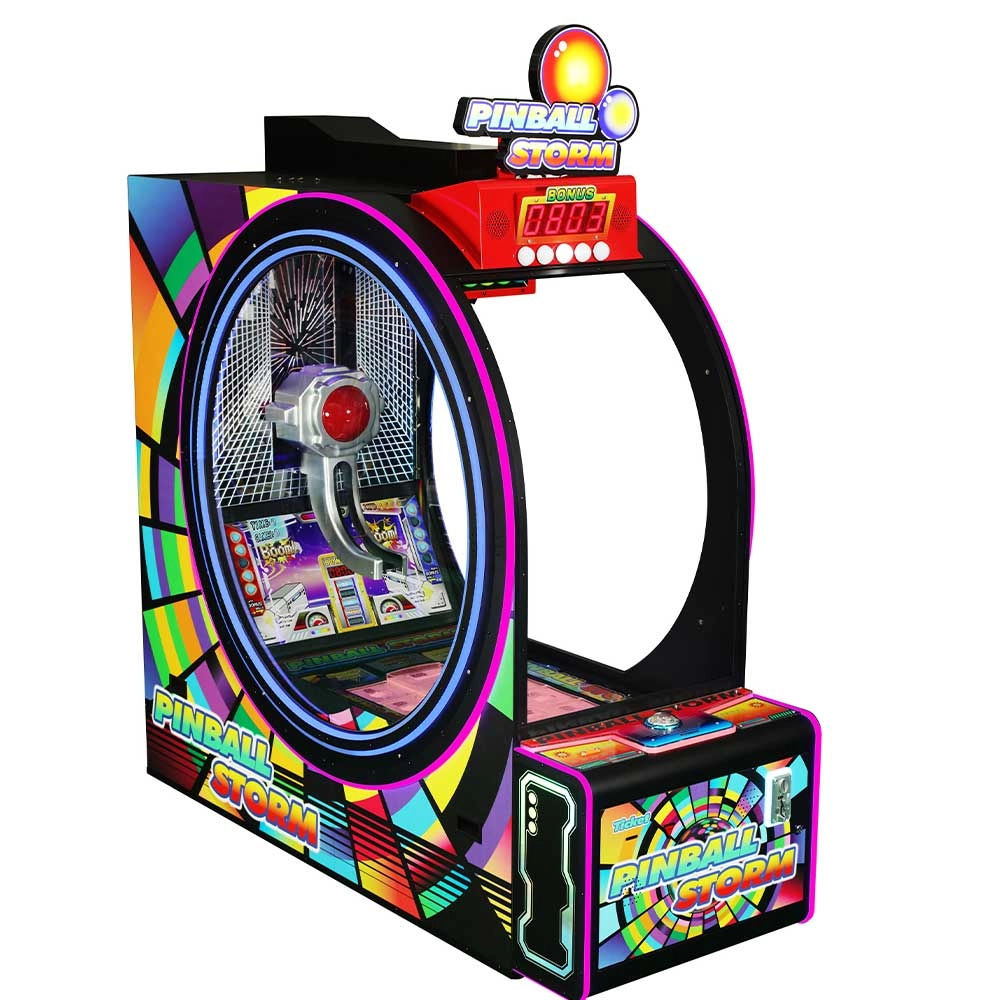
Classic pinball reimagined! Hit, bounce, and win prizes. Trigger the Pinball Storm for an epic multi-ball blast!

Copyright © 2026 PALM FUN All Rights Reserved. | Privacy Policy • Terms and Conditions | Sitemap
palmfunarcade
Palm Fun Arcade Game
Whatsapp: +8618126837443
PalmFun Arcade
PalmFun_Arcade
PALM FUN Redemption Machine