


Ball Dropper Arcade Games: How They Work & FEC Buying Guide
An operator-focused introduction to ball drop arcade games, with gameplay comparison, PALM FUN's Naughty Bombs example, technical buying checks and ticket redemption FAQ.
- How Do Ball Dropper Arcade Games Work?
- Ball Dropper, Plinko-Style Games and Coin Pushers: Key Differences
- PALM FUN Ball Drop Arcade Example: Naughty Bombs
- Where Can Commercial Ball Dropper Games Fit?
- What Technical Specifications Should a Buyer Request?
- Ticket Rewards, Prize Costs and Player Expectations
- Maintenance and Safe Operation of Ball-Drop Machines
- Frequently Asked Questions About Ball Dropper Arcade Games
- How does a ball drop arcade machine score a result?
- Are ball-drop games the same as mechanical coin pushers?
- Does every ball dropper give paper tickets?
- Is the Naughty Bombs game compatible with 110V or 220V?
- What should I ask before buying a ball-drop arcade machine?
- Conclusion: Choose a Ball Dropper by Real Gameplay and Venue Fit
What is a ball dropper arcade game machine? A ball dropper is an amusement cabinet in which the player launches, releases or directs a ball toward a target or scoring area. The machine records the result according to its particular game rules. Some commercial ball-drop games issue tickets or electronic redemption points, while others use different score or award formats. A ball's movement does not automatically guarantee a prize, and the term “ball dropper” does not identify one standard cabinet with universal specifications.
For arcade owners and family entertainment center (FEC) buyers, the important questions are how guests control the ball, whether the game suits the intended audience, how rewards are recorded and what installation or maintenance requirements apply. This guide explains common ball-drop gameplay and separates those general principles from PALM FUN's actual listed products. It does not invent a universal screen type, warranty duration, multiplayer feature or revenue figure for machines that have not been specified.
How Do Ball Dropper Arcade Games Work?
At the start of a typical game, a visitor activates a supported credit or token input and follows the displayed controls. Depending on the machine, they may press a launch button, choose timing or direct a rolling ball toward a target zone. A physical or electronic scoring system evaluates the actual result. The displayed score or ticket balance then follows the configured rules of the particular model.
A ball can roll down a track, pass over obstacles or enter colored scoring areas. Those possibilities should not all be assumed available on every cabinet. The playfield, release mechanism, return path, controls and award system are model-specific. The guest should be able to understand the play sequence without having to guess when credits are consumed or how a target translates into tickets.
For an operator, observing a demonstration is more useful than relying on generic marketing terms such as “automatic high-definition display” or “guaranteed big win.” Ask the supplier to show the ball's full path, how the cabinet handles a missed target and how the result is recorded. Staff should use exactly those steps when explaining the game to customers.
Ball Dropper, Plinko-Style Games and Coin Pushers: Key Differences
Several arcade attractions use gravity or physical movement, but they are not necessarily the same type of machine. A ball dropper typically focuses on launching or releasing a ball toward targets. A Plinko-style game commonly lets a ball or puck travel through a field of obstacles. A traditional coin pusher moves coins or tokens across a shelf, creating a different player action and result pattern.
| Format | Typical player action | Buying consideration |
|---|---|---|
| Ball dropper / rolling ball | Time a release or launch toward designated zones | Ball path, target sensors and award rules |
| Plinko-style drop | Release an item into an obstacle layout | Actual obstacles, scoring and local prize rules |
| Mechanical coin pusher | Introduce coins or tokens into a moving shelf | Pusher action, player position and ticket recording |
Hybrid cabinets can combine elements, so a product name alone is not enough. When comparing game formats, ask what physically happens on the installed machine and which interactions the player can control. For mechanical pushers specifically, see the coin pusher working-principle explanation rather than treating it as a standard ball-drop device.
PALM FUN Ball Drop Arcade Example: Naughty Bombs
PALM FUN's Naughty Bombs Ball Drop Redemption Arcade Game Machine provides a verified example of this category. Its current product information describes timing-based gameplay in which players launch and drop rolling balls toward colored targets. The catalogue also identifies ticket prizes, surprise bonus rewards, lighting and sound effects. These are documented features of Naughty Bombs, not universal characteristics of every ball dropper.
The existing product record lists customizable 110V / 220V voltage options and a cabinet height of 2,000 mm, depth of 2,300 mm and width of 830 mm. It lists a 280 kg weight and a maximum-power range of 900–1,000 W. These values should be checked against the final quoted version and destination electrical arrangements. Technical measurements for Naughty Bombs must not be copied onto a generic ball-drop machine that has different construction or player positions.
The game's target-based physical experience is an example of why the exact controls matter. A venue operator should ask how ball return and target recording work, how rewards are displayed and what routine checks the model requires. The colourful cabinet may fit some family-oriented settings, but suitability and guest demand depend on the specific venue rather than the model's visual design alone.
Where Can Commercial Ball Dropper Games Fit?
Family entertainment centers, arcade venues and mixed entertainment areas may consider ball-drop games as one element of a varied floor. A machine should be selected according to the venue's actual usable space, customer age range, supervision, noise limitations and technical services. An operator cannot infer that the cabinet is appropriate for a private home or for every age simply because it uses a ball. The product's instructions, intended commercial use and local operating requirements still apply.
Plan space for the cabinet, player standing position, waiting groups and access for service. Check the delivery path and any requirements for flooring, power and ventilation. Placement should also help new visitors find the rules and recognise where earned tickets or points can be redeemed. A crowded aisle can undermine both accessibility and supervision, so floor plans should be checked against the site-specific building and safety provisions.
Machine choice can also change the mix of play styles on a floor. If the venue already has several moving-shelf pushers, an aiming or timing-based ball game may offer a different guest activity. That is a category-planning hypothesis, not a guarantee of additional revenue. The FEC redemption game category comparison provides a broader framework for evaluating the mix.
What Technical Specifications Should a Buyer Request?
Purchasers should request the selected model's dimensions, weight, voltage, rated or maximum power, ball handling components, controls, supported payment inputs and ticket or point interface. Also clarify how bonus features work, whether the machine uses a particular card or reader system, and which setup instructions are supplied. Not every manufacturer offers the same accessories or third-party integrations, and a broad category label should not be used as proof of compatibility.
Ask for packaging size, freight responsibilities, installation access and model-level warranty terms before finalizing a bulk order. Confirm the available spare parts and who is authorized to inspect a fault or carry out protected electrical work. An arcade buyer should also establish who provides operator training and whether post-installation support is provided directly by the manufacturer or through an approved distributor.
A current quotation should distinguish standard features from requested customization. For instance, the optional voltage configuration of one PALM FUN ball-drop product does not establish a universal customization package for all models. Likewise, a supplier's website cannot establish local legal approval for every ticket or prize arrangement. Those questions require confirmation for the exact machine and destination market.
Ticket Rewards, Prize Costs and Player Expectations
Ball-drop games can be enjoyable because the player can see a ball travel toward a result area. That visibility does not establish a fixed win probability or a guaranteed number of tickets. Players should be told what counts as a valid target, whether bonus stages are available and where any earned value appears. Ticket rules and the prize counter need to use consistent terms to avoid complaints or misunderstanding.
Operators should distinguish gross paid-play revenue from the actual cost of fulfilled prizes and the additional costs of maintenance, staff and space. A machine with a lively presentation can still have poor operating contribution if reward costs and downtime are not monitored. Avoid setting prices or expected returns from unverified claims that ball-drop games always attract families or are certain to increase arcade revenue.
Monitor guest questions, machine uptime, repeat errors, paid play counts and redemption records. Compare results across similar reporting periods and record changes made to signs or machine configuration. Detailed ROI methods can be explored in the arcade machine cost and ROI guide, while this article remains focused on the ball-drop game format.
Maintenance and Safe Operation of Ball-Drop Machines
Commercial ball-drop equipment has physical play media, moving or guiding components, controls and a result-recording process. Staff may be able to observe whether the machine accepts a credit, launches the ball and shows the expected result, but they should not open protected panels or reach into moving mechanisms while the cabinet is operating. The exact inspection and cleaning schedule should come from the manufacturer's documentation, not an invented universal service interval.
Where a ball is lost, jammed or fails to return normally, record the problem and take the machine out of use when necessary. A result or ticket discrepancy can originate in the sensor, game controller, communication with the redemption system or another model-specific component. Diagnosis and repair should be performed by authorized personnel following the correct technical instructions. Managers should keep the service record so recurring issues can be evaluated.
For an operator ordering from overseas, clarify which replacement balls, mechanisms or electronic components are available and which items can be serviced locally. Technical documentation and responsible parts supply matter more than an unsupported durability promise. Venue-specific safety requirements remain applicable regardless of the arcade game's perceived simplicity.
Frequently Asked Questions About Ball Dropper Arcade Games
How does a ball drop arcade machine score a result?
Typically, a player launches or releases a ball toward targets and the machine records the outcome according to its game rules. Target detection, scoring and ticket awards are model-specific; a ball entering a zone does not always produce a universal prize amount.
Are ball-drop games the same as mechanical coin pushers?
No. A ball-drop game usually uses a ball launch or release toward scoring zones, while a traditional coin pusher uses a moving shelf to shift coins or tokens. Some hybrid cabinets combine mechanisms, so the actual game should be checked.
Does every ball dropper give paper tickets?
No. Reward formats vary by model and configuration. Some machines use paper tickets, electronic points or other supported outcomes, and the supplier should confirm which interfaces are available for the intended venue.
Is the Naughty Bombs game compatible with 110V or 220V?
The current PALM FUN product listing identifies customizable 110V / 220V voltage options for Naughty Bombs. Confirm the exact configuration, technical documentation and local installation requirements for the order.
What should I ask before buying a ball-drop arcade machine?
Request the actual gameplay and award demonstration, cabinet and packed dimensions, weight, power, payment and ticket compatibility, service access, spare parts, warranty terms and a clear quotation for the destination market.
Conclusion: Choose a Ball Dropper by Real Gameplay and Venue Fit
Ball-drop arcade games offer a visible physical challenge that differs from conventional coin-pushing gameplay. The correct equipment choice depends on the actual controls, reward settings, service needs, visitor profile and venue space. PALM FUN's Naughty Bombs is one current example of timing-based ball-drop ticket redemption equipment, with its own confirmed specification and order-dependent options. For commercial purchasing information, contact PALM FUN with the venue location, game requirements and expected quantity.

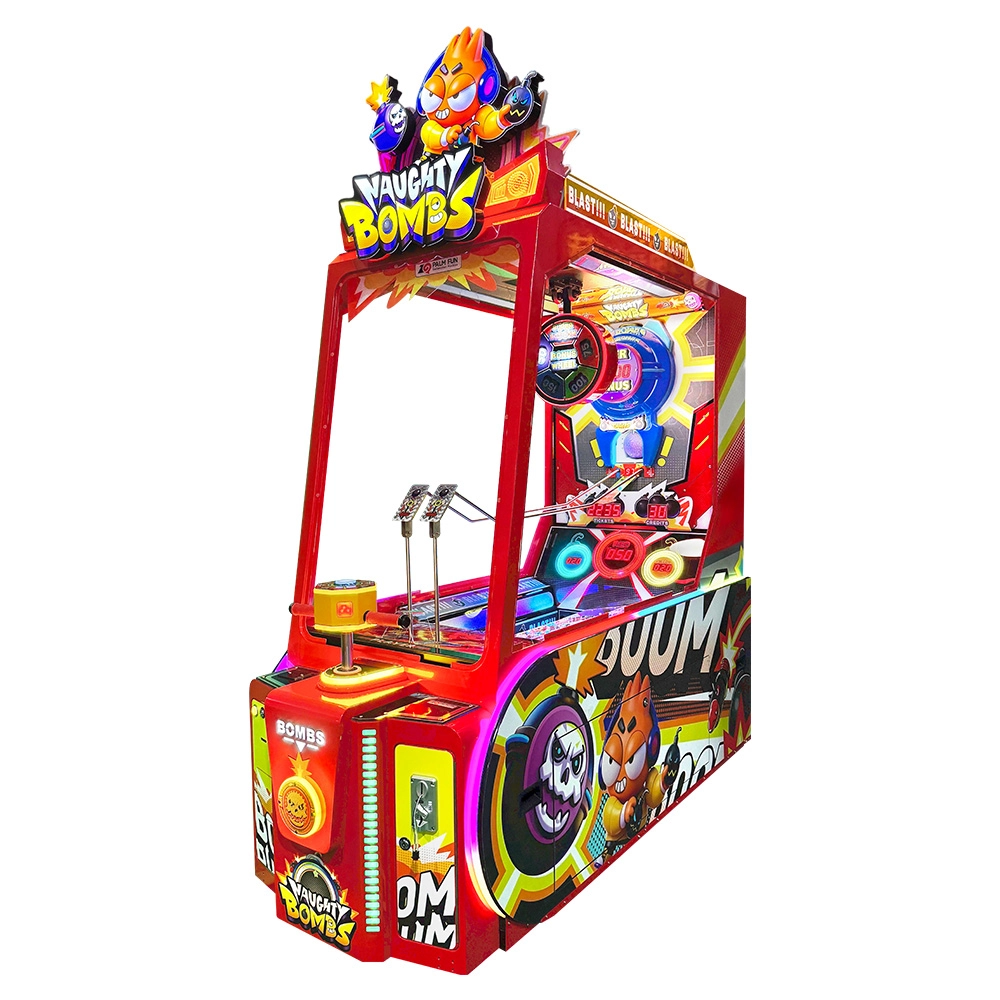
Naughty Bombs is a ball-drop redemption arcade game featuring rolling-ball gameplay, colored targets, ticket prizes, surprise bonus rewards, lighting and sound effects. Players use timing to launch and drop balls toward colored target areas. The product is presented for arcade, family entertainment center and other entertainment-venue projects, with customizable 110V / 220V AC voltage configuration.
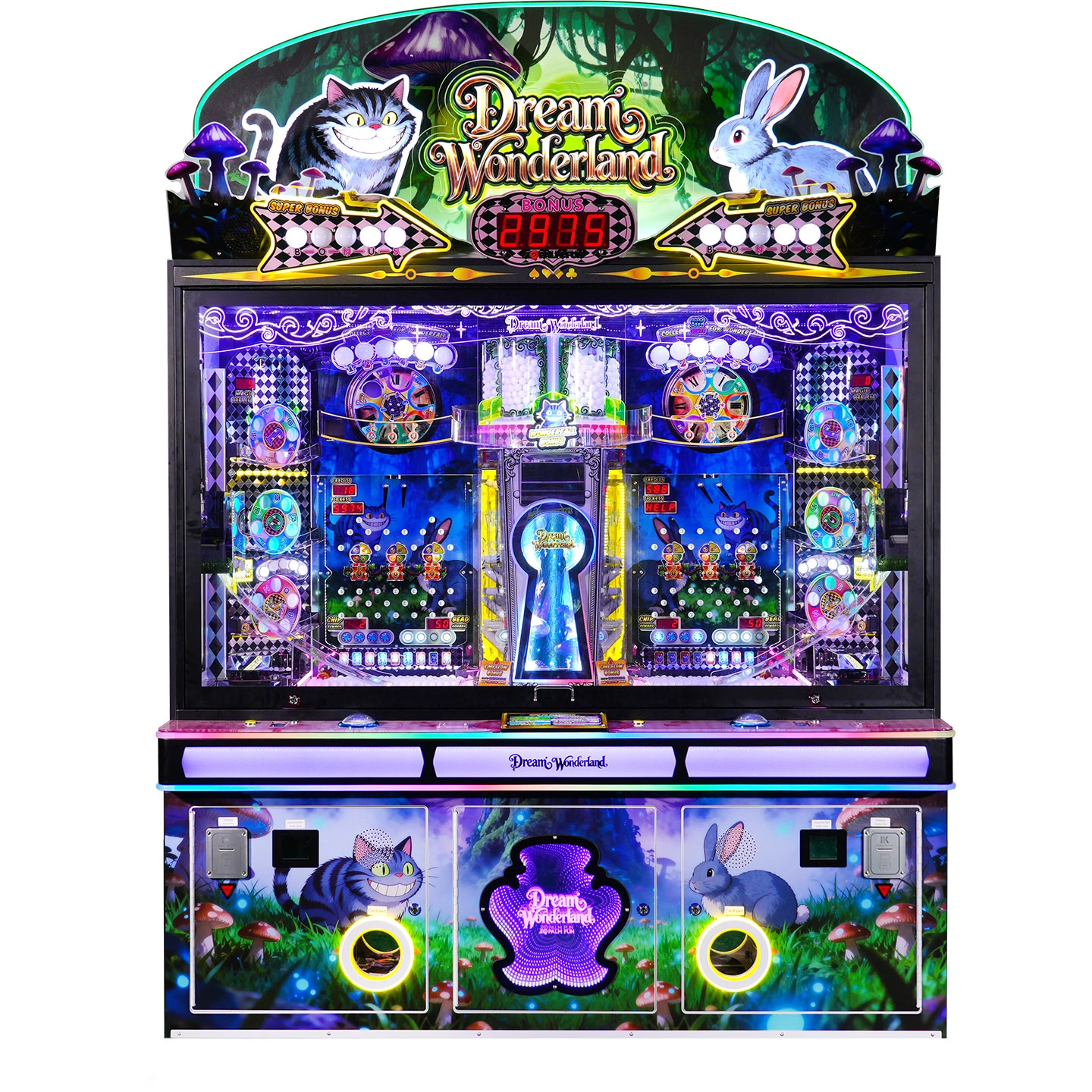
Enter Dream Wonderland — a magical marble pusher adventure filled with glowing lights, magic orbs, bonus wheels, collectible character cards, and exciting jackpot challenges.
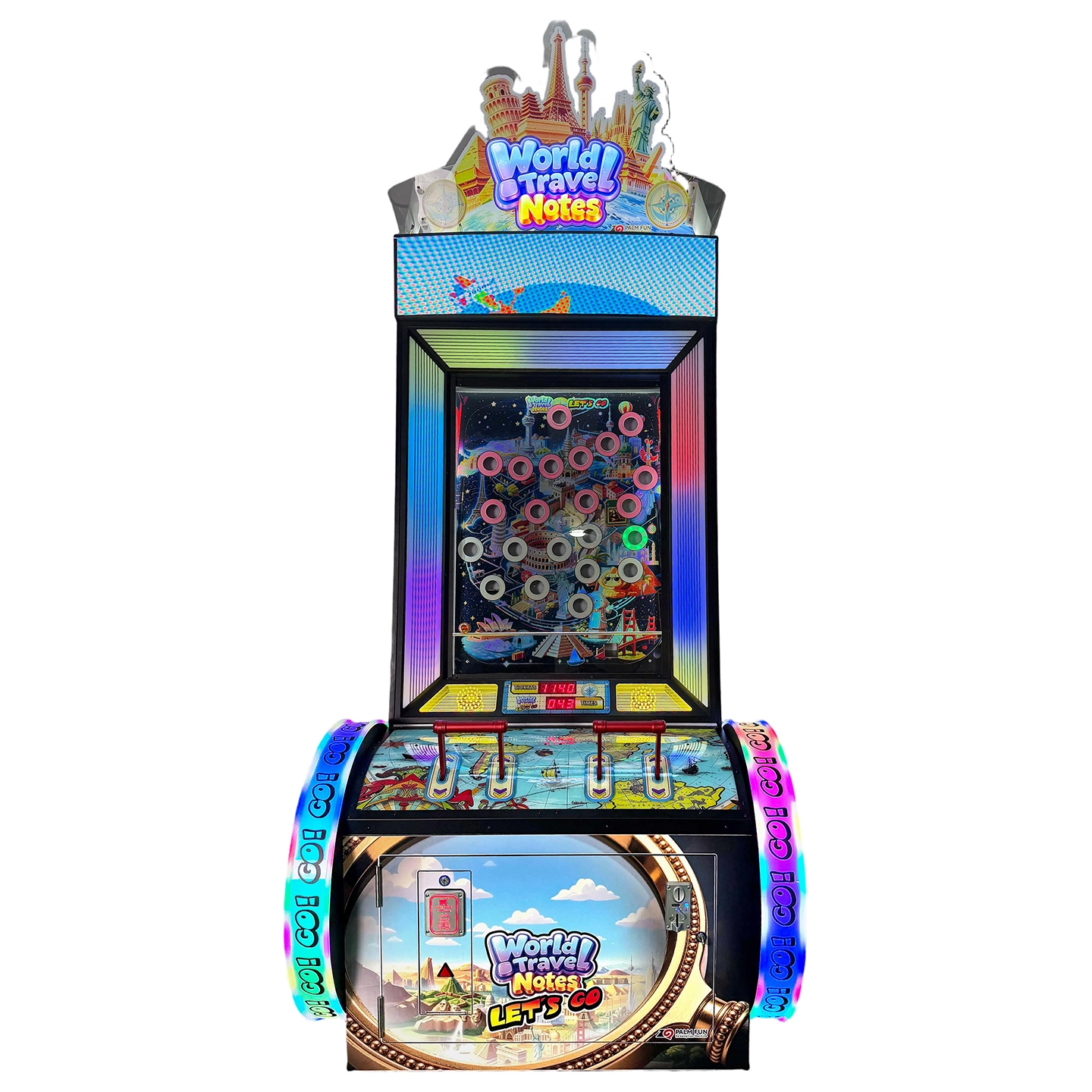
World Travel Notes is a skill-based balance ball redemption game with a fun world-travel theme. Players use two handles to control the balance bar and guide the ball into each target hole. As the game progresses, the targets become more challenging, leading players toward the final grand prize. With colorful world-travel graphics, dynamic RGB lighting, a live score display, and progressive difficulty, World Travel Notes is designed to attract attention and encourage repeat play in arcades, FECs, shopping malls, and other entertainment venues.
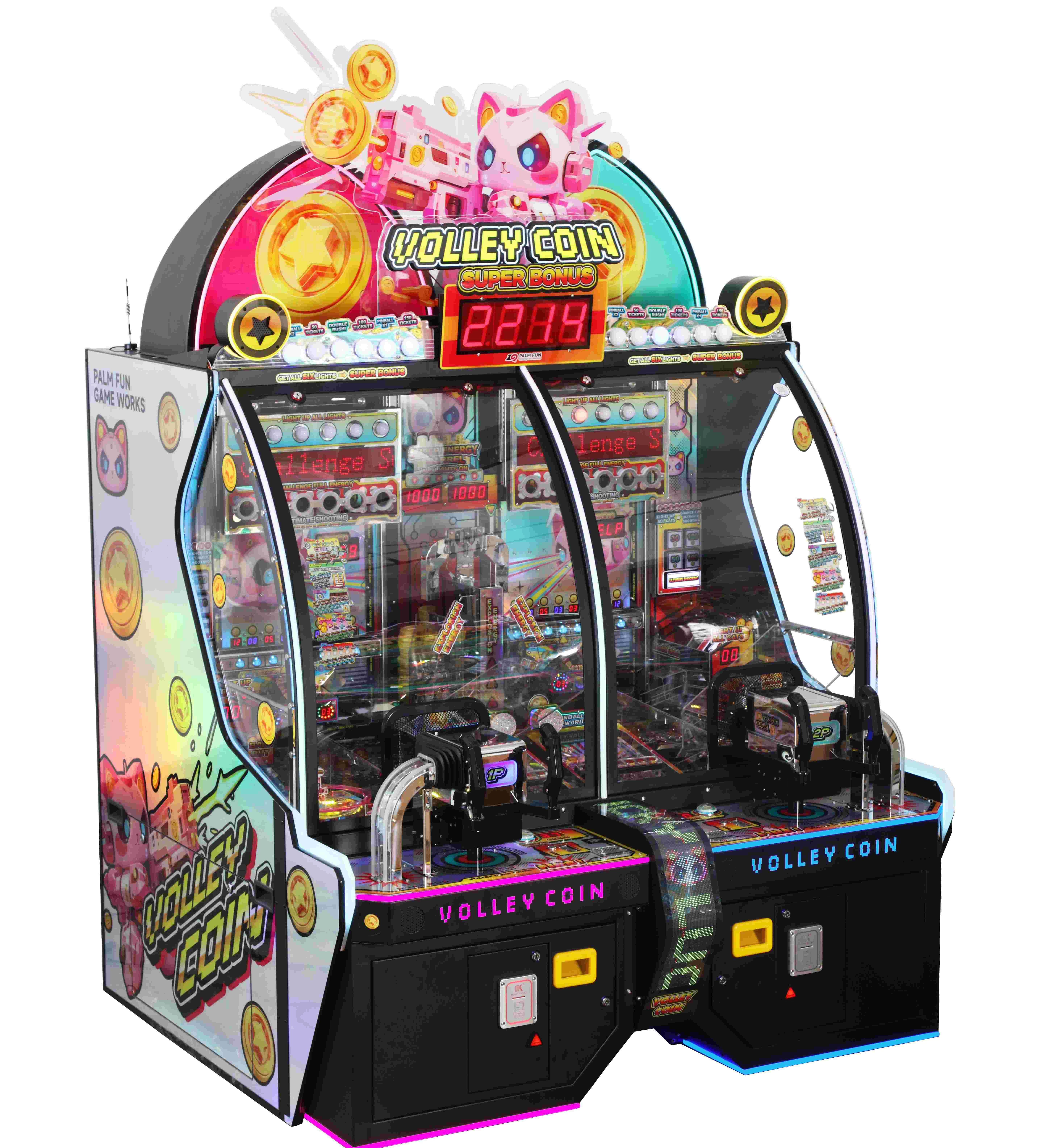
Volley Coin is an innovative arcade ticket redemption machine developed by Palm Fun Electronics. Combining the excitement of a fast-paced token shooter game with the proven earning power of a traditional coin pusher machine, Volley Coin offers a fresh and engaging gameplay experience that appeals to players of all ages.

Copyright © 2026 PALM FUN All Rights Reserved. | Privacy Policy • Terms and Conditions | Sitemap
palmfunarcade
Palm Fun Arcade Game
Whatsapp: +8618126837443
PalmFun Arcade
PalmFun_Arcade
PALM FUN Redemption Machine