






How long is lead time for coin pusher arcade machine production?
Expert guide for arcade operators on selecting a coin pusher arcade machine manufacturer. We address critical pain points regarding lead times, component sourcing, and technical compliance to ensure your investment delivers high ROI and long-term durability in the competitive redemption market.
- How does the sourcing of high-precision sliding plates affect the lead time for coin pusher arcade machine production?
- What are the specific electrical certification bottlenecks when importing from a global coin pusher arcade machine manufacturer?
- How does the integration of 'Skill-Based' payout logic impact the manufacturing timeline?
- Why does the choice of cabinet material (MDF vs. Plywood) dictate both durability and shipping readiness?
- What role does 'Plug-and-Play' modularity play in reducing long-term maintenance for new operators?
- How do peak seasonal demands at the factory level influence your delivery schedule?
How does the sourcing of high-precision sliding plates affect the lead time for coin pusher arcade machine production?
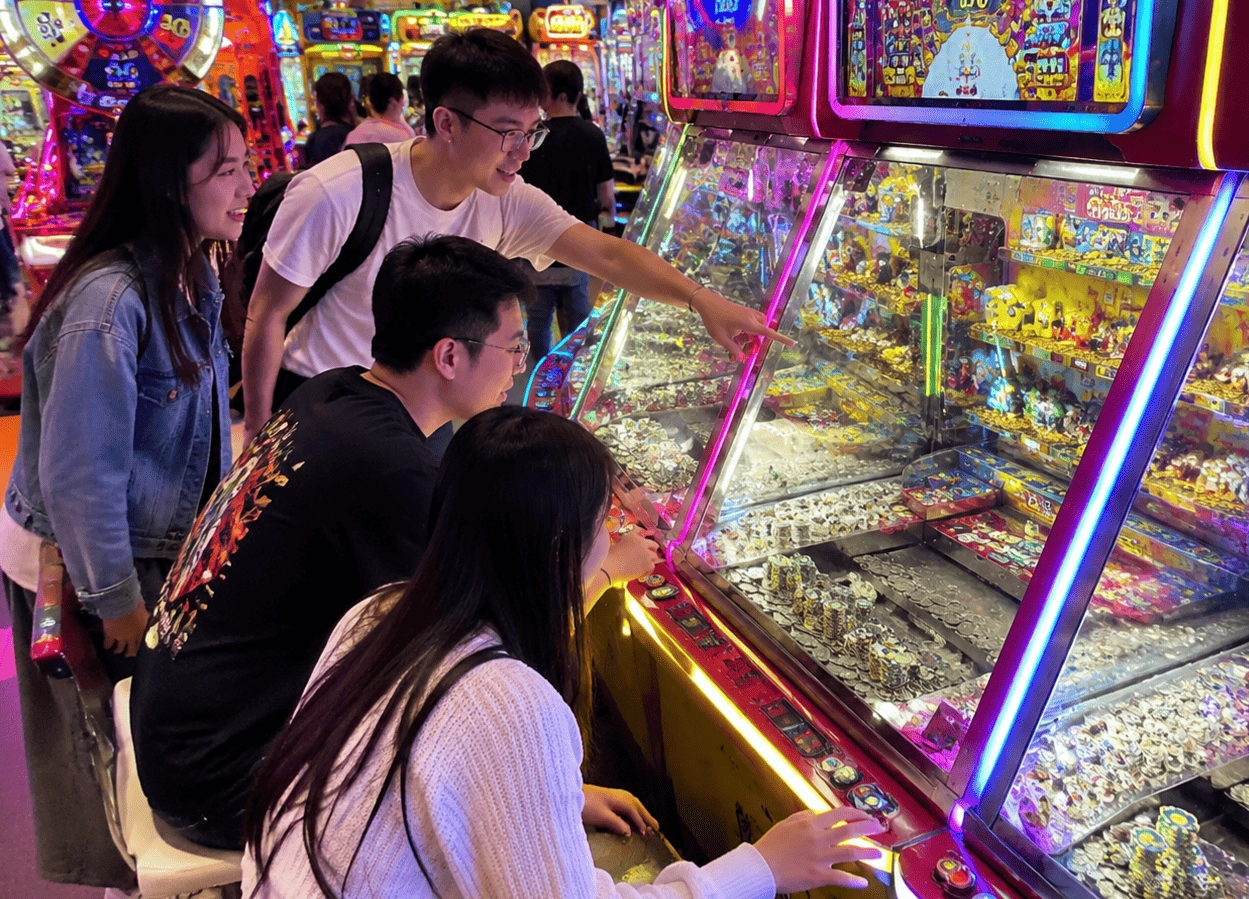
The sliding plate is the heart of any mechanical redemption game. A High Quality coin pusher arcade machine manufacturer typically sources industrial-grade stainless steel with anti-friction coatings to prevent 'jamming'—the number one cause of downtime. If a manufacturer uses custom-dimension plates, the lead time for coin pusher arcade machine production can extend by 10-15 days due to precision laser cutting and polishing phases. Standardized units may ship faster, but custom high-capacity decks require rigorous stress testing to ensure the motor torque handles the weight of thousands of coins without burning out.
What are the specific electrical certification bottlenecks when importing from a global coin pusher arcade machine manufacturer?
Beginners often overlook that internal wiring and power supplies must meet regional standards like UL (USA), CE (Europe), or SASO (Middle East). A professional coin pusher arcade machine manufacturer must integrate localized coin acceptors and bill validators. If these components are not in stock, the lead time for coin pusher arcade machine production may increase by 2 weeks as the factory awaits specialized sensors. Ensuring the PCB (Printed Circuit Board) is compatible with local voltage fluctuations is critical for preventing logic board failure in high-traffic FECs (Family Entertainment Centers).
How does the integration of 'Skill-Based' payout logic impact the manufacturing timeline?
Modern redemption regulations in many jurisdictions require 'skill-hole' features or specific payout percentages. Programming these custom algorithms into the game's microchip is a bespoke process. While a generic machine might be ready in 20 days, a unit optimized for specific ROI targets and legal compliance usually requires a 30-to-45-day lead time for coin pusher arcade machine production. This includes the 'burn-in' phase where the software is cycled 5,000+ times to ensure the payout sensors remain 99.9% accurate.
Why does the choice of cabinet material (MDF vs. Plywood) dictate both durability and shipping readiness?
In the amusement equipment industry, the structural integrity of the cabinet is paramount. High-end manufacturers prefer CNC-machined plywood for its moisture resistance and screw-holding strength. However, plywood requires longer curing times for laminates compared to cheap MDF. When asking 'how long is lead time,' consider that high-quality finishings and reinforced T-molding add roughly 5 days to the assembly line but prevent the cabinet from warping during sea freight, saving you thousands in potential transit damage.
What role does 'Plug-and-Play' modularity play in reducing long-term maintenance for new operators?
A sophisticated coin pusher arcade machine manufacturer designs units with modular components. This means the coin hopper, motor assembly, and lighting strips can be swapped without soldering. While modular designs might have a slightly higher upfront cost, they simplify the production lead time by allowing parallel assembly of sub-systems. For the operator, this ensures that if a part fails after 1,000 hours of play, the machine isn't sidelined for weeks awaiting a specialized technician.
How do peak seasonal demands at the factory level influence your delivery schedule?
The lead time for coin pusher arcade machine production is highly sensitive to the global trade calendar. During the lead-up to industry shows like IAAPA or the Chinese New Year, lead times can double from 25 days to 50 days. Savvy buyers coordinate with their coin pusher arcade machine manufacturer at least 4 months before their venue's grand opening to account for both production queues and the current volatility in global ocean freight logistics.
Choosing the right partner means looking beyond the sticker price. A manufacturer that prioritizes mechanical precision, electrical safety, and modular design ensures your redemption center remains profitable. By understanding the nuances of the production cycle, you can better manage your inventory and launch schedule with confidence.
For professional consultations and high-performance machine quotes, contact Palmfun today at luobin@palm-fun.com or visit www.palm-fun.com.


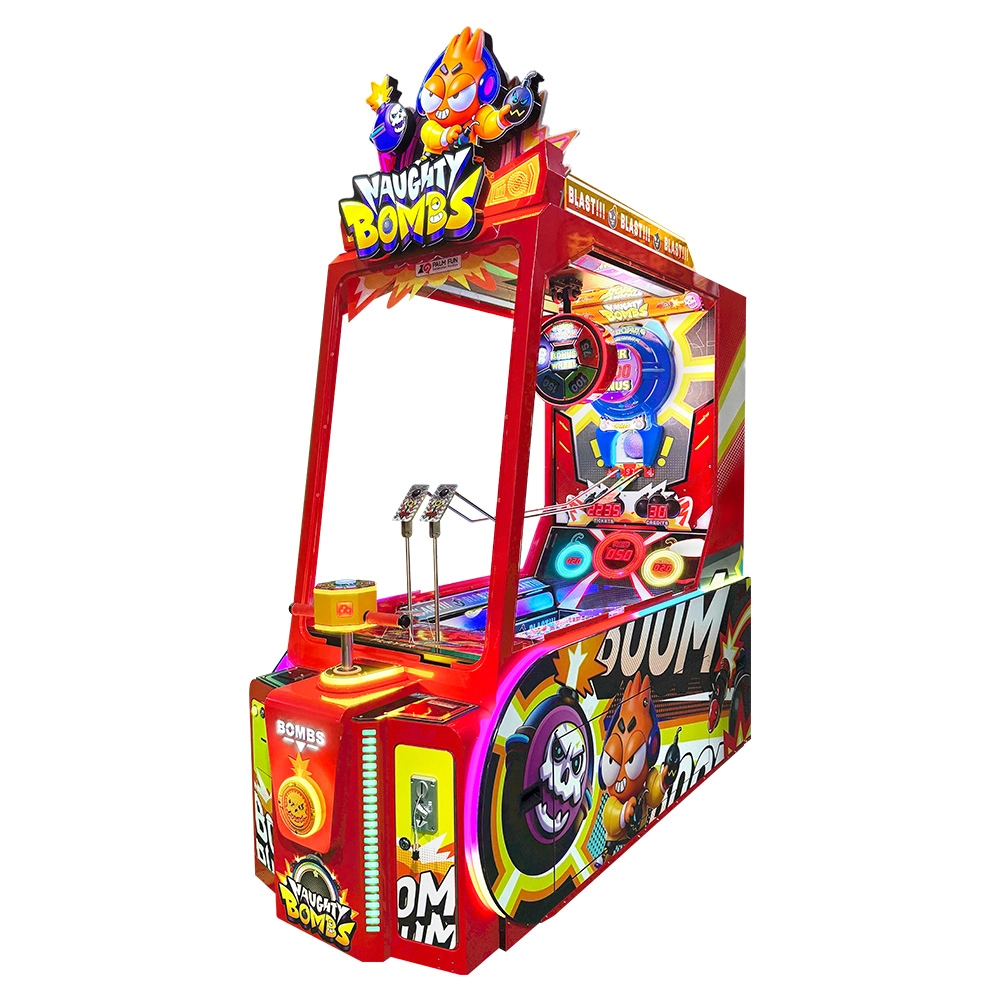
Naughty Bombs is a ball-drop redemption arcade game featuring rolling-ball gameplay, colored targets, ticket prizes, surprise bonus rewards, lighting and sound effects. Players use timing to launch and drop balls toward colored target areas. The product is presented for arcade, family entertainment center and other entertainment-venue projects, with customizable 110V / 220V AC voltage configuration.
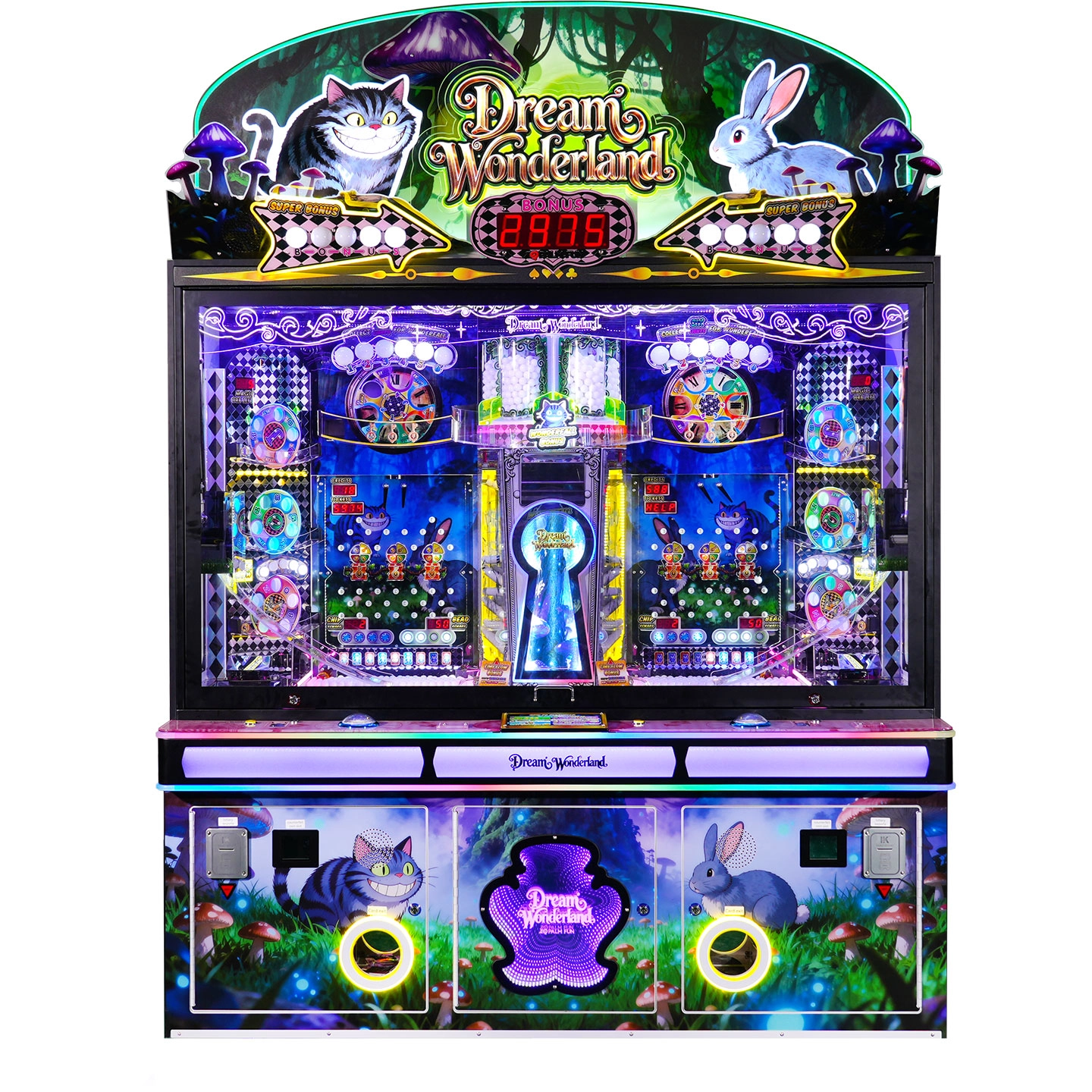
Enter Dream Wonderland — a magical marble pusher adventure filled with glowing lights, magic orbs, bonus wheels, collectible character cards, and exciting jackpot challenges.
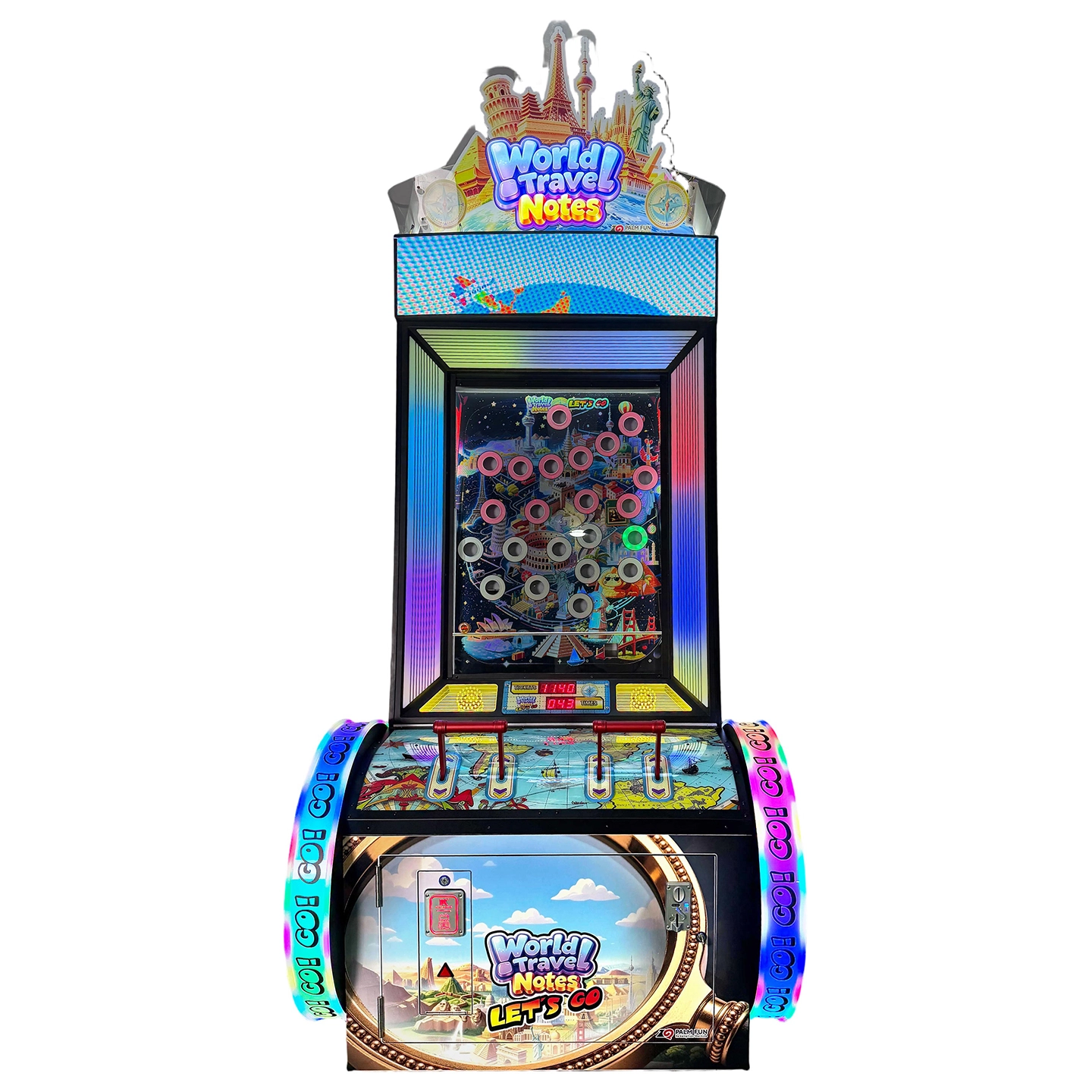
World Travel Notes is a skill-based balance ball redemption game with a fun world-travel theme. Players use two handles to control the balance bar and guide the ball into each target hole. As the game progresses, the targets become more challenging, leading players toward the final grand prize. With colorful world-travel graphics, dynamic RGB lighting, a live score display, and progressive difficulty, World Travel Notes is designed to attract attention and encourage repeat play in arcades, FECs, shopping malls, and other entertainment venues.
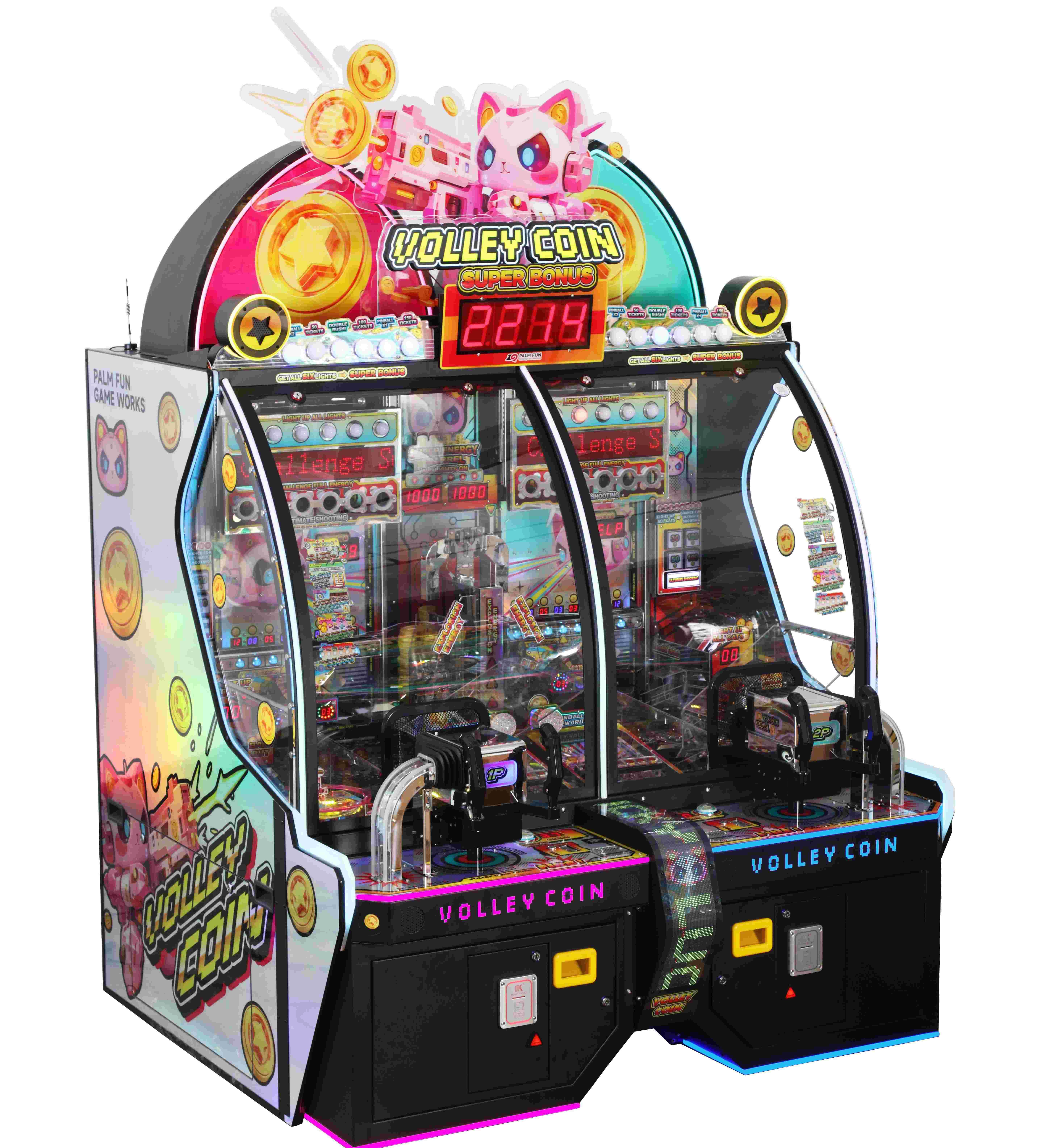
Volley Coin is an innovative arcade ticket redemption machine developed by Palm Fun Electronics. Combining the excitement of a fast-paced token shooter game with the proven earning power of a traditional coin pusher machine, Volley Coin offers a fresh and engaging gameplay experience that appeals to players of all ages.
Copyright © 2026 PALM FUN All Rights Reserved. | Privacy Policy • Terms and Conditions | Sitemap
palmfunarcade
Palm Fun Arcade Game
Whatsapp: +8618126837443
PalmFun Arcade
PalmFun_Arcade
PALM FUN Redemption Machine