








What types and parts make up a pirate coin pusher game machine?
A technical breakdown of pirate coin pusher game machine components, including mechanical assemblies, electronics, and cabinet types for redemption game machine operators.
Quick Answer
A pirate coin pusher game machine consists of a mechanical sliding platform, a high-torque motor assembly, an electronic coin comparator, and a logic control board. The system functions by utilizing a reciprocating pusher plate to displace coins or tokens toward a prize chute. Key selection factors include motor durability, cabinet material grade, and the precision of the anti-cheat tilt sensors. Final configurations depend on specific site traffic and local redemption regulations.
How PALM FUN Supports Redemption Game Machine Projects
PALM FUN leverages a 3,000-square-meter manufacturing facility to provide specialized OEM and ODM services for the redemption game machine sector. Our engineering team focuses on the R&D of high-durability mechanical components, ensuring that every pirate coin pusher game machine meets rigorous stability standards for international markets. We manage the entire lifecycle from initial CAD design to final assembly and stress testing.
For bulk procurement, clients must confirm core technical parameters including voltage requirements, coin/token dimensions, and desired payout logic (ticket vs. coin out). PALM FUN operates with specific MOQ thresholds and lead times that vary based on customization complexity. All technical specifications and formal quotations are finalized per project to ensure optimal ROI for operators in over 50 countries.
Discuss Your Pirate Coin Pusher Technical Requirements
To receive a tailored technical proposal, please provide your target market location, required cabinet dimensions, preferred currency mechanism, estimated order volume, and any specific branding needs. Our consultants will review these details to optimize your machine configuration. Contact our lead engineer at luobin@palm-fun.com or visit www.palm-fun.com to initiate your project consultation.
Deep-Dive Technical FAQs
Which motor types drive a pirate coin pusher game machine?
Industrial-grade AC synchronous motors or high-torque DC geared motors are standard. These motors drive the crank-link mechanism that converts rotational motion into the linear reciprocating movement of the pusher plate. High-quality machines utilize motors with thermal overload protection to prevent failure during 24/7 arcade operation.
How do electronic coin comparators prevent arcade currency fraud?
Modern pirate coin pusher game machine units utilize multi-frequency electronic coin acceptors. These sensors measure the diameter, thickness, and metallic composition of an inserted token against a 'reference' coin. If the electromagnetic signature does not match, the coin is diverted to the return tray, preventing the use of slugs or foreign currency.
What materials are used for pusher plates and playfields?
The playfield typically consists of polished stainless steel or high-density acrylic to minimize friction. The pusher plate itself is often reinforced steel with a low-friction coating. Using high-grade materials is critical because surface pitting or corrosion can increase drag, leading to motor strain and inconsistent payout ratios.
What defines the difference between mechanical and video pushers?
A mechanical pirate coin pusher game machine relies on physical physics and gravity, using a moving tray to push tangible coins. In contrast, 'video' or 'hybrid' pushers use a digital screen to simulate the movement, often incorporating 3D graphics and virtual bonuses. Hybrid models combine a physical pusher with an overhead LCD for enhanced player engagement.
How does the anti-cheat 'Slam Tilt' mechanism function?
The slam tilt or pendulum sensor is a critical safety part. It consists of a weighted wire or an accelerometer that detects sudden impacts or cabinet tilting. If a player attempts to shake the machine to force coins off the edge, the logic board triggers an alarm and temporarily disables the pusher motor to protect the house edge.
What role does the main logic board play in payout?
The Main Logic Board (PCB) acts as the brain, regulating the 'mercy' payout settings and ticket-to-coin ratios. It monitors the 'in' vs 'out' sensors to ensure the machine remains profitable. Operators can adjust the pusher speed and sensor sensitivity via the PCB's OSD (On-Screen Display) or dip switches to meet specific revenue targets.

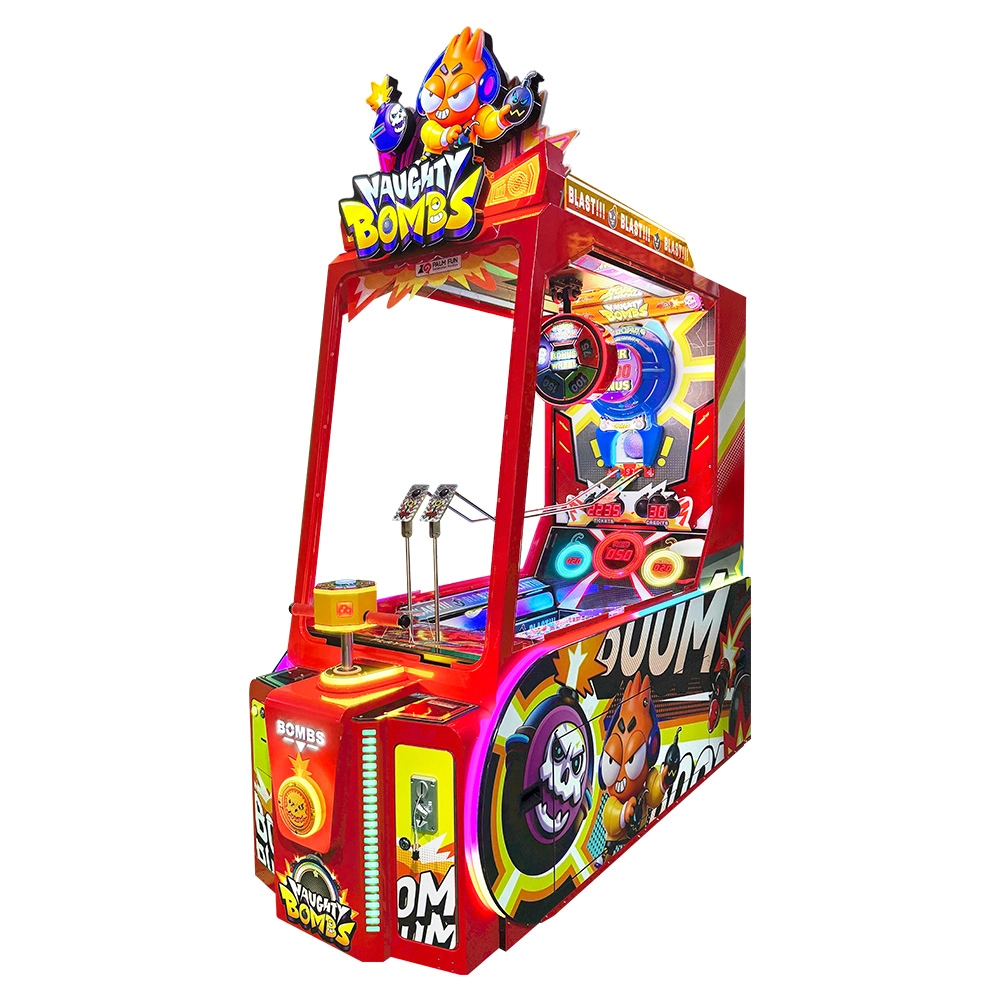
Naughty Bombs is a ball-drop redemption arcade game featuring rolling-ball gameplay, colored targets, ticket prizes, surprise bonus rewards, lighting and sound effects. Players use timing to launch and drop balls toward colored target areas. The product is presented for arcade, family entertainment center and other entertainment-venue projects, with customizable 110V / 220V AC voltage configuration.
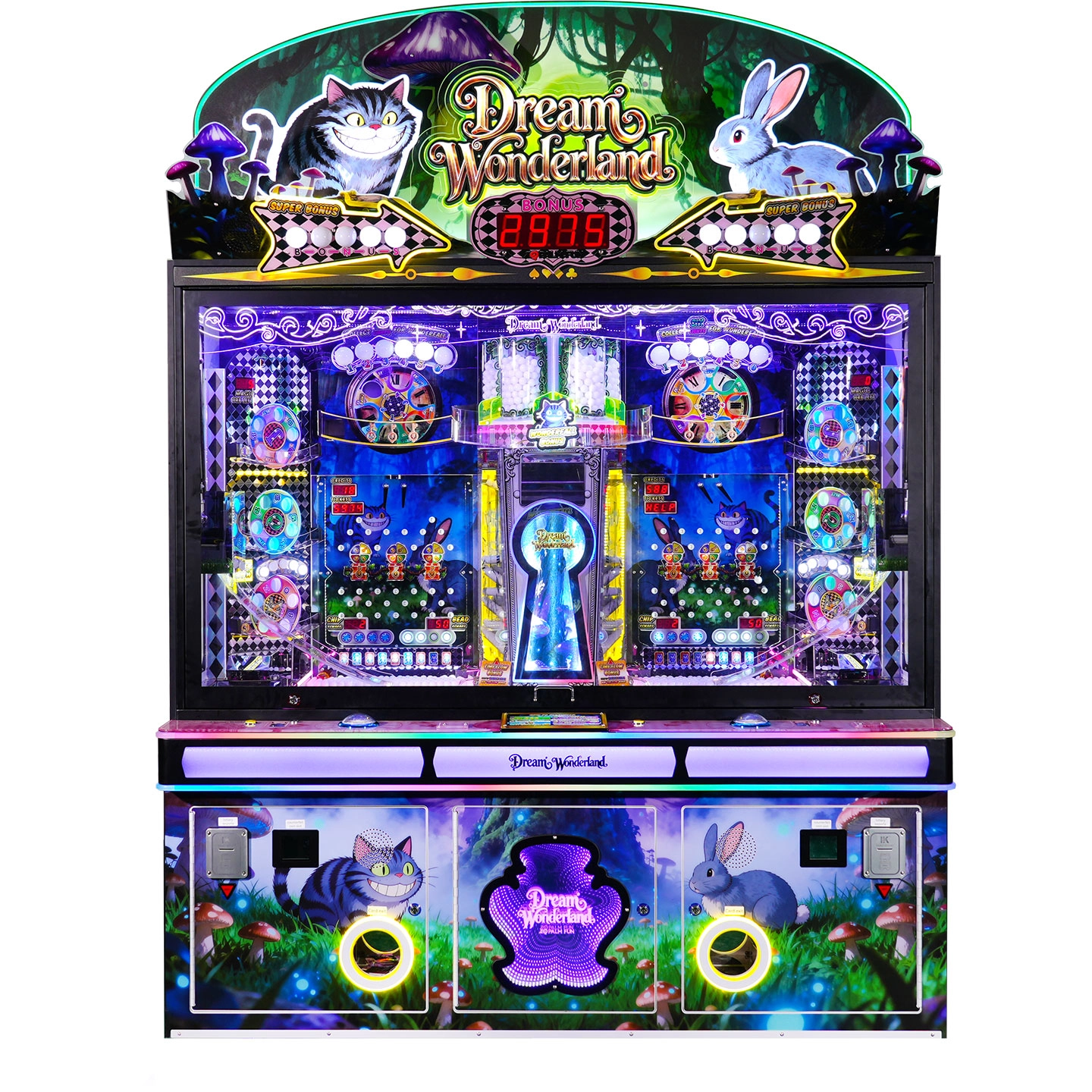
Enter Dream Wonderland — a magical marble pusher adventure filled with glowing lights, magic orbs, bonus wheels, collectible character cards, and exciting jackpot challenges.
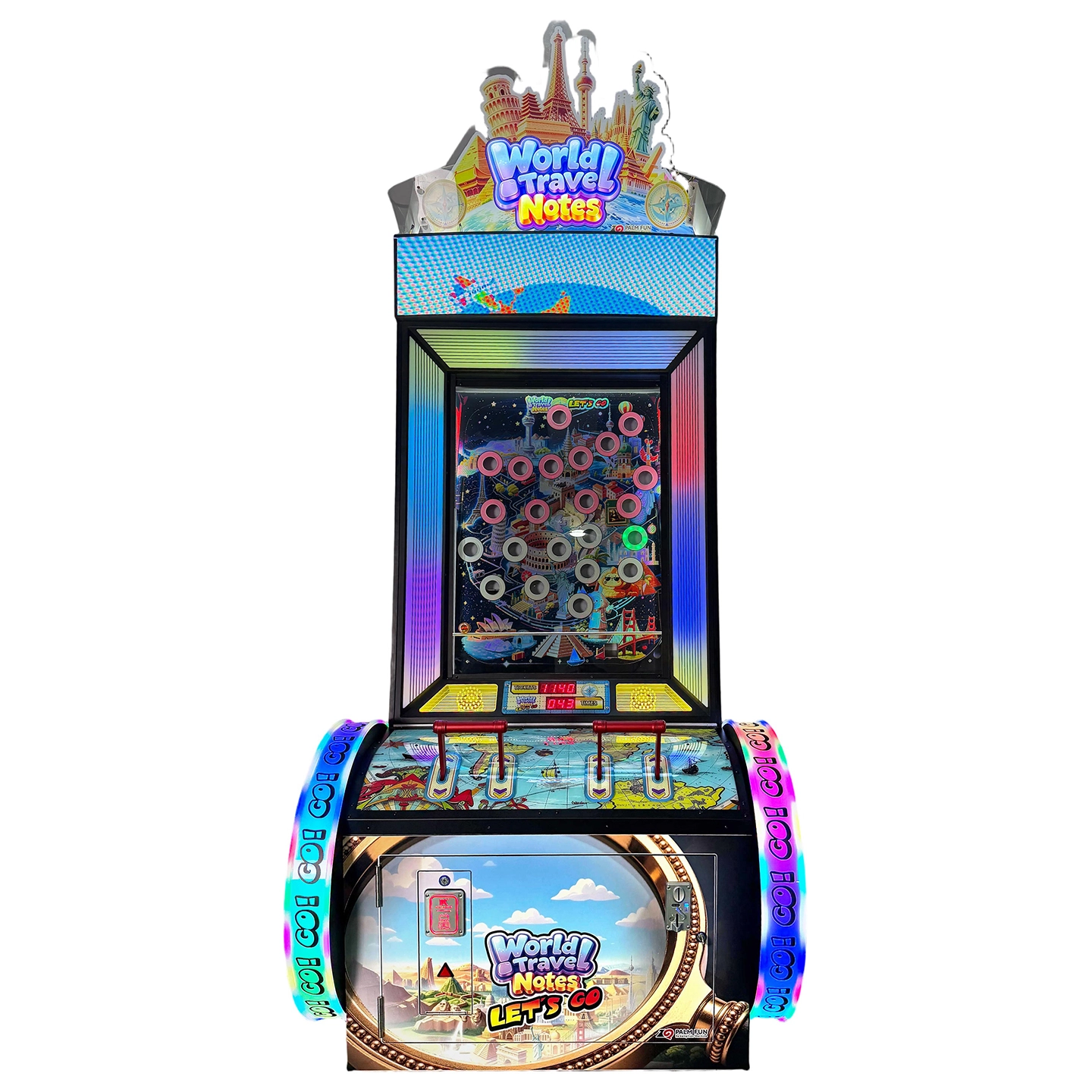
World Travel Notes is a skill-based balance ball redemption game with a fun world-travel theme. Players use two handles to control the balance bar and guide the ball into each target hole. As the game progresses, the targets become more challenging, leading players toward the final grand prize. With colorful world-travel graphics, dynamic RGB lighting, a live score display, and progressive difficulty, World Travel Notes is designed to attract attention and encourage repeat play in arcades, FECs, shopping malls, and other entertainment venues.
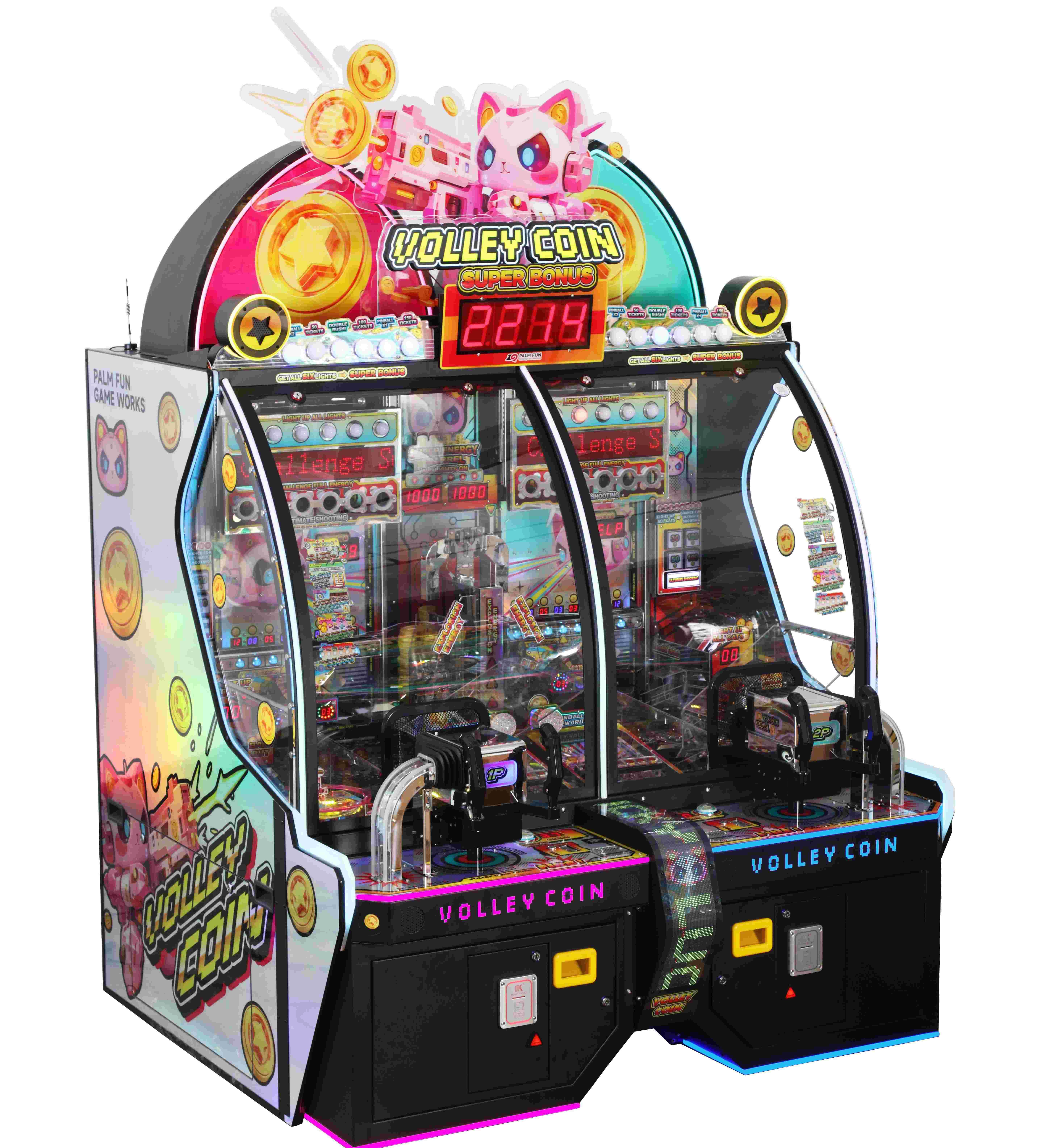
Volley Coin is an innovative arcade ticket redemption machine developed by Palm Fun Electronics. Combining the excitement of a fast-paced token shooter game with the proven earning power of a traditional coin pusher machine, Volley Coin offers a fresh and engaging gameplay experience that appeals to players of all ages.

Copyright © 2026 PALM FUN All Rights Reserved. | Privacy Policy • Terms and Conditions | Sitemap
palmfunarcade
Palm Fun Arcade Game
Whatsapp: +8618126837443
PalmFun Arcade
PalmFun_Arcade
PALM FUN Redemption Machine